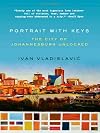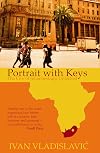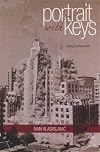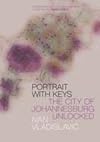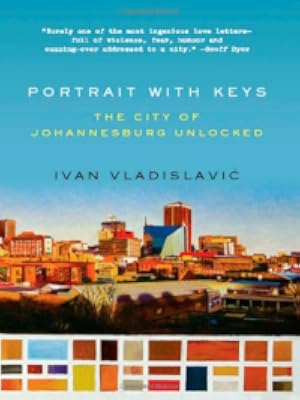
Portrait with Keys: The City of Johannesburg Unlocked
by Ivan Vladislavić
On This Page
Description
This dazzling portrait of Johannesburg is one of the most haunting, poetic pieces of reportage about a metropolis since Suketu Mehta's Maximum City. Through precisely crafted snapshots, Ivan Vladislavic observes the unpredictable, day-today transformation of his embattled city: the homeless using manholes as cupboards, a public statue slowly cannibalized for scrap. Most poignantly he charts the small, devastating changes along the postapartheid streets: walls grow higher, neighborhoods are show more gated off, the keys multiply. Security -- insecurity? -- is the growth industry. Vladislavic, described as 'one of the most imaginative minds at work in South African literature today' (Andre? Brink), delivers 'one of the best things ever written about a great, if schizophrenic, city, and an utterly true picture of the new South Africa.' (Christopher Hope). show lessTags
Recommendations






Member Reviews
Ivan Vladislavic’s Portrait with Keys is all once beautiful, sad, infuriating, marvelous, and quiet. This is a book of fragments – pieces of a city – which are inspected, sometimes connected to other parts. But there are many areas that are unreachable, locked behind doors, walls, and gates that only open for the right people. Each of the 138 pieces are indeed a portrait of a city, but only the parts that Vladislavic has access to. Through the book, there is a theme of history and art being created and destroyed that haunts the writing. I encourage anyone with a free afternoon to read this one.
This is probably the perfect lockdown travel book: not only is it constantly playing around with ideas about locks, keys, fences and guards, it is also almost entirely focussed on a suburban area within a block or two of the narrator's house.
In 138 numbered, short pieces — which rather endearingly turn out to occupy 183 pages — Vladislavić jumps around, apparently randomly, between encounters with beggars and street vendors, crime reports, notes about art exhibitions, thoughts on writers from Elias Canetti to Herman Charles Bosman, close observation of the way the very ordinary buildings, gardens, pavements, signs, graffiti, and street furniture around him reflect the short and complicated history of the city, and extracts from an show more essay on the semiotics of the steering-wheel lock.
The pieces seem to be arranged in simple chronological order of writing, irrespective of their subject, but there's an appendix in which Vladislavić proposes to us a number of thematic "walking tours" of different lengths and difficulties we can take through the literary model of a city he's created. Kind of a cross between Lonely Planet and Hopscotch.
The kind of engaging, enquiring writing that spots something interesting under the most ordinary and prosaic detail. Great fun. show less
In 138 numbered, short pieces — which rather endearingly turn out to occupy 183 pages — Vladislavić jumps around, apparently randomly, between encounters with beggars and street vendors, crime reports, notes about art exhibitions, thoughts on writers from Elias Canetti to Herman Charles Bosman, close observation of the way the very ordinary buildings, gardens, pavements, signs, graffiti, and street furniture around him reflect the short and complicated history of the city, and extracts from an show more essay on the semiotics of the steering-wheel lock.
The pieces seem to be arranged in simple chronological order of writing, irrespective of their subject, but there's an appendix in which Vladislavić proposes to us a number of thematic "walking tours" of different lengths and difficulties we can take through the literary model of a city he's created. Kind of a cross between Lonely Planet and Hopscotch.
The kind of engaging, enquiring writing that spots something interesting under the most ordinary and prosaic detail. Great fun. show less
As a former resident of Johannesburg, I thoroughly enjoyed this insider's view of his corner of the city. It is not a tourist's guide, but rather a local resident's thoughtful view of his home, revealing it as both fascinating and complex.
The reader will have the pleasure of walking along some of the city's less-traveled streets, guided by excellent writing – smooth and unselfconscious, yet so intelligent and thoughtful as to be occasionally transcendent. The slim volume's collage structure includes vignettes, second-hand tales, episodic insertions, tidbits from diaries and memoirs, histories and newspapers, along with simple lists of items seen. The layered structure hints at an elemental truth about all cities and their people, and show more this one in particular. Pure pleasure. show less
The reader will have the pleasure of walking along some of the city's less-traveled streets, guided by excellent writing – smooth and unselfconscious, yet so intelligent and thoughtful as to be occasionally transcendent. The slim volume's collage structure includes vignettes, second-hand tales, episodic insertions, tidbits from diaries and memoirs, histories and newspapers, along with simple lists of items seen. The layered structure hints at an elemental truth about all cities and their people, and show more this one in particular. Pure pleasure. show less
"...I think that Ivan Vladislavic is probably our most unheralded writer. He is an astoundingly accomplished master of the English sentence.
The book is a series of 138 fragments, each dealing with a specific symbol of Johannesburg, like our keys and our walls. The key is a very symbolic Johannesburg object because we are determined to lock up our stuff. We all walk about with a lot of keys, and Ivan homes in on that. But for me the most important thing that he focuses on is the walls. Through the 138 fragments, I think there are 19 or 20 that look at the subject. He explains to people how the Johannesburg psyche is totally embodied in the height of the walls. And he does it in a very subtle, suggestive and ultimately powerful way. He show more will talk about barbed wire on top of the wall above the metal spikes. He will talk about the electric fencing and how walls seem to get higher as the city becomes more inward looking. There is no street culture in the affluent parts of South Africa, there is no eye contact....." (reviewed by Kevin Bloom in FiveBooks).
The full interview is available here: http://fivebooks.com/interviews/kevin-bloom-on-post-apartheid-identity show less
The book is a series of 138 fragments, each dealing with a specific symbol of Johannesburg, like our keys and our walls. The key is a very symbolic Johannesburg object because we are determined to lock up our stuff. We all walk about with a lot of keys, and Ivan homes in on that. But for me the most important thing that he focuses on is the walls. Through the 138 fragments, I think there are 19 or 20 that look at the subject. He explains to people how the Johannesburg psyche is totally embodied in the height of the walls. And he does it in a very subtle, suggestive and ultimately powerful way. He show more will talk about barbed wire on top of the wall above the metal spikes. He will talk about the electric fencing and how walls seem to get higher as the city becomes more inward looking. There is no street culture in the affluent parts of South Africa, there is no eye contact....." (reviewed by Kevin Bloom in FiveBooks).
The full interview is available here: http://fivebooks.com/interviews/kevin-bloom-on-post-apartheid-identity show less
Ratings
Members
- Recently Added By
Author Information

21+ Works 662 Members
Awards and Honors
Common Knowledge
- Important places
- South Africa; Johannesburg, South Africa
Classifications
- Genres
- Nonfiction, Travel, General Nonfiction
- DDC/MDS
- 968.22 — History & geography History of Africa Southern Africa: Botswana, Zimbabwe, Zambia, Malawi Gauteng, Limpopo, Mpumalanga [Transvaal] Gauteng
- LCC
- DT2405 .J6 — History of Europe, Asia, Africa and Oceania Africa History of Africa South Africa
- BISAC
Statistics
- Members
- 97
- Popularity
- 331,234
- Reviews
- 4
- Rating
- (4.25)
- Languages
- English, French, German, Norwegian (Bokmål)
- Media
- Paper, Ebook
- ISBNs
- 10
- ASINs
- 1