On This Page
Description
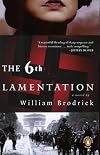
When a suspected Nazi war criminal demands sanctuary from his church, Father Anselm finds his investigation paralleled by a search by Lucy Aubret, whose grandmother was betrayed by the Nazi criminal when she secretly worked to rescue Jewish children.Tags
Recommendations















Member Reviews
The process of aging, inching towards death, shrinks a life, distilling it down to its most basic. The mind returns, effortlessly but urgently, to the defining moments of one’s life. And so, Agnes, a survivor of the Nazi death camps, returns to the days of her youth, picking through them, reevaluating them, and recording them in two school notebooks, purchased on the way home from the doctor’s office and her final death sentence. Slowly dieing of a degenerative neurological disorder and daily losing control of her body, Agnes archives her past on the thin notebook paper, hoping to explain herself to her family before it’s too late. As she begins to write, a former Nazi SS officer appears at a local priory, claiming the ancient show more right of sanctuary. The two enigmatic people, a cool, aloof grandmother and a suspected war criminal, are inexorably tied together by a mysterious past, one which threatens to redefine not only their lives but the lives of everyone they have touched.
The 6th Lamentation, a brilliant patchwork mystery, examines the nature of human perception. Every event, every spoken word captured on the page reshapes itself in the eyes and understanding of each different character. All of the people trying to flesh out the events of their past touch a different piece of the elephant, remembering and describing their lives in drastically different ways. And their misunderstandings lead them to fatal errors in judgment about each other and about the true nature of what transpired amongst them.
William Brodrick populated the novel with wildly fascinating, natural characters, filled with the common contradictions of human living. Among these characters, Anselm, a barrister turned monk, stands out. His faith is tenuous and alive, subject to the whims of everyday life but able to sustain him, even when he is unaware of its power over him.
As the mystery of the novel progresses, Brodrick attacks it from every angle, leading the reader to the same misjudgments that befall the characters in the book. The result is a captivating and dynamic story, woven in layers which catch the eye differently depending on the angle of view. On rare occasions, Brodrick confuses the narrative slightly with the complexity of his style, but drags the reader back to the story’s thread with a quick summary from one of the players. Ultimately, Brodrick’s intricate mystery overpowers neither the story nor his message. Rather, it serves to carry the story along, exhibiting ever more complex and disparate views of the past. Thus, the story’s conclusion is all the more sobering, with some characters finally reconciling themselves to the truth of their past and others trapped forever in faulty judgments, pursuing them to fatal ends. Brodrick reminds us that, as life necessarily winds down, reducing us, reconciliation depends upon constant and honest self evaluation.
4 ½ bones!!!! show less
The 6th Lamentation, a brilliant patchwork mystery, examines the nature of human perception. Every event, every spoken word captured on the page reshapes itself in the eyes and understanding of each different character. All of the people trying to flesh out the events of their past touch a different piece of the elephant, remembering and describing their lives in drastically different ways. And their misunderstandings lead them to fatal errors in judgment about each other and about the true nature of what transpired amongst them.
William Brodrick populated the novel with wildly fascinating, natural characters, filled with the common contradictions of human living. Among these characters, Anselm, a barrister turned monk, stands out. His faith is tenuous and alive, subject to the whims of everyday life but able to sustain him, even when he is unaware of its power over him.
As the mystery of the novel progresses, Brodrick attacks it from every angle, leading the reader to the same misjudgments that befall the characters in the book. The result is a captivating and dynamic story, woven in layers which catch the eye differently depending on the angle of view. On rare occasions, Brodrick confuses the narrative slightly with the complexity of his style, but drags the reader back to the story’s thread with a quick summary from one of the players. Ultimately, Brodrick’s intricate mystery overpowers neither the story nor his message. Rather, it serves to carry the story along, exhibiting ever more complex and disparate views of the past. Thus, the story’s conclusion is all the more sobering, with some characters finally reconciling themselves to the truth of their past and others trapped forever in faulty judgments, pursuing them to fatal ends. Brodrick reminds us that, as life necessarily winds down, reducing us, reconciliation depends upon constant and honest self evaluation.
4 ½ bones!!!! show less
This is a first novel? Hard to believe. I started this book at 10 pm and finished it at 1 am. I couldn't bring myself to stop reading - it was that good. Not only as a mystery, but as a novel in general. The ending is a little too formulaic, but a surprise which I must say I never saw coming. The ending is the reason the book gets a 9...I was a little let down at the way things sort of just a little too neatly fit. Other than that, it is a fine,no, an excellent novel. I highly recommend it.
Synopsis:
Set in England, present day, the story opens with Agnes Embleton, an elderly mother & grandmother, who has just received news that she's dying of motor neurone disease. She will, at some point the doctors tell her, lose all of her motor show more skills including the ability to talk. So before the disease develops into the final stages, Agnes feels this great need to share her past life with her granddaughter Lucy. She writes her story in a series of notebooks that she wants Lucy to read before Agnes dies. She reveals a life Lucy never even dreamed of.
That is plotline #1. Plotline #2:
Eduard Schwermann is a former SS officer who was stationed in France at the time of WWII. He has come to Larkwood Priory in England, and in speaking to one of the friars there, Father Anselm, he asks him what options are open to someone when it seems the entire world has turned against him. Anselm answers that in olden times, a man would claim Sanctuary. So Schwermann does just that. He claims sanctuary at Larkwood Priory, and somehow the media gets wind of the story. The Church realizes they have a dilemma here, so the head honchos send for Anselm, who in his pre-priestly life had been an attorney. They send him on a mission. As he gets more entangled in the lives of those affected by Schwermann, he finds he has a number of questions that cannot be easily answered. For example, why, toward the end of the war, did the church offer Schwermann, a former SS officer, sanctuary? Why did the British government allow Schwermann to get away and even furnish him with a new name? These two stories cross paths throughout the book. The mystery deepens as both Lucy and Anselm try to find the truth of what happened in the past -- but like one character in the novel warns, things are not what they seem.
The author does a great job not only in his characterizations...you never feel sorry for the bad guys here and you get drawn into the lives of most of the people in the novel. He deals with the Holocaust and its effects on his characters with compassion for the victims and disgust for its architects & those who carried out their orders. He also touches upon the role of politics, past & present, in the Catholic Church.
As I said, my only objection to this novel was that the end was a little too pat. Very contrived. The way the book reads, though, is perfect. It starts out slow, builds in tempo as you go along, then you find yourself unable to stop reading as the action builds. Had the ending moved along in this rhythm, it would have been a perfect novel.
Highly highly recommended. show less
Synopsis:
Set in England, present day, the story opens with Agnes Embleton, an elderly mother & grandmother, who has just received news that she's dying of motor neurone disease. She will, at some point the doctors tell her, lose all of her motor show more skills including the ability to talk. So before the disease develops into the final stages, Agnes feels this great need to share her past life with her granddaughter Lucy. She writes her story in a series of notebooks that she wants Lucy to read before Agnes dies. She reveals a life Lucy never even dreamed of.
That is plotline #1. Plotline #2:
Eduard Schwermann is a former SS officer who was stationed in France at the time of WWII. He has come to Larkwood Priory in England, and in speaking to one of the friars there, Father Anselm, he asks him what options are open to someone when it seems the entire world has turned against him. Anselm answers that in olden times, a man would claim Sanctuary. So Schwermann does just that. He claims sanctuary at Larkwood Priory, and somehow the media gets wind of the story. The Church realizes they have a dilemma here, so the head honchos send for Anselm, who in his pre-priestly life had been an attorney. They send him on a mission. As he gets more entangled in the lives of those affected by Schwermann, he finds he has a number of questions that cannot be easily answered. For example, why, toward the end of the war, did the church offer Schwermann, a former SS officer, sanctuary? Why did the British government allow Schwermann to get away and even furnish him with a new name? These two stories cross paths throughout the book. The mystery deepens as both Lucy and Anselm try to find the truth of what happened in the past -- but like one character in the novel warns, things are not what they seem.
The author does a great job not only in his characterizations...you never feel sorry for the bad guys here and you get drawn into the lives of most of the people in the novel. He deals with the Holocaust and its effects on his characters with compassion for the victims and disgust for its architects & those who carried out their orders. He also touches upon the role of politics, past & present, in the Catholic Church.
As I said, my only objection to this novel was that the end was a little too pat. Very contrived. The way the book reads, though, is perfect. It starts out slow, builds in tempo as you go along, then you find yourself unable to stop reading as the action builds. Had the ending moved along in this rhythm, it would have been a perfect novel.
Highly highly recommended. show less
Father Anselm was once a barrister but decided that the secular life was not for him and joined a monastery. One day a stranger appears at the monastery and asks for sanctuary, he is an accused Nazi war criminal. During the war a group of young people arranged to smuggle Jewish children to safety from occupied Paris until they were betrayed. Most were killed but Agnes Aubret survived the death camps to marry and settle in England. Now a younger generation is looking for answers and vengeance.
I came to Brodrick's books late and actually started further on in the series so this is a regression to the start. Whilst Father Anselm is a thread that runs through, this isn't a book about him really. The story is rooted in actuality but the show more characters and scenarios are fictional. The writing is spare but utterly gripping and the characters are allowed to develop but still leave questions at the end. show less
I came to Brodrick's books late and actually started further on in the series so this is a regression to the start. Whilst Father Anselm is a thread that runs through, this isn't a book about him really. The story is rooted in actuality but the show more characters and scenarios are fictional. The writing is spare but utterly gripping and the characters are allowed to develop but still leave questions at the end. show less
In the main, William Brodrick's novel is haunting and believable, with ordinary characters facing incredible situations and revelations (based, in part, on the experiences of Brodrick's mother). The conclusion, however satisfying, somewhat stretches the reader's suspension of disbelief - too many twists and turns, with the relationships between characters changing in every chapter, and fantastic coincidences - but the overall story is historically informative with a natural progression. The dialogue is in turn funny and heartbreaking, and it's easy to sympathise with both the survivors and their betrayers. Thoughtful, poetic writing.
A page-turner, who-did-what-to-whom-when taking place both in present day Britain and in 1940's France. Main characters include a lawyer-turned monk, a young woman and her grandmother dying of a tragic disease, and a former Nazi on trial for war crimes against the Jews. Others include a butler (of course, this is a british novel), an angst-ridden artist, and enough others to warrant a character list. Both entertaining and thought-provoking. Do we ever really know the truth about the past--even the pasts of those we think we know best?
A good first effort, with an interesting main character and a well-developed supporting cast. The last quarter of the book becomes extremely confusing as the author tries to tie up all the plot lines. The coincidences required for this would put Dickens to shame.
In creating clerical detective Father Anselm William Brodrick, drew upon his own experience first as an Augustinian friar and later as a practicing barrister plus the actual story in the Sixth Lamentation is loosely based on the wartime experiences of his mother
Elderly Agnes Aubret lived through the German occupation of Paris and the persecution of its Jewish citizens but now time is running out for her as she is dying from motor neurone disease. At Father Anselm's monastery a man has just claimed sanctuary as he has been exposed as an SS officer and alleged war criminal.
This is the premise of the Sixth Lamentation which weaves a huge cast of characters spread over three generations and their interconnecting stories, through German show more occupied Paris to modern day London.
The only thing wrong with it was my own doing. Where I went wrong was listening to it as an audio book whilst driving… as the first third of the book introduces layer upon layer of story, endless characters and to make it worst I found out after that the hard copy had a list of characters at the beginning for reference!. I think if I had know this I would have read it instead of listening to it as I found it hard to engage with as I was, up until about one third of the way in, struggling with the vast cast and the French, German, Italian names.
I really admired the way the author managed this labyrinthine story with its twists and turns and revelations. The historical attention to detail was superb and as the author states 'I did not want to record a single detail that was not supported by a contemporaneous record.'
This is a novel that requires time and patience to fully appreciate it and I would imagine that it is a remarkable reading experience.
I haven’t been put off and intent reading A Whispered Name by the same author show less
Elderly Agnes Aubret lived through the German occupation of Paris and the persecution of its Jewish citizens but now time is running out for her as she is dying from motor neurone disease. At Father Anselm's monastery a man has just claimed sanctuary as he has been exposed as an SS officer and alleged war criminal.
This is the premise of the Sixth Lamentation which weaves a huge cast of characters spread over three generations and their interconnecting stories, through German show more occupied Paris to modern day London.
The only thing wrong with it was my own doing. Where I went wrong was listening to it as an audio book whilst driving… as the first third of the book introduces layer upon layer of story, endless characters and to make it worst I found out after that the hard copy had a list of characters at the beginning for reference!. I think if I had know this I would have read it instead of listening to it as I found it hard to engage with as I was, up until about one third of the way in, struggling with the vast cast and the French, German, Italian names.
I really admired the way the author managed this labyrinthine story with its twists and turns and revelations. The historical attention to detail was superb and as the author states 'I did not want to record a single detail that was not supported by a contemporaneous record.'
This is a novel that requires time and patience to fully appreciate it and I would imagine that it is a remarkable reading experience.
I haven’t been put off and intent reading A Whispered Name by the same author show less
Members
- Recently Added By
Published Reviews
There seems to be a new wave of fiction based on the Holocaust (what is meant by `the sixth lamentation' in this title) and investigations by the survivors and succeeding generations into the World War II experiences of their Jewish forebears. Other examples are The archivist (by Martha Cooley, 1998), Disturbance of the inner ear (Joyce Hackett, 2003) and The Nose (Elena Lappin, 2003), show more following the earlier Little boy lost (Marghanita Laski, 1949) and Sophie's Choice (William Styron, 1979).
Incredibly (but necessary for the plot), in the investigation in The Sixth Lamentation, the lawyer-turned-monk main character, entrusted with vitally important documents, `thought of making photocopies but didn't. The notion of duplicating the names of the dead seemed somehow irreverent, an act of trespass.' I found it distasteful and irreverent trespass (as in none of the other novels treating this topic) to use the dreadful events of the Holocaust as the basis of a thriller, over-long (430 pages) and crammed with secrets discovered, identities permuted, papers lost, found and destroyed, dramatic revelations, ecclesiastical plotting, revisionism, revenge sought, murder threatened, misapprehensions and cross-purposes galore.
The language is maladroit to the point of mystification. An adolescent girl records in her journal, after a boy tells her, `I think I may be attached to you', `I woke the next morning with a fountain spurting from the pit of my stomach'. Menstruation? Vomiting? First love? An attack of nerves? Who can tell? show less
Incredibly (but necessary for the plot), in the investigation in The Sixth Lamentation, the lawyer-turned-monk main character, entrusted with vitally important documents, `thought of making photocopies but didn't. The notion of duplicating the names of the dead seemed somehow irreverent, an act of trespass.' I found it distasteful and irreverent trespass (as in none of the other novels treating this topic) to use the dreadful events of the Holocaust as the basis of a thriller, over-long (430 pages) and crammed with secrets discovered, identities permuted, papers lost, found and destroyed, dramatic revelations, ecclesiastical plotting, revisionism, revenge sought, murder threatened, misapprehensions and cross-purposes galore.
The language is maladroit to the point of mystification. An adolescent girl records in her journal, after a boy tells her, `I think I may be attached to you', `I woke the next morning with a fountain spurting from the pit of my stomach'. Menstruation? Vomiting? First love? An attack of nerves? Who can tell? show less
added by KayCliff
This first-time novelist was an Augustinian friar before becoming a barrister; his chief protagonist, Father Anselm, was a barrister before becoming a monk. The two vocations offer fitting keys--logic and compassion--to unlock the doors of this labyrinthine tale. A suspected Nazi war criminal, Eduard Schwermann, asks for sanctuary at Anselm's home, Larkwood Priory. When the Vatican asks Anselm show more to investigate on its behalf, Anselm finds reason to suspect the church itself may have been complicit in Schwermann's long-ago escape to England. In nearby London, dying Holocaust survivor Agnes Aubret shares a secret with her granddaughter, Lucy: Agnes was part of a French Resistance ring broken by Schwermann. Schwermann's trial begins with both Anselm and Lucy still hurrying to make sense of the past. Sticky strands of deceit, loss, and betrayal bind together a large cast of characters, and untangling them is both difficult and painful. Though Brodrick builds tension slowly (he's better at foreshadowing than planting clues), he's mapped his plot masterfully, and his approach to the thorny issues of justice and punishment is thoughtful and complex. show less
added by cmwilson101
Lists

Books featuring monks and/or nuns
166 works; 33 members
Monastic life
31 works; 1 member
Author Information

10 Works 1,404 Members
Awards and Honors
Series

Common Knowledge
- Canonical title
- The Sixth Lamentation
- Original publication date
- 2003
- People/Characters
- Father Anselm; Agnes Aubret; Lucy Aubret; Eduard Schwermann
- Important places
- Larkwood Priory, Suffolk, England, UK; Suffolk, England, UK
- Important events
- World War II (1939 | 1945); World War II, German Occupation of France (1940 | 1944); Holocaust
- Epigraph
- L'Occupation
April's tiny hands once captured Paris,
As you once captured me: infant Trojan
Fingers gently peeled away my resistance
To your charms. It was an epiphany;
I saw waving palms, rising dust, and... (show all) yes,
I even heard the stones cry out your name,
Agnes.
And then the light fell short.
I made a pact with the Devil when the
"Spring Wind" came, when Priam's son lay bleeding
On the ground. As morning broke the scattered
Stones whispered, "God, what have you done?" and yes,
I betrayed you both. Can you forgive me,
Agnes?
(August, 1942)
Translated from the French by Father Anselm Duffy
Feast of Saint Agnes
Larkwood Priory, 21st January, 1998 - First words
- "Of course."
- Last words
- (Click to show. Warning: May contain spoilers.)Instead, I raise these old hands of mine: may God protect you, always; and forgive you, as I do now.
Classifications
Statistics
- Members
- 888
- Popularity
- 30,578
- Reviews
- 28
- Rating
- (3.47)
- Languages
- 9 — Dutch, English, Finnish, French, German, Hungarian, Italian, Norwegian (Bokmål), Spanish
- Media
- Paper, Audiobook, Ebook
- ISBNs
- 35
- UPCs
- 1
- ASINs
- 10