The Night Life of the Gods
by Thorne Smith
On This Page
Description
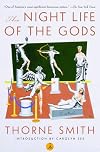
Author Thorne Smith puts his seemingly boundless imagination to good work in The Night Life of the Gods , a rip-roaring novel that postulates about what would happen if ancient deities were revived and allowed to run wild in the streets of Depression-era New York City. This turn of events comes about when inventor Hunter Hawk devises a method of turning people into stone statues and vice versa.Tags
Recommendations








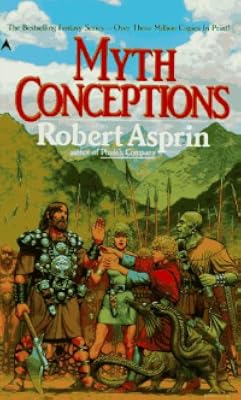
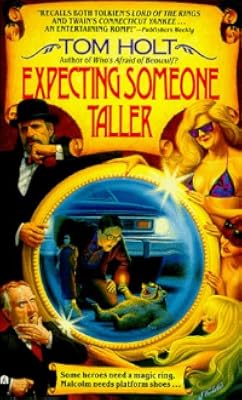


Member Recommendations
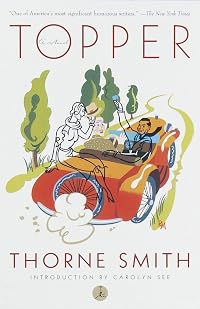
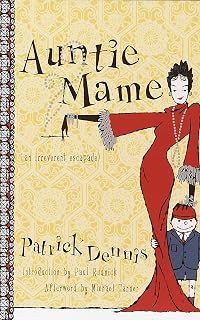
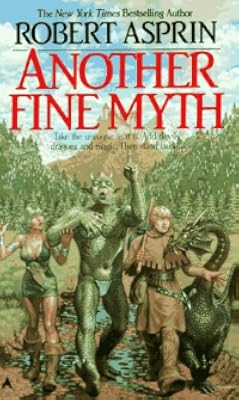
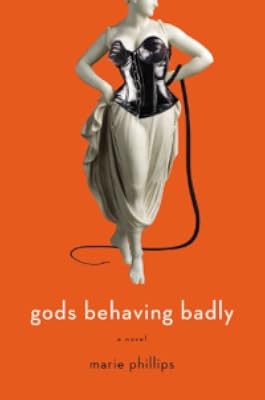
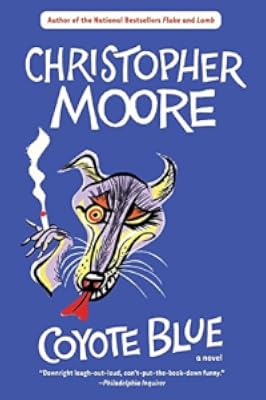
DeusXMachina Another take on the theme of gods coming to life in a modern age.
Member Reviews
The Night Life of the Gods was the first book of Thorne Smith's I ever read (thank you, Sandy!), and it made me a devotee. This, and Smith's works as well, are screwball supernatural hilarity, with a post-WW1 vibe. Smith practically invented a number of common SFnal tropes: the opposites switch bodies, the supernatural entity nobody else can see. Here, it's the Greek gods come to the modern era, to plague a modern man with their wanton willful ways. Really delightful.
In Night Life of the Gods, by Thorne Smith, we meet Hunter Hawk, wealthy eccentric scientist in 1920s America, who, after numerous explosions, manages to invent an "atomic ray" that turns living beings into statues, and a second ray that restores them to their original state. He meets Megaera, the 900-year-old descendent of one of the ancient Furies and daughter of one of the last living leprechauns, and she has the magic to turn statues into living beings. Together, the two are invincible, especially when they get to New York City, where there are museums full of statues of Greek and Roman gods and goddesses, waiting to come back to life.... This is a re-read from a gazillion years ago, and I must say it holds up well. Thorne Smith is show more a humourist in the same vein as James Thurber (indeed, the two were friends), and his wordplay and sarcastic commentary about life under Prohibition is still very, very funny. Mind you, I'm not sure that any human being (or deity, for that matter) could actually survive the amount of alcohol his characters constantly imbibe, but given that it's a fantasy anyway, why not indulge? Also in its favour is the fact that the female characters, while generally indolent, are by no means subordinate to the men; in fact, both genders are given non-traditional personality aspects. It's true that the only non-white characters are waiters in a restaurant, and there is one cringe-worthy passage of one of them speaking to another, but there isn't the kind of pervasive racism one might expect from the era. Interestingly, I found this in a Kindle version that includes nine (count 'em, 9!) novels by Thorne Smith, perhaps his whole output, for a mere US $4.59, whereas the Kindle version of this book by itself was over US $5.00. If you're interested in American humour from the 1920s and 1930s, and you have a Kindle, this is an absolute bargain. Recommended! show less
A charming comic fable. It must have been written as a poke in the eye at 30's social mores, but it has elements of the screwball capers of the period, as well as the loosely articulated and highly improbable structure of comic stories written in the Renaissance. Meant to entertain and highly recommended.
I found out my grandfather was a huge Thorne Smith fan, so I thought I'd give one of his novels a try (my grandfather died when I was in high school). Night Life of the Gods was one of the funniest books I've ever read. It was also very timeless, so even though I knew it was publish in 1931, it read, for the most part, as though it had been written in 2010. I'm definitely going to have to read some more of Smith's works.
It lacks the charm and innocence of "Topper." Hawk is a more cynical and world-weary than Cosmo. The book is more daring, yet less effective. It strains for profundity and poignancy, finally succeeding on the last page.
This was, I think, the first Thorne Smith I read, and certainly the most I enjoy most, about a group of classical statues that come to life so several of the Roman gods and goddesses get loose in New York City. Ultimately, however, they return to statues and the hero and heroine decide to join then --a rather sad and dignified ending to a hilarious story. There is an odd resemblance to a film mentioned by Dorothy Sayers in The Copper Fingers "Apollo Comes to New York" in which the Apollo Belvedere comes to life. I bought this used after reading my father's old paperback copy.
This book took me forever to get through, but I think that's more my fault that its. It was pretty funny (in the Wodehouse vein, but slightly less wit and quite a bit more...deviancy?) with some LOL moments, which I always appreciate.
Members
- Recently Added By
Lists

Best Laugh Out Loud Books
143 works; 48 members

Cawthorn and Moorcock's Fantasy: The 100 Best Books
110 works; 7 members

Cheesy pleasures and odd lots!
119 works; 7 members

Michael Dirda's 100 Best Comic Novels
100 works; 1 member
Author Information

28+ Works 2,468 Members
Some Editions
Awards and Honors
Notable Lists
Series
Belongs to Publisher Series
Work Relationships
Is contained in
Common Knowledge
- Original title
- The Night Life of the Gods
- Original publication date
- 1931
- People/Characters
- Daphne Lambert; Hunter Hawk; Megaera Turner; Ludwig Turner; Bacchus (Greek god of wine); Mercury (show all 12); Neptune; Diana; Hebe; Apollo; Perseus; Betts
- Related movies
- Night Life of the Gods (1935 | IMDb)
Classifications
Statistics
- Members
- 410
- Popularity
- 75,257
- Reviews
- 11
- Rating
- (3.77)
- Languages
- English, German
- Media
- Paper, Ebook
- ISBNs
- 19
- ASINs
- 29