On This Page
Description
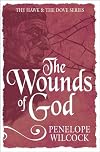
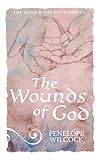
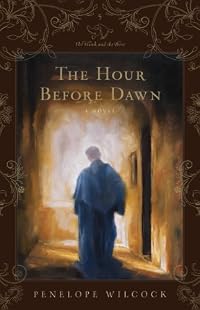
14th century Yorkshire: the time of Chaucer. Has Peregrine been broken? Injured in an attack by old adversaries, Father Peregrine transforms from a steely, articulate, impressive leader into a humbled, crippled, wise mentor. Relying on the kindness of his fellow monks, the fiercely independent, hawkish abbot begins to regain his feet. But he faces a fresh challenge. The Augustinian Priory of St Dunstan lies three days' ride to the southwest, the domain of Prior William, whose calculating show more self-interest makes enemies everywhere. When he and Peregrine cross swords over a matter of justice masked as doctrine, will ruthlessness triumph over integrity? show lessTags
Recommendations



















Member Reviews
Another engaging group of stories in the Hawk and the Dove series. Each story is framed around a modern mother, a descendent of Father Peregrine, abbot of a 14th century monastery in northern England and the stories passed down through the family about the monastics at St. Alcuin's Monastery. Each story concerns one of the different monks and a spiritual crisis through which each suffers and the wise counsel of their beloved abbot. You might think fiction set in a monastery would be boring, but the lives of these men gives the lie to that word.
In "Who's the fool now?" we learn the lesson of true humility from the humiliation of the disabled Fr. Peregrine during a visit to another monastery; who is the better person, the one inflicting show more the unkindness or Fr. Peregrine himself?
In "The Poor in Spirit" Brother Francis, who works in the scriptorium, illustrating manuscripts, agonizes through his "dark night of the soul", hiding it behind a cheerful façade, and breaks down before the compassionate abbot.
In "Keeping Faith" we meet the Novice Brother Tom, who is torn between his love for a young woman and his monastic vows.
In "Beholding the heart" the clumsy Brother Theodore is berated by the novice master and we see Brother Theodore has the compassion the Rule-bound novice master lacks. A poem is interpreted by the novice master as licentious when it is not.
In "God's Wounds" a wealthy man's son, now a novice, Brother James, a spoiled, worldly young man, finally bares his soul and faces himself before the abbot.
There were several other stories, but these were the most memorable to me.
The book was beautifully and simply written. Description was marvelous and each monastic I felt I could know. They faced the same fears and anxieties that we do today. I didn't like the framing device; but I loved these stories of the monastics and their spiritual crises. I loved Fr. Peregrine's soothing spiritual counsel. I'm glad there are several other books in the series I can dip into. show less
In "Who's the fool now?" we learn the lesson of true humility from the humiliation of the disabled Fr. Peregrine during a visit to another monastery; who is the better person, the one inflicting show more the unkindness or Fr. Peregrine himself?
In "The Poor in Spirit" Brother Francis, who works in the scriptorium, illustrating manuscripts, agonizes through his "dark night of the soul", hiding it behind a cheerful façade, and breaks down before the compassionate abbot.
In "Keeping Faith" we meet the Novice Brother Tom, who is torn between his love for a young woman and his monastic vows.
In "Beholding the heart" the clumsy Brother Theodore is berated by the novice master and we see Brother Theodore has the compassion the Rule-bound novice master lacks. A poem is interpreted by the novice master as licentious when it is not.
In "God's Wounds" a wealthy man's son, now a novice, Brother James, a spoiled, worldly young man, finally bares his soul and faces himself before the abbot.
There were several other stories, but these were the most memorable to me.
The book was beautifully and simply written. Description was marvelous and each monastic I felt I could know. They faced the same fears and anxieties that we do today. I didn't like the framing device; but I loved these stories of the monastics and their spiritual crises. I loved Fr. Peregrine's soothing spiritual counsel. I'm glad there are several other books in the series I can dip into. show less
This book was received for free from LibraryThing’s Early Reviewers in return for a review.
"He saw the expression on Father Matthew’s face as Theodore stumbled over his broken sandal strap, shot out his hand to save himself, and dropped the jug he was carrying. It was smashing into tinkling fragments on the stone, in a puddle of warm fizzing beer that splashed my lady’s elegant gown and my lord’s embroidered shoes. There was a moment in which the universe stopped to allow for Brother Theodore’s mind to reel is dismay, Father Matthew’s expression to change from mere resentment to red-hot rage, and my lady to step back with a little, affected ‘Oh!’ of alarm."
Father Peregrine’s story continues in the second book of the show more Hawk and Dove series where he faces a variety of new challenges, filled with new and familiar characters that reveal the humanity and divinity present within the life of a monastery. This is interspliced with the story of a modern day family with each section relating to a parable within the Peregrine sections.
Wilcock has a soft way of writing, with diction that gives a warm, comfortable feel to the story. This, coupled with a variety of rounded characters that aren’t all likeable, creates a richness in each vignette. Thankfully this book can serve as a standalone, allowing readers to jump in at any point in the series. Thanks to Wilcock’s references to earlier events, it’s not necessary to have read the first book in the Hawk and Dove series to understand characters or setting.
One concern was the form. This book would have been better served if it had only focused on Father Peregrine. Every time the story switches back to present day, it loses tension being less interesting than the adventures of Peregrine. Currently they interrupt the narrative flow and pull the reader out of the story. The message of the vignettes are obvious enough that nothing would have been lost if these sections were eliminated.
Ultimately the best parts of the book are the scenes with Father Peregrine. While the world is populated with unique characters and personalities, it’s Peregrine that we identify with the most. He is the most interesting of all the monks with his struggle with his own body and how he interacts with the world and the people around him. Again and again he must use his sharp mind rather than a strong body to defend himself and navigate the world. If you’re interested in watching a man outsmart others on brainpower alone and spread compassion wherever he can, check out this book. show less
"He saw the expression on Father Matthew’s face as Theodore stumbled over his broken sandal strap, shot out his hand to save himself, and dropped the jug he was carrying. It was smashing into tinkling fragments on the stone, in a puddle of warm fizzing beer that splashed my lady’s elegant gown and my lord’s embroidered shoes. There was a moment in which the universe stopped to allow for Brother Theodore’s mind to reel is dismay, Father Matthew’s expression to change from mere resentment to red-hot rage, and my lady to step back with a little, affected ‘Oh!’ of alarm."
Father Peregrine’s story continues in the second book of the show more Hawk and Dove series where he faces a variety of new challenges, filled with new and familiar characters that reveal the humanity and divinity present within the life of a monastery. This is interspliced with the story of a modern day family with each section relating to a parable within the Peregrine sections.
Wilcock has a soft way of writing, with diction that gives a warm, comfortable feel to the story. This, coupled with a variety of rounded characters that aren’t all likeable, creates a richness in each vignette. Thankfully this book can serve as a standalone, allowing readers to jump in at any point in the series. Thanks to Wilcock’s references to earlier events, it’s not necessary to have read the first book in the Hawk and Dove series to understand characters or setting.
One concern was the form. This book would have been better served if it had only focused on Father Peregrine. Every time the story switches back to present day, it loses tension being less interesting than the adventures of Peregrine. Currently they interrupt the narrative flow and pull the reader out of the story. The message of the vignettes are obvious enough that nothing would have been lost if these sections were eliminated.
Ultimately the best parts of the book are the scenes with Father Peregrine. While the world is populated with unique characters and personalities, it’s Peregrine that we identify with the most. He is the most interesting of all the monks with his struggle with his own body and how he interacts with the world and the people around him. Again and again he must use his sharp mind rather than a strong body to defend himself and navigate the world. If you’re interested in watching a man outsmart others on brainpower alone and spread compassion wherever he can, check out this book. show less
 This review was written for LibraryThing Early Reviewers.
Before reading this book, I read the first book in the series, The Hawk and the Dove. This book is the second in the series. It isn't necessary to read the first one to enjoy this one, but it did help me understand it better. A mother during modern times is passing on stories to her daughter, and the stories are about monks who lived in the 1300s in a monastery. The main character, Father Peregrine, is an ancestor. The plot weaves between the two time periods, with the happenings in one reflected in the stories from the other. The stories are designed to teach, and the book is a bit preachy in places, but I enjoy the characters, especially in the monastery. Each chapter almost stands alone in a way that makes this an easy book to read show more in short sessions. show less
This review was written for LibraryThing Early Reviewers.The Wounds of God by Penelope Wilcock is one of a series called 'The Hawk & The Dove Series". The various tales tale told in this book are related through a mother and oral history that has been passed down to her. She in turn is passing them down to her daughter. These tales told about Father Peregrine and the monks within the Augustinian Priory. Each tale tells of an individual struggle within the monastery. While the tales are told from long ago they remain valuable to modern day Christianity. There are many characters in this book which made it at times hard to remember at times what the reader had already learned of them. The fact that Ms. Wilcock includes a list of the men and their role in the monastery was very helpful. I really show more enjoyed Ms Wilcock's style of writing. I will look for other books she has
written,especially within this series. show less
written,especially within this series. show less
This review was written for LibraryThing Early Reviewers.This book offered a look into a simple way of life, in terms of life in a monastery and a family with very limited income. And show cased good general advice. All good! But, wrapped around it was a religious strong hold that did not work for me. Too bad, because the stories spoke for them selves with the need to hit you over the head.
This review was written for LibraryThing Early Reviewers.I really like this book. The writing was lyrical and flowing in passages, and I really enjoyed the imagery. I plan to read more by this author.It was touching,insightful, and inspiring. Check it out.
This review was written for LibraryThing Early Reviewers.This is the second book in the series. Just like the first book the story switches between modern times and the 14th century. There are a few new characters in this book and the other Monks have aged some. The characters were well developed and the editing was well done. (I really have trouble with poorly edited books). The story flows at a nice pace. The book came to a valid conclusion while still leaving room to start the next book in this 3 book series. I enjoyed this book and think you will too. I received this book in exchange for my honest review.
Members
- Recently Added By
Lists

Ambleside Books
459 works; 18 members
Author Information
27 Works 1,171 Members
Series

Work Relationships
Is contained in
Common Knowledge
- Important places
- St. Alcuin’s Abbey, Yorkshire, England
Classifications
Statistics
- Members
- 137
- Popularity
- 237,527
- Reviews
- 9
- Rating
- (4.21)
- Languages
- English
- Media
- Paper, Ebook
- ISBNs
- 5
- ASINs
- 2