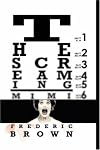
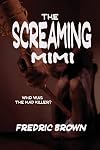
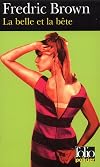
The Screaming Mimi
by Fredric Brown
On This Page
Description
This beloved, larger-than-life thriller from Edgar Award-winning author Fredric Brown stars Bill Sweeney, an ace reporter with an otherworldly drinking problem who gets mixed up with a naked woman as the latter is trying to avoid becoming the fourth victim of a local serial killer-"the Ripper." Rousing himself from his drunken stupor in order to aid the woman, Bill sets out on the killer's trail. As he puts questions and answers together, he finds himself face-to-face with madness and death. show more In this wild ride from a renowned author, you'll visit an insane asylum, meet a bum named "God," and discover the little statue that ties everything together. show lessTags
Recommendations





















Member Reviews
Psychiatry was all the rage in late 1940s popular culture, very au courant, as witness films such as Spellbound and The Snake Pit, or the three dazzling novels that John Franklin Bardin published between 1946 and 1948, The Deadly Percheron, The Last of Philip Banter, and Devil Take the Blue-Tail Fly. So when a character early in Fredric Brown's equally dazzling The Screaming Mimi makes a seemingly casual reference to having had psychiatric training, you may be sure it is a significant moment.
Fredric Brown (1906-1972) is one of the rare authors to distinguish himself in both crime fiction and science fiction, and he brought an offbeat sense of humor to both. The Screaming Mimi (1949) is a standalone hard-boiled mystery with a newspaper show more reporter rather than a detective as its protagonist. Bill Sweeney is an unmarried Irish-American scribe in his early 40s who claims not to be an alcoholic (right) but who goes on benders during which he winds up on park benches with other drunks - which is how the novel opens, as a matter of fact, and it gives nothing away to say that is how it ends, as well. Loop the loop!
Brown says on the opening page, "it isn't a nice story. It's got murder in it, and women and liquor and gambling and even prevarication" (love that "even," a neat specimen of Brown's puckishness). Sweeney will witness the aftermath of an attempted killing and become obsessed with the victim, who just happens to be a stripper who performs an act with a large and ferocious-looking dog. You can already see how this gets psychological.
The "Screaming Mimi" of the title is a semi-mass-produced "fine art" statuette of a terrified nude woman, which figures heavily in the narrative: "The mouth was wide open in a soundless scream. The arms were thrust out, palms forward, to hold off some approaching horror." Believe me that I know that the phrase "semi-mass-produced 'fine art' statuette" is rife with internal contradictions, which happen to be completely germane to the story. Sweeney is a high-culture snob who dotes on his semi-mass-produced classical music 78s and shudders when he hears Irving Berlin mentioned. (This is funny, since Berlin and his "Great American Songbook" colleagues are now considered classical composers, just about.)
It gets better. The statuette looks like it is made of ebony, but it's not. "It is made of a new plastic that can't be told from ebony, unless you pick it up. The dull gloss is the same as ebony's, to the eye." Things are not what they seem!, check. Repros and knock-offs.
Then when Sweeney's apartment is burgled, the thief fails to take "a stickpin with a zircon in it that [he] could not have been sure wasn't a diamond." Who can be sure of anything, those days or these days?
In case you're wondering, Walter Benjamin's seminal 1936 essay "The Work of Art in the Age of Mechanical Reproduction" would not be published in English translation until 1968, but in 1949 Brown is already channeling its spirit, big-time.
I don't want to go any further with the plot of The Screaming Mimi; you really need to read it. It is an absolute classic of its kind, easily as good as Raymond Chandler when he was cooking. It has a coterie reputation, but is not as well-known as it should be (although you know about it now, and that's all that really counts). No Brown title was included in the Library of America's big two-volume set of noir novels of the 1930s, 1940s, and 1950s, and that was a criminal oversight.
The Screaming Mimi has been adapted for the movies twice, by Gerd Oswald as Screaming Mimi in 1958, and by Dario Argento as The Bird with the Crystal Plumage in 1970. I haven't seen either, but I feel confident that the Oswald film, at least, must have considerably altered Brown's overall thrust, because there is no way that a 1958 movie, even luridly put forward as "The strip-tease murder case!" and featuring Gypsy Rose Lee in a supporting role, could have encompassed some of the twists of the original.
Yes, I have been mimicking Brown's Mimi style throughout this piece. Sharp of you to notice. show less
Fredric Brown (1906-1972) is one of the rare authors to distinguish himself in both crime fiction and science fiction, and he brought an offbeat sense of humor to both. The Screaming Mimi (1949) is a standalone hard-boiled mystery with a newspaper show more reporter rather than a detective as its protagonist. Bill Sweeney is an unmarried Irish-American scribe in his early 40s who claims not to be an alcoholic (right) but who goes on benders during which he winds up on park benches with other drunks - which is how the novel opens, as a matter of fact, and it gives nothing away to say that is how it ends, as well. Loop the loop!
Brown says on the opening page, "it isn't a nice story. It's got murder in it, and women and liquor and gambling and even prevarication" (love that "even," a neat specimen of Brown's puckishness). Sweeney will witness the aftermath of an attempted killing and become obsessed with the victim, who just happens to be a stripper who performs an act with a large and ferocious-looking dog. You can already see how this gets psychological.
The "Screaming Mimi" of the title is a semi-mass-produced "fine art" statuette of a terrified nude woman, which figures heavily in the narrative: "The mouth was wide open in a soundless scream. The arms were thrust out, palms forward, to hold off some approaching horror." Believe me that I know that the phrase "semi-mass-produced 'fine art' statuette" is rife with internal contradictions, which happen to be completely germane to the story. Sweeney is a high-culture snob who dotes on his semi-mass-produced classical music 78s and shudders when he hears Irving Berlin mentioned. (This is funny, since Berlin and his "Great American Songbook" colleagues are now considered classical composers, just about.)
It gets better. The statuette looks like it is made of ebony, but it's not. "It is made of a new plastic that can't be told from ebony, unless you pick it up. The dull gloss is the same as ebony's, to the eye." Things are not what they seem!, check. Repros and knock-offs.
Then when Sweeney's apartment is burgled, the thief fails to take "a stickpin with a zircon in it that [he] could not have been sure wasn't a diamond." Who can be sure of anything, those days or these days?
In case you're wondering, Walter Benjamin's seminal 1936 essay "The Work of Art in the Age of Mechanical Reproduction" would not be published in English translation until 1968, but in 1949 Brown is already channeling its spirit, big-time.
I don't want to go any further with the plot of The Screaming Mimi; you really need to read it. It is an absolute classic of its kind, easily as good as Raymond Chandler when he was cooking. It has a coterie reputation, but is not as well-known as it should be (although you know about it now, and that's all that really counts). No Brown title was included in the Library of America's big two-volume set of noir novels of the 1930s, 1940s, and 1950s, and that was a criminal oversight.
The Screaming Mimi has been adapted for the movies twice, by Gerd Oswald as Screaming Mimi in 1958, and by Dario Argento as The Bird with the Crystal Plumage in 1970. I haven't seen either, but I feel confident that the Oswald film, at least, must have considerably altered Brown's overall thrust, because there is no way that a 1958 movie, even luridly put forward as "The strip-tease murder case!" and featuring Gypsy Rose Lee in a supporting role, could have encompassed some of the twists of the original.
Yes, I have been mimicking Brown's Mimi style throughout this piece. Sharp of you to notice. show less
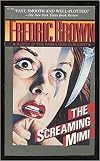
A damn-near perfect entertainment. The Carroll & Graf edition, with the garish cover of a wide-eyed woman with the shadow of a knife across her eye, let’s you know it’s pulpy, and the synopsis on the first page—“It’s got murder in it, and women and liquor and gambling and even prevarication”—tells us that Brown knows what makes a good story. He doesn’t right off mention strippers, madness and art, but the plot puts it all together around some of the finest dark/zany set-pieces ever conjured by a hungry writer. (Thanks to BBB. RIP, friend.)
Picked this up when I heard it was the inspiration for The Bird with the Crystal Plumage. It's not quite on the level of Argento's incredible debut feature, but it's a heck of a hard boiled murder story in its own right. Alcoholic journalist Sweeney makes a great protagonist and he barely sleeps trying to unravel the mystery of the Chicago ripper. Satisfyingly sleazy stuff.
Short story masquerading unsuccessfully as a novel, padded with dialogue that thinks it's clever but isn't. Constant navel-gazing self-pity on the central character's part. Unrealistic premise. The Screaming Mimi is an excellent example of the precipitous decline in writing quality that occurred when noir supplanted the popularity of the hard-boiled detective story. The noirists were mostly gimmick writers, and aimed their work at a readership that had never understood (or cared) what made Dashiell Hammett and Raymond Chandler stand out among their pulp contemporaries. Ross Macdonald belonged to the generation of these second- and third-rate authors, but enjoyed two great advantages over them: A.) he followed the trail blazed by Hammett show more and Chandler, rather than the lurid bypath of his peers, and B.) he was infinitely more talented.
But didn't the classic PI writers employ some pretty far-fetched premises now and then? Yes, Chandler's The High Window and Macdonald's The Chill spring to mind. The difference is that Fredric Brown was never half as good as Chandler or Macdonald, and he didn't have the skills to make such a premise work. The High Window and The Chill are great books despite the fact that they test the reader's ability to suspend disbelief; The Screaming Mimi is just a perfunctory cardboard shack built around a twist ending.
Not my cup of tea. show less
But didn't the classic PI writers employ some pretty far-fetched premises now and then? Yes, Chandler's The High Window and Macdonald's The Chill spring to mind. The difference is that Fredric Brown was never half as good as Chandler or Macdonald, and he didn't have the skills to make such a premise work. The High Window and The Chill are great books despite the fact that they test the reader's ability to suspend disbelief; The Screaming Mimi is just a perfunctory cardboard shack built around a twist ending.
Not my cup of tea. show less
Much more serious and darker than the other Brown mysteries I have read, but not lacking his typical sense of humor and frequent digressions - mostly into classical music. Just when you think you know what's going on with this one - it hits you - the same way it hits the hero, a newspaper reporter, what the truth is. A spectacular ending!
review of
Fredric Brown's The Screaming Mimi
by tENTATIVELY, a cONVENIENCE - August 26, 2018
At this point, I'll read anything by Brown fairly soon after acquiring it. In the last mnth & a half I've already read & reviewed Night of the Jabberwock ( https://www.goodreads.com/review/show/2452296089 ), The Lenient Beast ( https://www.goodreads.com/review/show/2461372607 ), Here Comes A Candle ( https://www.goodreads.com/review/show/2462070437 ), What Mad Universe ( https://www.goodreads.com/review/show/2464499871 ), Rogue in Space ( https://www.goodreads.com/review/show/2465064031 ), The Mind Thing ( https://www.goodreads.com/review/show/2467733917 ), & The Fabulous Clipjoint ( https://www.goodreads.com/review/show/2470384508 ) & I'm in show more the midst of a short story collection. I must be enjoying them.
Brown's characters are often alcoholics:
"He needed a drink; he needed about six more shots, or say half a pint, and that would put him over the hump and he could sleep. When had he slept last? He tried to think back, but things were foggy. It had been in an areaway on Huron over near the El, and it had been night, but had it been last night or the night before that? What had he done yesterday?" - p 10
His name is Sweeney & he eventually makes it back to his apartment after his bender:
""Um—I'm afraid I lost my key. Do you have—""
""You didn't lose it. I took it away from you a week ago Friday. You were trying to carry out your phonograph to hock it."
"Sweeney dropped his head into his hands. "Lord, did I?"
""You didn't. I made you take it back. And I made you give me the key. Your clothes are all there, too, except your topcoat and overcoat. You must have taken them before that. And your typewriter. And your watch—unless you got it on."
"Sweeney shook his head slowly. "Nope. It's gone. But thanks for saving the other stuff."" - p 31
His characters are alcoholics, classical music is a running theme too:
"Why should I tell you anything about Sweeney? If you know the Mozart 40, the dark restlessness of it, the macabre drive behind its graceful counterpoint, then you know Sweeney. And if the Mozard 40 sounds to you like a gay but slightly boring minuet, background for a conversation, then to you Sweeney is just another damn reporter who happens, too, to be a periodic drunk."
[..]
"There are strange things and there are stranger ones. And one of the strangest? A wooden box containing oddments of copper wire and metal plates, a half-dozen spaces of the nothingness called a vacuum, and a black wire which plugs into a hole in the wall from whence cometh our help, whence flows a thing which we call electricity because we do not know what it is. But it flows and inorganic matter lives; a table is prepared before you and revolves, bearing a disc; a needle scrapes in a groove." - p 34
I don't think you'll be geting such a description of a record player in a Mickey Spillane novel. Unlike Spillane, Brown is a writer as opposed to a propagandist:
""Stella Gaylord was a B-girl on West Madison Street. The Lee girl was a private secretary."
""How private? Kind that has to watch her periods as well as her commas?"" - p 44
"A moon-faced man stood just inside the doorway. A wide but meaningless smile was on his face as he looked along the bar, starting at the far end. His eyes, through round thick-lensed glasses came to rest on Sweeney and the smile widened. His eyes, through the lenses, looked enormous.
"Somehow, too, they managed to look both vacant and deadly. They looked like a repitle's eyes, magnified a hundredfold, and you expected a nictitating membrane to close across them.
"Sweeney—the outside of Sweeney—didn't move, but something shuddered inside him. For almost the first time in his life he was hating a man at first sight." - p 48
This is a mystery. I skip ahead 143 pp:
"Sweeney stared moodily into his. This had looked so good, less than half an hour ago. He'd found a Ripper. Only the Ripper was dead, four and a quarter years dead, with a hole in him that Sweeney could stick his head through if he wanted to, only he didn't want to, especially with the Ripper four and a quarter years dead." - p 191
I skip ahead even more, the mystery remains a mystery (in this review, i.e.), Brown makes an aside to the reader:
"After the floor show (you wouldn't want me to describe it again would you?) he wandered out to the bar and managed to get a place at it." - p 215
This is a mystery. I haven't spoiled it. I highly recommend reading it.. if you don't have anything better to do. show less
Fredric Brown's The Screaming Mimi
by tENTATIVELY, a cONVENIENCE - August 26, 2018
At this point, I'll read anything by Brown fairly soon after acquiring it. In the last mnth & a half I've already read & reviewed Night of the Jabberwock ( https://www.goodreads.com/review/show/2452296089 ), The Lenient Beast ( https://www.goodreads.com/review/show/2461372607 ), Here Comes A Candle ( https://www.goodreads.com/review/show/2462070437 ), What Mad Universe ( https://www.goodreads.com/review/show/2464499871 ), Rogue in Space ( https://www.goodreads.com/review/show/2465064031 ), The Mind Thing ( https://www.goodreads.com/review/show/2467733917 ), & The Fabulous Clipjoint ( https://www.goodreads.com/review/show/2470384508 ) & I'm in show more the midst of a short story collection. I must be enjoying them.
Brown's characters are often alcoholics:
"He needed a drink; he needed about six more shots, or say half a pint, and that would put him over the hump and he could sleep. When had he slept last? He tried to think back, but things were foggy. It had been in an areaway on Huron over near the El, and it had been night, but had it been last night or the night before that? What had he done yesterday?" - p 10
His name is Sweeney & he eventually makes it back to his apartment after his bender:
""Um—I'm afraid I lost my key. Do you have—""
""You didn't lose it. I took it away from you a week ago Friday. You were trying to carry out your phonograph to hock it."
"Sweeney dropped his head into his hands. "Lord, did I?"
""You didn't. I made you take it back. And I made you give me the key. Your clothes are all there, too, except your topcoat and overcoat. You must have taken them before that. And your typewriter. And your watch—unless you got it on."
"Sweeney shook his head slowly. "Nope. It's gone. But thanks for saving the other stuff."" - p 31
His characters are alcoholics, classical music is a running theme too:
"Why should I tell you anything about Sweeney? If you know the Mozart 40, the dark restlessness of it, the macabre drive behind its graceful counterpoint, then you know Sweeney. And if the Mozard 40 sounds to you like a gay but slightly boring minuet, background for a conversation, then to you Sweeney is just another damn reporter who happens, too, to be a periodic drunk."
[..]
"There are strange things and there are stranger ones. And one of the strangest? A wooden box containing oddments of copper wire and metal plates, a half-dozen spaces of the nothingness called a vacuum, and a black wire which plugs into a hole in the wall from whence cometh our help, whence flows a thing which we call electricity because we do not know what it is. But it flows and inorganic matter lives; a table is prepared before you and revolves, bearing a disc; a needle scrapes in a groove." - p 34
I don't think you'll be geting such a description of a record player in a Mickey Spillane novel. Unlike Spillane, Brown is a writer as opposed to a propagandist:
""Stella Gaylord was a B-girl on West Madison Street. The Lee girl was a private secretary."
""How private? Kind that has to watch her periods as well as her commas?"" - p 44
"A moon-faced man stood just inside the doorway. A wide but meaningless smile was on his face as he looked along the bar, starting at the far end. His eyes, through round thick-lensed glasses came to rest on Sweeney and the smile widened. His eyes, through the lenses, looked enormous.
"Somehow, too, they managed to look both vacant and deadly. They looked like a repitle's eyes, magnified a hundredfold, and you expected a nictitating membrane to close across them.
"Sweeney—the outside of Sweeney—didn't move, but something shuddered inside him. For almost the first time in his life he was hating a man at first sight." - p 48
This is a mystery. I skip ahead 143 pp:
"Sweeney stared moodily into his. This had looked so good, less than half an hour ago. He'd found a Ripper. Only the Ripper was dead, four and a quarter years dead, with a hole in him that Sweeney could stick his head through if he wanted to, only he didn't want to, especially with the Ripper four and a quarter years dead." - p 191
I skip ahead even more, the mystery remains a mystery (in this review, i.e.), Brown makes an aside to the reader:
"After the floor show (you wouldn't want me to describe it again would you?) he wandered out to the bar and managed to get a place at it." - p 215
This is a mystery. I haven't spoiled it. I highly recommend reading it.. if you don't have anything better to do. show less
Bill Sweeney is an alcoholic news reporter who stumble upon a grisly crime while he is on a bender. The victim is the serial killer known as the Ripper's latest victim, who is still alive.
Fascinated by what he has witnessed, and hoping that breaking the story will help smooth things over with his boss, Sweeney sobers up and starts to track the killer. The term "screaming mimi" refers to a hideous statue of a screaming woman which appears to be the trigger for the killer's crime spree.
Just when Sweeney thought that the case was solved, he encounters the shocking truth.
This was a very good read, and I wish that more of the author's mysteries were in print.
Fascinated by what he has witnessed, and hoping that breaking the story will help smooth things over with his boss, Sweeney sobers up and starts to track the killer. The term "screaming mimi" refers to a hideous statue of a screaming woman which appears to be the trigger for the killer's crime spree.
Just when Sweeney thought that the case was solved, he encounters the shocking truth.
This was a very good read, and I wish that more of the author's mysteries were in print.
Members
- Recently Added By
Lists

Jones & Newman: Best Horror Books Further Recommended Reading
577 works; 4 members
Author Information

Series
Belongs to Publisher Series
Work Relationships
Common Knowledge
- Original publication date
- 1949
- People/Characters
- Sweeney
- Important places
- Chicago, Illinois, USA
- Related movies
- Screaming Mimi (1958 | IMDb); L'uccello dalle piume di cristallo (1970 | IMDb)
- First words
- You can never tell what a drunken Irishman will do.
Classifications
Statistics
- Members
- 211
- Popularity
- 154,779
- Reviews
- 12
- Rating
- (3.94)
- Languages
- 6 — English, French, German, Italian, Spanish, Swedish
- Media
- Paper, Audiobook, Ebook
- ISBNs
- 21
- ASINs
- 19