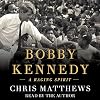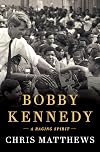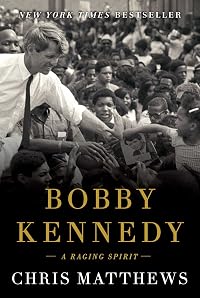
Bobby Kennedy: A Raging Spirit
by Chris Matthews
On This Page
Description
INCLUDES AN INTERVIEW WITH THE AUTHOR!New York Times Bestseller
A revealing new portrait of Robert F. Kennedy that gets closer to the man than any book before, by bestselling author Chris Matthews, an esteemed Kennedy expert and anchor of MSNBC's Hardball.
With his bestselling biography Jack Kennedy, Chris Matthews shared a new look of one of America's most beloved Presidents and the patriotic spirit that defined him. Now, with Bobby Kennedy, Matthews returns with a gripping, in-depth, show more behind-the-scenes portrait of one of the great figures of the American twentieth century.
Overlooked by his father, and overshadowed by his war-hero brother, Bobby Kennedy was the perpetual underdog. When he had the chance to become a naval officer like Jack, Bobby turned it down, choosing instead to join the Navy as a common sailor. It was a life changing experience that led him to connect with voters from all walks of life: young or old, black or white, rich or poor. They were the people who turned out for him in his 1968 campaign. RFK would prove himself to be the rarest of politicians—both a pragmatist who knew how to get the job done and an unwavering idealist who could inspire millions.
Drawing on extensive research and interviews, Matthews pulls back the curtain on the public and private worlds of Robert Francis Kennedy. He shines a light on all the important moments of his life, from his early years and his start in politics to his crucial role as attorney general in his brother's administration and his tragic run for president. This definitive book brings Bobby Kennedy to life like never before and is destined to become a political classic. show less
Tags
Recommendations







Member Reviews
Chris Matthews's Bobby Kennedy: A Raging Spirit is a compelling and bittersweet tribute to RFK, but in a larger sense expresses a heartfelt longing for that type of person and politician: someone who truly cared for the oppressed and disadvantaged, and strived to lift them up. A leader with empathy. A leader to believe in.
Matthews chronicles the transformation from Bobby's early pursuit of "villains" (going after the perceived Communist threat as counsel on Joseph McCarthy's Subcommittee on Investigations, and his activity investigating labor corruption and organized crime) to later seeking to make a difference for those he saw as life's victims: the African Americans subjected to segregation and discrimination, the poor, the hungry.
The show more book also explores the remarkably strong bond between RFK and JFK, Bobby's tireless efforts and expert organizational skills that helped elect his brother president, and the overwhelming grief that consumed him after the assssination of President Kennedy. Matthews also weaves in the long-standing friction between Bobby and Lyndon Johnson, which culminated in RFK's decision to seek the 1968 Democratic nomination, opposing sitting president LBJ and the Vietnam War.
The author peppers the narrative with personal reminiscences which illuminate how he became interested in politics and how, like millions of young Americans in the 1960's, RFK inspired him; however, the periodic shift to first person narrative does tend to interrupt the flow somewhat.
Matthews clearly relishes the rough-and-tumble world of politics, and the book provides some intriguing stories of backroom dealing, double-dealing, demands, and dirty tricks. But as political biographies go, this one is on the light side. Major issues such as the Bay of Pigs, the Cuban missile crisis, and Vietnam are sketched superficially, though the civil rights movement is more thoroughly discussed. And the book seems to end too abruptly. Matthews addresses the assassination of RFK swiftly with barely any denouement, much less any epilogue. But then perhaps this approach is a statement of the suddenness of Bobby's life cut short, the void it created, with it left to us to reflect and provide our own summary appreciation. show less
Matthews chronicles the transformation from Bobby's early pursuit of "villains" (going after the perceived Communist threat as counsel on Joseph McCarthy's Subcommittee on Investigations, and his activity investigating labor corruption and organized crime) to later seeking to make a difference for those he saw as life's victims: the African Americans subjected to segregation and discrimination, the poor, the hungry.
The show more book also explores the remarkably strong bond between RFK and JFK, Bobby's tireless efforts and expert organizational skills that helped elect his brother president, and the overwhelming grief that consumed him after the assssination of President Kennedy. Matthews also weaves in the long-standing friction between Bobby and Lyndon Johnson, which culminated in RFK's decision to seek the 1968 Democratic nomination, opposing sitting president LBJ and the Vietnam War.
The author peppers the narrative with personal reminiscences which illuminate how he became interested in politics and how, like millions of young Americans in the 1960's, RFK inspired him; however, the periodic shift to first person narrative does tend to interrupt the flow somewhat.
Matthews clearly relishes the rough-and-tumble world of politics, and the book provides some intriguing stories of backroom dealing, double-dealing, demands, and dirty tricks. But as political biographies go, this one is on the light side. Major issues such as the Bay of Pigs, the Cuban missile crisis, and Vietnam are sketched superficially, though the civil rights movement is more thoroughly discussed. And the book seems to end too abruptly. Matthews addresses the assassination of RFK swiftly with barely any denouement, much less any epilogue. But then perhaps this approach is a statement of the suddenness of Bobby's life cut short, the void it created, with it left to us to reflect and provide our own summary appreciation. show less
I learned a lot listening to this audiobook. I, like many, am fascinated by the Kennedys. Although the author reads at a very fast pace (I got the feeling he was spitting as he spoke), I learned details about history, politics, and Bobby Kennedy. Matthews paints him as a tough, principled, driven man who was passionate about his beliefs. What a tragic loss! I wonder what he could have accomplished?
I really enjoyed this book; Chris Matthews really put together a well-written, well-researched biography of Bobby Kennedy and how he really came to be the Kennedy we all know and love.
What was most interesting, I think, was to see how much RFK changed from his younger years and through adulthood as he met people, heard their stories, and experienced things himself. I have to admit that the younger RFK was not so appealing to me. I read this book in the car to my dad as he drove us back home from vacation, and we reflected on how changeable he was - he was willing to come back and listen, to change, and then stand up for what was right and be the catalyst for change. He grew into the inspiring man that I've always thought of when I show more think of RFK.
There were a handful of points in the book that I struggled to keep a steady voice - parts that really left me wanting to cry and parts that were just so inspiring yet tragic I couldn't help but get choked up. Even the way the book ended was so incredibly powerful, yet so, so incredibly sad - as if I felt the nation's loss just as it had in the past. When I got to the end of the book, my dad responded, "That's it?" And I said, 'Yeah, that's it. It's over." And he was a bit teary-eyed and I think disappointed that there wasn't more to read.
And I think that's the most devastating reality, that there wasn't more to his story because we'd reached the end of RFK's timeline - but what a powerful story to tell, especially in these times, and one that can reach from the past and inspire a generation of the future to do better. show less
What was most interesting, I think, was to see how much RFK changed from his younger years and through adulthood as he met people, heard their stories, and experienced things himself. I have to admit that the younger RFK was not so appealing to me. I read this book in the car to my dad as he drove us back home from vacation, and we reflected on how changeable he was - he was willing to come back and listen, to change, and then stand up for what was right and be the catalyst for change. He grew into the inspiring man that I've always thought of when I show more think of RFK.
There were a handful of points in the book that I struggled to keep a steady voice - parts that really left me wanting to cry and parts that were just so inspiring yet tragic I couldn't help but get choked up. Even the way the book ended was so incredibly powerful, yet so, so incredibly sad - as if I felt the nation's loss just as it had in the past. When I got to the end of the book, my dad responded, "That's it?" And I said, 'Yeah, that's it. It's over." And he was a bit teary-eyed and I think disappointed that there wasn't more to read.
And I think that's the most devastating reality, that there wasn't more to his story because we'd reached the end of RFK's timeline - but what a powerful story to tell, especially in these times, and one that can reach from the past and inspire a generation of the future to do better. show less
READ, AND GO BACK TO A TIME WHEN WE HAD HEROES
Author Chris Matthews and I have a lot of commonalities – mid-seventies, white male, Catholic, family-rooted, a respect and passion for the Kennedys. Matthews went to Holy Cross, then grad school, desperate to keep a draft deferment; I went to Notre Dame (Holy Cross priests, though there weren’t many visible even when I was there in the 60’s), then grad school, desperate to keep a draft deferment. I often watch “Hard Ball” and note his frequent plugs for his “Bobby Kennedy”; I am always moved by recollections of that incredibly sad but somehow uplifting last train ride from New York to Washington, DC. I have very vivid memories of the night RFK was killed and I felt I still had show more a lot to learn about him. I read three or four history books per year, typically books like Chernow’s Washington, Hamilton, and Grant, each 1,000 page anchors. Yet I felt that Matthews and RFK at 342 pages would be just right and so I bought the hardbound edition, a must. There are touching and apropos photos at the title page of each chapter, and there are wonderful family pictures (new to me) on the inside front and back covers. It is an excellent work and I recommend it highly.
While there is a fair amount of background, for the most part “Bobby Kennedy” is a book about the 60’s. Like many of my age, I grew up in those years, slowly maturing from a suburban Chicago high school kid who read the headlines but was mostly apolitical, to a non-protesting East Coast liberal looking to start a career and family. I include all this personal stuff only to make the point that if some of this is déjà vu for you then this book will resonate for you page after page.
And it will instruct, depending on your level of 60’s historical awareness. Some examples of things I did not know or had long forgotten -In 1953, new to Washington DC and government life, Bobby met Lyndon Baines Johnson for the first time and did not immediately shake his extended hand, this dating back to LBJ’s connection to Roosevelt’s 1941 firing of Joe Kennedy Sr from his ambassadorial post in London. Senator Joe McCarthy was somewhat close to the Kennedy family and enjoyed both political and personal relationships. The Kennedys were not quick to cut their ties when McCarthy’s ship began to sink. Growing up JFK was always much closer to older brother Joe Jr.; Bobby, who was eight years younger, was paid little attention ditto from Joe Sr. whose dreams centered on the older boys. Bobby had a lifelong struggle to achieve his father’s attention much less respect and support.
It’s 1960, JFK is running for President and Bobby in his mid-30s is campaign manager, on top of every detail, working endless hours. In 1968 when Bobby ran for President he lamented that he didn’t have a Bobby Kennedy doing for him what he had done for his brother. There are many interesting passages, differentiating the brothers – JFK the charmer, the politician, running for President, willing to compromise, Bobby the believer, later running to right wrongs. Then there’s the Cuban missile crisis including a bit about Turkey I had never heard before. And the aftermath of JFK’s assassination and the deep despair into which Bobby plunged. The book winds down of course with the divisive political climate of the early days of ’68. Eugene McCarthy doing much better than expected in an early primary, the shocking vulnerability of LBJ. Bobby hesitating. Then on March 16 Bobby announces he’s running, two weeks later LBJ withdraws (in my mind I long thought this sequence was reversed – another learning!) Then Dr King is assassinated, and Bobby throws himself into public view to still fears and restore faith.
Given the political environment of today, spring 2018, I think such a book as “Bobby Kennedy” is so timely, not just to dust off the details of this man’s life, but to remember an age when we had heroes, people who were willing to make sacrifices, to take risks, to do the right thing. show less
Author Chris Matthews and I have a lot of commonalities – mid-seventies, white male, Catholic, family-rooted, a respect and passion for the Kennedys. Matthews went to Holy Cross, then grad school, desperate to keep a draft deferment; I went to Notre Dame (Holy Cross priests, though there weren’t many visible even when I was there in the 60’s), then grad school, desperate to keep a draft deferment. I often watch “Hard Ball” and note his frequent plugs for his “Bobby Kennedy”; I am always moved by recollections of that incredibly sad but somehow uplifting last train ride from New York to Washington, DC. I have very vivid memories of the night RFK was killed and I felt I still had show more a lot to learn about him. I read three or four history books per year, typically books like Chernow’s Washington, Hamilton, and Grant, each 1,000 page anchors. Yet I felt that Matthews and RFK at 342 pages would be just right and so I bought the hardbound edition, a must. There are touching and apropos photos at the title page of each chapter, and there are wonderful family pictures (new to me) on the inside front and back covers. It is an excellent work and I recommend it highly.
While there is a fair amount of background, for the most part “Bobby Kennedy” is a book about the 60’s. Like many of my age, I grew up in those years, slowly maturing from a suburban Chicago high school kid who read the headlines but was mostly apolitical, to a non-protesting East Coast liberal looking to start a career and family. I include all this personal stuff only to make the point that if some of this is déjà vu for you then this book will resonate for you page after page.
And it will instruct, depending on your level of 60’s historical awareness. Some examples of things I did not know or had long forgotten -In 1953, new to Washington DC and government life, Bobby met Lyndon Baines Johnson for the first time and did not immediately shake his extended hand, this dating back to LBJ’s connection to Roosevelt’s 1941 firing of Joe Kennedy Sr from his ambassadorial post in London. Senator Joe McCarthy was somewhat close to the Kennedy family and enjoyed both political and personal relationships. The Kennedys were not quick to cut their ties when McCarthy’s ship began to sink. Growing up JFK was always much closer to older brother Joe Jr.; Bobby, who was eight years younger, was paid little attention ditto from Joe Sr. whose dreams centered on the older boys. Bobby had a lifelong struggle to achieve his father’s attention much less respect and support.
It’s 1960, JFK is running for President and Bobby in his mid-30s is campaign manager, on top of every detail, working endless hours. In 1968 when Bobby ran for President he lamented that he didn’t have a Bobby Kennedy doing for him what he had done for his brother. There are many interesting passages, differentiating the brothers – JFK the charmer, the politician, running for President, willing to compromise, Bobby the believer, later running to right wrongs. Then there’s the Cuban missile crisis including a bit about Turkey I had never heard before. And the aftermath of JFK’s assassination and the deep despair into which Bobby plunged. The book winds down of course with the divisive political climate of the early days of ’68. Eugene McCarthy doing much better than expected in an early primary, the shocking vulnerability of LBJ. Bobby hesitating. Then on March 16 Bobby announces he’s running, two weeks later LBJ withdraws (in my mind I long thought this sequence was reversed – another learning!) Then Dr King is assassinated, and Bobby throws himself into public view to still fears and restore faith.
Given the political environment of today, spring 2018, I think such a book as “Bobby Kennedy” is so timely, not just to dust off the details of this man’s life, but to remember an age when we had heroes, people who were willing to make sacrifices, to take risks, to do the right thing. show less
Chris Matthews is a good, concise storyteller. Despite all of the people in the history he helps the reader keep everyone straight. His study reveals the tactics and personalities of true presidential politics. Having just read Dors Kearns Goodwin's book on LBJ this book about RFK was a great read. Same story with different perspectives is so enlightening about history, politics, governance and people. Matthews weaved a few parts of his life into the book and that added perspective and a frame of reference I appreciated. Matthews also has a way of telling each story revealing the strengths, weaknesses, failures and successes of the players. You can see he admired the actors but the book does not pull punches because of it. This makes show more for better history because all political history is of, by and for people. show less
Adequate. The last 1/3 made it worth my time because I learned more about how RFK evolved after his brother’s death. I found Chris Matthews recurrent comments about tangential connections to his life unnecessary, intrusive and annoying.
Matthews does a good job giving an overview of Bobby Kennedy’s life. It’s obvious that Matthews is a fan of Bobby’s—and he admits as much. For understandable reasons, much of Bobby’s story is intertwined with Jack Kennedy’s, and the book spends a lot of time on that. But it really shines where it focuses on Bobby’s perspective and history (which, sadly, was all too short).
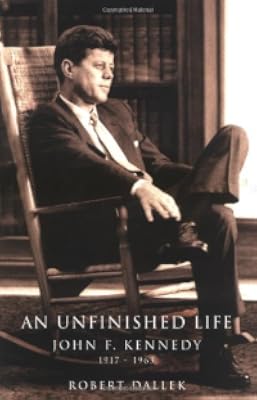
If I have a real complaint about this book, it is that I wanted to hear more details and more stories (like an Unfinished Life, which masterfully told JFK’s story). But even without that, it’s a good read to gain a perspective on Bobby from someone who grew up watching and supporting Bobby.
If I have a real complaint about this book, it is that I wanted to hear more details and more stories (like an Unfinished Life, which masterfully told JFK’s story). But even without that, it’s a good read to gain a perspective on Bobby from someone who grew up watching and supporting Bobby.
Members
- Recently Added By
Author Information

10 Works 1,969 Members
Common Knowledge
- Canonical title
- Bobby Kennedy: A Raging Spirit
- Original title
- Bobby Kennedy: A Raging Spirit
- Original publication date
- 2017
- People/Characters
- Robert F. Kennedy; John F. Kennedy
- Important events
- Civil Rights Movement, USA; Bay of Pigs Invasion, Cuba; Vietnam War
- Epigraph
- Man is Spirit
---WINSTON CHURCHILL - Dedication
- For Michael, Thomas, and Caroline, to learn from this man's faith and share his lived compassion
- First words
- I long ago came to realize that movies are always about the present.
On March 16, 1968, Robert F. Kennedy stood in the high-ceilinged, marble-walled Senate Caucus Room where, eight years earlier, his brother Jack had announced for president. - Quotations
- O'Neill found himself fascinated by the contradictions in Bobby. "He seems to be genuinely horrified," he wrote, " to learn that some helpless fellow has been pushed around by a price fixer, a crooked politician or a co... (show all)nniving labor leader--although his impulse to smite the wrongdoer usually precedes his impulse to bemoan the victim."
Just over a week later, President Kennedy submitted to Congress a strong civil rights bill. "How can we say to the Negro in Jackson," Bobby Kennedy asked in Senate testimony supporting it, "that when war comes you will be a... (show all)n American citizen, but in the meantime you're a citizen of Mississippi and we can't help you?" - Last words
- (Click to show. Warning: May contain spoilers.)"Then there was the other:
" 'Always do what you are afraid to do.' " - Original language
- English
Classifications
- Genres
- Biography & Memoir, History, Nonfiction, General Nonfiction
- DDC/MDS
- 973.922092 — History & geography History of North America United States 1901- Cold War, Vietnam War, Digital Age (1953-2001) Dwight D. Eisenhower, 2nd Term (1953-1961) Sputnik Crisis, Little Rock Crisis, National Aeronautics and Space Act Biography
- LCC
- E840.8 .K4 .M38 — History of the United States United States Later twentieth century, 1961-2000 Biography (General)
- BISAC
Statistics
- Members
- 445
- Popularity
- 68,771
- Reviews
- 12
- Rating
- (3.77)
- Languages
- Chinese, English
- Media
- Paper, Audiobook, Ebook
- ISBNs
- 11
- ASINs
- 3