On This Page
Description
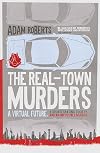
Alma is a private detective in a near-future England, a country desperately trying to tempt people away from the delights of Shine, the immersive successor to the internet. But most people are happy to spend their lives plugged in, and the country is decaying. Alma's partner is ill, and has to be treated without fail every 4 hours, a task that only Alma can do. If she misses the 5 minute window her lover will die. She is one of the few not to access the Shine. So when Alma is called to an show more automated car factory to be shown an impossible death and finds herself caught up in a political coup, she knows that getting too deep may leave her unable to get home. show lessTags
Recommendations


























Member Reviews
R!-town, the city formerly known as Reading, UK. That’s “R!-town” as in Real Town. And, some time in this novel’s version of the 21st century, city government undertook a lot of building and public art projects. But the Real didn’t shine. Or, to be more precise, the Real ain’t Shine.
That’s where most of the people spend their lives: a virtual reality accessed by cranial implants almost everyone seems to have. The environments are customized on demand. The lovers and sex partners are exactly what you want.
Sure, there’s the pesky problem of your body. But you just need a tiny apartment for it. Powered exoskeletons can exercise your body while you live in the Shine. If you can’t work in the Shine, it’s at least vailable show more in your off hours.
But bodies are still there to murder. And, in the case of one Adam Kent, in a most ostentatious way. His body is found in the trunk of a car entirely made by robots on a production floor where humans aren’t even allowed. It’s discovered by the human inspector of the finished product. No clues exist on the surveillance footage. The AI running the factory doesn’t have an answer to this.
One Alma is called in. She’s a private investigator. She insists on showing up in the flesh to the distress of the factory manager.
An encounter with a police detective leads Alma to believe that someone in high officialdom has an interest in the case. But that goes both ways since, shortly after showing up, her “kill fee” is paid, Alma’s sent on her way, but not before the policewoman helpfully lets her know that Kent’s lungs were mysteriously shredded internally.
One of the many allusions in this book is Alma and her live-in lover Marguerite. Marguerite is a brilliant woman. She’s also a corpulent, housebound mess, so I suppose she’s sort of a Nero Wolfe to Alma’s Archie. (Marguerite herself suggests she’s Mycroft to Almas’ “Yourcroft”.)
Marguerite is such a mess because, some years ago, someone infected her with a customized virus, a “lipid phage”. It’s weakened her body, renders her feverish, messes up her brain, and every four hours she’s on the brink of death. Insidiously, she can only be treated by Alma who must customize a drug treatment every session and prime it with her own DNA. Alma suspects she was infected with another customized virus the same time Marguerite was.
The unique narrative effect of this is that every four hours Alma has to be sure she’s back home to treat Marguerite.
And that treatment isn’t cheap, so Alma is glad to take a case from a flaky mother who is convinced that her son’s employer is conducting some illegal experiment on him. Why else would he always be hungry and eating and still losing weight?
And Alma is going to have trouble making her four hour appointments as she gets caught up in an internal bureaucratic struggle that has gone very hot.
Roberts gives us some real horror and tension in this novel as Alma gets shot and injected with experimental nanobots and is assaulted by drones.
But Roberts also gives us lots of puns, black humor, arch dialogue, bickering with AIs and the dumber “intelligent algorithms”, and plenty of literary and cinematic allusions. (A constant joke is characters being annoyed by such allusions when they’re offline and can’t look them up.) The primary artistic inspiration here seems to be Alfred Hitchcock. There’s a climax on the White Cliffs of Dover which have been carved into the likeness of various significant figures of British culture. Enough said.
But there’s also a serious look at what artificial intelligence in politics and governance could mean, especially in the context of the Shine. To underline that philosophical point, the novel’s point of view abruptly shifts in the second half, and we see some of those warring bureaucrats and their perspectives.
Even though this is novel is only about eight years, it’s already taken on the aspect of what I call “double-vision”: technological and cultural extrapolations which have both retained some relevance and also dated at the same time. Specifically, even apart from the whole access to the Shine via implants, the AI of this world noticeably is not widely distributed or used to generate video and audio as it is in our world.
An entertaining and somewhat thought provoking novel I quite enjoyed. Roberts’ solutions to his mysteries are clear – if not very comforting. show less
That’s where most of the people spend their lives: a virtual reality accessed by cranial implants almost everyone seems to have. The environments are customized on demand. The lovers and sex partners are exactly what you want.
Sure, there’s the pesky problem of your body. But you just need a tiny apartment for it. Powered exoskeletons can exercise your body while you live in the Shine. If you can’t work in the Shine, it’s at least vailable show more in your off hours.
But bodies are still there to murder. And, in the case of one Adam Kent, in a most ostentatious way. His body is found in the trunk of a car entirely made by robots on a production floor where humans aren’t even allowed. It’s discovered by the human inspector of the finished product. No clues exist on the surveillance footage. The AI running the factory doesn’t have an answer to this.
One Alma is called in. She’s a private investigator. She insists on showing up in the flesh to the distress of the factory manager.
An encounter with a police detective leads Alma to believe that someone in high officialdom has an interest in the case. But that goes both ways since, shortly after showing up, her “kill fee” is paid, Alma’s sent on her way, but not before the policewoman helpfully lets her know that Kent’s lungs were mysteriously shredded internally.
One of the many allusions in this book is Alma and her live-in lover Marguerite. Marguerite is a brilliant woman. She’s also a corpulent, housebound mess, so I suppose she’s sort of a Nero Wolfe to Alma’s Archie. (Marguerite herself suggests she’s Mycroft to Almas’ “Yourcroft”.)
Marguerite is such a mess because, some years ago, someone infected her with a customized virus, a “lipid phage”. It’s weakened her body, renders her feverish, messes up her brain, and every four hours she’s on the brink of death. Insidiously, she can only be treated by Alma who must customize a drug treatment every session and prime it with her own DNA. Alma suspects she was infected with another customized virus the same time Marguerite was.
The unique narrative effect of this is that every four hours Alma has to be sure she’s back home to treat Marguerite.
And that treatment isn’t cheap, so Alma is glad to take a case from a flaky mother who is convinced that her son’s employer is conducting some illegal experiment on him. Why else would he always be hungry and eating and still losing weight?
And Alma is going to have trouble making her four hour appointments as she gets caught up in an internal bureaucratic struggle that has gone very hot.
Roberts gives us some real horror and tension in this novel as Alma gets shot and injected with experimental nanobots and is assaulted by drones.
But Roberts also gives us lots of puns, black humor, arch dialogue, bickering with AIs and the dumber “intelligent algorithms”, and plenty of literary and cinematic allusions. (A constant joke is characters being annoyed by such allusions when they’re offline and can’t look them up.) The primary artistic inspiration here seems to be Alfred Hitchcock. There’s a climax on the White Cliffs of Dover which have been carved into the likeness of various significant figures of British culture. Enough said.
But there’s also a serious look at what artificial intelligence in politics and governance could mean, especially in the context of the Shine. To underline that philosophical point, the novel’s point of view abruptly shifts in the second half, and we see some of those warring bureaucrats and their perspectives.
Even though this is novel is only about eight years, it’s already taken on the aspect of what I call “double-vision”: technological and cultural extrapolations which have both retained some relevance and also dated at the same time. Specifically, even apart from the whole access to the Shine via implants, the AI of this world noticeably is not widely distributed or used to generate video and audio as it is in our world.
An entertaining and somewhat thought provoking novel I quite enjoyed. Roberts’ solutions to his mysteries are clear – if not very comforting. show less
Well, this didn’t go where I expected it to. Adam Roberts is an excellent person, and probably the best genre critic currently active in the UK, and while he writes enormously clever science fiction it is not always to my taste. But The Real-Town Murders has a heroine called Alma and is all about Hitchcock, and I’ve been a huge Hitchcock fan for many, many years, so this was a book I wanted to read. And yes, it starts out like a locked-room mystery, not that Hitchcock made many locked-room mysteries – maybe in Alfred Hitchcock Presents?- but The Real-Town Murders then goes off down a completely different path, which resulted in a very different novel to what I had been expecting to read. Alma is a private detective in a UK where show more most of the population live in a virtual world and rarely experience “the Real”. A bit like now, I expect. Except for the virtual world. She is called in to solve how a dead body appeared in the boot of a car at an automated factory even though there is complete footage of the car being made and at no time could a body have been placed in it. Alma is led to believe this may have been accomplished by teleportation. And if teleportation were real, then people might start returning to the Real because travel will have become as trivial there as it is in the virtual world. Except, it’s not teleportation (the solution is not hard to figure out, to be honest). And Alma finds herself being harassed by various arms of the government’s security services, which jeopardises the life of her partner, who had been infected with a hacked disease linked to Alma’s DNA and only Alma can prepare a a treatment when the disease threatens to kill her partner every four hours or so. So, not really a murder-mystery. And the plot makes so many swerves, despite being essentially a fugitive story, that at times it’s in danger of burying its ideas. Nonetheless, I liked it. There is apparently a sequel. show less
It is sometime in the future and much of the populace spends their days in what today’s social media has evolved into: “The Shine,” a complete, full body immersive experience which is apparently far more interesting than “Real Life.” Their bodies are being exercised and maintained for them by the special suits they wear. Still, there are some who continue to operate in the Real-World and Alma, a young investigator, is one of these.
Alma been brought in to investigate the mysterious discovery of a (human!) body in the trunk of a car in a fully automated factory. The investigation quickly becomes something much more and Alma finds herself in the middle of a political coup. She’s hampered by the fact that her partner is gravely show more ill, and must be treated every four hours or she will die. Alma’s DNA has been maliciously configured into her partner’s treatment and therefore only she can apply the treatment.
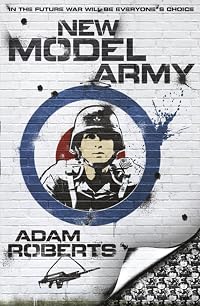
While the cover suggests this crime novel is a mystery, it quickly moves away from the original mystery to become more a tongue-in-cheek thriller. My favorite part is the fight scene in the nose of Shakespeare, one of the many huge faces carved into the white cliffs of Dover (referred to as the “White Cliff Faces”) Adam Roberts, who by day is a professor of 19th Century English Literature, is a versatile writer who doesn’t take himself too seriously. He seems equally comfortable writing criticism, serious SF, even parodies, and I believe he once challenged himself to write an SF book in every sub-genre. Between my husband and I we have read most of his SF. This is a light, fun, fast-paced read, an amusing story with some interesting ideas thrown in (and we do eventually find out who killed the guy in the trunk of the car). show less
Alma been brought in to investigate the mysterious discovery of a (human!) body in the trunk of a car in a fully automated factory. The investigation quickly becomes something much more and Alma finds herself in the middle of a political coup. She’s hampered by the fact that her partner is gravely show more ill, and must be treated every four hours or she will die. Alma’s DNA has been maliciously configured into her partner’s treatment and therefore only she can apply the treatment.
While the cover suggests this crime novel is a mystery, it quickly moves away from the original mystery to become more a tongue-in-cheek thriller. My favorite part is the fight scene in the nose of Shakespeare, one of the many huge faces carved into the white cliffs of Dover (referred to as the “White Cliff Faces”) Adam Roberts, who by day is a professor of 19th Century English Literature, is a versatile writer who doesn’t take himself too seriously. He seems equally comfortable writing criticism, serious SF, even parodies, and I believe he once challenged himself to write an SF book in every sub-genre. Between my husband and I we have read most of his SF. This is a light, fun, fast-paced read, an amusing story with some interesting ideas thrown in (and we do eventually find out who killed the guy in the trunk of the car). show less
I plucked this book off the shelf at our local bookstore simply based on the cover. Probably my first mistake. Still the premise was interesting enough, and it looked like a quick and fun read. And for what it's worth, that it was. I won't detail the plot here, but I will say that Roberts is a pretty good writer of sentences. He strings them together nicely. And that's very important to me. I want to read a book by someone who knows how to write.
Sadly, he's not quite as good at putting together a plot or coming up with well rounded characters. Our main character here, Alma, is a private detective, and a bright and plucky hero she is, too. The broad strokes to this story are interesting enough, but what Roberts does with Alma is almost show more shameful. He constantly leads her into dire situations where her life is imperiled or (in one case) nearly and abruptly ended, only to have her saved by a deus ex machina well outside of her control. Which is odd because in other scenes she is completely capable of handling herself on her own. Plucky and bright, remember? That's the character he created, and yet he keeps leading her down pathways where she's out gunned (both literally and metaphorically, depending on which scene you're reading). Frustrating.
A better plotted novel written by a better plotting novelist would have allowed Alma to solve her way out of her own crises. He built her with enough gumption to do so, but then rarely trusted her in this regard. Shame.
Also, not to give anything away, but the ending of the novel was a bit of a bore. The so-called locked room mystery wasn't much of one after all. And the angle he was getting at, the villian behind the scenes, government conspiracy, isn't very original, even if his theory behind why these branches of government were at "war" (the real vs. the matrix) was kind of clever. show less
Sadly, he's not quite as good at putting together a plot or coming up with well rounded characters. Our main character here, Alma, is a private detective, and a bright and plucky hero she is, too. The broad strokes to this story are interesting enough, but what Roberts does with Alma is almost show more shameful. He constantly leads her into dire situations where her life is imperiled or (in one case) nearly and abruptly ended, only to have her saved by a deus ex machina well outside of her control. Which is odd because in other scenes she is completely capable of handling herself on her own. Plucky and bright, remember? That's the character he created, and yet he keeps leading her down pathways where she's out gunned (both literally and metaphorically, depending on which scene you're reading). Frustrating.
A better plotted novel written by a better plotting novelist would have allowed Alma to solve her way out of her own crises. He built her with enough gumption to do so, but then rarely trusted her in this regard. Shame.
Also, not to give anything away, but the ending of the novel was a bit of a bore. The so-called locked room mystery wasn't much of one after all. And the angle he was getting at, the villian behind the scenes, government conspiracy, isn't very original, even if his theory behind why these branches of government were at "war" (the real vs. the matrix) was kind of clever. show less
One character's name slips between Ernest and Lester. Sloppy!
Ratings
Members
- Recently Added By
Lists

2018 Hugo Eligible Novels
170 works; 16 members

2017 Locus recommended reading list SciFi
28 works; 2 members

Books Read in 2019
4,052 works; 110 members
Author Information

123+ Works 6,451 Members
Awards and Honors
Awards
Series

Common Knowledge
- Original publication date
- 2017-08-24
- People/Characters
- Alma
- Epigraph
- Think of the key, each in his prison
Thinking of the key
T S Eliot, North by North Wasteland - First words
- Where we are, and where we aren't.
Classifications
Statistics
- Members
- 136
- Popularity
- 241,065
- Reviews
- 6
- Rating
- (3.51)
- Languages
- English
- Media
- Paper, Audiobook, Ebook
- ISBNs
- 4
- ASINs
- 3