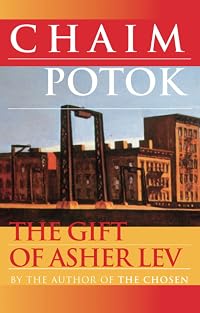
On This Page
Description
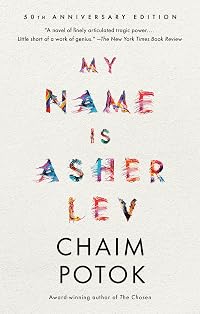
“Extraordinary . . . No one but Chaim Potok could have written this strangely sweet, compelling, and deeply felt novel.”—The Cleveland Plain DealerIn his powerful My Name is Asher Lev, Chaim Potok gave the world an unforgettable character and a timeless story that The New York Times Book Review hailed as “little short of a work of genius.” The Chicago Sun-Times declared it “a story that had to be told.” Now, Chaim Potok’s beloved character returns to learn, to teach, to show more dream, in The Gift of Asher Lev.
Twenty years have passed. Asher Lev is a world-renowned artist living with his young family in France. Still, he is unsure of his artistic direction. Success has not brought ease to his heart. Then Asher’s beloved uncle dies suddenly, and Asher and his family rush back to Brooklyn—and into a world that Asher thought he had left behind forever.
It is a journey of confrontation and discovery as Asher purges his past in search of new inspiration for his art and begins to understand the true meaning of sacrifice and the painful joy in sharing the most precious gift of all.
Praise for The Gift of Asher Lev
“A masterwork.”—Newsday
“Rivals anything Chaim Potok has ever produced. It is a book written with passion about passion. You’re not likely to read anything better this year.”—The Detroit News
“Fascinating.”—The Washington Post Book World
“Very moving.”—The Philadelphia Inquirer. show less
Tags
Recommendations



















Member Reviews
Summary: Asher Lev, exiled from a Brooklyn Hasidic community over a scandalous artwork portraying crucifixion, returns after twenty years with his family for the funeral of his uncle, only to find that he is being called upon to make a far greater sacrifice than the pain of exile.
I first became acquainted with the work of Chaim Potok in the 1980's. His novels were set in the Ladover Hasidic Jwish community of New York. One of these was My Name is Asher Lev and describes the awakening of a Jewish boy in this community to his artistic gifts, and the conflicts with his beliefs this raised, culminating in the scandal of painting a crucifixion scene set in Brooklyn as a portrayal of pain and suffering in the world. For this he was exiled to show more France, where he pursues an increasingly successful art career while remaining an observant Ladover, heeding the teaching of its venerable Rebbe.
Twenty years have passed. He is married to Devorah, who after several miscarriages bore Rochelah and Avrumel. They now live in Saint Paul, near Nice where he has his studio, and a few close friends. On the heels of a show in Paris, scathingly panned by critics as "repeating oneself," he receives news of the sudden death of his Uncle Yitzchok died--the uncle who had encouraged his artistic career from buying his first drawing at age six onward. He and his family return to Brooklyn for the funeral, and a reunion with parents and a community he hadn't seen in years.
At the funeral, attended by thousands, because Yitzchok had been involved extensively in efforts to fund the Ladover movement, the Rebbe makes a cryptic remark, a kind of riddle, than runs through the book. "I say this as a message from the departed and from your Rebbe. I say to you: Three will save us. The third is our future. Do you hear me, my people? Three will save us. The third is our future." On the minds of many is who will succeed the Rebbe if Messiah does not come first. He has no children. Asher's father Aryeh is the leading candidate. But the third?
A week's stay extends to five months at the plea of parents who want to know their grandchildren, and a Rebbe, who takes an unusual interest in Asher, and his son. Meanwhile, Asher's life becomes more complicated when he learns not only that his uncle had assembled a valuable and unusual art collection, a scandal to his sons, and that he had designated Asher as trustee of the collection, with any proceeds from it to be returned to the Ladover community. His cousins, especially Younkel fight this and there is a painful estrangement.
While Asher contends with these matters and seeks inspiration for his art, his wife and children discover Brooklyn as a place where they thrive. Devorah finds in her mother-in-law the mother she lost in the Holocaust. Rochelah, a perceptive but asthmatic young girl flourishes at summer camp, as does Avrumel at day camp. While Asher longs for a return to his work in Saint Paul, his family becomes more and more rooted in Brooklyn, and close to Asher's parents. Aryeh and Avrumel spend time together around the Rebbe's office.
While back in France to look after affairs, including help to the widow of an assistant who died in a bombing, Asher begins to understand the riddle and that his son is the third and that he is being asked (even in a vision of the Rebbe and Uncle Yitzchok) to offer his son Avrumel to succeed his father when the day came as Rebbe, and to be raised in the Brooklyn Yeshiva. Brooklyn represents community to his family. To him, it is a place, once exiled from, that is impossible to return to if he is to answer his artistic call. To many in that community he is suspect, even a devil. He is wracked with this dilemma, losing sleep but sketching furiously.
Chaim Potok is one of a handful of writers I've found who writes with what I would call a "quiet" voice. Alan Paton is another. There is a kind of stillness as if the writer is listening for how the story will unfold to relate it to us, a stillness with depth, where momentous things may occur in the quiet unfolding of the narrative.
In this voice he explores the tensions of love and honor and estrangement in families, and in a religious community. What does it mean to be faithful to one's gift as an artist when it causes so much pain in one's community? What does it mean to observe a community's teaching and care for it when it is uncomfortable with you. In a world of moral clarity, of black and white, how does one deal with life's messiness and ambiguities, from the horror of the Holocaust to the unsolvable conflict between the future foreseen for his son, his love for his wife and daughter, and one's own artistic calling.
This work, published in 1990, was one I missed as I moved on to other writers. I'm thankful to have discovered it, and to be reminded of the richness of Potok's portrayal of this religious community and the challenges faced by the deeply orthodox of any faith in a secular society. show less
I first became acquainted with the work of Chaim Potok in the 1980's. His novels were set in the Ladover Hasidic Jwish community of New York. One of these was My Name is Asher Lev and describes the awakening of a Jewish boy in this community to his artistic gifts, and the conflicts with his beliefs this raised, culminating in the scandal of painting a crucifixion scene set in Brooklyn as a portrayal of pain and suffering in the world. For this he was exiled to show more France, where he pursues an increasingly successful art career while remaining an observant Ladover, heeding the teaching of its venerable Rebbe.
Twenty years have passed. He is married to Devorah, who after several miscarriages bore Rochelah and Avrumel. They now live in Saint Paul, near Nice where he has his studio, and a few close friends. On the heels of a show in Paris, scathingly panned by critics as "repeating oneself," he receives news of the sudden death of his Uncle Yitzchok died--the uncle who had encouraged his artistic career from buying his first drawing at age six onward. He and his family return to Brooklyn for the funeral, and a reunion with parents and a community he hadn't seen in years.
At the funeral, attended by thousands, because Yitzchok had been involved extensively in efforts to fund the Ladover movement, the Rebbe makes a cryptic remark, a kind of riddle, than runs through the book. "I say this as a message from the departed and from your Rebbe. I say to you: Three will save us. The third is our future. Do you hear me, my people? Three will save us. The third is our future." On the minds of many is who will succeed the Rebbe if Messiah does not come first. He has no children. Asher's father Aryeh is the leading candidate. But the third?
A week's stay extends to five months at the plea of parents who want to know their grandchildren, and a Rebbe, who takes an unusual interest in Asher, and his son. Meanwhile, Asher's life becomes more complicated when he learns not only that his uncle had assembled a valuable and unusual art collection, a scandal to his sons, and that he had designated Asher as trustee of the collection, with any proceeds from it to be returned to the Ladover community. His cousins, especially Younkel fight this and there is a painful estrangement.
While Asher contends with these matters and seeks inspiration for his art, his wife and children discover Brooklyn as a place where they thrive. Devorah finds in her mother-in-law the mother she lost in the Holocaust. Rochelah, a perceptive but asthmatic young girl flourishes at summer camp, as does Avrumel at day camp. While Asher longs for a return to his work in Saint Paul, his family becomes more and more rooted in Brooklyn, and close to Asher's parents. Aryeh and Avrumel spend time together around the Rebbe's office.
While back in France to look after affairs, including help to the widow of an assistant who died in a bombing, Asher begins to understand the riddle and that his son is the third and that he is being asked (even in a vision of the Rebbe and Uncle Yitzchok) to offer his son Avrumel to succeed his father when the day came as Rebbe, and to be raised in the Brooklyn Yeshiva. Brooklyn represents community to his family. To him, it is a place, once exiled from, that is impossible to return to if he is to answer his artistic call. To many in that community he is suspect, even a devil. He is wracked with this dilemma, losing sleep but sketching furiously.
Chaim Potok is one of a handful of writers I've found who writes with what I would call a "quiet" voice. Alan Paton is another. There is a kind of stillness as if the writer is listening for how the story will unfold to relate it to us, a stillness with depth, where momentous things may occur in the quiet unfolding of the narrative.
In this voice he explores the tensions of love and honor and estrangement in families, and in a religious community. What does it mean to be faithful to one's gift as an artist when it causes so much pain in one's community? What does it mean to observe a community's teaching and care for it when it is uncomfortable with you. In a world of moral clarity, of black and white, how does one deal with life's messiness and ambiguities, from the horror of the Holocaust to the unsolvable conflict between the future foreseen for his son, his love for his wife and daughter, and one's own artistic calling.
This work, published in 1990, was one I missed as I moved on to other writers. I'm thankful to have discovered it, and to be reminded of the richness of Potok's portrayal of this religious community and the challenges faced by the deeply orthodox of any faith in a secular society. show less
I love the world and tensions that Chaim Potok draws me into. This story continues with the world of the previous book My Name is Asher Lev, twenty years later. Asher Lev is married and has a daughter and a son, is living in exile from the Brooklyn Ladover community in the south of France. He's experiencing artistic tension after some harsh criticism at his last show. When his beloved uncle dies, he and his wife and children return to Brooklyn for the mourning.
That is the stage set for The Gift of... On it plays out similar themes to the prior book, plus artistic integrity, the difficult choices of a husband and father and son and disgraced member of community. Potok creates a world so real that I wanted to visit the Ladover in show more Brooklyn, and especially to see Lev's paintings and drawings and am disappointed that I cannot.
The two novels (and I am now convinced that they both must be read; do not stop with the first) draw the reader deeply into questions of community and tradition, creativity and identity.
A small note. After completing the first novel, I really wanted to dive more deeply into art appreciation (the first novel in particular teases the reader through an art history with just enough touchpoints so as to be tantalizing). After completing the second, I purchased family membership in my city's art museum so that we can go visit and learn. show less
That is the stage set for The Gift of... On it plays out similar themes to the prior book, plus artistic integrity, the difficult choices of a husband and father and son and disgraced member of community. Potok creates a world so real that I wanted to visit the Ladover in show more Brooklyn, and especially to see Lev's paintings and drawings and am disappointed that I cannot.
The two novels (and I am now convinced that they both must be read; do not stop with the first) draw the reader deeply into questions of community and tradition, creativity and identity.
A small note. After completing the first novel, I really wanted to dive more deeply into art appreciation (the first novel in particular teases the reader through an art history with just enough touchpoints so as to be tantalizing). After completing the second, I purchased family membership in my city's art museum so that we can go visit and learn. show less
I wrote the review below on April 19, just after finishing the book.
I just finished this and a lot of the emotional impact happens near the end, and it's not a surprise, it's not a crazy plot twist or anything of that sort, it's just really well presented and moving on readers like me, and it makes looking that the book overall kind of immediately difficult.
Potok published this in 1990, about 18 years after My Name is Asher Lev and the story takes places 20 years after the former book, mainly in 1988. And it's possible he didn't he write anything comparable to his early books in those intervening years. So, to me, it's a bit noteworthy that he pulled this off and kept the same sense in the book that he had created in the My Name is show more Asher Lev.
I don't think this book is as good as My Name is Asher Lev, mind you, but I did get lost in it. Potok spends a lot of the book creating an experience of the plot. There are endless descriptions, but it works in setting the tone and building up the reader-experience of the book. It's impressive stuff. Within this he brings in his sense of cyclic and daily ritual which he takes from Jewish and Hasidic Jewish tradition, by repetition of experience and of cycles. For example morning descriptions don't tell all the details of a morning, but each is careful to include Asher Lev telling us he did his morning prayers with the same tone that singles it out as something for the reader to note and think about.
And I think Potok intentionally throws the reader, as he brings up the hyper-conservative political aspects of Hasidic Judaism, which aren't outright disturbing here, but verge that way. In 1988 and 1990 this wasn't yet the gigantic problem in Israel that is today, but it existed and it was uncomfortable and perhaps Potok had some foresight where it might lead. In any case it lets us feel Asher Lev's ambivalence and discomfort with the black & white world of his own Hasidism. This is just part of the book, and I'm getting carried away on it. Again, for the second time this year, I have enjoyed Potok.
2014 (link actually goes to kind of post-review comments)
https://www.librarything.com/topic/172769#4697523 show less
I just finished this and a lot of the emotional impact happens near the end, and it's not a surprise, it's not a crazy plot twist or anything of that sort, it's just really well presented and moving on readers like me, and it makes looking that the book overall kind of immediately difficult.
Potok published this in 1990, about 18 years after My Name is Asher Lev and the story takes places 20 years after the former book, mainly in 1988. And it's possible he didn't he write anything comparable to his early books in those intervening years. So, to me, it's a bit noteworthy that he pulled this off and kept the same sense in the book that he had created in the My Name is show more Asher Lev.
I don't think this book is as good as My Name is Asher Lev, mind you, but I did get lost in it. Potok spends a lot of the book creating an experience of the plot. There are endless descriptions, but it works in setting the tone and building up the reader-experience of the book. It's impressive stuff. Within this he brings in his sense of cyclic and daily ritual which he takes from Jewish and Hasidic Jewish tradition, by repetition of experience and of cycles. For example morning descriptions don't tell all the details of a morning, but each is careful to include Asher Lev telling us he did his morning prayers with the same tone that singles it out as something for the reader to note and think about.
And I think Potok intentionally throws the reader, as he brings up the hyper-conservative political aspects of Hasidic Judaism, which aren't outright disturbing here, but verge that way. In 1988 and 1990 this wasn't yet the gigantic problem in Israel that is today, but it existed and it was uncomfortable and perhaps Potok had some foresight where it might lead. In any case it lets us feel Asher Lev's ambivalence and discomfort with the black & white world of his own Hasidism. This is just part of the book, and I'm getting carried away on it. Again, for the second time this year, I have enjoyed Potok.
2014 (link actually goes to kind of post-review comments)
https://www.librarything.com/topic/172769#4697523 show less
Asher Lev, now a husband and father living in France, has become a world-renowned artist, even as his art continues to grate against his Hasidic Jewish observance. He's stayed away from the rest of his family and Jewish community back in Brooklyn, but the passing of his uncle draws Asher into a difficult and perplexing journey he isn't prepared for in The Gift of Asher Lev by Chaim Potok.
Now, in all honesty, if I hadn't already gotten to know and relate to Asher in the preceding novel, My Name is Asher Lev, one of my all-time favorite books, it's doubtful that I would have stuck with this sequel from start to finish. The walk through this novel was rather dry and tedious to me at times, but I remained curious to see where this show more mysterious, mystical leg of Asher's journey would lead.
Besides, I already knew how this author's measured and understated but intentional plot development can eventually bring certain details and questions into startling light, which does happen in places in this story.
I couldn't put into a book review all the reasons why I relate to Asher, an artist, even as I, a writer, don't share his rather somber outlook on life or what life apparently must be for a serious creative. And for personal reasons I won't get into, this story wound up angering a part of me—which nothing in the novel could resolve.
Nevertheless, the story served to further impress upon me my takeaways from the previous book, concerning the tension of the unfathomable mystery that can come along with a profound gift. In an essential echo of one of my takeaways from The Chosen, another all-time favorite of mine by this author: greatness is not, and need not be, easily understood. show less
Now, in all honesty, if I hadn't already gotten to know and relate to Asher in the preceding novel, My Name is Asher Lev, one of my all-time favorite books, it's doubtful that I would have stuck with this sequel from start to finish. The walk through this novel was rather dry and tedious to me at times, but I remained curious to see where this show more mysterious, mystical leg of Asher's journey would lead.
Besides, I already knew how this author's measured and understated but intentional plot development can eventually bring certain details and questions into startling light, which does happen in places in this story.
I couldn't put into a book review all the reasons why I relate to Asher, an artist, even as I, a writer, don't share his rather somber outlook on life or what life apparently must be for a serious creative. And for personal reasons I won't get into, this story wound up angering a part of me—which nothing in the novel could resolve.
Nevertheless, the story served to further impress upon me my takeaways from the previous book, concerning the tension of the unfathomable mystery that can come along with a profound gift. In an essential echo of one of my takeaways from The Chosen, another all-time favorite of mine by this author: greatness is not, and need not be, easily understood. show less
The Gift of Asher Lev
Chaim Potok
It is 20 years after the events in the first book, My Name is Asher Lev. Lev has lived those years in France--currently in a small town in the south of France. He is married, with two children, his daughter Rochelel and his young son Avrumel. Lev has just had a disastrous show in Paris; while all his works sold, those critics he respects have been devastating, calling his work repetitive and worse. Agreeing, Lev is now suffering through a dry period--he can not paint. In the midst of all this, Lev receives a phone call from Brooklyn telling him that his Uncle Yitzchok has died.; he returns to Brooklyn with his wife and children for the funeral, telling himself that it is only for the week of mourning, but show more full of foreboding and with the terrible feeling that he has seen the last of his home for some time.
The sequel does not have the power of the first book. My Name is Asher Lev covered Lev’s entire life from childhood until young adulthood at 25, a tumultuous time; The Gift of Asher Lev covers a 6 month period of time at age 45. Events moved fast in the first book; there is not that much going on externally in the second, but much, much more happening in Lev’s interior life. The conflict with his father is still there, but muted by the joy the grandparents have in their grandchildren.
But power there is, because Lev is faced yet again with an agonizing choice in which it appears that no matter which way he decides, the personal cost is terrible. His internal turmoil is illuminated by imaginary conversations and meetings with “the Spaniard”--Picasso, now dead some years--and Jacob Kahn, his mentor, also dead some years. He is haunted by his artistic past, never allowed to forget it either in his birth community or with others.
Potok manages to keep the interest high in this book despite a deceptively “slow” unfolding of the plot, through various writing style devices; he constantly shifts from past tense to present tense, even when describing the same scene. It jolts the reader awake and alert; it is very effective. also, if the two books are read close together in time, it is evident from the beginning that the 2nd book is sharper, harder-edged. There are many lyrical passages but the sequel does not have the dream-like quality that pervaded much of the first book. Lev is middle-aged, with a family, and the world is different.
While in his previous book, Potok wrote sympathetically of the Hasidic Jewish community, this book shows some of the darker aspects of what is a fundamentalist religion. The Rebbe, considered a saint, is not above reaching for secular power, and Lev’s father is a willing aide, traveling to Washington and to Israel in an attempt to influence elections. There are a few sentences in the book that make it very clear that the Rebbe and therefore the entire community that follows him, slavishly, is not a “liberal”; Asher’s father says, “We are not going to vote for the homosexuals. We are not going to vote for the abortionists” as he explains why practically the entire community, under direction from the Rebbe, will support the Republican party. Lev’s wife Devorah dismisses Dukakis as someone who, in France, would be seen as weak, as lacking in his convictions. Power, strength are admired--and sought. Other results of the conservative way of interpreting Torah are also brought out in Asher’s conflict with his cousin Yonkel, one of Yitzchok’s son, over the father’s art collection, which has been left to Lev in his care. It is clear that males are more important than females, no matter how much daughters are loved.
While it does not have the glamor of the first book, The Gift of Asher Lev is yet another thoughtful--and powerful--book from Potok. Not to be missed, after reading My Name is Asher Lev. show less
Chaim Potok
It is 20 years after the events in the first book, My Name is Asher Lev. Lev has lived those years in France--currently in a small town in the south of France. He is married, with two children, his daughter Rochelel and his young son Avrumel. Lev has just had a disastrous show in Paris; while all his works sold, those critics he respects have been devastating, calling his work repetitive and worse. Agreeing, Lev is now suffering through a dry period--he can not paint. In the midst of all this, Lev receives a phone call from Brooklyn telling him that his Uncle Yitzchok has died.; he returns to Brooklyn with his wife and children for the funeral, telling himself that it is only for the week of mourning, but show more full of foreboding and with the terrible feeling that he has seen the last of his home for some time.
The sequel does not have the power of the first book. My Name is Asher Lev covered Lev’s entire life from childhood until young adulthood at 25, a tumultuous time; The Gift of Asher Lev covers a 6 month period of time at age 45. Events moved fast in the first book; there is not that much going on externally in the second, but much, much more happening in Lev’s interior life. The conflict with his father is still there, but muted by the joy the grandparents have in their grandchildren.
But power there is, because Lev is faced yet again with an agonizing choice in which it appears that no matter which way he decides, the personal cost is terrible. His internal turmoil is illuminated by imaginary conversations and meetings with “the Spaniard”--Picasso, now dead some years--and Jacob Kahn, his mentor, also dead some years. He is haunted by his artistic past, never allowed to forget it either in his birth community or with others.
Potok manages to keep the interest high in this book despite a deceptively “slow” unfolding of the plot, through various writing style devices; he constantly shifts from past tense to present tense, even when describing the same scene. It jolts the reader awake and alert; it is very effective. also, if the two books are read close together in time, it is evident from the beginning that the 2nd book is sharper, harder-edged. There are many lyrical passages but the sequel does not have the dream-like quality that pervaded much of the first book. Lev is middle-aged, with a family, and the world is different.
While in his previous book, Potok wrote sympathetically of the Hasidic Jewish community, this book shows some of the darker aspects of what is a fundamentalist religion. The Rebbe, considered a saint, is not above reaching for secular power, and Lev’s father is a willing aide, traveling to Washington and to Israel in an attempt to influence elections. There are a few sentences in the book that make it very clear that the Rebbe and therefore the entire community that follows him, slavishly, is not a “liberal”; Asher’s father says, “We are not going to vote for the homosexuals. We are not going to vote for the abortionists” as he explains why practically the entire community, under direction from the Rebbe, will support the Republican party. Lev’s wife Devorah dismisses Dukakis as someone who, in France, would be seen as weak, as lacking in his convictions. Power, strength are admired--and sought. Other results of the conservative way of interpreting Torah are also brought out in Asher’s conflict with his cousin Yonkel, one of Yitzchok’s son, over the father’s art collection, which has been left to Lev in his care. It is clear that males are more important than females, no matter how much daughters are loved.
While it does not have the glamor of the first book, The Gift of Asher Lev is yet another thoughtful--and powerful--book from Potok. Not to be missed, after reading My Name is Asher Lev. show less
Have you read The Gift of Asher Lev by Chaim Potok ?
Well I did and it was well worth the effort to get beyond the beginning and into this story of a man’s struggle with his own needs versus those of family and the community.
There was a lot to enjoy in this book starting with an intimate view into the Chasidic community and the depths of the main character, Asher Lev. Bonuses were the settings and visual memories of New York, Massachusetts, Paris and St. Paul de Vence. Potok weaves subtle metaphors into his writing, specifically the gloom and darkness of rain to convey the mood of various characters. There is rich imagery of the Abraham and Isaac story, very pertinent this time of year, plus Jacob’s dream with the angels going up show more and down related to Asher Lev’s struggles for light within his own life. Part of the father son story is a look at the absent father, the sacrifice of son for the good of the community . Yes this is a recommendation for a gem of an older book in the Fiction section.
Cyrille Cobe- September, 2010 show less
Well I did and it was well worth the effort to get beyond the beginning and into this story of a man’s struggle with his own needs versus those of family and the community.
There was a lot to enjoy in this book starting with an intimate view into the Chasidic community and the depths of the main character, Asher Lev. Bonuses were the settings and visual memories of New York, Massachusetts, Paris and St. Paul de Vence. Potok weaves subtle metaphors into his writing, specifically the gloom and darkness of rain to convey the mood of various characters. There is rich imagery of the Abraham and Isaac story, very pertinent this time of year, plus Jacob’s dream with the angels going up show more and down related to Asher Lev’s struggles for light within his own life. Part of the father son story is a look at the absent father, the sacrifice of son for the good of the community . Yes this is a recommendation for a gem of an older book in the Fiction section.
Cyrille Cobe- September, 2010 show less
(8.5) Despite it being three years since I read [My Name is Asher Lev], I soon recognised the characters in the story and his childhood years, with they aid of references throughout the story, came back to me. Although Asher is now a world acclaimed artist, his return to Brooklyn after a twenty year absence, plummets him straight back into the emotional turbulence of the past. He feels unable to paint as once again he is condemned and criticised by the local Jewish community. His parents, however, put pressure on the family to remain. What decision is he to make for his own happiness? He longs to return to their home in the South of France but meanwhile his wife and children are forming strong bonds with his parents and he is under show more pressure from the Rebbe to allow his son the attend the local yeshiva, as they see him as a future leader.
This is an inside view into the Hasidim Jewish community and also the international art world. show less
This is an inside view into the Hasidim Jewish community and also the international art world. show less
Members
- Recently Added By
Lists

Jewish Books
367 works; 24 members

1990s
309 works; 17 members

Amanda's Guaranteed Books
110 works; 5 members

Read For Your Life
157 works; 1 member
Author Information

36+ Works 24,624 Members
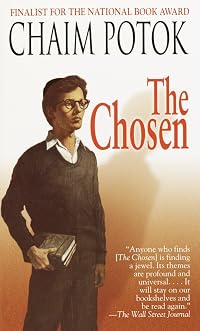
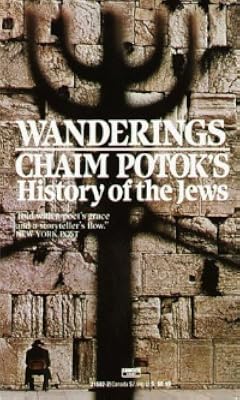
Chaim Potok was born in New York City in 1929. He graduated summa cum laude (with highest honors) from Yeshiva University in 1950, and received an advanced degree from Jewish Theological Seminary in 1954, when he also became an ordained Conservative rabbi. After two years of military service as a chaplain in Korea, Potok married Adena Sarah show more Mosevitsky in 1958. The couple had three children. Eventually Potok returned to school and received his Ph.D. from the University of Pennsylvania in 1965. Potok has held a variety of positions within the Jewish community, including directing a camp in Los Angeles, teaching at the University of Judaism in Los Angeles at a Jewish Theological Seminary in New York, and working as an editor on various religious publications, Potok's first novel, The Chosen, was published in 1967, and he quickly won acclaim for this best-selling book about tensions within the Orthodox and Hasidic Jewish communities. This and later books have been both critically and popularly successful. Many of them explore the meaning of Judaism in the modern era, focusing on the conflict between traditional teachings and the pressures of modern life. The Chosen was nominated for a National Book Award in 1967 and made into a successful film in 1982. Its sequel, The Promise (1969) was the winner of an Athenaeum Award. Potok is also the author of a nonfiction volume, Wanderings: Chaim Potok's History of the Jews (1978), as well as several short stories and articles that have been published in both religious and secular magazines. (Bowker Author Biography) show less
Some Editions
Awards and Honors
Awards
Series

Common Knowledge
- Canonical title
- The Gift of Asher Lev
- Original publication date
- 1990
- People/Characters
- Asher Lev; Uncle Yitzok
- Important places
- Brooklyn, New York, New York, USA
- Epigraph
- Ongetwijfeld is kunst altijd het resultaat van in gevaar verkeerd hebben, van een ervaring helemaal tot het uiterste doorleefd hebben, tot waar geen mens verder kan gaan.
RAINER MARIA RILKE
Surely all art is the result of having been in danger, of having gone through an experience all the way to the end, to where no one can go any further.
RAINER MARIA RILKE - First words
- Later woonde ik in hetzelfde appartement in Parijs waar ik De Kruisiging van Brooklyn had geschilderd.
Afterward I lived in Paris, in the same apartment where I had painted the Brooklyn Crucifixtion. - Last words
- (Click to show. Warning: May contain spoilers.)Avroemel kijkt de laatste tijd niet meer naar Sjimsjon om en wil per se alleen naar school lopen.
(Click to show. Warning: May contain spoilers.)Avrumel has lately taken to ignoring Shimshon and insists on walking to school by himself. - Original language
- English
Classifications
Statistics
- Members
- 1,496
- Popularity
- 15,488
- Reviews
- 26
- Rating
- (4.13)
- Languages
- 8 — Czech, Dutch, English, French, Hungarian, Italian, Norwegian (Bokmål), Spanish
- Media
- Paper, Ebook
- ISBNs
- 26
- ASINs
- 15