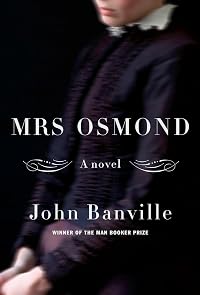
Mrs Osmond
by John Banville
On This Page
Description
"From the Man Booker Prize-winning author of The Sea and The Blue Guitar--a dazzling new novel that extends the story of Isabel Archer, the heroine of Henry James's The Portrait of a Lady, into unexpected (and completely stand-alone) territory. Isabel Archer is a young American woman, swept off to Europe in the late nineteenth century by an aunt who hopes to round out the impetuous but naive girl's experience of the world. When Isabel comes into a large, unexpected inheritance, she is show more finagled into a marriage with the charming, penniless, and--as Isabel finds out too late--cruel and deceitful Gilbert Osmond, whose connection to a certain Madame Merle is suspiciously intimate. On a trip to England to visit her cousin Ralph Touchett on his deathbed, Isabel is offered a chance to free herself from the marriage, but nonetheless chooses to return to Italy. Banville follows James's story line to this point, but Mrs. Osmond is thoroughly Banville's own: the narrative inventiveness; the lyrical precision and surprise of his language; the layers of emotional and psychological intensity; the subtle, dark humor. And when Isabel arrives in Italy--along with someone else!--the novel takes off in directions that James himself would be thrilled to follow"-- show lessTags
Recommendations






















Member Reviews
Spoilers here, so be warned.
Good grief.
What a maudlin mess this turned out to be -- so much so, that in my universe of stars I can't pick one rating that would satisfy me, so I give none.
What was this?
Such a ghostly extension (sequel?) to [b:The Portrait of a Lady|264|The Portrait of a Lady|Henry James|https://i.gr-assets.com/images/S/compressed.photo.goodreads.com/books/1502148606l/264._SY75_.jpg|1434368] that it positively makes the skin crawl. Here, Isabel Archer becomes a revenant in her own life: she is so ghostly yet so exact; such a phantom, yet such a macabre flesh-and-blood creature that there is more life in the Vampire Lestat -- more life, in fact, and less monstrosity, for at least Rice knew who and what Lestat was.
To be show more terribly, terribly cheeky, this is when fan fiction goes "terribly" wrong.
Isabel Archer, lately sprung from Henry James's carriage, meanders through this novel in an aimless helter-skelter pursuit of her own version of revenge -- though of course, it can never be described as such, for Isabel is a Lady and revenge, as a form, lacks delicacy and charm, which a lady must-ever display. (At one point, I had an image of Isabel as a tiny silver ball in a pinball machine, bouncing about hither and yon with no purpose or control over her own actions.)
In much the same way that Isabel's invertebrate spirit led her into a disastrous marriage to Osmond in the first place, her subsequent lack of perspicacity only ensures reward where avengement was intended.
How can one possibly hope to revenge oneself against a sociopath? A pair of sociopaths? By their very nature(s) both Osmond and Merle are incapable of sustaining an injury -- they both lack conscience; neither is capable of empathy or remorse; they are both cold and calculating, having their own interests solely in mind; they each have a sense of immense superiority over their fellow beings; neither has learned anything from past mistakes; they've both taken huge risks -- at the expense of others; neither is capable of loving anyone, including themselves or each other. Oh my. The list is long. In fact, as the old joke goes, if I looked up "sociopathy" in the [b:Diagnostic and Statistical Manual of Mental Disorders DSM-IV-TR|164723|Diagnostic and Statistical Manual of Mental Disorders DSM-IV-TR|American Psychiatric Association|https://i.gr-assets.com/images/S/compressed.photo.goodreads.com/books/1389919214l/164723._SX50_.jpg|159038], there would be portraits of Osmond and Merle.
How can one suppose that Isabel's actions toward her husband and his erstwhile mistress would serve as any sort of redress? Such a false and weak premise overturns the novel completely for me. The bonus becomes that, not only have they lived their respective lives on their own terms, but they each end up with a castle in Italy as a reward for their sins. Are two sociopaths likely to mourn such bounty? Just desserts indeed!
Even the Christian ethos recognizes sociopathy, at some level, so it cannot be said that Banville argues from that vantage point either.
What kept me reading, then? Well, on an ironic note, for the simple pleasure of knowing I'd be able to toss the book across the room and scream garbage at it. On a truer note ... I admire Banville's writing and am seduced, much like Isabel by Osmond by his agility with words. I know at some point, it's going to end rather badly, for me, but still ...
I do admire Banville's style, but I continue to pursue him in a (perhaps-illusive?) attempt to find better substance. show less
Good grief.
What a maudlin mess this turned out to be -- so much so, that in my universe of stars I can't pick one rating that would satisfy me, so I give none.
What was this?
Such a ghostly extension (sequel?) to [b:The Portrait of a Lady|264|The Portrait of a Lady|Henry James|https://i.gr-assets.com/images/S/compressed.photo.goodreads.com/books/1502148606l/264._SY75_.jpg|1434368] that it positively makes the skin crawl. Here, Isabel Archer becomes a revenant in her own life: she is so ghostly yet so exact; such a phantom, yet such a macabre flesh-and-blood creature that there is more life in the Vampire Lestat -- more life, in fact, and less monstrosity, for at least Rice knew who and what Lestat was.
To be show more terribly, terribly cheeky, this is when fan fiction goes "terribly" wrong.
Isabel Archer, lately sprung from Henry James's carriage, meanders through this novel in an aimless helter-skelter pursuit of her own version of revenge -- though of course, it can never be described as such, for Isabel is a Lady and revenge, as a form, lacks delicacy and charm, which a lady must-ever display. (At one point, I had an image of Isabel as a tiny silver ball in a pinball machine, bouncing about hither and yon with no purpose or control over her own actions.)
In much the same way that Isabel's invertebrate spirit led her into a disastrous marriage to Osmond in the first place, her subsequent lack of perspicacity only ensures reward where avengement was intended.
How can one possibly hope to revenge oneself against a sociopath? A pair of sociopaths? By their very nature(s) both Osmond and Merle are incapable of sustaining an injury -- they both lack conscience; neither is capable of empathy or remorse; they are both cold and calculating, having their own interests solely in mind; they each have a sense of immense superiority over their fellow beings; neither has learned anything from past mistakes; they've both taken huge risks -- at the expense of others; neither is capable of loving anyone, including themselves or each other. Oh my. The list is long. In fact, as the old joke goes, if I looked up "sociopathy" in the [b:Diagnostic and Statistical Manual of Mental Disorders DSM-IV-TR|164723|Diagnostic and Statistical Manual of Mental Disorders DSM-IV-TR|American Psychiatric Association|https://i.gr-assets.com/images/S/compressed.photo.goodreads.com/books/1389919214l/164723._SX50_.jpg|159038], there would be portraits of Osmond and Merle.
How can one suppose that Isabel's actions toward her husband and his erstwhile mistress would serve as any sort of redress? Such a false and weak premise overturns the novel completely for me. The bonus becomes that, not only have they lived their respective lives on their own terms, but they each end up with a castle in Italy as a reward for their sins. Are two sociopaths likely to mourn such bounty? Just desserts indeed!
Even the Christian ethos recognizes sociopathy, at some level, so it cannot be said that Banville argues from that vantage point either.
What kept me reading, then? Well, on an ironic note, for the simple pleasure of knowing I'd be able to toss the book across the room and scream garbage at it. On a truer note ... I admire Banville's writing and am seduced, much like Isabel by Osmond by his agility with words. I know at some point, it's going to end rather badly, for me, but still ...
I do admire Banville's style, but I continue to pursue him in a (perhaps-illusive?) attempt to find better substance. show less
Isabel Archer Osmond's exit from Gardencourt following the death of her cousin Ralph is the launching point for Banville's resumption of the Henry James heroine's story. She decides to buy her way out of her mercenary marriage; how she ransoms herself forms the plot of the novel.Gorgeous sentence upon gorgeous sentence, her story unfolds. There really is no finer stylist in contemporary fiction. A refreshing departure from his loquacious, middle-aged, male, unreliable narrators of recent years. As always, though, the characters are keenly self-conscious, and while not actors, theater metaphors are everywhere.
I’m going to bail on this after only seven chapters. I don’t know if the book is good or bad, I simply don’t think it’s going to do it for me. My “finish your plate” superego is fighting my decision, as is the knowledge that the New York Times named is a notable book at the end of the year it appeared.
Going into it, I wondered what would bother me more if Banville successfully imitates Henry James, or if he fails to continue her story in a way that fits the personality James created for Isabel Osmond, née Archer.
As for the first worry: the book abounds in Jamesian sentences, such as this: “She received Isabel with a show of muted welcome, managing the trick of coming forward while at the same time seeming to draw back, show more with a twist to her lips that was nearly but not quite a smile . . . .” The sentence continues on in this vein for the rest of the paragraph.
Yet some of the sentences come off as a parody of James’ style, not homage: “… not to put too fine a point on it — not to put a point on it of any fineness at all. . . .”
So my verdict on my first worry: mixed.
More serious is how Banville continues the story. One aspect is literally “how.” Based on the first seven chapters, it seems as if Banville will rely more on plot turns than on situation and character than does James. But on a deeper level: Banville seems to reduce Isabel’s character to a curious mix of pig-headedness and passivity, mixed with behavior that goes beyond naive to plain stupid. Something is missing of the regard James conveys for Isabel. Like Isabel’s cousin Ralph, Henry James seems to have placed Isabel in a situation for the pleasure of watching her in it. In short, he is fascinated by Isabel in a way that Banville does not make me feel.
More seriously, in Portrait of a Lady, James slowly unveils the false nature of Madame Merle and the odiousness of Gilbert Osmond. We know these things going in this time around, whereas many of the attractive characters in Portrait, such as Ralph, are gone from the scene. With Isabel now infuriating instead of fascinating, I dread the prospect of being trapped in this story with the three of them for another 300 pages. show less
Going into it, I wondered what would bother me more if Banville successfully imitates Henry James, or if he fails to continue her story in a way that fits the personality James created for Isabel Osmond, née Archer.
As for the first worry: the book abounds in Jamesian sentences, such as this: “She received Isabel with a show of muted welcome, managing the trick of coming forward while at the same time seeming to draw back, show more with a twist to her lips that was nearly but not quite a smile . . . .” The sentence continues on in this vein for the rest of the paragraph.
Yet some of the sentences come off as a parody of James’ style, not homage: “… not to put too fine a point on it — not to put a point on it of any fineness at all. . . .”
So my verdict on my first worry: mixed.
More serious is how Banville continues the story. One aspect is literally “how.” Based on the first seven chapters, it seems as if Banville will rely more on plot turns than on situation and character than does James. But on a deeper level: Banville seems to reduce Isabel’s character to a curious mix of pig-headedness and passivity, mixed with behavior that goes beyond naive to plain stupid. Something is missing of the regard James conveys for Isabel. Like Isabel’s cousin Ralph, Henry James seems to have placed Isabel in a situation for the pleasure of watching her in it. In short, he is fascinated by Isabel in a way that Banville does not make me feel.
More seriously, in Portrait of a Lady, James slowly unveils the false nature of Madame Merle and the odiousness of Gilbert Osmond. We know these things going in this time around, whereas many of the attractive characters in Portrait, such as Ralph, are gone from the scene. With Isabel now infuriating instead of fascinating, I dread the prospect of being trapped in this story with the three of them for another 300 pages. show less
He had paused on a pathway, under a trellis of vines, and was patting his pockets and frowning—he must have forgotten something at his neighbour's apartment, his cigar case, most probably, since it was a thing he frequently mislaid and left behind. He wore a pale loose linen suit and a cambric shirt with a soft collar; his waistcoat was unbuttoned and his straw hat was pushed far back at an uncharacteristically casual and what for anyone else would have been a comical angle, although it nevertheless gave to him, with his narrow face and tapering beard, the look of one of El Greco's haloed, white-clad saints. Although they were separated only by some yards, he would not yet have seen her, so bright was the sunlight surrounding him and show more so dimly shadowed the doorway within which she stood. She made no sound or movement, only stayed still and watched him. He was usually so sharply self-aware a man that, caught there in the glare of noonday and not knowing he was observed, he appeared to Isabel unwontedly a figure of the ordinary sort, distracted, agitated, vexed both at his own forgetfulness and the stubborn way that supposedly inanimate, taken-for-granted things have of making themselves furiously elusive. (p.275)
Ah... Henry James. You either love the style of this great American novelist—designed to catch, with immense, with fiendish, subtlety, and in sentences of labyrinthine intricacy, the very texture of conscious life—or you hate it. There are 208 words in that excerpt, and we agree, I am sure, that nothing has happened, and this paragraph goes on for a page and half, and still nothing happens. What is truly remarkable about John Banville's 'sequel' to James' The Portrait of a Lady (1881) is that his style in Mrs Osmond so faithfully replicates James's style and yet remains so readable.
It's playful too. Isabel Archer is one of the great disappointments in 19th century fiction: her assertive independence fizzles out in Europe when she learns of her husband Gilbert Osmond's perfidy and it's not clear whether she goes back to him or not. Oh please! we thought, when we read Portrait of a Lady in our younger years, bring on the feminist literature project and let us have female protagonists with some intelligence and gumption. Banville plays with us all through Mrs Osmond... what is this rich (enormously rich) young woman going to do to salvage her life?
To read the rest of my review please visit https://anzlitlovers.com/2020/06/15/mrs-osmond-by-john-banville/ show less
Ah... Henry James. You either love the style of this great American novelist—designed to catch, with immense, with fiendish, subtlety, and in sentences of labyrinthine intricacy, the very texture of conscious life—or you hate it. There are 208 words in that excerpt, and we agree, I am sure, that nothing has happened, and this paragraph goes on for a page and half, and still nothing happens. What is truly remarkable about John Banville's 'sequel' to James' The Portrait of a Lady (1881) is that his style in Mrs Osmond so faithfully replicates James's style and yet remains so readable.
It's playful too. Isabel Archer is one of the great disappointments in 19th century fiction: her assertive independence fizzles out in Europe when she learns of her husband Gilbert Osmond's perfidy and it's not clear whether she goes back to him or not. Oh please! we thought, when we read Portrait of a Lady in our younger years, bring on the feminist literature project and let us have female protagonists with some intelligence and gumption. Banville plays with us all through Mrs Osmond... what is this rich (enormously rich) young woman going to do to salvage her life?
To read the rest of my review please visit https://anzlitlovers.com/2020/06/15/mrs-osmond-by-john-banville/ show less
What happens to Isabel Archer (originally of Albany, New York) after she flouts the wishes of her controlling husband Gilbert Osmond to leave Rome to be at the bedside of her dying cousin Ralph Touchett in England? Novelist John Banville channels his inner Henry James to provide us with this sequel to that master's 'Portrait of a Lady.' -- Banville achieves a remarkable similarity in tone and story to the original, which serves to yield a mostly satisfying continuation of the story. I found the Isabel of these pages, in fact, a more appealing character than the one seen in 'Portrait,' perhaps because of the suffering she has undergone in, and because of, her marriage, as well as the shock of the final revelations in James's novel. show more Still, if I could, I would deduct ½ star from my rating for the last two chapters, set, once again, in England: they felt truncated, rushed, jarring, even a trifle absurd and unrealistic, but perhaps setting up yet another sequel? Sad to have a slightly bitter aftertaste to such an enjoyable brew... show less
I loved it. Marvelous pastiche of Henry James’ style. For anyone who has read Portrait of a Lady, and wanted to throttle the odious Gilbert Osmond, this is the book for you. Although Banville does provide some much needed and deserved endings to matters left unresolved by James in the original, I noted that he created a couple of new strands, just in case he is moved to bring our Isabel back again. She has become wiser and quite intrepid!
If you are a fan of Henry James, you'll recognize the name in the title, and you'd be right to presume that Banville's latest novel is a sequel to Portrait of a Lady focusing on Isabel Archer. Having discovered the truth about her husband's relationship with Serena Merle and the underlying truth that Gilbert married her solely for her money, Isabel disregards his order that she remain in Rome, fleeing instead to rural England and the bedside of her dying cousin, Ralph Touchett. At the end of James's novel, Mrs. Touchett tells Isabel's longtime suitor, Caspar Goodwood, that she has returned to Rome and her husband, apparently to live a life of misery rather than to defy social conventions.
Banville, however, decides otherwise: his novel show more opens with Isabel disembarking from a train in London. Hurt, embarrassed, and confused, she has decided to remain there to sort out her feelings, weigh her options, and determine her next move. While there, she visits her friend Henrietta Stackpole, a journalist who has taken up the cause of women's rights. In her circumstances, Isabel has become more sympathetic to the cause, but putting her own affairs in order and securing her own independence from Gilbert Osmond are her chief concerns. She also hopes to keep her promise to Pansy, Osmond's daughter, to return to Rome, and to help Pansy to find happiness and escape her father's control. After Isabel's interference caused Lord Warburton to break off negotiations to marry Pansy, the girl has been sent back to the convent where she was raised to keep her away from the man she truly loves.
The novel centers around the stealth warfare between Isabel and Gilbert. Will she return to her husband and to Rome? How will she keep her inheritance out of Gilbert's clutches? Will she be able to maintain the independence she appears to have gained, or will she give in to society's expectations? How will she manage to protect Pansy? And what direction will her life take from here on out?
Banville does a fine job of replicating James's signature style--the elegant patterns and distinctive pacing. Here's just one random example:
"All through that long hazed-over afternoon the heat of the shrouded sun beat steadily upon the air, until an entire half of the congested sky had been pounded into a swollen lead-blue cloud in the shape of an anvil, tinged along its lower rim with a delicate, sore-seeming redness, like an incipient rash."
My only real criticism of Mrs. Osmond is the ending, and of course, I don't want to reveal what happens. Suffice it to say that the slow, langorous pacing breaks in the last few chapters as the plot takes a number of quick, unexpected turns--turns that aren't all necessarily pleasing, nor are they consistent with what has come before. Still, this was an enjoyable read, and Banville has put me in a mind to return to the original Master soon. show less
Banville, however, decides otherwise: his novel show more opens with Isabel disembarking from a train in London. Hurt, embarrassed, and confused, she has decided to remain there to sort out her feelings, weigh her options, and determine her next move. While there, she visits her friend Henrietta Stackpole, a journalist who has taken up the cause of women's rights. In her circumstances, Isabel has become more sympathetic to the cause, but putting her own affairs in order and securing her own independence from Gilbert Osmond are her chief concerns. She also hopes to keep her promise to Pansy, Osmond's daughter, to return to Rome, and to help Pansy to find happiness and escape her father's control. After Isabel's interference caused Lord Warburton to break off negotiations to marry Pansy, the girl has been sent back to the convent where she was raised to keep her away from the man she truly loves.
The novel centers around the stealth warfare between Isabel and Gilbert. Will she return to her husband and to Rome? How will she keep her inheritance out of Gilbert's clutches? Will she be able to maintain the independence she appears to have gained, or will she give in to society's expectations? How will she manage to protect Pansy? And what direction will her life take from here on out?
Banville does a fine job of replicating James's signature style--the elegant patterns and distinctive pacing. Here's just one random example:
"All through that long hazed-over afternoon the heat of the shrouded sun beat steadily upon the air, until an entire half of the congested sky had been pounded into a swollen lead-blue cloud in the shape of an anvil, tinged along its lower rim with a delicate, sore-seeming redness, like an incipient rash."
My only real criticism of Mrs. Osmond is the ending, and of course, I don't want to reveal what happens. Suffice it to say that the slow, langorous pacing breaks in the last few chapters as the plot takes a number of quick, unexpected turns--turns that aren't all necessarily pleasing, nor are they consistent with what has come before. Still, this was an enjoyable read, and Banville has put me in a mind to return to the original Master soon. show less
Members
- Recently Added By
Published Reviews
The last page of Henry James’s Portrait of a Lady (1881) leaves its heroine, Isabel Osmond, with an ambiguous choice. To go back into the cage of her wretched marriage might be an exercise of will for duty’s sake, or an evasion, based on fear. Readers have been disputing Isabel’s motives ever since her creator so provokingly left the door ajar. Now, distinguished Irish novelist John show more Banville has taken it on himself to answer the question that James left hanging. What will Isabel do next, and why? show less
added by rodneyvc
Lists

Kirkus Starred Fiction Reviews of Books Published in 2017
412 works; 7 members

Books Read in 2021
5,361 works; 114 members
Author Information

90+ Works 27,992 Members
Some Editions
Awards and Honors
Awards
Distinctions
Notable Lists
Work Relationships
Is a (non-series) sequel to
Common Knowledge
- Canonical title
- Mrs Osmond
- Original title
- Mrs Osmond
- Original publication date
- 2017
- Original language
- English
Classifications
Statistics
- Members
- 418
- Popularity
- 74,202
- Reviews
- 19
- Rating
- (3.79)
- Languages
- 8 — Dutch, English, French, Greek, Italian, Portuguese, Spanish, Turkish
- Media
- Paper, Audiobook, Ebook
- ISBNs
- 22
- ASINs
- 5