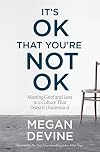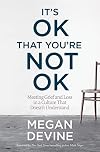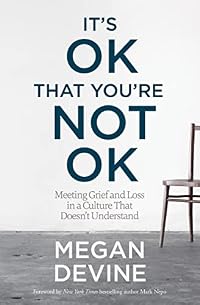
It's OK That You're Not OK: Meeting Grief and Loss in a Culture That Doesn't Understand
by Megan Devine
On This Page
Description
A New Resource for Those Experiencing LossWith It's OK That You're Not OK, Megan Devine offers a profound new approach to both the experience of grief and the way we help others who have endured tragedy. Having experienced grief from both sides—as both a therapist and as a woman who witnessed the accidental drowning of her beloved partner—Megan writes with deep insight about the unspoken truths of loss, love, and healing. She debunks the culturally prescribed goal of returning to a show more normal, "happy" life, replacing it with a far healthier middle path, one that invites us to build a life alongside grief rather than seeking to overcome it.
On this unabridged audio recording read by the author, Megan offers stories, research, life tips, and creative and mindfulness-based practices to guide us through an experience we all must face. With Megan's gentle but direct guidance, you'll learn:
- How challenging the myths of grief—doing away with stages, timetables, and unrealistic ideals about how grief should unfold—allows us to accept it as a mystery to be honored instead of a problem to solve
- Practical guidance for managing stress, improving sleep, and decreasing anxiety without trying to "fix" your pain
Many people who have suffered a loss feel judged, dismissed, and misunderstood by a culture that wants to "solve" grief. Megan writes, "Grief no more needs a solution than love needs a solution." It's OK That You're Not OK is a book for grieving people, those who love them, and all those seeking to love themselves—and each other—better.
Tags
Recommendations























Member Reviews
Best for: Those who are grieving, or those who want to be better prepared to support those who are grieving.
In a nutshell: People who are grieving deserve better than what society offers them. This book attempts to provide some direction towards that.
Line that sticks with me: “We have to be able to see what’s true without fear of being seen as weak, damaged, or somehow failing the cultural storyline.” (p 54).
Why I chose it: Ms. Devine spoke at an event I attended this past weekend, and was kind enough to also sell her book to attendees prior to it’s release next month.
Review:
The book is written almost as a love letter to a friend. Ms. Devine carries such kindness in her writing, stemming from her own experience witnessing the show more sudden death of her partner Matt. She was a writer, therapist, and artist prior to his death, and was able to take her experience, along with what she has learned from others, to create a community (Refuge in Grief) to help others experiencing grief, and write a book that both validates feelings and provides practical tips for navigating an experience that is utterly horrible.
The through-line of the book is that grief is not a problem to be fixed. It is a new reality that the grieving person must honor and tend. People will not “get over” profound losses, and it is cruel to demand that they do. Friends and family members of those who are grieving want their old loved one back, and don’t listen or pick up on the overt and subtle clues that they are not helping. We want to help, but we want that help to lead to things being fixed, and that’s not a thing that will happen.
In my work, we have that list of things to never say to someone who has lost someone, and I see some of those phrases included here as well. Things like “they’re in a better place” or, worse, “everything happens for a reason.” Ms. Devine goes into why these phrases are so very hurtful, regardless of the fact that they usually come from a good intent. Like in so many areas of life, the harm caused doesn’t care what the intent was.
There are a million things I could say about this book. I should caveat my review by pointing out that I am not the primary target audience — I have so far been lucky enough to not have experienced real loss in my life — but I have seen enough friends living in their grief to want to know how I can better support them. While there is a section of the book that is directed at folks like me that I found immensely helpful, there is also such value in reading words directed at those who are experiencing loss. I cannot understand what they are feeling, but I can at least get a sense of the challenges they are facing and the ways our culture and society can make a horrible experience so much worse.
The event I attended where I purchased this book was Death Salon Seattle. I chose to attend in part because I think our society has a very strange and unhealthy relationship with death in myriad ways [from how some refuse to talk about it, to how others are forced to talk about it at way too young an age, to how we expect those who lose someone to ‘get over it’ ever (and usually in a few months, maybe a year tops)] and partly because my job, as some of you know, involves planning for the response to a mass fatality incident. Most days I’m doing something death-related; the Salon gave me an opportunity to look at death outside of the plans and procedures and meetings that fill up my workday.
Seeing Ms. Devine speak is a gift. She was able to tailor her talk to this group in a way that recognized that a bunch of individuals who spend a lot of time thinking and talking about death may have some very specific ways we can support those who are actually experiencing loss. This book is another gift, and one I strongly recommend anyone who is thinking this might possibly be something they need pick up. show less
In a nutshell: People who are grieving deserve better than what society offers them. This book attempts to provide some direction towards that.
Line that sticks with me: “We have to be able to see what’s true without fear of being seen as weak, damaged, or somehow failing the cultural storyline.” (p 54).
Why I chose it: Ms. Devine spoke at an event I attended this past weekend, and was kind enough to also sell her book to attendees prior to it’s release next month.
Review:
The book is written almost as a love letter to a friend. Ms. Devine carries such kindness in her writing, stemming from her own experience witnessing the show more sudden death of her partner Matt. She was a writer, therapist, and artist prior to his death, and was able to take her experience, along with what she has learned from others, to create a community (Refuge in Grief) to help others experiencing grief, and write a book that both validates feelings and provides practical tips for navigating an experience that is utterly horrible.
The through-line of the book is that grief is not a problem to be fixed. It is a new reality that the grieving person must honor and tend. People will not “get over” profound losses, and it is cruel to demand that they do. Friends and family members of those who are grieving want their old loved one back, and don’t listen or pick up on the overt and subtle clues that they are not helping. We want to help, but we want that help to lead to things being fixed, and that’s not a thing that will happen.
In my work, we have that list of things to never say to someone who has lost someone, and I see some of those phrases included here as well. Things like “they’re in a better place” or, worse, “everything happens for a reason.” Ms. Devine goes into why these phrases are so very hurtful, regardless of the fact that they usually come from a good intent. Like in so many areas of life, the harm caused doesn’t care what the intent was.
There are a million things I could say about this book. I should caveat my review by pointing out that I am not the primary target audience — I have so far been lucky enough to not have experienced real loss in my life — but I have seen enough friends living in their grief to want to know how I can better support them. While there is a section of the book that is directed at folks like me that I found immensely helpful, there is also such value in reading words directed at those who are experiencing loss. I cannot understand what they are feeling, but I can at least get a sense of the challenges they are facing and the ways our culture and society can make a horrible experience so much worse.
The event I attended where I purchased this book was Death Salon Seattle. I chose to attend in part because I think our society has a very strange and unhealthy relationship with death in myriad ways [from how some refuse to talk about it, to how others are forced to talk about it at way too young an age, to how we expect those who lose someone to ‘get over it’ ever (and usually in a few months, maybe a year tops)] and partly because my job, as some of you know, involves planning for the response to a mass fatality incident. Most days I’m doing something death-related; the Salon gave me an opportunity to look at death outside of the plans and procedures and meetings that fill up my workday.
Seeing Ms. Devine speak is a gift. She was able to tailor her talk to this group in a way that recognized that a bunch of individuals who spend a lot of time thinking and talking about death may have some very specific ways we can support those who are actually experiencing loss. This book is another gift, and one I strongly recommend anyone who is thinking this might possibly be something they need pick up. show less
A handy and reassuring guide for those who are grieving and those who want to best support them. Culturally, we are afraid of grief and as a result the author says we don't know how to act around it. We offer platitudes, awkward reassurances, and quick solutions. We believe grief is something to get over as soon as possible but the author argues that your grief is your unique journey, one to be honored and leaned into, and the best thing others can do is to bear witness with you and be a support, not a problem solver. The author writes from tragic experience; readers in need will feel seen and acknowledged. Practical tips and activities are provided for easing the immediate suffering of grief.
It's OK That You're Not OK: Meeting Grief and Loss in a Culture That Doesn't Understand by Megan Devine explores the way we process grief and the expectations society puts on grief and the grieving. Devine uses her own experience with grief and people's response to her grief as a foundation for examining how society treats the grieving. She discusses how we often view grief as a problem to be solved and how hurtful that attitude can be. Devine spends quite a bit of time exploring the idea that everyone's grief is different. She emphasizes that everyone has the right to grieve in the way that best works for them. I vacillated between finding It's OK That You're Not OK very insightful, somewhat short-sighted, and occasionally show more contradictory. As I read, I kept wondering why and how we continue to get it so wrong since everyone grieves at some point in their life and everyone seems to know we're doing it wrong, at least when experiencing grief themselves. show less
The author knows grief intimately; she's a therapist and a widow. In this wonderfully honest and deeply generous book, she confronts the reality of grieving and reminds us that "love is the thing that lasts."
There are so many myths and misconceptions about grief in our society, and this book debunks them all. It presents a new model of grief that allows and encourages the griever to feel what they feel without worry about societal timetables. Megan speaks the unvarnished, no-sugar-coating truths about grief and loss that so badly need to be spoken and understood.
Great for anyone going through grief but can be helpful to anyone who reads it. Provides great examples and information on how to normalize the grieving process instead of considering it am ailment and to provide the support everyone needs during that time
This book is for grieving people and through stories, research, life tips, and creative mindfulness-based practices, she offers a unique guide through an experience that we must all face. The author has experience grief from both sides as both a therapist and a woman who witnessed the accidental drowning of her partner.
Members
- Recently Added By
Lists

Deathreads
78 works; 2 members

Grief
15 works; 1 member

Men's healing resources
727 works; 1 member

Healing resources for women
587 works; 1 member
Author Information
14+ Works 759 Members
Megan Devine is a writer, speaker, and advocate for emotional change on a cultural level. She holds a Master's in counseling psychology. Since the tragic loss of her partner in 2009, Megan has emerged as a bold new voice in the world of grief support. Her contributions via her site Refuge in Grief have helped create sanctuary for those in pain and show more encouragement for those who want to help. For more, visit refugeingrief.com. show less
Some Editions
Classifications
Statistics
- Members
- 663
- Popularity
- 43,226
- Reviews
- 11
- Rating
- (4.29)
- Languages
- English, French, Portuguese (Portugal), Spanish
- Media
- Paper, Audiobook, Ebook
- ISBNs
- 11
- ASINs
- 4