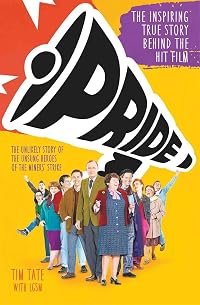
Pride: The Unlikely Story of the True Heroes of the Miner's Strike
by Tim Tate
On This Page
Description
"In 1984, a small group of metropolitan homosexual men and lesbian women stepped away from the vibrant culture and hedonism of London's defiant gay scene to befriend and support the beleaguered villages of a very traditional mining community in the remote valleys of South Wales. They did so in the midst of the 1984 miners' strike - the most bitter and divisive dispute for more than half a century, and in one of the most turbulent periods in modern British history. In the 1980s Margaret show more Thatcher's hardcore social and fiscal policies devastated Britain's traditional industries, and at the same time, AIDS began to claim lives across the nation. At the very height of this perfect storm, as the government and police battled 'the enemy within' in communities across the land and newspapers whipped up fear of the gay 'perverts' who were supposedly responsible for inflicting this lethal new pestilence upon the entire population, two groups who ostensibly had nothing in common - miners and homosexuals - unexpectedly made a stand together and forged a lasting friendship. It was an alliance which helped keep an entire valley clothed and fed during the darkest months of the strike. It led directly to a long-overdue acceptance by trades unions and the Labour Party that homosexual equality was a cause to be championed. Pride tells the inspiring true story of how two very different communities - each struggling to overcome its own bitter internal arguments and long-established fault lines, as well as facing the power of a hostile government and press - found common cause against overwhelming odds. And how this one simple but unlikely act of friendship would, in time, help change life in Britain - forever." -- Provided by publisher. show lessTags
Recommendations













Member Reviews
After I watch movies based on historical events I'm often very interested in finding out more about the event, person or whatever it is about. Pride (www.imdb.com/title/tt3169706/) was no different and I was happy to find out a book had been published about it and decided to pick it up. I certainly wasn't disappointed by it, but it didn't add much to the story of the movie.
The book is chronological going from the background, through the actual events and in the end chapter even a small part about how LGSM was invited to lead the Pride parade in London after the movie was released and how LGSM wanted to lead together with trade unions which the Pride committee denied them. It is made up of interviews and discussions with the actual show more people involved together with the author's short exposition of the events covered. The interviews is from both the Lesbians and Gays Support the Miners (LGSM), Lesbians Against Pit Closures (LAPC) and people from the mining community. It isn't in depth interviews with one person at a time, but rather several voices is heard for every part of the story.
I think the background part of the book, which cover both the background of the miners and that of the lesbian and gay communities and the hardships they all went through, is the one thing missing from the movie. Which is quite normal since a historical background is hard to convey in an appealing why in a movie. For the other parts it is small nuances which is the difference. Gethin probably didn't own the bookstore where they held there meetings, Joe/Bromley probably didn't exist but is rather a collage of different characters, the reception of LGSM into the mining community was not as tense as portrayed, etc. The one thing which the book adds some depth to in the actual events is the LAPC split off from LGSM. It is clear there certainly are differences of opinion on the split and whether it was good or not. In the movie the LAPC is a bit brushed of as comic relief and therefore I appreciated they got the chance to tell their side of split in the book. Their part of the history feels a bit short-changed in the book also though, although not as severely as in the movie.
The focus of the book is definitely on LGSM. Most of those interviewed in the book is from LGSM, then the miners community and the least amount of interviewees is from LAPC. Whether the difference in number of interviewees from LGSM and LAPC is a reflection of the number of people involved in the organizations and their respective impact I don't know (LGSM was clearly first and LAPC a splinter group though), but obviously the number of miners greatly exceeded those of LGSM and LAPC. And even while the lesbians and gays emphasize how the meeting with the mining community changed them, it is much easier to see how the lesbians and gays had an impact on the mining communities and the possibility to come out as a homosexual. A great example of that is Cliff who was part of the mining community who had hid his sexuality his whole life and suddenly his village is visited by a group of homosexual men and women. Hywel Francis, one of the interviewees from the mining community, recounts how Cliff was excited weeks in advance for LGSM's visits and how it was such a big thing for him. Which is not hard to imagine.
All in all it is a good, not amazing, book, but I recommend you watch the movie first. And if you are like me and want to know more about the characters and the history, do pick it up and hear the voices of those who where there. It is amazing the history which was in danger of being forgotten, as told in the final chapter of the book, now has gotten a new life through the movie and the book. And it certainly is a story worthy of remembrance. show less
The book is chronological going from the background, through the actual events and in the end chapter even a small part about how LGSM was invited to lead the Pride parade in London after the movie was released and how LGSM wanted to lead together with trade unions which the Pride committee denied them. It is made up of interviews and discussions with the actual show more people involved together with the author's short exposition of the events covered. The interviews is from both the Lesbians and Gays Support the Miners (LGSM), Lesbians Against Pit Closures (LAPC) and people from the mining community. It isn't in depth interviews with one person at a time, but rather several voices is heard for every part of the story.
I think the background part of the book, which cover both the background of the miners and that of the lesbian and gay communities and the hardships they all went through, is the one thing missing from the movie. Which is quite normal since a historical background is hard to convey in an appealing why in a movie. For the other parts it is small nuances which is the difference. Gethin probably didn't own the bookstore where they held there meetings, Joe/Bromley probably didn't exist but is rather a collage of different characters, the reception of LGSM into the mining community was not as tense as portrayed, etc. The one thing which the book adds some depth to in the actual events is the LAPC split off from LGSM. It is clear there certainly are differences of opinion on the split and whether it was good or not. In the movie the LAPC is a bit brushed of as comic relief and therefore I appreciated they got the chance to tell their side of split in the book. Their part of the history feels a bit short-changed in the book also though, although not as severely as in the movie.
The focus of the book is definitely on LGSM. Most of those interviewed in the book is from LGSM, then the miners community and the least amount of interviewees is from LAPC. Whether the difference in number of interviewees from LGSM and LAPC is a reflection of the number of people involved in the organizations and their respective impact I don't know (LGSM was clearly first and LAPC a splinter group though), but obviously the number of miners greatly exceeded those of LGSM and LAPC. And even while the lesbians and gays emphasize how the meeting with the mining community changed them, it is much easier to see how the lesbians and gays had an impact on the mining communities and the possibility to come out as a homosexual. A great example of that is Cliff who was part of the mining community who had hid his sexuality his whole life and suddenly his village is visited by a group of homosexual men and women. Hywel Francis, one of the interviewees from the mining community, recounts how Cliff was excited weeks in advance for LGSM's visits and how it was such a big thing for him. Which is not hard to imagine.
All in all it is a good, not amazing, book, but I recommend you watch the movie first. And if you are like me and want to know more about the characters and the history, do pick it up and hear the voices of those who where there. It is amazing the history which was in danger of being forgotten, as told in the final chapter of the book, now has gotten a new life through the movie and the book. And it certainly is a story worthy of remembrance. show less
Ratings
Members
- Recently Added By
Lists

Read the book and saw the movie
1,170 works; 192 members

The Best LGBTQ Nonfiction
218 works; 70 members
Author Information

20+ Works 443 Members
All Editions
Awards and Honors
Notable Lists
Work Relationships
Has the adaptation
Common Knowledge
- People/Characters
- Arthur Scargill; Margaret Thatcher, Milk Snatcher
- Important places
- South Wales, UK; London, England, UK; Gay's The Word bookshop, Bloomsbury, England
- Important events
- London Lesbian and Gay Pride parade; 1984-85 Miners' Strike
- Related movies
- Pride (2014 | IMDb)
- First words
- Friday, 26 October 1984
Dulais Valley, South Wales
It was past midnight and they were lost. - Last words
- (Click to show. Warning: May contain spoilers.)Because now, more than ever, we need them.
Classifications
- Genres
- Nonfiction, General Nonfiction, History, Sexuality and Gender Studies, LGBTQ+, Biography & Memoir
- DDC/MDS
- 331.892 — Society, government, & culture Economics Labor economics Labor unions, labor-management bargaining and disputes Labour-management bargaining and disputes Strikes
- LCC
- HD5365 .M6152 — Social sciences Industries. Land use. Labor Industries. Land use. Labor Labor. Work. Working class Labor disputes. Strikes and lockouts
- BISAC
Statistics
- Members
- 45
- Popularity
- 663,870
- Reviews
- 1
- Rating
- (4.40)
- Languages
- English
- Media
- Paper, Ebook
- ISBNs
- 2
- ASINs
- 1