
The Darkening Age: The Christian Destruction of the Classical World
by Catherine Nixey
On This Page
Description
A New York Times Notable Book, winner of the Jerwood Award from the Royal Society of Literature, a New York Times Book Review Editors' Choice, and named a Book of the Year by the Telegraph, Spectator, Observer, and BBC History Magazine, this bold new history of the rise of Christianity shows how its radical followers helped to annihilate Greek and Roman civilizations. The Darkening Age is the largely unknown story of how a militant religion deliberately attacked and suppressed the teachings show more of the Classical world, ushering in centuries of unquestioning adherence to "one true faith." Despite the long-held notion that the early Christians were meek and mild, going to their martyrs' deaths singing hymns of love and praise, the truth, as Catherine Nixey reveals, is very different. Far from being meek and mild, they were violent, ruthless, and fundamentally intolerant. Unlike the polytheistic world, in which the addition of one new religion made no fundamental difference to the old ones, this new ideology stated not only that it was the way, the truth, and the light but that, by extension, every single other way was wrong and had to be destroyed. From the first century to the sixth, those who didn't fall into step with its beliefs were pursued in every possible way: social, legal, financial, and physical. Their altars were upturned and their temples demolished, their statues hacked to pieces, and their priests killed. It was an annihilation. Authoritative, vividly written, and utterly compelling, this is a remarkable debut from a brilliant young historian. show lessTags
Recommendations

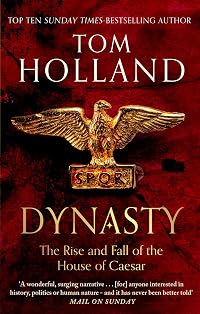
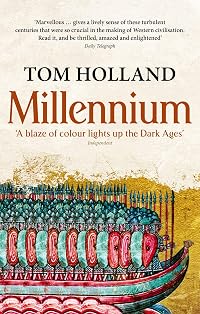
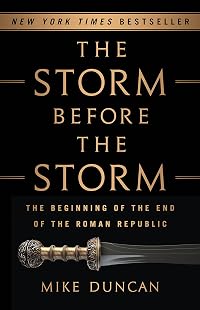
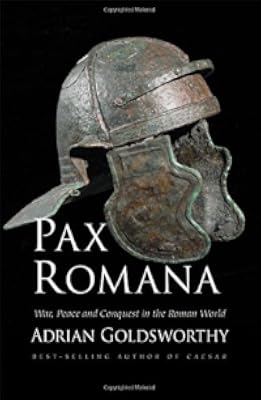





Member Recommendations
Member Reviews
When I returned from a trip to Italy in late 2018, I wanted to learn all the classical things and watch all the documentaries on the Italian Renaissance. This book was one of my leftover library hold binges from January and I really enjoyed such an unusual perspective on the rise of early Christianity in ancient Rome.
Nixey presents research and writings from the point of view of the pagans and the so-called heretics who watched as their temples, sculptures and way of life were slowly eroded away by the new fad called Christianity.
As a causal reader of history, this was fast-paced, interesting and well-written. Nixey has a sardonic sense of humor that some could translate as a deep bias against Christians. And, to be fair, there are a show more few passages where she refers to these early Christians as uneducated, barbarians (but also, to be fair, this is in the context of when they’re burning thousands of scrolls and mutilating statues of Roman gods.)
Overall, a fascinating book and one I would recommend to other readers who enjoy diverse and provocative perspectives on history. show less
Nixey presents research and writings from the point of view of the pagans and the so-called heretics who watched as their temples, sculptures and way of life were slowly eroded away by the new fad called Christianity.
As a causal reader of history, this was fast-paced, interesting and well-written. Nixey has a sardonic sense of humor that some could translate as a deep bias against Christians. And, to be fair, there are a show more few passages where she refers to these early Christians as uneducated, barbarians (but also, to be fair, this is in the context of when they’re burning thousands of scrolls and mutilating statues of Roman gods.)
Overall, a fascinating book and one I would recommend to other readers who enjoy diverse and provocative perspectives on history. show less
The traditional view most of us learned in school is that diligent monks copying manuscripts in their monasteries helped to preserve civilization during the Dark Ages. What most of us did not learn is that early Christian zealots, starting in the 4th century, were the barbarians that destroyed so much of the civilization of the ancient world.
Catherine Nixey tells the story of how those early Christian zealots destroyed great works of art and architecture as well as countless manuscripts in ancient libraries. They also shut down the open study of philosophy and terrorized many philosophers. The most interesting chapter in the book tells about Romans that provided a detailed and educated critique of the Christian religion. The book is show more recommended for the new perspective it provides on early Christian history and the fall of Rome.
The book is very readable even for people not familiar with Roman history or literature. Nixey's writing style is saucy and she goes out of her way to quote the most salacious passages from Roman erotic literature. There are, however, several weaknesses in the book including a considerable number of redundancies and a tendency to jump around in time so it is difficult to put the events she describes in context. Also, because she focuses on just a limitted number of figures, I was not sure how broadly things had spread. show less
Catherine Nixey tells the story of how those early Christian zealots destroyed great works of art and architecture as well as countless manuscripts in ancient libraries. They also shut down the open study of philosophy and terrorized many philosophers. The most interesting chapter in the book tells about Romans that provided a detailed and educated critique of the Christian religion. The book is show more recommended for the new perspective it provides on early Christian history and the fall of Rome.
The book is very readable even for people not familiar with Roman history or literature. Nixey's writing style is saucy and she goes out of her way to quote the most salacious passages from Roman erotic literature. There are, however, several weaknesses in the book including a considerable number of redundancies and a tendency to jump around in time so it is difficult to put the events she describes in context. Also, because she focuses on just a limitted number of figures, I was not sure how broadly things had spread. show less
I've just finished reading Catherine Nixey's excellent and thought-provoking book, and given that there's pretty much an even split in the two reviews that now exist, I thought I would put my thumb on the scales...
Nixey, educated at Cambridge, studied the classics and went on to teach the subject before moving sideways into journalism, which means she brings to her project a scholarly knowledge of one side of the equation: the classical world's perception of the rise to power/triumph of Christianity. Raised by a former monk and a former nun, as a Catholic, she also learned to accept as "givens" what remains the standard narrative about that subject, from the idea that Christians were relentlessly and consistently persecuted for their show more religion to the concept that the world somehow became a happier place starting with the conversion of Constantine.
It's important to note that Nixey's goal is NOT to provide a "balanced" narrative. She herself points out that the church and scholars drawing on centuries of history that has been unevenly preserved and then tilted in favor of the victors (any student of history knows that this happens, and it's no less the case in a religious triumph than in a political one...) means that there have been plenty of books that document the Christian view of the crucial centuries from about 200 AD, when Christians became significantly more visible, to 592 AD, when Justinian finally decreed that anyone who didn't convert to Christianity would have their goods seized, be exiled, as well as suffer vague "other" punishments. So she has started from the other perspective: what would it have been like to be among the 90% of the population of greater Europe (the Roman/Byzantine empire) that historians estimate was NOT Christian at the time of Constantine's conversion? What would their experience of the ensuing decades and centuries have been like?
Her answer? Chaos, fear and uncertainty. Once Christians decided that their faith could not (unlike all the others that existed in the world) coexist, but that it was THE path to truth and not A path to truth, and that everyone must subscribe to it, all bets were off. (And she quotes liberally from early church theologians and apologists, ranging from Augustine to Tertullian, in support of that broad position.) Monks weren't just holy men praying in the desert, but roving bands of enforcers, tearing down and mutilating statues, burning books indiscriminately (usually) and assaulting or even murdering anyone who stood in their path. Nixey recounts one magistrate who, hearing the chanting mob approaching his courtroom, simply jumped up and fled, saying "justice cannot be exercised once they have appeared." And while of course Nixey chronicles the murder of Hypatia in Alexandria (as one of the best known thinkers in centuries...), she notes Hypatia wasn't alone. Mobs in North Africa (Carthage) beat those who weren't sufficiently devout (including Christians...) to death with clubs, since Matthew 26:22 told them to keep their swords sheathed. (So somehow, clubbing to death became acceptable...)
Individual incidents from this book may be familiar to readers of history, from Hypatia's death to the final collapse of the Library of Alexandria, and Gibbon's analysis of the role of Christianity in his 18th century "Decline and Fall of the Roman Empire". Indeed, if you've read that, this would be an excellent book to follow up with, as, like Gibbon, Nixey relies heavily on primary sources, and analyzes and discusses the motivations of each of those sources. Was the person whose perspective she is citing likely to have been threatened by what was happening, or was he speaking from the perspective of the winning camp and yet being presented in ostensibly objective prose even centuries later as a benign individual? (A case in point is France's St. Martin, who was was famed throughout what would become France for the violence with which he approached destroying art, buildings and his hostility to individuals of other faiths -- a Penguin book of the Lives of the Saints refers to him blandly as sometimes "over-zealous."
To me, this is a book about how to approach history as much as it is history itself. In any tug-of-war, there are always two sides to a story. One has been the dominant narrative; the other has been lost. (Nixey quotes -- accurately -- the estimate that today we possess perhaps 1% of all the Latin literature ever written, and that most contemporary critics of Christianity had their words banned outright, with anyone possessing copies being automatically condemned to death. So we possess only glimpses here and there into this tale. Still, Nixey has crafted a narrative that suggests what it might have been like to be part of a majority in a large empire -- a polytheistic, multilingual, multicultural, chaotic kind of universe, in which Christians made up only 10% -- and then one day to wake up and find that that 10% now ran the world and set the rules, and that in contrast to the olden days, when merely pretending to sacrifice (she debunks some of the Christian martyr stories, too) by touching incense once every decade, would have gotten you off the hook, the new regime wants to own your soul because it is the truth. WHAT a shock to the system. Nixey's challenge to the reader is to ask us to imagine that kind of transition, and what being compelled to believe in someone else's religion, or else, might have been like. She does compare the nature of the persecutions of Christians (and anyone else who didn't want to submit to the authority of a divine emperor at periodic intervals) in three distinct periods, with the nature of the persecution of non-Christians under the rule of bishops who gave their followers carte blanche to walk into neighbors' houses whenever they wanted to look for books or statues.
This made me think of what's happening in Europe today, and specifically the fear of a "takeover" by Muslims who will impose sharia law on all Europeans. The percentage of Muslims, in Western Europe, is roughly analogous to Christians at the time of Constantine's conversion... No, Nixey doesn't go there, but that's what I mean about this being thought provoking.
So much of what was written by those who weren't church leaders, like Augustine, simply wasn't preserved (or was destroyed) that we may never have a full or complete picture of the people who weren't part of the group we today see as the mainstream -- the ultimate victors. And time has eroded the memory of their extreme and intolerant views, characteristic of many religions seeking to establish themselves or that feel under threat. In other cases, Nixey's description of early monastic practices can be linked to current monastic practices, like the denial of personal property (and the concept of bringing a "dowry" to the church, in the case of nuns), or the extremes of self-abnegation and self-punishment, such as hair shirts and "the discipline".
This is no more a balanced view than Thomas Cahill's book about how the Irish saved civilization by saving books, or many others I could mention, that take a perspective and support it with research. That said, it DOES provide a solid, well-researched and analytical historical look at a turning point from the 4th to the 6th centuries. It's not written by a religious believer like Karen Armstrong, which is fine -- precisely because it's not a work of theology, but about the impact that those theologians had on the people they viewed as existing in "insane error". It's not polemical. It says nothing about today's Catholic church, or Christianity today; it says nothing about the merits or lack thereof of the religion. It only addresses how those who were NOT Christian and did NOT convert or feel moved to embrace that faith, experienced their encounters with Christianity as the religion became the power in their world, from THEIR point of view and not those of the victors. For those who are religious, try not to read too much into this. Nixey is chronicling history, not mocking. She is recounting what people at that time, 1,700 years ago, might have experienced or did experience, based on the record that has come down to us. No more, no less. And the fact that it might come as a shock to some is, itself, testimony that this kind of book -- written not by someone with a religious axe to grind but by someone with an academic background even if she isn't an academic today -- has a role. Read it and think about what messages it sends about the nature of belief, about tolerance, about how we arrive at faith and how we treat others if they don't share our view of THE only faith. Nixey does mention how one of the early targets of the iconoclasts, or image breakers, were the classical temples in Palmyra in Syria (which I was lucky enough to visit before the war erupted there...) And of course, precisely the same statues, since carefully restored, have since been destroyed and defaced by ISIS. Intolerance and a demand that everyone think alike is not the preserve of any single religion, but of zealots of all faiths. But in a world where parchment and papyrus and fragile sculptures were all that preserved an entire classical civilization, we may never know the price of this particular kind of zealotry that Nixey describes. show less
Nixey, educated at Cambridge, studied the classics and went on to teach the subject before moving sideways into journalism, which means she brings to her project a scholarly knowledge of one side of the equation: the classical world's perception of the rise to power/triumph of Christianity. Raised by a former monk and a former nun, as a Catholic, she also learned to accept as "givens" what remains the standard narrative about that subject, from the idea that Christians were relentlessly and consistently persecuted for their show more religion to the concept that the world somehow became a happier place starting with the conversion of Constantine.
It's important to note that Nixey's goal is NOT to provide a "balanced" narrative. She herself points out that the church and scholars drawing on centuries of history that has been unevenly preserved and then tilted in favor of the victors (any student of history knows that this happens, and it's no less the case in a religious triumph than in a political one...) means that there have been plenty of books that document the Christian view of the crucial centuries from about 200 AD, when Christians became significantly more visible, to 592 AD, when Justinian finally decreed that anyone who didn't convert to Christianity would have their goods seized, be exiled, as well as suffer vague "other" punishments. So she has started from the other perspective: what would it have been like to be among the 90% of the population of greater Europe (the Roman/Byzantine empire) that historians estimate was NOT Christian at the time of Constantine's conversion? What would their experience of the ensuing decades and centuries have been like?
Her answer? Chaos, fear and uncertainty. Once Christians decided that their faith could not (unlike all the others that existed in the world) coexist, but that it was THE path to truth and not A path to truth, and that everyone must subscribe to it, all bets were off. (And she quotes liberally from early church theologians and apologists, ranging from Augustine to Tertullian, in support of that broad position.) Monks weren't just holy men praying in the desert, but roving bands of enforcers, tearing down and mutilating statues, burning books indiscriminately (usually) and assaulting or even murdering anyone who stood in their path. Nixey recounts one magistrate who, hearing the chanting mob approaching his courtroom, simply jumped up and fled, saying "justice cannot be exercised once they have appeared." And while of course Nixey chronicles the murder of Hypatia in Alexandria (as one of the best known thinkers in centuries...), she notes Hypatia wasn't alone. Mobs in North Africa (Carthage) beat those who weren't sufficiently devout (including Christians...) to death with clubs, since Matthew 26:22 told them to keep their swords sheathed. (So somehow, clubbing to death became acceptable...)
Individual incidents from this book may be familiar to readers of history, from Hypatia's death to the final collapse of the Library of Alexandria, and Gibbon's analysis of the role of Christianity in his 18th century "Decline and Fall of the Roman Empire". Indeed, if you've read that, this would be an excellent book to follow up with, as, like Gibbon, Nixey relies heavily on primary sources, and analyzes and discusses the motivations of each of those sources. Was the person whose perspective she is citing likely to have been threatened by what was happening, or was he speaking from the perspective of the winning camp and yet being presented in ostensibly objective prose even centuries later as a benign individual? (A case in point is France's St. Martin, who was was famed throughout what would become France for the violence with which he approached destroying art, buildings and his hostility to individuals of other faiths -- a Penguin book of the Lives of the Saints refers to him blandly as sometimes "over-zealous."
To me, this is a book about how to approach history as much as it is history itself. In any tug-of-war, there are always two sides to a story. One has been the dominant narrative; the other has been lost. (Nixey quotes -- accurately -- the estimate that today we possess perhaps 1% of all the Latin literature ever written, and that most contemporary critics of Christianity had their words banned outright, with anyone possessing copies being automatically condemned to death. So we possess only glimpses here and there into this tale. Still, Nixey has crafted a narrative that suggests what it might have been like to be part of a majority in a large empire -- a polytheistic, multilingual, multicultural, chaotic kind of universe, in which Christians made up only 10% -- and then one day to wake up and find that that 10% now ran the world and set the rules, and that in contrast to the olden days, when merely pretending to sacrifice (she debunks some of the Christian martyr stories, too) by touching incense once every decade, would have gotten you off the hook, the new regime wants to own your soul because it is the truth. WHAT a shock to the system. Nixey's challenge to the reader is to ask us to imagine that kind of transition, and what being compelled to believe in someone else's religion, or else, might have been like. She does compare the nature of the persecutions of Christians (and anyone else who didn't want to submit to the authority of a divine emperor at periodic intervals) in three distinct periods, with the nature of the persecution of non-Christians under the rule of bishops who gave their followers carte blanche to walk into neighbors' houses whenever they wanted to look for books or statues.
This made me think of what's happening in Europe today, and specifically the fear of a "takeover" by Muslims who will impose sharia law on all Europeans. The percentage of Muslims, in Western Europe, is roughly analogous to Christians at the time of Constantine's conversion... No, Nixey doesn't go there, but that's what I mean about this being thought provoking.
So much of what was written by those who weren't church leaders, like Augustine, simply wasn't preserved (or was destroyed) that we may never have a full or complete picture of the people who weren't part of the group we today see as the mainstream -- the ultimate victors. And time has eroded the memory of their extreme and intolerant views, characteristic of many religions seeking to establish themselves or that feel under threat. In other cases, Nixey's description of early monastic practices can be linked to current monastic practices, like the denial of personal property (and the concept of bringing a "dowry" to the church, in the case of nuns), or the extremes of self-abnegation and self-punishment, such as hair shirts and "the discipline".
This is no more a balanced view than Thomas Cahill's book about how the Irish saved civilization by saving books, or many others I could mention, that take a perspective and support it with research. That said, it DOES provide a solid, well-researched and analytical historical look at a turning point from the 4th to the 6th centuries. It's not written by a religious believer like Karen Armstrong, which is fine -- precisely because it's not a work of theology, but about the impact that those theologians had on the people they viewed as existing in "insane error". It's not polemical. It says nothing about today's Catholic church, or Christianity today; it says nothing about the merits or lack thereof of the religion. It only addresses how those who were NOT Christian and did NOT convert or feel moved to embrace that faith, experienced their encounters with Christianity as the religion became the power in their world, from THEIR point of view and not those of the victors. For those who are religious, try not to read too much into this. Nixey is chronicling history, not mocking. She is recounting what people at that time, 1,700 years ago, might have experienced or did experience, based on the record that has come down to us. No more, no less. And the fact that it might come as a shock to some is, itself, testimony that this kind of book -- written not by someone with a religious axe to grind but by someone with an academic background even if she isn't an academic today -- has a role. Read it and think about what messages it sends about the nature of belief, about tolerance, about how we arrive at faith and how we treat others if they don't share our view of THE only faith. Nixey does mention how one of the early targets of the iconoclasts, or image breakers, were the classical temples in Palmyra in Syria (which I was lucky enough to visit before the war erupted there...) And of course, precisely the same statues, since carefully restored, have since been destroyed and defaced by ISIS. Intolerance and a demand that everyone think alike is not the preserve of any single religion, but of zealots of all faiths. But in a world where parchment and papyrus and fragile sculptures were all that preserved an entire classical civilization, we may never know the price of this particular kind of zealotry that Nixey describes. show less
The Roman Empire converting to Christianity doesn’t get a lot of coverage, probably because it’s tough to not see the Christians as the bad guys (as compared to Christians being persecuted by Rome which unsurprisingly gets a lot more press).
After it became the official state religion it saw it as its holy obligation to eradicate any traces of their old gods, who were now seen as demons deceiving mankind (according to the Christians, to everyone else these were still the gods). Statues were defaced, temples torn down, worshippers persecuted and libraries were destroyed as science and philosophy were replaced by doctrine and orthodoxy.
The author pulls no punches making a case for this being one of the worst things to happen in history.
After it became the official state religion it saw it as its holy obligation to eradicate any traces of their old gods, who were now seen as demons deceiving mankind (according to the Christians, to everyone else these were still the gods). Statues were defaced, temples torn down, worshippers persecuted and libraries were destroyed as science and philosophy were replaced by doctrine and orthodoxy.
The author pulls no punches making a case for this being one of the worst things to happen in history.
"With our faith, we desire no further belief"
Before Christianity, no one identified by their religion, says Catherine Nixey. It was not their defining characteristic. Christians imposed their beliefs on everyone else, and required everyone to identify as Christian. That is the essence of The Darkening Age. It shows how the free-for-all that was life in the Roman Empire became the dour, sullen austerity of Christendom.
The Roman Empire was about living life to the fullest. Sex was celebrated (March 17 was a national festival celebrating young men’s first ejaculations), the bathhouses were for both sexes, sex acts provided artwork on walls, floors and objects in homes. Shame was not in the culture. Fine food and wine were exalted. Every show more religion from the vast expanse of the Empire was tolerated. The attitude was: Believe what you will, I’m having a drink. It was actually very Christian of them.
Nixey’s argument is that right from the beginning, Christianity favored martyrs over do-gooders to promote itself. Stories became epics, the ordinary became tragic and blood became holy, as Christianity’s fame and (forced) attraction spread. Christians were all about suicide and martyrdom, because eternal life after death was the promise and the goal. Christianity’s intolerance also began early on, denigrating any other form of worship, and once in power, punishing it by death to adherents. Homosexuality and lesbianism were banned, slavery was upheld, and death sentences became routine.
It all began with Constantine’s conversion in 312. He exempted the church from taxes, paid bishops five times the rate for professors, and set about converting his entire Roman Empire. To do this, he literally demonized all other religions, claiming all of them were really demons among the good people of the empire. By 386 it was a capital crime to even criticize Christianity. Up to that point, Christianity had been considered an eastern cult with absurd myths at its center.
The Darkening Age follows the collapse of civilization (the Roman Empire) from the time of Jesus to about 500 AD. In that time, the Romans went from tolerating Christians and their fierce sect (Pliny called it a “degenerate sort of cult”), to being taken over by it. The empire went from multi-faith to one single faith, as Christians, far from loving their neighbors, destroyed all vestiges of previous civilization, including the largest repository of knowledge and history – the library at Alexandria – and forced their religion on one and all, or face execution. They implemented spying by neighbors, required bishops to monitor each other for their faith, and instituted gruesome torture and murder for anyone suspected of lack of enthusiasm for Christianity.
Throughout the book there is a heartbreaking refugee, a philosopher named Damascius. He fled Alexandria because philosophy was destroyed by Christianity. He made it to Athens, where he resurrected the Academy of ancient Greece, and it thrived once again -until the Christians took over. He fled again, this time to Persia, which was so vulgar and ignorant, he and his last seven philosophers fled back to the Roman Empire, where they faded from history.
Christians were proud of their ignorance and despised learning. They dragged the most honored mathematician in the world to a temple, stripped her and flayed her skin off with pottery shards. They managed to burn books to the point where entire centuries show no evidence of non-religious writing at all. Monks scraped parchments clean and made copies of the bible on them instead. Statues were defaced, temples destroyed and the stones used to make churches. Nixey’s research says 90% of ancient Greek and Roman artifacts were mutilated or destroyed by Christians. They hammered nipples, carved crosses in foreheads, and smashed limbs. Essentially, any and every evidence of past learning or religion was removed from the Roman Empire as 60 million were cowed into allowing it to go on.
Reading The Darkening Age is very familiar. It is exactly what Islam is going through today. Killing apostates, blowing up statuary, destroying museums, demonizing sex and regulating every movement of every resident. The fierceness and intolerance of the Islamic fundamentalists has all been seen before. Only the numbers are different, as 21st century man counts in the billions, and the entire world is Islam’s target. There are many lessons in The Darkening Age, but mostly it is a fiendishly uncomfortable and gripping read.
David Wineberg show less
Before Christianity, no one identified by their religion, says Catherine Nixey. It was not their defining characteristic. Christians imposed their beliefs on everyone else, and required everyone to identify as Christian. That is the essence of The Darkening Age. It shows how the free-for-all that was life in the Roman Empire became the dour, sullen austerity of Christendom.
The Roman Empire was about living life to the fullest. Sex was celebrated (March 17 was a national festival celebrating young men’s first ejaculations), the bathhouses were for both sexes, sex acts provided artwork on walls, floors and objects in homes. Shame was not in the culture. Fine food and wine were exalted. Every show more religion from the vast expanse of the Empire was tolerated. The attitude was: Believe what you will, I’m having a drink. It was actually very Christian of them.
Nixey’s argument is that right from the beginning, Christianity favored martyrs over do-gooders to promote itself. Stories became epics, the ordinary became tragic and blood became holy, as Christianity’s fame and (forced) attraction spread. Christians were all about suicide and martyrdom, because eternal life after death was the promise and the goal. Christianity’s intolerance also began early on, denigrating any other form of worship, and once in power, punishing it by death to adherents. Homosexuality and lesbianism were banned, slavery was upheld, and death sentences became routine.
It all began with Constantine’s conversion in 312. He exempted the church from taxes, paid bishops five times the rate for professors, and set about converting his entire Roman Empire. To do this, he literally demonized all other religions, claiming all of them were really demons among the good people of the empire. By 386 it was a capital crime to even criticize Christianity. Up to that point, Christianity had been considered an eastern cult with absurd myths at its center.
The Darkening Age follows the collapse of civilization (the Roman Empire) from the time of Jesus to about 500 AD. In that time, the Romans went from tolerating Christians and their fierce sect (Pliny called it a “degenerate sort of cult”), to being taken over by it. The empire went from multi-faith to one single faith, as Christians, far from loving their neighbors, destroyed all vestiges of previous civilization, including the largest repository of knowledge and history – the library at Alexandria – and forced their religion on one and all, or face execution. They implemented spying by neighbors, required bishops to monitor each other for their faith, and instituted gruesome torture and murder for anyone suspected of lack of enthusiasm for Christianity.
Throughout the book there is a heartbreaking refugee, a philosopher named Damascius. He fled Alexandria because philosophy was destroyed by Christianity. He made it to Athens, where he resurrected the Academy of ancient Greece, and it thrived once again -until the Christians took over. He fled again, this time to Persia, which was so vulgar and ignorant, he and his last seven philosophers fled back to the Roman Empire, where they faded from history.
Christians were proud of their ignorance and despised learning. They dragged the most honored mathematician in the world to a temple, stripped her and flayed her skin off with pottery shards. They managed to burn books to the point where entire centuries show no evidence of non-religious writing at all. Monks scraped parchments clean and made copies of the bible on them instead. Statues were defaced, temples destroyed and the stones used to make churches. Nixey’s research says 90% of ancient Greek and Roman artifacts were mutilated or destroyed by Christians. They hammered nipples, carved crosses in foreheads, and smashed limbs. Essentially, any and every evidence of past learning or religion was removed from the Roman Empire as 60 million were cowed into allowing it to go on.
Reading The Darkening Age is very familiar. It is exactly what Islam is going through today. Killing apostates, blowing up statuary, destroying museums, demonizing sex and regulating every movement of every resident. The fierceness and intolerance of the Islamic fundamentalists has all been seen before. Only the numbers are different, as 21st century man counts in the billions, and the entire world is Islam’s target. There are many lessons in The Darkening Age, but mostly it is a fiendishly uncomfortable and gripping read.
David Wineberg show less
Intolerance of Certitude
Catherine Nixey has written a useful cautionary on what happens when a group certain, unreasoning, and unmovable in its faith gains power. While the idea that dominance can lead to intolerance isn’t new, and that Christians aren’t the first to wield dominance and power indiscriminately and often brutally, it is rare that a group will hold sway as long as Christianity has managed. As Nixey illustrates, such divine certitude when commingled with temporal authority can be costly in intangibles, such as stifling diverse intellectual life, and tangibles, including not only art but in the ability to lead a satisfying life that might diverge from the (restrictive) norm. While some reviewers more steeped in ancient show more history point to Nixey’s selective assembly of facts that portray early Christians as an intolerant and philistine bunch and polytheists as at least inclusive, her larger point of the destructive power and cost of willful ignorance is well taken, especially in the shadow of today’s eruptions of lunacy. And, it doesn’t hurt that her writing moves things at an electric pace. If a volume about religion and antiquities can ever be called a page turner, this is it.
When a belief system, pretty much anything based wholly on faith, gets stripped of it theological razzle-dazzle and then lampooned with wit, it can certainly appear foolish. And it’s here that some may object to Nixey’s style, for she does have lots of wit about her, and she knows how to rally the wit of the ancients to her cause. Where she does this most entertainingly is Chapter Three, “Wisdom is Foolishness.” If you ever thought the ancients a dry, dusty lot, you’ll not want to pass up this chapter, which you could probably take in leaning against the shelf in your local bookstore or library. Nixey discusses the influential physician and philosopher Galen (a goodly portion of his vast writings managed to survive and influence the West via the Arab world, another story) in the context of empirical knowledge versus Christian blind faith. But the chapter really entertains when she offers up Greek philosopher Celsus’ argument against Christianity. Theodosius II and Valentinian III (400s) banned Celsus’s The True Word (178), so no complete copy survives outside of what Origen of Alexandria quotes in Contra Celsum (248), his multivolume refutation of Celsus. A sample will give a measure on both Nixey and Celsus:
“The Creation story itself takes a particular bashing. Celsus disdains the idea of an omnipotent being needing to piece out his work like a builder, to make so much on one day, so much more on a second, third, fourth and so on—and particularly the idea that, after all this work, ‘God, exactly like a bad workman, was worn out and needed a holiday to have a rest.’”
How different would our world be today had Christians exercised a modicum of tolerance in their ascent to dominance? Well, that’s a question best answered by speculative fiction. Reality is that we live in a world missing a sizable portion of our past thanks to blind faith. show less
Catherine Nixey has written a useful cautionary on what happens when a group certain, unreasoning, and unmovable in its faith gains power. While the idea that dominance can lead to intolerance isn’t new, and that Christians aren’t the first to wield dominance and power indiscriminately and often brutally, it is rare that a group will hold sway as long as Christianity has managed. As Nixey illustrates, such divine certitude when commingled with temporal authority can be costly in intangibles, such as stifling diverse intellectual life, and tangibles, including not only art but in the ability to lead a satisfying life that might diverge from the (restrictive) norm. While some reviewers more steeped in ancient show more history point to Nixey’s selective assembly of facts that portray early Christians as an intolerant and philistine bunch and polytheists as at least inclusive, her larger point of the destructive power and cost of willful ignorance is well taken, especially in the shadow of today’s eruptions of lunacy. And, it doesn’t hurt that her writing moves things at an electric pace. If a volume about religion and antiquities can ever be called a page turner, this is it.
When a belief system, pretty much anything based wholly on faith, gets stripped of it theological razzle-dazzle and then lampooned with wit, it can certainly appear foolish. And it’s here that some may object to Nixey’s style, for she does have lots of wit about her, and she knows how to rally the wit of the ancients to her cause. Where she does this most entertainingly is Chapter Three, “Wisdom is Foolishness.” If you ever thought the ancients a dry, dusty lot, you’ll not want to pass up this chapter, which you could probably take in leaning against the shelf in your local bookstore or library. Nixey discusses the influential physician and philosopher Galen (a goodly portion of his vast writings managed to survive and influence the West via the Arab world, another story) in the context of empirical knowledge versus Christian blind faith. But the chapter really entertains when she offers up Greek philosopher Celsus’ argument against Christianity. Theodosius II and Valentinian III (400s) banned Celsus’s The True Word (178), so no complete copy survives outside of what Origen of Alexandria quotes in Contra Celsum (248), his multivolume refutation of Celsus. A sample will give a measure on both Nixey and Celsus:
“The Creation story itself takes a particular bashing. Celsus disdains the idea of an omnipotent being needing to piece out his work like a builder, to make so much on one day, so much more on a second, third, fourth and so on—and particularly the idea that, after all this work, ‘God, exactly like a bad workman, was worn out and needed a holiday to have a rest.’”
How different would our world be today had Christians exercised a modicum of tolerance in their ascent to dominance? Well, that’s a question best answered by speculative fiction. Reality is that we live in a world missing a sizable portion of our past thanks to blind faith. show less
Ah well, not an easy review to write. Here's the bottom line: Human beings are Not Nice. When authority falters into the vacuum pours anything from barbarians to religious extremists and often the civil structure cannot hold and a period of upheaval and turmoil (lots and lots of pointless deaths, destruction, re-allocation of property etc.) ensues. Then the winners rewrite everything and claim it was All For the Best! And We Have Improved! We did it here in the USA about exterminating the native people. What happened as the Roman Empire collapsed was appalling and Christian fanaticism and extremism was an integral part of the dismantling of an astonishingly inclusive and tolerant culture that put its faith in civil law (yes, backed up show more by military might). We might nowadays regard some of those laws as questionable, but for the most part, if you were male and a citizen, you had some protections and rights and even women and slaves had a few-- certainly more than in any other existing culture in the West at that time. Christian rewriting and skewing of how their religion came to dominate the West in such a short time does need examining and re-evaluation. The Catholic Church which grew out of this earlier time period, among other things has always been a law unto itself: even now religious institutions constantly petition to exist independently of civil law. Early Christians excused much violence as sanctioned by God and set precedents about being above the law, among others, about sexuality and culture, notions that have encouraged hypocritical behavior ever since given tghat human beings are what they are and always will be. To me, this book is an attempt at a correction, if you will and in line with contemporary historical practice. Kid yourself if you wish that she, Nixey, is not a "real" scholar. (She! stop and think! That "she" forms the first snort of dismissal.) She is a trained historian (classics, ancient history at Cambridge -- does it get more serious than that??), a former teacher of same, and only recently a journalist. I would have given the book more stars but I don't think it was organized effectively. Nixey made the choice to cover specific places (Alexandria, say), specific types of people (philosphers), even sometimes specific individuals, but there is something jumbled here that I haven't quite put a finger on. The message is not a pleasing one for many, but nonetheless important. **** show less
Members
- Recently Added By
Lists

Top Five Books of 2020
982 works; 348 members

KayStJ's to-read list
1,616 works; 11 members

Atheism, humanism, freethought, &c. — Best nonfiction books in favour of
167 works; 14 members
Author Information

4 Works 1,213 Members
Catherine Nixey is a journalist and a classicist. Her mother was a nun, her father was a monk, and she was brought up Catholic. She lives in London.
Some Editions
Awards and Honors
Awards
Distinctions
Notable Lists
Common Knowledge
- Canonical title
- The Darkening Age: The Christian Destruction of the Classical World
- Original title
- The Darkening Age: The Christian Destruction of the Classical World
- Original publication date
- 2017
- Important places
- Alexandria, Egypt; Antioch, Turkey; Rome, Italy; Pompeii, Italy; Athens, Greece
- Dedication
- “To T.,
for deciphering my handwriting.” - First words
- Prologue
Palmyra, c. AD 385
'There is no crime for those who have Christ.'
St Shenoute
The destroyers came from out of the desert.
Introduction
Athens, AC 532
'We see the same stars, the sky is shared by all, the same world surrounds us. What does it matter what wisdom a person uses to seek for the truth?'
The 'pagan' author Symmachus
'Th... (show all)at all superstition of pagans and heathens should be annihilated is what God wants. God commands, God proclaims!'
St Augustine
They must have been a melancholy party.
Chapter One
The Invisible Army
'Behold, I give unto you power to tread on serpents and scorpions, and over all the power of the enemy.'
Luke 10:19
Satan knew how to tempt St Antony. - Last words
- (Click to show. Warning: May contain spoilers.)The 'triumph' of Christianity was complete.
- Blurbers
- Wilson, Emily; Hall, Edith; Arnand, Anita; Scott, Michael
- Original language
- English UK
Classifications
- Genres
- Religion & Spirituality, History, Nonfiction, General Nonfiction
- DDC/MDS
- 270.1 — Religion History of Christianity History, geographic treatment, biography of Christianity Apostolic; Nativity to Constantine
- LCC
- BR162.3 .N59 — Philosophy, Psychology and Religion Christianity Christianity History By period Early and medieval
- BISAC
Statistics
- Members
- 1,006
- Popularity
- 25,926
- Reviews
- 31
- Rating
- (3.82)
- Languages
- 11 — Dutch, English, Estonian, German, Greek, Italian, Portuguese, Romanian, Spanish, Swedish, Turkish
- Media
- Paper, Audiobook, Ebook
- ISBNs
- 32
- UPCs
- 1
- ASINs
- 10