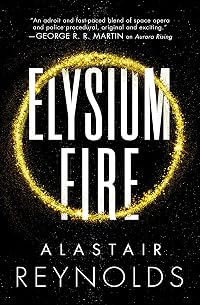
Elysium Fire
by Alastair Reynolds
Prefect Dreyfus Emergency (2), Revelation Space (8), Revelation Space, chronological order (2429)
On This Page
Description
"Elysium Fire" is a smoldering tale of murderers, secret cultists, tampered memories, and unthinkable power, of bottomless corruption and overpowering idealism from the king of modern space opera. Ten thousand city-state habitats orbit the planet Yellowstone, forming a near-perfect democratic human paradise. But even utopia needs a police force. For the citizens of the Glitter Band that organization is Panoply, and the prefects are its operatives. Prefect Tom Dreyfus has a new emergency on show more his hands. Across the habitats and their hundred million citizens, people are dying suddenly and randomly, victims of a bizarre and unprecedented malfunction of their neural implants. And these "melters" leave no clues behind as to the cause of their deaths... As panic rises in the populace, a charismatic figure is sowing insurrection, convincing a small but growing number of habitats to break away from the Glitter Band and form their own independent colonies. show lessTags
Recommendations














Member Reviews
Oh, Alastair, my dude. I do still love you but this book is not your finest hour. I’ve — I’ve got some issues with this, is what I’m saying.
Okay, so. First issue: we’ve recently had the dubious pleasure, in Reynolds’s work, of watching a man lose his faith in democracy book by book. Reynolds created a “perfectly democratic” society, and for a long time had almost no interest in it — his earlier books focus on various other elements of his universe, or on what happens after this society crashes and burns. And then comes his Dreyfuss thing (we’ll get to that), and now he is interested in his perfect democracy — except it’s less and less perfect, the more he writes about it. In this book, he more or less destroys show more it. The democracy, like the cake, is a lie! It’s pretty obvious he can’t believe in a huge group of people voting and managing to steer a society well for any length of time, and it’s pretty obvious — I’m pointing here at the entire world, but at Brexit and Trump in particular — why.
So that is kind of interesting, although I think, um, he’s milked all of whatever remained of the interest out of it in this book. Which is unfortunate, because I gather from the numbering and labeling scheme of this book that he’s going to stay on his Dreyfuss bullshit for a while, and wow I wish he would not. Dreyfuss is everything that a Reynolds character, once upon a time, was not: generic, bland, and nearly personalityless. His main character traits are that he is wise (good at patterns and with intuition!) and tired (so, so tired). His main motivation is Justice. His main sorrow is his refrigerated wife (such sorrow, so much guilt, he had to refrigerate her himself for the Good of Society, o woe, o wife, o life!). I — seriously, this is not the best Reynolds has. Not even close. I could hit a dozen of Dreyfuss from where I’m sitting, and that would be in books on *my* shelves, and I hate this character. But he’s ubiquitous. And so, so very done before. Reynolds can — or once could — do better.
Beyond that, the plot of this book is — honestly pretty basic. I saw where it was going a looooong time before we got there, and spent most of the second half of the book going, yes, yes, can we speed this up? Unfortunately, the plot’s simplicity gave me plenty of time to appreciate the other problem with this Dreyfuss affair Reynolds has got going on: Dreyfuss is Wise and Right and the Designated Survivor, because he’s the main character. Which means that the women around him get to be mostly either wrong or dead. It’s not a great look, and while I wouldn’t normally expect better from hard SF, I do expect better from Reynolds.
I just — I just want this book not to be the new Reynolds. I want him to get over this and move on. I mean, if there’s another Dreyfuss book, I’ll read it, because I’ve read everything else Reynolds has written, and I still have hope. But I very much would like him to return to his better form. This is just a blah procedural mystery novel in space clothes. show less
Okay, so. First issue: we’ve recently had the dubious pleasure, in Reynolds’s work, of watching a man lose his faith in democracy book by book. Reynolds created a “perfectly democratic” society, and for a long time had almost no interest in it — his earlier books focus on various other elements of his universe, or on what happens after this society crashes and burns. And then comes his Dreyfuss thing (we’ll get to that), and now he is interested in his perfect democracy — except it’s less and less perfect, the more he writes about it. In this book, he more or less destroys show more it. The democracy, like the cake, is a lie! It’s pretty obvious he can’t believe in a huge group of people voting and managing to steer a society well for any length of time, and it’s pretty obvious — I’m pointing here at the entire world, but at Brexit and Trump in particular — why.
So that is kind of interesting, although I think, um, he’s milked all of whatever remained of the interest out of it in this book. Which is unfortunate, because I gather from the numbering and labeling scheme of this book that he’s going to stay on his Dreyfuss bullshit for a while, and wow I wish he would not. Dreyfuss is everything that a Reynolds character, once upon a time, was not: generic, bland, and nearly personalityless. His main character traits are that he is wise (good at patterns and with intuition!) and tired (so, so tired). His main motivation is Justice. His main sorrow is his refrigerated wife (such sorrow, so much guilt, he had to refrigerate her himself for the Good of Society, o woe, o wife, o life!). I — seriously, this is not the best Reynolds has. Not even close. I could hit a dozen of Dreyfuss from where I’m sitting, and that would be in books on *my* shelves, and I hate this character. But he’s ubiquitous. And so, so very done before. Reynolds can — or once could — do better.
Beyond that, the plot of this book is — honestly pretty basic. I saw where it was going a looooong time before we got there, and spent most of the second half of the book going, yes, yes, can we speed this up? Unfortunately, the plot’s simplicity gave me plenty of time to appreciate the other problem with this Dreyfuss affair Reynolds has got going on: Dreyfuss is Wise and Right and the Designated Survivor, because he’s the main character. Which means that the women around him get to be mostly either wrong or dead. It’s not a great look, and while I wouldn’t normally expect better from hard SF, I do expect better from Reynolds.
I just — I just want this book not to be the new Reynolds. I want him to get over this and move on. I mean, if there’s another Dreyfuss book, I’ll read it, because I’ve read everything else Reynolds has written, and I still have hope. But I very much would like him to return to his better form. This is just a blah procedural mystery novel in space clothes. show less
An epidemic of exploding heads, and a rabble-rousing demagogue trying to foment Space Brexit, are the two flies in the ointment of the Glitter Band, a swarm of space habitats whose citizens vote on everything, mostly without giving it a conscious thought, via brain implants. Charged with extracting said flies (could they by any chance be linked?) is Panoply, the light-touch police force whose day job is keeping the constant elections free and fair. Can grizzled noirish Detective (sorry, "Prefect") Dreyfus, aided by puckish rising-star deputy Thalia Ng and cynical hyperpig Sparver Bancal, unravel the mystery before the Utopian federation of the Glitter Band is wrecked by self-interested secessionists? And if they do, will any of its show more inhabitants still have an intact upper deck? Read this book to find out!
But only if your tolerance for comic book villains who explain their motives before offering someone a sadistic choice, disjointed pacing, and plots gummed up with procedural manoeuverings and too-long flashback sequences is greater than mine. It doesn't help that I'm way more into the kind of galaxy-spanning space opera Reynolds gives us in the Revelation Space trilogy than cop stories, but I still don't think this is a very good example of the latter. Noggins going nova will always be an exciting premise (although slightly less so when "beta-level" copies of their owners can be resurrected for evidential purposes) but none of the characters here are very interesting, least of all Space Brexit dude and the perma-harried top cop "Lady" Jane Aumonier whose main purpose is to trust the hunches of Dreyfus. And even then, we learn early on that the upper-limit for cranial detonations is like 2,000. Hardly the end of the world in a populace of tens of millions! show less
But only if your tolerance for comic book villains who explain their motives before offering someone a sadistic choice, disjointed pacing, and plots gummed up with procedural manoeuverings and too-long flashback sequences is greater than mine. It doesn't help that I'm way more into the kind of galaxy-spanning space opera Reynolds gives us in the Revelation Space trilogy than cop stories, but I still don't think this is a very good example of the latter. Noggins going nova will always be an exciting premise (although slightly less so when "beta-level" copies of their owners can be resurrected for evidential purposes) but none of the characters here are very interesting, least of all Space Brexit dude and the perma-harried top cop "Lady" Jane Aumonier whose main purpose is to trust the hunches of Dreyfus. And even then, we learn early on that the upper-limit for cranial detonations is like 2,000. Hardly the end of the world in a populace of tens of millions! show less
"Two psychotic ghosts, locked in an endless stalemate": Reynolds returns with another space opera police procedural set in the Glitter Band, an artificial ring system of numerous habitats revolving around the planet Yellowstone. The Glitter Band is a direct democracy on a mass scale, and citizens employ cybernetic means to participate constantly in the policymaking process. This time, the specter of political fragmentation haunts the Band. Somewhat transparently, the ostensible antagonist is a yellow-haired populist who urges habitats to "take back control" and withdraw from the Band's unique form of self-government. Meanwhile, a kind of plague grows in the background. Much of the procedural here addresses the anxieties and details of show more exponential growth curves, projected mortality rates, etc. But the story turns around the antagonist's own strange and fragmented backstory. A tyrant never really has agential unity, after all. Late in the novel, one of the spaceships is called the Democratic Circus. Its name, perhaps, captures the quivering anxiety that animates the plot. show less
Before finishing the first chapter of 'Elysium Fire' I noticed it's about Space Brexit. Perhaps unsurprising as it was published in 2018. I found the analogy for Brexit rather effective. The conclusion being that while demagogues are both dangerous and annoying, the real risk lies with their shadowy backers who are pursuing private agendas with no regard for the extremely destructive wider consequences. It was also well-integrated into an exciting hard sci-fi thriller, in which prefects race against time to prevent a series of mysterious deaths. There are some excellent action sequences and the main characters face compelling dilemmas. The protagonists are the same group as in [b:The Prefect|89195|The Prefect (Prefect Dreyfus Emergency, show more #1)|Alastair Reynolds|https://i.gr-assets.com/images/S/compressed.photo.goodreads.com/books/1327988786l/89195._SX50_.jpg|3102565] and I continued to find them interesting and sympathetic. I appreciated that differences of opinion, trade-offs, co-operation, use of force, and public trust in Panopoly were all treated thoughtfully. The prefects aren't heroes or faceless functionaries and their role in the Glitter Band is explored with nuance.
Nonetheless, I preferred their depiction in [b:The Prefect|89195|The Prefect (Prefect Dreyfus Emergency, #1)|Alastair Reynolds|https://i.gr-assets.com/images/S/compressed.photo.goodreads.com/books/1327988786l/89195._SX50_.jpg|3102565] as 'Elysium Fire' placed them very much on the defensive against external critique and breakaway habitats. Devon Garlin's role in the plot doesn't allow space for consideration of whether Panopoly could benefit from reforms or changes in oversight. Of course, this is also frustratingly analogous with Brexit! 'Elysium Fire' is a high quality sci-fi adventure with contemporary resonances, although I didn't enjoy it quite as much as [b:The Prefect|89195|The Prefect (Prefect Dreyfus Emergency, #1)|Alastair Reynolds|https://i.gr-assets.com/images/S/compressed.photo.goodreads.com/books/1327988786l/89195._SX50_.jpg|3102565]. The inclusion of so many flashbacks in the narrative wasn't entirely to my taste, despite them being suitably ominous. The world of the Glitter Band is brilliantly detailed, though, and a real joy to visit. show less
Nonetheless, I preferred their depiction in [b:The Prefect|89195|The Prefect (Prefect Dreyfus Emergency, #1)|Alastair Reynolds|https://i.gr-assets.com/images/S/compressed.photo.goodreads.com/books/1327988786l/89195._SX50_.jpg|3102565] as 'Elysium Fire' placed them very much on the defensive against external critique and breakaway habitats. Devon Garlin's role in the plot doesn't allow space for consideration of whether Panopoly could benefit from reforms or changes in oversight. Of course, this is also frustratingly analogous with Brexit! 'Elysium Fire' is a high quality sci-fi adventure with contemporary resonances, although I didn't enjoy it quite as much as [b:The Prefect|89195|The Prefect (Prefect Dreyfus Emergency, #1)|Alastair Reynolds|https://i.gr-assets.com/images/S/compressed.photo.goodreads.com/books/1327988786l/89195._SX50_.jpg|3102565]. The inclusion of so many flashbacks in the narrative wasn't entirely to my taste, despite them being suitably ominous. The world of the Glitter Band is brilliantly detailed, though, and a real joy to visit. show less
Alastair Reynolds returns to the Revelation Space universe with the strongest novel *IMHO* since The Prefect. Of course, this is a direct follow-up to The Prefect.
Look, I know that's kinda a toss out statement, but it's still true. I loved The Prefect because it went wild with tech and even wilder political imagination, glorifying the Glitter Band before it became the Rust Belt. And of course, it was a really awesome mystery that went all out to become a nightmare destroying so much of the beautiful orbiting habitats around Yellowstone. That last book was a near-utopia under siege by a dead girl who had gotten really good with neural architecture and cloud-based systems. It was damn delicious and imaginative and detailed as hell. And show more the characters were pretty hardcore awesome, too.
Fast forward to an even more accomplished Reynolds with even better characterization, more fluid prose, and dialogue. Add the lingering effects of failed confidence in the Prefects from the previous events, talk of secession by demagogs, and a pretty awesome string of high-tech murders that can be directly linked to the events of other RS novels, and we've got an increasingly harrowing mystery on a shoestring budget even if the high tech gadgets are way beyond anything we've got.
I mean, just look at this tiny list: Beta-level intelligence simulations allowing the dead to keep on living, quick-matter constructs that can become anything just so long as the right price is paid, personal weapons that act like Swiss Army Knives of AI snakes, and a subset of humans who just don't give a crap about what they want to upgrade themselves with.
The mystery is almost the only thing that's normal, and we're dealing with cooked brains and a list of the dead reaching the thousands and it's all being used as political gain.
Really fun novel. Really Hard-SF.
But you know what I love most about this? Reynolds is connecting ALL the Revelation Space novels together even tighter in this one. I'm picking up future events in Chasm City, regular and awesome characters from Reynold's short fiction and the events after everything goes to hell following the Melding Plague and the alien menace, and of course, there's Aurora. I love, love, love Aurora. She's been a mainstay of godlike intelligence in the series and what a personality. :)
A word to the wise: I probably should have re-read The Prefect before picking this up, but it really wasn't that bad. This book was pretty brilliant without needing to revisit the other. BUT I was reminded just how brilliant the other was, too. :)
Another thing: Most of his standalone novels are just that... even if the connections and the timelines are there. The stories are readable in any order you wish. Even this one.
And that being said, Bravo! This really was a fantastic new Reynolds! Easily one of my favorites.
Thanks to Netgalley for this ARC! show less
Look, I know that's kinda a toss out statement, but it's still true. I loved The Prefect because it went wild with tech and even wilder political imagination, glorifying the Glitter Band before it became the Rust Belt. And of course, it was a really awesome mystery that went all out to become a nightmare destroying so much of the beautiful orbiting habitats around Yellowstone. That last book was a near-utopia under siege by a dead girl who had gotten really good with neural architecture and cloud-based systems. It was damn delicious and imaginative and detailed as hell. And show more the characters were pretty hardcore awesome, too.
Fast forward to an even more accomplished Reynolds with even better characterization, more fluid prose, and dialogue. Add the lingering effects of failed confidence in the Prefects from the previous events, talk of secession by demagogs, and a pretty awesome string of high-tech murders that can be directly linked to the events of other RS novels, and we've got an increasingly harrowing mystery on a shoestring budget even if the high tech gadgets are way beyond anything we've got.
I mean, just look at this tiny list: Beta-level intelligence simulations allowing the dead to keep on living, quick-matter constructs that can become anything just so long as the right price is paid, personal weapons that act like Swiss Army Knives of AI snakes, and a subset of humans who just don't give a crap about what they want to upgrade themselves with.
The mystery is almost the only thing that's normal, and we're dealing with cooked brains and a list of the dead reaching the thousands and it's all being used as political gain.
Really fun novel. Really Hard-SF.
But you know what I love most about this? Reynolds is connecting ALL the Revelation Space novels together even tighter in this one. I'm picking up future events in Chasm City, regular and awesome characters from Reynold's short fiction and the events after everything goes to hell following the Melding Plague and the alien menace, and of course, there's Aurora. I love, love, love Aurora. She's been a mainstay of godlike intelligence in the series and what a personality. :)
A word to the wise: I probably should have re-read The Prefect before picking this up, but it really wasn't that bad. This book was pretty brilliant without needing to revisit the other. BUT I was reminded just how brilliant the other was, too. :)
Another thing: Most of his standalone novels are just that... even if the connections and the timelines are there. The stories are readable in any order you wish. Even this one.
And that being said, Bravo! This really was a fantastic new Reynolds! Easily one of my favorites.
Thanks to Netgalley for this ARC! show less
I adore Prefect Dreyfus, Sparver the hyper-pig and all the cast at Panoply as well as the conceit of the 'detective' story (he is more than that, of course) in the far future in space, which is, being inhabited by humans, vulnerable to the bad guy, full of innovations and venom. Not quite as fun as the first one but still plenty fun. I was less absorbed in the back story although I don't know how that was unavoidable and the two threads past and future came together reasonably well. I had figured some stuff out but not all. ****
Elysium Fire is a disappointing work. If you quite enjoyed "The Prefect" (also called "Aurora Rising") then you MAY still enjoy Elysium Fire. It's largely the same book.
The frustration with Elysium Fire is that Reynolds does not construct a narrative that has any real consequences. This was a defect in The Prefect but becomes even more pronounced in Elysium. Apparently incredibly consequential events and actions are later brushed off as if nothing happen. For example, a character is crushed with life-threatening injuries and almost-certain brain damage only to pop back up fully functional in a day-or-so. This is repeated.
Further, the villain's motivation is flat. Reynold sets up an interesting mystery with the Shell House but then show more follows it with a flaccid reveal and comic book hero-level motivations. Reynold's writing cannot save a 1 dimensional plot with 2 dimensional characters.
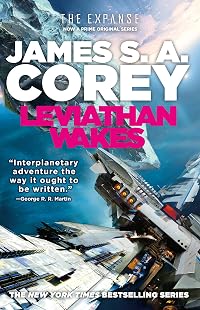
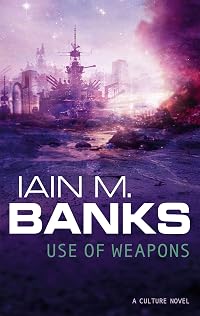
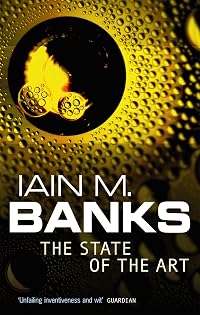
My suggestion is that if you're looking for great Sci Fi (or even much better Alastair Reynolds), find something else. Check out James SA Corey, Ian M Banks. Alastair Reynolds early stuff (like Revelation Space) was also far superior. This is just a bad novel.
***SPOILERS FROM ELYSIUM FIRE AND THE PREFECT BELOW***
One of the great flaws is that in the universe of Dreyfus, there are no consequences. Jane Aumonier is saved from the Clockmaker and has what consequences in this book? She is wholly unchanged from a traumatic experience. Dreyfus is still the same cliched Film Noir detective. Ng is almost killed and has serious brain damage only to brush it off in a day.
The Big Danger in the plot itself is ridiculous. At most 2000 citizens (of how many millions?) are threatened. Somehow this will bring the downfall of the Glitter Band. Why the villain even wants this downfall is because he was seriously abused as a child, wishes to punish his abusers (which makes sense) and ALSO wants to destroy the entire Glitter Band. Because... he wants to watch the world burn? The villain was setup as a complex character in the "flashbacks", but because 1D and insipid by the end. show less
The frustration with Elysium Fire is that Reynolds does not construct a narrative that has any real consequences. This was a defect in The Prefect but becomes even more pronounced in Elysium. Apparently incredibly consequential events and actions are later brushed off as if nothing happen. For example, a character is crushed with life-threatening injuries and almost-certain brain damage only to pop back up fully functional in a day-or-so. This is repeated.
Further, the villain's motivation is flat. Reynold sets up an interesting mystery with the Shell House but then show more follows it with a flaccid reveal and comic book hero-level motivations. Reynold's writing cannot save a 1 dimensional plot with 2 dimensional characters.
My suggestion is that if you're looking for great Sci Fi (or even much better Alastair Reynolds), find something else. Check out James SA Corey, Ian M Banks. Alastair Reynolds early stuff (like Revelation Space) was also far superior. This is just a bad novel.
***SPOILERS FROM ELYSIUM FIRE AND THE PREFECT BELOW***
One of the great flaws is that in the universe of Dreyfus, there are no consequences. Jane Aumonier is saved from the Clockmaker and has what consequences in this book? She is wholly unchanged from a traumatic experience. Dreyfus is still the same cliched Film Noir detective. Ng is almost killed and has serious brain damage only to brush it off in a day.
The Big Danger in the plot itself is ridiculous. At most 2000 citizens (of how many millions?) are threatened. Somehow this will bring the downfall of the Glitter Band. Why the villain even wants this downfall is because he was seriously abused as a child, wishes to punish his abusers (which makes sense) and ALSO wants to destroy the entire Glitter Band. Because... he wants to watch the world burn? The villain was setup as a complex character in the "flashbacks", but because 1D and insipid by the end. show less
Members
- Recently Added By
Lists

2019 Hugo Eligible Novels
40 works; 12 members

Review 4
37 works; 3 members

Books Read in 2023
5,638 works; 147 members
Author Information

141+ Works 40,091 Members
Awards and Honors
Awards
Series


Common Knowledge
- Canonical title*
- Elysionin tuli
- Original publication date
- 2018-01-23
- People/Characters
- Tom Dreyfus; Thalia Ng; Sparver Bancal; Jane Aumonier; Aurora; Lurcher (show all 8); Devon Garlin; Doctor Stasov
- Important places
- The Glitter Band; Yellowstone (Planet)
- Important events
- Wildfire outbreak
- First words
- From a distance it almost looked natural.
- Last words
- (Click to show. Warning: May contain spoilers.)Across the grounds, far from the Shell House - but still within the family dome, rather than beyond it, in the greater expanse of Chasm City - something was on fire.
- Publisher's editor
- Redfearn, Gillian
- Blurbers
- Martin, George R. R.
*Some information comes from Common Knowledge in other languages. Click "Edit" for more information.
Classifications
Statistics
- Members
- 617
- Popularity
- 47,381
- Reviews
- 23
- Rating
- (3.79)
- Languages
- Czech, English, Finnish
- Media
- Paper, Audiobook, Ebook
- ISBNs
- 16
- ASINs
- 6