Tales of Ancient Egypt
by Roger Lancelyn Green
On This Page
Description
Retells twenty stories of magic, adventure, and mythology first told in ancient Egypt.Tags
Recommendations





Member Reviews
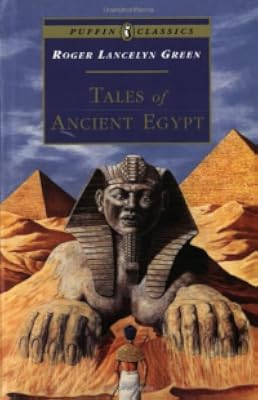
Many of the covers show a rather bizarre illustration: the sphinx is semi-buried in sand, but its paws are sticking out. I don't know who provided this cover illustration, but it is _impossible_. For a more realistic illustration of this story about the young prince and the sphinx, try "Secrets of the Sphinx" by James Cross Giblin or "Gods and Pharaohs from Egyptian Mythology" by Geraldine Harris.
It struck me that the last four of the tales in the section called "Tales of the Gods" should really be in a separate section called "Propaganda", as these tales were invented by various pharaohs to impart a special divine blessing to their rule. They were, of course, usually invented in the reign of a pharaoh whose rule might have seemed a show more little less legitimate. For example, the story of Hatshepsut's divine birth would have been put about because, for a woman to become pharaoh, rather than merely regent, was a bit out of the way and seemed like it required extra justification. show less
It struck me that the last four of the tales in the section called "Tales of the Gods" should really be in a separate section called "Propaganda", as these tales were invented by various pharaohs to impart a special divine blessing to their rule. They were, of course, usually invented in the reign of a pharaoh whose rule might have seemed a show more little less legitimate. For example, the story of Hatshepsut's divine birth would have been put about because, for a woman to become pharaoh, rather than merely regent, was a bit out of the way and seemed like it required extra justification. show less
This is a nicely written, highly entertaining set of Ancient Egyptian stories. It is interesting to see how many of them pre-date stories I'm more familiar with, such as Cinderella (or the Bible....) As always, Green tells a wonderful tale, but as this is intended for younger readers, some of stories are a bit expurgated. I read this as I was watching the Teaching Company's History of Ancient Egypt with Robert Brier, and it is a good companion, although the names used to identify the gods differ in some instances.
This started as lunch stories and ended up being nighttime reading because Z couldn't get enough.
Z loved this book and called it the best mythology collections he's read. I did like the way the the stories were divided into gods and goddesses, Pharaohs, and adventures . . . The latter being very similar to folk tales. It was cool to rad the Egyptian version of Helen of Troy and a few fairy tales. But, the violence and misogyny is not for the squeamish, nor is the dense text of unfamiliar names (as a read aloud).
Egypt is one of the oldest literary cultures on earth, dating from 3200 B.C. when Menes united Upper and Lower Egypt. The tales in this book are divided into three sections. “Tales of the Gods” tell myths about ancient Egyptian deities such as Amen-Ra, Isis, Osiris, Thoth, Horus, Khnemu, and others. “Tales of Magic” relate legends about semi-historical figures in ancient Egypt like Seneferu, Khufu, Rameses the Great, and Bata. And “Tales of Adventure” contain other stories that the ancient Egyptians recorded. These tales are taken from the hieroglyphics carved on temples and tombs and the later papyri written after Demotic script superseded the old hieroglyphs. There are a few references to drinking wine and beer, but there show more is also a mention of Joseph and the Israelites in the prologue implying that the author considered them genuine historical entities. A time chart of Egyptian history places the different tales into their historical context, and there are several pages of facts about ancient Egyptian culture and beliefs. The book would make an excellent complement to a homeschool study of ancient Egypt.
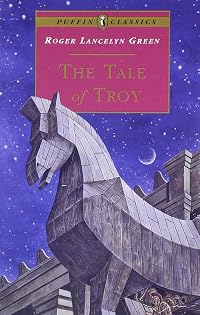
Roger Gilbert Lancelyn Green (1918–1987), born in Norwich, England, was a British biographer, children's writer, and Oxford academic who formed part of the Inklings literary discussion group along with C.S. Lewis and J.R.R. Tolkien. He had studied under Lewis at Merton College, Oxford, and remained close to Lewis until the latter’s death in 1963. In fact, when Lewis started writing his famous children’s fantasy books in the late 1940s, it was Green who encouraged him to publish it and suggested that they should be called The Chronicles of Narnia. Green became known primarily for his writings for children, particularly his retellings of the myths of Greece in Tales of the Greek Heroes (1958), The Tale of Troy (1958), and Tales the Muses Told: Ancient Greek Myths (1965); and The Tale of Thebes (1977); Norse mythology in The Saga of Asgard, later renamed Myths of the Norsemen (1960); the Arthurian legends in King Arthur and His Knights of the Round Table (1953); the stories of Robin Hood in The Adventures of Robin Hood (1956); and even Tales from Shakespeare (1965). His works of original fiction include The Luck of Troy (1961), set during the Trojan War, and The Land of the Lord High Tiger (1958), a fantasy that has been compared to the Narnia books.
There are some in the homeschool movement who have strong objections to reading and studying mythology, claiming that it gives credence to heathen idolatry. While I respect their sincere convictions, I do not necessarily agree with their conclusions. The fact that many ancient cultures worshipped false gods and the stories that they told about those false gods are part of the history of our world, and there are many aspects of our Western culture which are drawn from them. I am convinced that we can read and study about the pagan idol gods from a purely historical standpoint without honoring them in any way or being in danger of believing in them, and can even see from learning about them how much superior the one true God who is revealed to us in the Bible truly is. I did not find Green’s Tales of Ancient Egypt to be awesome or inspiring, but I thought that they were interesting reading, and they do remind me how thankful I am that our universe is ruled over by a holy, just, reasonable, and orderly Lord rather than the hodge-podge of mystical, magical, mythical deities of ancient Egypt. show less
Roger Gilbert Lancelyn Green (1918–1987), born in Norwich, England, was a British biographer, children's writer, and Oxford academic who formed part of the Inklings literary discussion group along with C.S. Lewis and J.R.R. Tolkien. He had studied under Lewis at Merton College, Oxford, and remained close to Lewis until the latter’s death in 1963. In fact, when Lewis started writing his famous children’s fantasy books in the late 1940s, it was Green who encouraged him to publish it and suggested that they should be called The Chronicles of Narnia. Green became known primarily for his writings for children, particularly his retellings of the myths of Greece in Tales of the Greek Heroes (1958), The Tale of Troy (1958), and Tales the Muses Told: Ancient Greek Myths (1965); and The Tale of Thebes (1977); Norse mythology in The Saga of Asgard, later renamed Myths of the Norsemen (1960); the Arthurian legends in King Arthur and His Knights of the Round Table (1953); the stories of Robin Hood in The Adventures of Robin Hood (1956); and even Tales from Shakespeare (1965). His works of original fiction include The Luck of Troy (1961), set during the Trojan War, and The Land of the Lord High Tiger (1958), a fantasy that has been compared to the Narnia books.
There are some in the homeschool movement who have strong objections to reading and studying mythology, claiming that it gives credence to heathen idolatry. While I respect their sincere convictions, I do not necessarily agree with their conclusions. The fact that many ancient cultures worshipped false gods and the stories that they told about those false gods are part of the history of our world, and there are many aspects of our Western culture which are drawn from them. I am convinced that we can read and study about the pagan idol gods from a purely historical standpoint without honoring them in any way or being in danger of believing in them, and can even see from learning about them how much superior the one true God who is revealed to us in the Bible truly is. I did not find Green’s Tales of Ancient Egypt to be awesome or inspiring, but I thought that they were interesting reading, and they do remind me how thankful I am that our universe is ruled over by a holy, just, reasonable, and orderly Lord rather than the hodge-podge of mystical, magical, mythical deities of ancient Egypt. show less
Written for children (over 9 years old) and young adults, these stories of the Ancient Egyptians include gods such as Amen-Ra and Osiris, and some of the Egyptian rulers. Interesting to compare with tales from ancient Greece, Rome or Troy.
Retells twenty stories of magic, adventure, and mythology first told in ancient Egypt.
Members
- Recently Added By
Lists

Beautiful Feet Books
304 works; 7 members

The Story of the World: History for the Classical Child: Activity Book One
291 works; 3 members

Author Information

85+ Works 14,414 Members
Roger Lancelyn Green was born in England in 1918, where his family has lived for more than 900 years. He was often sick as a child and spent long periods confined to his room devouring Greek myths, medieval romances, and fairy tales. Green began a lifelong fascination with Greece and Greek culture when he first visited that country in 1935. He show more went on to compile and retell many Greek stories, including "Old Greek Fairy Tales," and "Jason and the Golden Fleece." Green also wrote his own stories, but he is better known for his retellings of folk tales from around the world. Roger Lancelyn Green died in 1987 (Bowker Author Biography) show less
Some Editions
Series
Belongs to Publisher Series
Common Knowledge
- Canonical title
- Tales of Ancient Egypt
- Original publication date
- 1967
- People/Characters
- Amen-Ra; Isis; Osiris; Horus; Khnemu; Hatshepsut (show all 11); Thoth; Se-Osiris; Sinuhe; Helen of Troy; Melenlaus
- Important places
- Africa; Egypt
- Dedication
- To my Niece and God-daughter Jane Trinder
- First words
- Egypt has always been a land of mystery and magic—a land different from all others, difficult to understand, apart and alien, yet strangely fascinating.
- Last words
- (Click to show. Warning: May contain spoilers.)And they lived happily together for the rest of their lives and died a year before the coming of Cambyses the Persian.
- Canonical DDC/MDS
- 398.20932
- Canonical LCC
- GR355 .G7
Classifications
- Genres
- Kids, Nonfiction
- DDC/MDS
- 398.20932 — Society, government, & culture Customs, etiquette & folklore Folklore & Folktales Folk literature History, geographic treatment, biography Folklore of the ancient world Folklore of Ancient Egypt
- LCC
- GR355 .G7 — Geography, Anthropology and Recreation Folklore Folklore By region or country
- BISAC
Statistics
- Members
- 2,012
- Popularity
- 10,481
- Reviews
- 7
- Rating
- (3.83)
- Languages
- English
- Media
- Paper, Audiobook, Ebook
- ISBNs
- 17
- ASINs
- 11