
On This Page
Description
A human foundling child, adopted by a wood-nymph and raised by the creatures who inhabit a magical forest, grows up to be the immortal Santa Claus.Tags
Recommendations














Member Recommendations

Member Reviews
Originally published in 1902, this lighthearted holiday fantasy from L. Frank Baum, an author best known for The Wonderful Wizard of Oz, was one of the perennial favorites of my own reading childhood. I read it again and again as a little girl, never growing tired of its story of good old Santa Claus, and how he came to be. Opening in the magical Forest of Burzee, a fairytale locale that would recur from time to time in Baum's other work, The Life and Adventures of Santa Claus chronicles the coming of a human infant to the immortal wood, his adoption by the wood nymph Necile - nicknamed Claus, or "Little One," by his adoptive mother, the child was sometimes referred to as Neclaus, or "Necile's Little One," a name that was eventually show more corrupted, in human speech, to "Nicholas" - his carefree youth amongst the immortals, and his round-the-world journey as a young man with Ak, the Master Woodsman of the World, a journey that introduced him to the reality of human suffering. Leaving behind his sheltered life in the forest, Claus settled in the Laughing Valley, eventually finding, through his joyful interaction with the children of men, whom he loved and always tried to please, his calling as a toy-maker. Would Claus - eventually called Santa Claus by the people of the world, who considered his goodness to their children nothing short of saintly - be able to continue with his good work? Or would enemies, in the form of the evil Awgwas, or even old age, put an end to it...?
Delightful, engrossing, entertaining - these are just some of the adjectives that spring to mind when I think of this fantastic treatment of the legend of Santa Claus. So great was my childhood enjoyment of it, that I have put off rereading it as an adult, lest it should fail to live up to my memory of it. Happily, I can report that this has not proved to be the case, and that The Life and Adventures of Santa Claus is (with one notable exception), every bit as wonderful as I remember it being. If one enjoys Baum's storytelling style (and I do), then the tale offered here will be a pleasure to read. The story itself, with its creative interpretation of and explanation for so many of the Santa-related traditions of Christmas, is engaging. I find the mixture of familiar and unfamiliar elements - Baum takes customs that are themselves well known (Santa's reindeer, the hanging of stockings by the fireplace), but comes up with unexpected and creative explanations of how they came to be - quite appealing, and I love the larger world of immortals into which he fits his narrative. There is a jolly, goodhearted kindness to the story, and its hero, that never fails to speak to me, although I am sad to say that my recent reread has revealed one less-than-appealing scene - there is a brief passage, in which Santa brings gifts to a family where the parents are said not to value their children at all, that is clearly meant to be about (from the artwork, and from the way in which the home is described) Native Americans of the plains region - that I never noticed as a child reader.
With the caveat that adults should be aware of this scene - Native Americans/Indians are not mentioned in the text, so the young reader might skip on by it - and prepared to discuss it, I do recommend this (mostly) sweet little book to young readers who enjoy Santa and/or Christmas fantasy. Even with its one flaw, in my eyes The Life and Adventures of Santa Claus definitely deserves its status as a classic. show less
Delightful, engrossing, entertaining - these are just some of the adjectives that spring to mind when I think of this fantastic treatment of the legend of Santa Claus. So great was my childhood enjoyment of it, that I have put off rereading it as an adult, lest it should fail to live up to my memory of it. Happily, I can report that this has not proved to be the case, and that The Life and Adventures of Santa Claus is (with one notable exception), every bit as wonderful as I remember it being. If one enjoys Baum's storytelling style (and I do), then the tale offered here will be a pleasure to read. The story itself, with its creative interpretation of and explanation for so many of the Santa-related traditions of Christmas, is engaging. I find the mixture of familiar and unfamiliar elements - Baum takes customs that are themselves well known (Santa's reindeer, the hanging of stockings by the fireplace), but comes up with unexpected and creative explanations of how they came to be - quite appealing, and I love the larger world of immortals into which he fits his narrative. There is a jolly, goodhearted kindness to the story, and its hero, that never fails to speak to me, although I am sad to say that my recent reread has revealed one less-than-appealing scene - there is a brief passage, in which Santa brings gifts to a family where the parents are said not to value their children at all, that is clearly meant to be about (from the artwork, and from the way in which the home is described) Native Americans of the plains region - that I never noticed as a child reader.
With the caveat that adults should be aware of this scene - Native Americans/Indians are not mentioned in the text, so the young reader might skip on by it - and prepared to discuss it, I do recommend this (mostly) sweet little book to young readers who enjoy Santa and/or Christmas fantasy. Even with its one flaw, in my eyes The Life and Adventures of Santa Claus definitely deserves its status as a classic. show less
So I was reading my son Little Wizard Stories of Oz as part of our slowly working our way through all the Oz novels. It was during the run-up to Christmas, and out of nowhere my son turns to me and says, "Is there an Oz book about Christmas?"
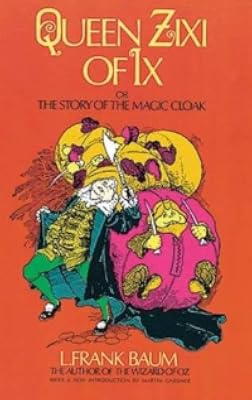
Well, as a matter of fact... kind of! I had kind of harbored ambitions of reading Baum's Oz-adjacent fantasies to him, but never did I imagine he would give me such an opening! In 1902, after The Wizard of Oz but before the Oz books became a regular thing with The Marvelous Land of Oz, Baum wrote The Life and Adventures of Santa Claus. The book features the Forest of Burzee, also mentioned in Queen Zixi of Ix and which appears on the Oz map that first appeared in the Tik-Tok of Oz end papers; the show more Nome King, who would later of course appear in Ozma of Oz and many others has a small appearance; and this version of Santa reappeared in The Road to Oz. So though, no, there was no Oz in this book, the book took place near to Oz, and connected to Oz, I established at great pains, even showing my son an Oz map and pointing out where Burzee was.
He was game for it. I did look into upgrading my copy, but though there is a Puffin edition out there that is probably nicer than my undated (but probably from 1986) New American Library edition, it didn't seem like it would be so much nicer that it would be worth the outlay.
Baum has a different style here than he does in the Oz books: less straightforward, more consciously old-fashioned. While most of the Oz books are what Farah Mendlesohn would call portal/quest fantasies, this one is more of an immersive fantasy. (Or if it is a portal/quest fantasy, it's about someone from the magical world going on a quest in our world.) This means we don't have a viewpoint character like Dorothy or Trot or even Tip or Ojo who doesn't understand the magical world; I wasn't always sure how much my son was getting out of it, though I did my best to slow down and explain things. He was very into it; we raced through chapters while traveling for Christmas.
The book seeks to explain the cultural mythos around Santa: why does he travel the world giving out toys, why does he have reindeer, why can he live forever, how can he go so fast, where do Christmas trees come from, why does he go down chimneys, why do we hang stockings. Baum isn't interested in real history; he clearly takes the current version of Santa and extrapolate backwards. So we learn that in fact Santa invented the concept of the toy! It's a little goofy but I liked it, and book takes place in a sort of non-place, a vaguely European pre-modern environment. (In the Tik-Tok map, the Forest of Burzee is right across the Deadly Desert from Oz, but that is an awkward fit with what we hear here, where it is clearly surrounded by nonmagical lands.) Like Baum was very consciously aiming to do with Wonderful Wizard, it's a fairy tale for the twentieth century, but in a very different way.
It does read a bit off to the modern reader, though, because some elements of the Santa Claus mythos were not yet codified in 1902; Thomas Nast placed Santa at the North Pole in the late nineteenth century, but that must not have been a given yet as of 1902, because Baum's Santa lives in the Laughing Valley of Hohaho. This bothered my son, but he ended up deciding that Santa must move to the North Pole later. Similarly, though Baum uses the idea from Clement C. Moore's "A Visit from St. Nicholas" that Santa's sleigh was drawn by a team of reindeer, he uses a different set, with ten: Flossie and Glossie, Racer and Pacer, Reckless and Speckless, Fearless and Peerless, and Ready and Steady.
The Nome King is a much friendlier fellow than the one from the Oz books. This is easy enough to explain (he would have been perfectly nice to the Oz characters if they hadn't wanted to rescue the Royal Family of Ev from him), but what is less easy to explain is that he has children! The Oz wiki suggests that this Nome King is the father of Roquat, the Nome King from the Oz novels.
It was fun to revisit the book; it has a certain charm. But it has less dialogue than Oz novels, with lots of exposition about Santa's life, and was thus less enjoyable to read aloud, especially to a three-year-old. show less
Well, as a matter of fact... kind of! I had kind of harbored ambitions of reading Baum's Oz-adjacent fantasies to him, but never did I imagine he would give me such an opening! In 1902, after The Wizard of Oz but before the Oz books became a regular thing with The Marvelous Land of Oz, Baum wrote The Life and Adventures of Santa Claus. The book features the Forest of Burzee, also mentioned in Queen Zixi of Ix and which appears on the Oz map that first appeared in the Tik-Tok of Oz end papers; the show more Nome King, who would later of course appear in Ozma of Oz and many others has a small appearance; and this version of Santa reappeared in The Road to Oz. So though, no, there was no Oz in this book, the book took place near to Oz, and connected to Oz, I established at great pains, even showing my son an Oz map and pointing out where Burzee was.
He was game for it. I did look into upgrading my copy, but though there is a Puffin edition out there that is probably nicer than my undated (but probably from 1986) New American Library edition, it didn't seem like it would be so much nicer that it would be worth the outlay.
Baum has a different style here than he does in the Oz books: less straightforward, more consciously old-fashioned. While most of the Oz books are what Farah Mendlesohn would call portal/quest fantasies, this one is more of an immersive fantasy. (Or if it is a portal/quest fantasy, it's about someone from the magical world going on a quest in our world.) This means we don't have a viewpoint character like Dorothy or Trot or even Tip or Ojo who doesn't understand the magical world; I wasn't always sure how much my son was getting out of it, though I did my best to slow down and explain things. He was very into it; we raced through chapters while traveling for Christmas.
The book seeks to explain the cultural mythos around Santa: why does he travel the world giving out toys, why does he have reindeer, why can he live forever, how can he go so fast, where do Christmas trees come from, why does he go down chimneys, why do we hang stockings. Baum isn't interested in real history; he clearly takes the current version of Santa and extrapolate backwards. So we learn that in fact Santa invented the concept of the toy! It's a little goofy but I liked it, and book takes place in a sort of non-place, a vaguely European pre-modern environment. (In the Tik-Tok map, the Forest of Burzee is right across the Deadly Desert from Oz, but that is an awkward fit with what we hear here, where it is clearly surrounded by nonmagical lands.) Like Baum was very consciously aiming to do with Wonderful Wizard, it's a fairy tale for the twentieth century, but in a very different way.
It does read a bit off to the modern reader, though, because some elements of the Santa Claus mythos were not yet codified in 1902; Thomas Nast placed Santa at the North Pole in the late nineteenth century, but that must not have been a given yet as of 1902, because Baum's Santa lives in the Laughing Valley of Hohaho. This bothered my son, but he ended up deciding that Santa must move to the North Pole later. Similarly, though Baum uses the idea from Clement C. Moore's "A Visit from St. Nicholas" that Santa's sleigh was drawn by a team of reindeer, he uses a different set, with ten: Flossie and Glossie, Racer and Pacer, Reckless and Speckless, Fearless and Peerless, and Ready and Steady.
The Nome King is a much friendlier fellow than the one from the Oz books. This is easy enough to explain (he would have been perfectly nice to the Oz characters if they hadn't wanted to rescue the Royal Family of Ev from him), but what is less easy to explain is that he has children! The Oz wiki suggests that this Nome King is the father of Roquat, the Nome King from the Oz novels.
It was fun to revisit the book; it has a certain charm. But it has less dialogue than Oz novels, with lots of exposition about Santa's life, and was thus less enjoyable to read aloud, especially to a three-year-old. show less
This begins with the discovery of the human baby by nymph Necile, who asks for permission from the Master Woodsman, a ruler of immortals, to keep the mortal child for her own. Named Claus, the boy is raised by all the fairies and magical creatures until the day he realizes that he must go live among other humans. He discovers a talent for toy-making, an empathy for all children, a way to carry his toys across the world and how simple B&E is.
I didn't know Baum, author of The Wizard of Oz, had written anything else. This was published in 1902, well before Coca-Cola provided us with the Santa we think of now, so I don't know how much Baum based his Santa on folktales and how much was his own creation. For instance, the reindeer names are show more Flossie, Glossie, Racer, Pacer, Reckless, Speckless, Fearless, Peerless, Ready and Steady.
This is written like a very old-fashioned fairy tale and was slow going at first until I realized that this book must have been intended to be read out loud to children. show less
I didn't know Baum, author of The Wizard of Oz, had written anything else. This was published in 1902, well before Coca-Cola provided us with the Santa we think of now, so I don't know how much Baum based his Santa on folktales and how much was his own creation. For instance, the reindeer names are show more Flossie, Glossie, Racer, Pacer, Reckless, Speckless, Fearless, Peerless, Ready and Steady.
This is written like a very old-fashioned fairy tale and was slow going at first until I realized that this book must have been intended to be read out loud to children. show less
This is a sweet book introducing the world to the man behind the bright red suit. From the time he's abandoned as a baby and adopted by fairies, to his first trip through the countryside with reindeer, every aspect of the Santa Claus myth is explained. I loved that at its heart it's a story of seeing the harsh reality in the world and deciding to be the change that you want. Santa Claus is depicted as a generous, loving man who wants to make children happy. The origins of his toy making skills and chimney entrances are explained in a playful and satisfying way. Such a wonderful Christmas tale!
I absolutely love Baum's take on Santa Claus. I remember seeing the Rankin & Bass animated special based on this years ago, but never realized it was a book until years later when I saw it on a shelf in my local bookstore. Even then, it didn't click until I started reading it and got into the story that certain elements seemed familiar to me.
The book originally drew me in when I saw it was written by L. Frank Baum. How could I pass up a book about the life of Santa written by the creator of Oz? For a few years now, I've wanted to make reading this a regular Christmas tradition, but I keep getting sidetracked by other things, so this year I was determined to return to Claus's fairy tale origins.
Instead of any sort of religious angle, show more Baum goes for much more fairy tale and folklore. He explains Claus's connections to the magical, how he first started to make toys, how he started to deliver, how the Christmas Eve date was chosen, and even how the traditions of stockings and Christmas trees began. Baum also covers how Claus became immortal and even includes a great battle between the forces of Good and Evil for the sake of this one very special man who has become such a figure in our storytelling.
Baum's version is the best I've ever seen, and that's why I want to make it a regular tradition to read it, either to myself or others, each and every Christmas. I'd also like to watch the Rankin & Bass version again some time if I can find it. show less
The book originally drew me in when I saw it was written by L. Frank Baum. How could I pass up a book about the life of Santa written by the creator of Oz? For a few years now, I've wanted to make reading this a regular Christmas tradition, but I keep getting sidetracked by other things, so this year I was determined to return to Claus's fairy tale origins.
Instead of any sort of religious angle, show more Baum goes for much more fairy tale and folklore. He explains Claus's connections to the magical, how he first started to make toys, how he started to deliver, how the Christmas Eve date was chosen, and even how the traditions of stockings and Christmas trees began. Baum also covers how Claus became immortal and even includes a great battle between the forces of Good and Evil for the sake of this one very special man who has become such a figure in our storytelling.
Baum's version is the best I've ever seen, and that's why I want to make it a regular tradition to read it, either to myself or others, each and every Christmas. I'd also like to watch the Rankin & Bass version again some time if I can find it. show less
I had no idea this book existed until quite recently when Alan reviewed it. It being the Christmas season, I looked it up on Project Gutenberg (www.gutenberg.org) and read it for myself.
This book is quite like the Oz books that [a:L. Frank Baum|3242|L. Frank Baum|http://d.gr-assets.com/authors/1197934453p2/3242.jpg] is better known for. The same whimsical nature of those books is conveyed, and the world is rife with folklore and certain bits of magic.
Reading this story, I could imagine it being told to children and trying to answer their questions... hence a lot of mythos without a lot of backstory, a lot of explanation of the more mundane things (cat toys won't hiss and scratch you!) without explanation of how the reindeer can, say, show more fly over water.
Nonetheless, this book is rather adorable and one I'd love to share with my nephews if given the chance. :) show less
This book is quite like the Oz books that [a:L. Frank Baum|3242|L. Frank Baum|http://d.gr-assets.com/authors/1197934453p2/3242.jpg] is better known for. The same whimsical nature of those books is conveyed, and the world is rife with folklore and certain bits of magic.
Reading this story, I could imagine it being told to children and trying to answer their questions... hence a lot of mythos without a lot of backstory, a lot of explanation of the more mundane things (cat toys won't hiss and scratch you!) without explanation of how the reindeer can, say, show more fly over water.
Nonetheless, this book is rather adorable and one I'd love to share with my nephews if given the chance. :) show less
In The Life and Adventures of Santa Claus, L. Frank Baum creates a unique life history for the jolly old elf from his infancy through to his achievement of immortality. Baum's Santa lives in a valley adjacent to Oz and interacts with fairy folk like those in his more famous body of work. Like the Oz stories, Baum's writing here is characterized by unadulterated joy and optimism, without condescending to his audience. Indeed, both adults and children can enjoy his writing. While certain elements of Baum's Santa Claus differ from what has become the standard, the essence of the character is still present. Parents can easily add this book to the list of traditional holiday books to share with their children while Oz enthusiasts will show more delight in Santa's backstory after seeing him in The Road to Oz, the fifth book in the Oz series. show less
Members
- Recently Added By
Lists

Christmas Books
370 works; 40 members

Out of Copyright
244 works; 14 members

Short and Sweet
246 works; 24 members

Books Read in 2014
2,344 works; 89 members

Children's Literature 1900 - 1950 in order
413 works; 8 members

Books Read in 2024
4,727 works; 128 members
Author Information

601+ Works 72,795 Members
Best known as the author of the Wizard of Oz series, Lyman Frank Baum was born on May 15, 1856, in New York. When Baum was a young man, his father, who had made a fortune in oil, gave him several theaters in New York and Pennsylvania to manage. Eventually, Baum had his first taste of success as a writer when he staged The Maid of Arran, a show more melodrama he had written and scored. Married in 1882 to Maud Gage, whose mother was an influential suffragette, the two had four sons. Baum often entertained his children with nursery rhymes and in 1897 published a compilation titled Mother Goose in Prose, which was illustrated by Maxfield Parrish. The project was followed by three other picture books of rhymes, illustrated by William Wallace Denslow. The success of the nursery rhymes persuaded Baum to craft a novel out of one of the stories, which he titled The Wonderful Wizard of Oz. Some critics have suggested that Baum modeled the character of the Wizard on himself. Other books for children followed the original Oz book, and Baum continued to produce the popular Oz books until his death in 1919. The series was so popular that after Baum's death and by special arrangement, Oz books continued to be written for the series by other authors. Glinda of Oz, the last Oz book that Baum wrote, was published in 1920. (Bowker Author Biography) show less
Some Editions
Series


Belongs to Publisher Series
Work Relationships
Is contained in
Has the adaptation
Common Knowledge
- Canonical title
- The Life and Adventures of Santa Claus
- Original title
- The Life and Adventures of Santa Claus
- Original publication date
- 1902
- People/Characters
- Santa Claus; Necile; Nome King (Gnome King); Jack Frost; Death (Spirit of Death)
- Important places
- Forest of Burzee
- Important events
- Christmas
- Related movies
- The Life & Adventures of Santa Claus (1985 | IMDb)
- Dedication
- To my son Harry Neal Baum
- First words
- Have you heard of the great Forest of Burzee?
- Last words
- (Click to show. Warning: May contain spoilers.)"In all this world there is nothing so beautiful as a happy child," says good old Santa Claus, and if he had his way the children would all be beautiful, for all would be happy.
- Original language
- English
Classifications
Statistics
- Members
- 1,427
- Popularity
- 16,604
- Reviews
- 40
- Rating
- (3.85)
- Languages
- 7 — Czech, English, French, German, Italian, Portuguese, Spanish
- Media
- Paper, Audiobook, Ebook
- ISBNs
- 164
- UPCs
- 1
- ASINs
- 47
