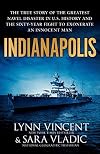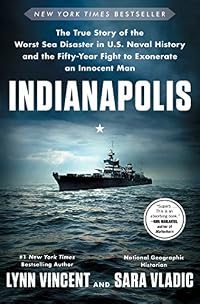
Indianapolis : The True Story of the Worst Sea Disaster in U.S. Naval History and the Fifty-Year Fight to Exonerate an Innocent Man
by Lynn Vincent, Sara Vladic
On This Page
Description
"Based on years of original research and new reporting, two acclaimed authors deliver the riveting and emotionally wrenching full story of the worst sea disaster in United States naval history: the sinking of the USS Indianapolis during World War II--and the fifty-year fight to exonerate the captain after a wrongful court martial."--Provided by publisher.Tags
Recommendations











Member Reviews
Summary: A narrative of the sinking of the U.S.S. Indianapolis by a Japanese submarine at the end of World War Two, the five day struggle for survival that took the lives of nearly two-thirds of those who made it into the water, and the fifty-year effort to exonerate her court-martialed captain.
The U.S.S. Indianapolis was a storied ship. For a time, it was the ship of state for Franklin Roosevelt. Subsequently, it was the flagship of the naval fleet in the Pacific theater, winning ten battle stars. After refitting due to a kamikaze strike, it is sent on a super-secret mission to deliver the components of one of the atomic bombs that ended the war. Then, just after midnight on July 30, 1945, a Japanese submarine surfaced within striking show more distance as Indianapolis, under command of decorated Captain Charles McVay III, was steaming unescorted to the Philippine Island for crew training. Two torpedos sink the ship in twelve minutes. Nine hundred of the twelve hundred men, including McVay make it off the ship due to his abandon ship orders. SOS messages had been sent, although whether the radio equipment was working at that point was in doubt.
Days and nights elapse in the oil-slicked waters where survivors board rafts, nets, or simply hold onto each other, staying afloat with their slowly water-logging life jackets. Somehow, no one realizes the ship is missing and no search is mounted. Men succumb to injuries, or the consequences of drinking salt water when desperately thirsty, or to sharks. After five nights and four days, only a little over 300 are still alive. Only then are they spotted by a patrol plane and a rescue operation mounted, some dying even as they attempt to swim to rescue. Only 316 survive.
While the men's physical ordeal has come to an end, that of Captain McVay is only beginning. Before leaving for the Philippines, he was assured there was no enemy activity along his route, despite intelligence to the contrary never communicated him. Because of overcast conditions, he had secured the ship from zig-zagging, a defensive measure, which was normal practice given what he knew. Nevertheless, he faced a rushed court martial for negligence that resulted in the ship's sinking, on which he was found guilty, even while exculpatory evidence was either being covered up or developed. The failures of others were covered up, only he was held to account.
The last part of the story is about the efforts of a group of the survivors, the captain of the modern namesake submarine, William J. Toti, and a precocious eighth grade boy. Hunter Scott's history project turns into a crusade that takes him to the halls of Congress and an appearance as witness in a Senate hearing, and is the most inspiring and heartening part of the book. Sadly, Captain McVay did not live to see this, only one of his sons.
This is a wonderfully told story that manages to fuse human and technical elements into a page-turning narrative. We experience the moments of fear, panic, and the shipboard disciplines of those last twelve minutes of Indianapolis. We sense the growing despair and struggles to sustain hope and sanity as hours stretch into days, and good friends succumb to injuries or sharks. We share the growing awareness of all who look into the court martial of McVay that a cover up has taken place, and an injustice done. All of this propels us to keep reading to see how this will resolve, and will there be survivors to celebrate. Whether you are a naval history buff, or simply enjoy a good story, this one has all the elements to be your next great read. show less
The U.S.S. Indianapolis was a storied ship. For a time, it was the ship of state for Franklin Roosevelt. Subsequently, it was the flagship of the naval fleet in the Pacific theater, winning ten battle stars. After refitting due to a kamikaze strike, it is sent on a super-secret mission to deliver the components of one of the atomic bombs that ended the war. Then, just after midnight on July 30, 1945, a Japanese submarine surfaced within striking show more distance as Indianapolis, under command of decorated Captain Charles McVay III, was steaming unescorted to the Philippine Island for crew training. Two torpedos sink the ship in twelve minutes. Nine hundred of the twelve hundred men, including McVay make it off the ship due to his abandon ship orders. SOS messages had been sent, although whether the radio equipment was working at that point was in doubt.
Days and nights elapse in the oil-slicked waters where survivors board rafts, nets, or simply hold onto each other, staying afloat with their slowly water-logging life jackets. Somehow, no one realizes the ship is missing and no search is mounted. Men succumb to injuries, or the consequences of drinking salt water when desperately thirsty, or to sharks. After five nights and four days, only a little over 300 are still alive. Only then are they spotted by a patrol plane and a rescue operation mounted, some dying even as they attempt to swim to rescue. Only 316 survive.
While the men's physical ordeal has come to an end, that of Captain McVay is only beginning. Before leaving for the Philippines, he was assured there was no enemy activity along his route, despite intelligence to the contrary never communicated him. Because of overcast conditions, he had secured the ship from zig-zagging, a defensive measure, which was normal practice given what he knew. Nevertheless, he faced a rushed court martial for negligence that resulted in the ship's sinking, on which he was found guilty, even while exculpatory evidence was either being covered up or developed. The failures of others were covered up, only he was held to account.
The last part of the story is about the efforts of a group of the survivors, the captain of the modern namesake submarine, William J. Toti, and a precocious eighth grade boy. Hunter Scott's history project turns into a crusade that takes him to the halls of Congress and an appearance as witness in a Senate hearing, and is the most inspiring and heartening part of the book. Sadly, Captain McVay did not live to see this, only one of his sons.
This is a wonderfully told story that manages to fuse human and technical elements into a page-turning narrative. We experience the moments of fear, panic, and the shipboard disciplines of those last twelve minutes of Indianapolis. We sense the growing despair and struggles to sustain hope and sanity as hours stretch into days, and good friends succumb to injuries or sharks. We share the growing awareness of all who look into the court martial of McVay that a cover up has taken place, and an injustice done. All of this propels us to keep reading to see how this will resolve, and will there be survivors to celebrate. Whether you are a naval history buff, or simply enjoy a good story, this one has all the elements to be your next great read. show less
How do you review a book like this? Where do you even begin? I originally received a free copy of this book from NetGalley, but knew within just a few pages of this beautifully written non-fiction account of the USS Indianapolis's history that I HAD to own a finished copy. I was unable to finish my ARC before the publication date, but the week it was published, I bought my hard copy. Let me say that the physical book itself is just as gorgeous as the prose within.
Lynn Vincent and Sara Vladic have put together a well-written, unputdownable account of the USS Indianapolis, her last voyage, the sinking of the ship, the incredible, harrowing experiences of the survivors and the unthinkable final moments of those who lost their lives, as show more well as the court-martial of Indy's captain, and his eventual exoneration. This is a book that will make you sob hysterically, copious amounts of tears that will come so hard and fast you won't be able to see the page in front of you. It will make you gasp in horror, shake with rage and indignation, and give you immense joy and comfort.
Embarrassingly, I knew NOTHING of the USS Indianapolis before I picked up this book on NetGalley. I am heartily ashamed of the gap in my education. I am beyond grateful to NetGalley and to the authors and publisher of this book for providing such a complete, compelling account. Whether you know a lot about US Naval History or you know nothing, please, I beg you...get your hands on a copy of this book. The saga of the USS Indianapolis and her crew is one that deserves to be told, honored, and remembered. show less
Lynn Vincent and Sara Vladic have put together a well-written, unputdownable account of the USS Indianapolis, her last voyage, the sinking of the ship, the incredible, harrowing experiences of the survivors and the unthinkable final moments of those who lost their lives, as show more well as the court-martial of Indy's captain, and his eventual exoneration. This is a book that will make you sob hysterically, copious amounts of tears that will come so hard and fast you won't be able to see the page in front of you. It will make you gasp in horror, shake with rage and indignation, and give you immense joy and comfort.
Embarrassingly, I knew NOTHING of the USS Indianapolis before I picked up this book on NetGalley. I am heartily ashamed of the gap in my education. I am beyond grateful to NetGalley and to the authors and publisher of this book for providing such a complete, compelling account. Whether you know a lot about US Naval History or you know nothing, please, I beg you...get your hands on a copy of this book. The saga of the USS Indianapolis and her crew is one that deserves to be told, honored, and remembered. show less
“Japanese submarine slammed two torpedoes into her side, Chief. We was comin’ back from the island of Tinian to Leyte. We’d just delivered the bomb. The Hiroshima bomb. Eleven hundred men went into the water. Vessel went down in 12 minutes.
Didn’t see the first shark for about a half-hour. Tiger. 13-footer. You know how you know that in the water, Chief? You can tell by lookin’ from the dorsal to the tail. What we didn’t know, was that our bomb mission was so secret, no distress signal had been sent. They didn’t even list us overdue for a week. Very first light, Chief, sharks come cruisin’ by, so we formed ourselves into tight groups. It was sorta like you see in the calendars, you know the infantry squares in the old show more calendars like the Battle of Waterloo and the idea was the shark come to the nearest man, that man he starts poundin’ and hollerin’ and sometimes that shark he go away… but sometimes he wouldn’t go away.
Sometimes that shark looks right at ya. Right into your eyes. And the thing about a shark is he’s got lifeless eyes. Black eyes. Like a doll’s eyes. When he comes at ya, he doesn’t even seem to be livin’… ’til he bites ya, and those black eyes roll over white and then… ah then you hear that terrible high-pitched screamin’. The ocean turns red, and despite all your poundin’ and your hollerin’ those sharks come in and… they rip you to pieces.
You know by the end of that first dawn, lost a hundred men. I don’t know how many sharks there were, maybe a thousand. I do know how many men, they averaged six an hour. Thursday mornin’, Chief, I bumped into a friend of mine, Herbie Robinson from Cleveland. Baseball player. Boson’s mate. I thought he was asleep. I reached over to wake him up. He bobbed up, down in the water, he was like a kinda top. Upended. Well, he’d been bitten in half below the waist.
At noon on the fifth day, a Lockheed Ventura swung in low and he spotted us, a young pilot, lot younger than Mr. Hooper here, anyway he spotted us and a few hours later a big ol’ fat PBY come down and started to pick us up. You know that was the time rest, June the 29th, 1945.
Anyway, we delivered the bomb.”
- Robert Shaw (Jaws 1975)
I'm not going to lie this is the reason I read this book. This speech from the movie Jaws inspired such fear and terror and added to the movie so well that the real story had to be even scarier.
And so it was in 1945 that after the USS Indianapolis carried the Hiroshima bomb it sank into the Philippine Sea leaving its crew to either sink, die of hypothermia or starvation, commit suicide, or simply wait for their turn.
A gripping and heated journey through the life and death of this ship and its crew. Amazingly written in a format that uses many naval terms but not so many that the layman cannot follow. Instead of just listing off the facts the authors decided to turn the book into a play-by-play story. Which makes it a lot easier for the reader to read. But there is no mistaking that the authors definitely did their homework on this one. This might possibly be the perfect maritime novel.
I would highly recommend this book to anyone who's interested in the military, Naval History, US History, the history of World War II or even just history in general. show less
Didn’t see the first shark for about a half-hour. Tiger. 13-footer. You know how you know that in the water, Chief? You can tell by lookin’ from the dorsal to the tail. What we didn’t know, was that our bomb mission was so secret, no distress signal had been sent. They didn’t even list us overdue for a week. Very first light, Chief, sharks come cruisin’ by, so we formed ourselves into tight groups. It was sorta like you see in the calendars, you know the infantry squares in the old show more calendars like the Battle of Waterloo and the idea was the shark come to the nearest man, that man he starts poundin’ and hollerin’ and sometimes that shark he go away… but sometimes he wouldn’t go away.
Sometimes that shark looks right at ya. Right into your eyes. And the thing about a shark is he’s got lifeless eyes. Black eyes. Like a doll’s eyes. When he comes at ya, he doesn’t even seem to be livin’… ’til he bites ya, and those black eyes roll over white and then… ah then you hear that terrible high-pitched screamin’. The ocean turns red, and despite all your poundin’ and your hollerin’ those sharks come in and… they rip you to pieces.
You know by the end of that first dawn, lost a hundred men. I don’t know how many sharks there were, maybe a thousand. I do know how many men, they averaged six an hour. Thursday mornin’, Chief, I bumped into a friend of mine, Herbie Robinson from Cleveland. Baseball player. Boson’s mate. I thought he was asleep. I reached over to wake him up. He bobbed up, down in the water, he was like a kinda top. Upended. Well, he’d been bitten in half below the waist.
At noon on the fifth day, a Lockheed Ventura swung in low and he spotted us, a young pilot, lot younger than Mr. Hooper here, anyway he spotted us and a few hours later a big ol’ fat PBY come down and started to pick us up. You know that was the time rest, June the 29th, 1945.
Anyway, we delivered the bomb.”
- Robert Shaw (Jaws 1975)
I'm not going to lie this is the reason I read this book. This speech from the movie Jaws inspired such fear and terror and added to the movie so well that the real story had to be even scarier.
And so it was in 1945 that after the USS Indianapolis carried the Hiroshima bomb it sank into the Philippine Sea leaving its crew to either sink, die of hypothermia or starvation, commit suicide, or simply wait for their turn.
A gripping and heated journey through the life and death of this ship and its crew. Amazingly written in a format that uses many naval terms but not so many that the layman cannot follow. Instead of just listing off the facts the authors decided to turn the book into a play-by-play story. Which makes it a lot easier for the reader to read. But there is no mistaking that the authors definitely did their homework on this one. This might possibly be the perfect maritime novel.
I would highly recommend this book to anyone who's interested in the military, Naval History, US History, the history of World War II or even just history in general. show less
Simply put this is an outstanding narrative history, one of the best I’ve ever read. On July 30, 1945 the cruiser Indianapolis with 1200 souls onboard was sunk by a Japanese submarine. 900 went into the water where for four long days they suffered from unimaginable horrors, including being attacked by packs of sharks. Only 316 survived. It was the worst disaster in US naval history. The tale here is not just one of sinking and survival; it’s an expertly woven tale of the ship, her history, the men who sailed her, and the families they left behind. It’s also the story of a systematic wall of silence protecting those who placed the ship in danger, and failed to react to her fate, the scapegoating of her Captain, and the fifty-year show more fight to exonerate him. Fascinating, horrific, emotional, and moving This is a compelling read whether you’ve never heard of the Indianapolis or are already familiar with her story. show less
Book on CD read by John Bedford Lloyd
The subtitle is all the synopsis anyone needs: The True Story of the Worst Sea Disaster in U.S. Naval History and the Fifty-Year Fight to Exonerate an Innocent Man.
I’ve known about the U.S.S. Indianapolis since I was about eleven years old. In 7th grade I became fascinated by sharks and read virtually every book in my public library about them. Many of those books included the story of the Indianapolis sinking and the days at sea that the survivors endured. So, this was not a new story for me, nor the first book about the tragedy that I’ve read.
But knowing the story did nothing to lessen my fascination or divert my attention from the tale. Vincent and Vladic did extensive research, including show more interviews with survivors and their families. The result is a detailed, thorough and still intimately personal story. There was more than one section that brought me to tears, and I cheered at the eventual success the survivors had in clearing their captain of charges of culpability.
The audiobook is masterfully narrated by John Bedford Lloyd. I listened in rapt attention. show less
The subtitle is all the synopsis anyone needs: The True Story of the Worst Sea Disaster in U.S. Naval History and the Fifty-Year Fight to Exonerate an Innocent Man.
I’ve known about the U.S.S. Indianapolis since I was about eleven years old. In 7th grade I became fascinated by sharks and read virtually every book in my public library about them. Many of those books included the story of the Indianapolis sinking and the days at sea that the survivors endured. So, this was not a new story for me, nor the first book about the tragedy that I’ve read.
But knowing the story did nothing to lessen my fascination or divert my attention from the tale. Vincent and Vladic did extensive research, including show more interviews with survivors and their families. The result is a detailed, thorough and still intimately personal story. There was more than one section that brought me to tears, and I cheered at the eventual success the survivors had in clearing their captain of charges of culpability.
The audiobook is masterfully narrated by John Bedford Lloyd. I listened in rapt attention. show less
I have never been drawn to stories of war, but there is something intriguing about the Indianapolis tragedy. I was completely blown away by the story itself, but the detail within the pages of this book is incredible. The vivid imagery is breathtaking, putting you on board the USS Indianapolis, being submerged into the life aboard a ship deep in battle during World War II.
Reading about everything that happened is absolutely heartbreaking, the loss overwhelming and impossible to comprehend. Superbly written in unbelievable detail, I took my time reading this great work, absorbing every morsel, allowing the account to come alive on the page. There were times I had to actually lay the book down and take a deep breath, the situation show more unimaginable, and hard to read. So much tragedy and all of it mind blowing.
I am so glad I had the opportunity to learn about the Indianapolis disaster and believe that everyone should read and reference this account. Highly recommend! show less
Reading about everything that happened is absolutely heartbreaking, the loss overwhelming and impossible to comprehend. Superbly written in unbelievable detail, I took my time reading this great work, absorbing every morsel, allowing the account to come alive on the page. There were times I had to actually lay the book down and take a deep breath, the situation show more unimaginable, and hard to read. So much tragedy and all of it mind blowing.
I am so glad I had the opportunity to learn about the Indianapolis disaster and believe that everyone should read and reference this account. Highly recommend! show less
Even if you know the story of the Indianapolis, this book is a must read. You may know there were 1,195 men on the ship when it was torpedoed, about 300 died initially, about 900 went into the water alive and ultimately 316 survived 5 days in the water before they were rescued. This well-researched, well-written telling gives us so much detail not only from the survivors but also from the loved ones of those who were lost. It will break your heart and it will also make your heart swell with joy and pride. Highly recommend.
Members
- Recently Added By
Lists

Top Five Books of 2018
802 works; 265 members

Club Read's Recommended Nonfiction Written by Women
618 works; 30 members
Author Information
8+ Works 7,027 Members
Lynn Vincent, a former Navy career counselor and air traffic controller, is a writer and a military career specialist. She has written about military career guidance for Army Times Publishing's 1998 Military Handbook, Army/Navy/Air Force Times, and National Business Employment Weekly. She lives in San Diego, California
2 Works 651 Members
Some Editions
Awards and Honors
Awards
Distinctions
Common Knowledge
- Canonical title
- Indianapolis : The True Story of the Worst Sea Disaster in U.S. Naval History and the Fifty-Year Fight to Exonerate an Innocent Man
- Original publication date
- 2018
- Important places
- South Pacific Ocean; Indianapolis, Indiana, USA; Washington, D.C., USA
- Important events
- World War II; Court Martial of Captain Charles B. McVay, III
- Related movies
- USS Indianapolis: The Legacy (2015 | IMDb)
- Dedication
- For those who did not live to tell their stories
- First words
- Prologue: She was born from soil as American as the men who sailed her.
- Last words
- (Click to show. Warning: May contain spoilers.)Guns trained toward the sky, Indianapolis is ready for all that might challenge her, forever on patrol.
- Blurbers
- Drury, Bob; Clavin, Tom; Stanton, Doug; Kinder, Gary; Anderson Brower, Kate; Stavridis, Admiral James (show all 7); Marlantes, Karl
- Canonical DDC/MDS
- 940.5426
- Canonical LCC
- D774.I5
Classifications
- Genres
- History, General Nonfiction, Nonfiction
- DDC/MDS
- 940.5426 — History & geography History of Europe History of Europe 1918- Military history of World War II Campaigns and battles by theatre Pacific
- LCC
- D774 .I5 — History of Europe, Asia, Africa and Oceania History (General) World War II (1939-1945)
- BISAC
Statistics
- Members
- 627
- Popularity
- 46,006
- Reviews
- 30
- Rating
- (4.41)
- Languages
- English
- Media
- Paper, Audiobook, Ebook
- ISBNs
- 14
- ASINs
- 2