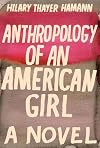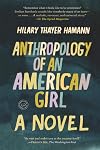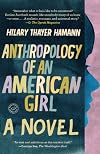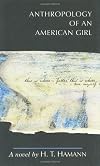
Anthropology of an American Girl
by Hilary Thayer Hamann 
On This Page
Description
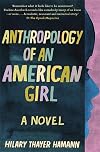
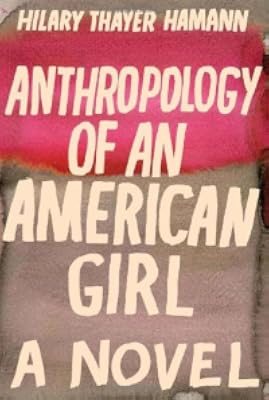
The riveting and cinematic story of a young artist's awakening and her enduring love for a professional boxer. Set in East Hampton, New York, in the 1970s through the moneyed, high-pressured Manhattan of the 1980s.Tags
Recommendations











Member Recommendations
Member Reviews
This is a rather chunky book and one that has gotten a lot of buzz, having initially been self-published, found a devoted following, and ultimately picked up by a major publisher. It's the publishing equivalent of being discovered by Hollywood. So I was very curious to read it and see what all the fuss was about.
Eveline Auerbach is about to start her senior year in high school. She is still reeling from the death of her best friend's mother, whom she loved very much, over the summer and her own unreported rape. Curling into herself and retreating, depressed, Evie navigates the end of high school and her tortured relationship with the solipsistic and emotionally creepy Jack. It is in this final year of school that Evie meets the tortured show more and artistic Rourke, drama teacher extraordinaire. And the philosophizing, self-referential cycle starts again albeit this time with the "love of her life." There are markers of the time scattered convincingly throughout the novel and anyone who lived through the late seventies and early eighties will recognize the references, grounding the book firmly in time. But this is only ever the anthropology of one girl, not a more general take, as I might have hoped.
I think it has just been too long since I was in high school or college but I struggled with the angst and the self-conscious philosophy, finding it all too desperately earnest. I am not so old that I don't remember the navel gazing discussions and disagreements of late teen-life but I didn't find them terribly appealing to read. Then again, I never did like Catcher in the Rye, even when I read it in high school, so perhaps I'm not the target audience for the book given that the major marketing comparison here is to Holden Caulfield. I didn't find the characters particularly likeable nor, in the face of this lack, all that interesting and that is not good when a thin plot is meant to be character-driven.
This could, perhaps, have been saved by exquisite writing but similies and metaphors overwhelmed each page and some of the writing was absolutely head-shakingly incomprehensible. I'd even read sentences aloud to see if I could figure out what Hamann intended if I heard it rather than just read it. Descriptions were overdone, lending none of them more weight than the others and completely overshadowing the story. Sometimes simplicity in writing is not a bad thing. Obviously, given the enormous positive buzz I've heard, my reservations are by no means universal. The jacket blurbs are incredibly glowing and I have since read some gushing reviews. I really wanted to be one of the gushers but it just wasn't to be. Check it out yourself and feel free to come back and tell me what all I missed, because I certainly missed that something intangible that makes me want to force everyone I know to read a book and it's clearly there for quite a lot of readers. show less
Eveline Auerbach is about to start her senior year in high school. She is still reeling from the death of her best friend's mother, whom she loved very much, over the summer and her own unreported rape. Curling into herself and retreating, depressed, Evie navigates the end of high school and her tortured relationship with the solipsistic and emotionally creepy Jack. It is in this final year of school that Evie meets the tortured show more and artistic Rourke, drama teacher extraordinaire. And the philosophizing, self-referential cycle starts again albeit this time with the "love of her life." There are markers of the time scattered convincingly throughout the novel and anyone who lived through the late seventies and early eighties will recognize the references, grounding the book firmly in time. But this is only ever the anthropology of one girl, not a more general take, as I might have hoped.
I think it has just been too long since I was in high school or college but I struggled with the angst and the self-conscious philosophy, finding it all too desperately earnest. I am not so old that I don't remember the navel gazing discussions and disagreements of late teen-life but I didn't find them terribly appealing to read. Then again, I never did like Catcher in the Rye, even when I read it in high school, so perhaps I'm not the target audience for the book given that the major marketing comparison here is to Holden Caulfield. I didn't find the characters particularly likeable nor, in the face of this lack, all that interesting and that is not good when a thin plot is meant to be character-driven.
This could, perhaps, have been saved by exquisite writing but similies and metaphors overwhelmed each page and some of the writing was absolutely head-shakingly incomprehensible. I'd even read sentences aloud to see if I could figure out what Hamann intended if I heard it rather than just read it. Descriptions were overdone, lending none of them more weight than the others and completely overshadowing the story. Sometimes simplicity in writing is not a bad thing. Obviously, given the enormous positive buzz I've heard, my reservations are by no means universal. The jacket blurbs are incredibly glowing and I have since read some gushing reviews. I really wanted to be one of the gushers but it just wasn't to be. Check it out yourself and feel free to come back and tell me what all I missed, because I certainly missed that something intangible that makes me want to force everyone I know to read a book and it's clearly there for quite a lot of readers. show less
Many reviewers have commented on the "beauty of the language" in this dense, 600 page novel. The problem is that Thayer Hamann does not know when to hold back. My patience officially snapped on p.271.
"Say it, he said, the words caught at the base of his throat. No one.
No one, I said, I swore, but you.
I said it because it was true. There was no one but him, and there never would be. I loved him with pain and with something greater than pain, with a barren ache that pealed not in the heart but in the desert dry alongside it. I knew it was so even then: if in his arms I was a woman, beyond them I was nothing."
You may say that this is really not that bad, and quite possibly, I could find worse examples if I cared enough to find them. The show more real problem, however, is that there is 600 pages of this. The prose, and Eveline's internal monologue, wind up choking the book. In 600 pages, largely consisting of Eveline's internal monologue and musings, I should have a sense of her as a character. I don't. She remains vacuous and passive, reacting to the men around her while spouting platitudes about the female condition. I have no idea why men are irresistibly attracted to her. I have no idea why she and Rourke have The One True Love. In fact, I know very little about Rourke at all. Or Eveline's parents. Characters like Kate simply drop out of the story.
The plotting? Well, there's a plot, though it's not exactly 600 pages worth of plot. It's not helped by Thayer Hamann's technique of explaining events 200 pages later, making me say, "Oh. So I didn't miss the explanation for what happened back there. Now it makes sense."
The only thing worse than reading this novel would be to have read the unedited vanity press edition. show less
"Say it, he said, the words caught at the base of his throat. No one.
No one, I said, I swore, but you.
I said it because it was true. There was no one but him, and there never would be. I loved him with pain and with something greater than pain, with a barren ache that pealed not in the heart but in the desert dry alongside it. I knew it was so even then: if in his arms I was a woman, beyond them I was nothing."
You may say that this is really not that bad, and quite possibly, I could find worse examples if I cared enough to find them. The show more real problem, however, is that there is 600 pages of this. The prose, and Eveline's internal monologue, wind up choking the book. In 600 pages, largely consisting of Eveline's internal monologue and musings, I should have a sense of her as a character. I don't. She remains vacuous and passive, reacting to the men around her while spouting platitudes about the female condition. I have no idea why men are irresistibly attracted to her. I have no idea why she and Rourke have The One True Love. In fact, I know very little about Rourke at all. Or Eveline's parents. Characters like Kate simply drop out of the story.
The plotting? Well, there's a plot, though it's not exactly 600 pages worth of plot. It's not helped by Thayer Hamann's technique of explaining events 200 pages later, making me say, "Oh. So I didn't miss the explanation for what happened back there. Now it makes sense."
The only thing worse than reading this novel would be to have read the unedited vanity press edition. show less
Eveline “Evie” Auerbach is growing up in East Hampton, New York in the late 1970′s. She is a philosophical young woman trying to uncover who she is as she navigates the uncertain waters of her senior year in high school and the transition to college in New York City. Anthropology of an American Girl opens in the fall of 1979 as Evie enters her final year of high school. Her best friend, Kate, has just lost her mother to cancer and is living with Evie and Evie’s mother. The two girls have a close relationship which is being tested by loss, grief, and the simple fact that they are growing up and apart. Evie is struggling with her relationship with her boyfriend, Jack – a boy who is angry, cynical, and a bit possessive. Evie and show more Jack seem to be perfect for each other – they are both artists (Jack a musician, while Evie likes to make sketches and create art) and they love to have deep and intellectual discussions, but their relationship is soon strained by an older man named Harrison Rourke. Predictably, Evie ends her uneven relationship with Jack and begins an affair with Rourke which is doomed to fail. Anthropology of An American Girl is a coming of age story which follows the life of one girl as she grows from adolescence into young adulthood.
I had heard a lot about this book before deciding to read it – and it seemed as though I was the perfect target audience for this novel since I came of age during the same time period as Evie. I graduated from high school in 1978 (a year before Evie does) and went on to college, graduating in 1982. But, I had a hard time relating to Evie who comes across much older than her years and has a flair for the melodramatic. Perhaps it was Hamann’s tendency to liberally pepper her writing with metaphor, but I grew tired of being inside of Evie’s head.
The novel is not without merit. I enjoyed some of the insights into aging. The idealism of youth is perfectly encapsulated through Evie’s unique view of the world.
I also enjoyed some of the late 1970s references which catapulted me back to my own youth, like the reference to “Pappagallo purses with the wood handles and the button-on fabric covers” – yes, I owned one of these!
Despite these positives, I found myself rolling my eyes when Evie falls into her angst-driven monologues and melodramatic depictions of love.
I know teens can be overemotional about life, love and everything in between, but I don’t necessarily want to spend 600 pages reading about it.
I really wanted to love this novel. I pushed myself through it hoping that it would come together for me. But in the end, I found myself wishing that it had been half its length. I think my disappointment stems from characters who I could not relate to, and language which was just a bit too flowery and overwrought to satisfy me. show less
I had heard a lot about this book before deciding to read it – and it seemed as though I was the perfect target audience for this novel since I came of age during the same time period as Evie. I graduated from high school in 1978 (a year before Evie does) and went on to college, graduating in 1982. But, I had a hard time relating to Evie who comes across much older than her years and has a flair for the melodramatic. Perhaps it was Hamann’s tendency to liberally pepper her writing with metaphor, but I grew tired of being inside of Evie’s head.
The novel is not without merit. I enjoyed some of the insights into aging. The idealism of youth is perfectly encapsulated through Evie’s unique view of the world.
I also enjoyed some of the late 1970s references which catapulted me back to my own youth, like the reference to “Pappagallo purses with the wood handles and the button-on fabric covers” – yes, I owned one of these!
Despite these positives, I found myself rolling my eyes when Evie falls into her angst-driven monologues and melodramatic depictions of love.
I know teens can be overemotional about life, love and everything in between, but I don’t necessarily want to spend 600 pages reading about it.
I really wanted to love this novel. I pushed myself through it hoping that it would come together for me. But in the end, I found myself wishing that it had been half its length. I think my disappointment stems from characters who I could not relate to, and language which was just a bit too flowery and overwrought to satisfy me. show less
Won as apart of the First Reads/LibraryThing giveaway.
You don't really get a novel these days that talks about American culture and its subcultures of the late 70s and early 80s, and if you do, you certainly don't get one coming from the voice of a girl in bloom.
Hamann's prose is lyrical and lush, perfectly capturing ambiguous states of being that only teenagers can really name and that adults forget all too easily. She captures the general uneasiness of America at the time through Evie's voice, the uneasiness of being a girl growing up in general.
I have not read the original, but even at around 600 pages, no words are wasted nor drawn out. Hamann's words may linger dreamily like a summer day after you read them, but they do not do so show more on the page. Haunting and lovely. One of the best of 2010 so far.
(Crossposted to LibraryThing) show less
You don't really get a novel these days that talks about American culture and its subcultures of the late 70s and early 80s, and if you do, you certainly don't get one coming from the voice of a girl in bloom.
Hamann's prose is lyrical and lush, perfectly capturing ambiguous states of being that only teenagers can really name and that adults forget all too easily. She captures the general uneasiness of America at the time through Evie's voice, the uneasiness of being a girl growing up in general.
I have not read the original, but even at around 600 pages, no words are wasted nor drawn out. Hamann's words may linger dreamily like a summer day after you read them, but they do not do so show more on the page. Haunting and lovely. One of the best of 2010 so far.
(Crossposted to LibraryThing) show less
 This review was written for LibraryThing Early Reviewers.
I carried this extremely thick novel around the house with me for days and had a hard time putting it down. I got nostalgic for my adolescence, and for the eighties...The thing that struck me most about the book was the beautiful prose. All of the characters came to life through the eyes of the first person protagonist, except she herself remained elusive and mysterious to me. I felt as though that was the point though. How does a girl make a reader understand who she is when she doesn't even know herself?
I loved the Rourke character. I loved the political and pop culture references. I loved the place Evie finally found herself at the end. It was a book of thoughts, and it was a very rewarding read. I'll read it again for sure. Who show more doesn't love a good tome about adolescent angst, the pains of first love, and becoming an adult? This is the kind of book I can drown in- dense, rich, and full of feeling.
The book wasn't heavy on action, but I think that those who admire character-driven stories and are willing to invest some time in this work of art will sigh in appreciation. show less
I loved the Rourke character. I loved the political and pop culture references. I loved the place Evie finally found herself at the end. It was a book of thoughts, and it was a very rewarding read. I'll read it again for sure. Who show more doesn't love a good tome about adolescent angst, the pains of first love, and becoming an adult? This is the kind of book I can drown in- dense, rich, and full of feeling.
The book wasn't heavy on action, but I think that those who admire character-driven stories and are willing to invest some time in this work of art will sigh in appreciation. show less
This review was written for LibraryThing Early Reviewers.If Henry James and Margaret Attwood could have a literary child, it might be Hilary Thayer Hamann. Evoking James’ Portrait of a Lady or Daisy Miller, and Atwood’s Surfacing, Hamann’s debut novel Anthropology of an American Girl poetically, and brutally, follows the seemingly ordinary but at once riveting life of narrator and protagonist Evaline with obsessive detail and powerful insight. It is a modern coming-of-age epic which brings to light this complex and artistic young woman, and it is very much (as the promotion for the book reads) “not for girls.” Hamman’s examination of moral character, and the intimate relationships through which power is exercised well or badly, is the centerpiece around which the mesmerizing, show more though at times terrifyingly commonplace, plot revolves. Eveline’s voice is almost impossibly and authentically observant, resonant and driven; her nuanced phrasing and painstaking scrutiny propelling the reader through thickly-woven vignettes of memory and experience, consciousness and perception; through the loss of love, the degradation of violence, and, in the end, the essence of hope through the human universal need for connection. show less
I received this book as part of the LibraryThing Early Reviewer group.
I was in High School at the same time as the main character Eveline - and there the similarities end. Differences being: I grew up on the west coast, I had a loving supportive and close knit family, I had lot's of girlfriends and guyfriends, and I was not into drugs. I also had a bit higher opinion of myself than poor Eveline who lacks self esteem by the truckload. Part of this stems from the fact that she chooses men who want to control her, and part is her parents indifference to parenting her.
Her first boyfriend Jack is a manipulative, rogue intellectual who also happens to be a drug addict. He is very intelligent, angry and Eveline admits that if she wasn't his show more friend he wouldn't have any friends at all as they all come through her. Soon Rourke, a temporary drama instructor shows up in the drama department where Evie works on set design. They smolder with sexual tension - even though he is ten years older than she and dating /having sex with her would be illegal (at least in my time, there is something a bit sick going on here). Jack bows out - Evie agrees their time to love is past and she moves in with Rourke for the summer before she heads off to art school. I found this difficult to believe from my experience growing up during the 70's and 80's. My parents would NEVER let me move in with an older man, but Evies parents cut her loose at age seventeen completely on her own, expecting her to pay her own way through college. I found that very sad. She often mentioned that she did not have any family at all. Their lack of relationship left her very alone and adrift.
Evie cries a lot. She is always breaking into tears for reasons known only to her. (Hormones? Maybe...) My theory is that she was clinically depressed and nobody around her recognized it. All her friends, mostly guys know she is emotionally untouchable and aloof, but are not aware of the depression. (Could this a result of the rape she experienced as a teenager at some high school party - where she never contacts the police and just lets it slide? So sad. Those 'boys' (rapists) should have been locked up. It was hard for me to watch her boyfriend at the time, Jack allow her to do nothing, I believe he was the only person she told. That broke my heart for Evie.
After a hormone ladden steamy love affair Rourke leaves at the end of the summer and Evie is devastated, going into a deep funk that will take years to get through. But Evie is living in a fog and a few months later she becomes 'property' of Mark Ross - a wealthy business man who is brother to a girlfriend Alicia. Hello! Yet another older man for God's sakes! He loves to tell her what to do ... and she does it! Rourke and Mark have one thing in common, they are obsessed with Evie, and Mark sets out to control her every move. It will take years for her to get out from under his thumb and find a self worth of her own.
I found Evies choices in men disappointing, she never really develops serious relationships with any of them. She is so aloof and malleable, she really doesn't ever say no to anything - until the very end when she finally starts living for herself. I still feel that she and Rourke's relationship was only based on sex and his possessiveness. All the men she dated wanted to control her in one way or another, and it was disturbing to me that she let that happen repeatedly. One friend of Rourke's, Rob actually did have decent friendship with Evie. However Rourke always had him watching her so she would not make poor choices in other men - and yet she still did. I also wonder why Kate - her best friend was virtually written out of the story. Was it because Kate liked Rourke too???
I think this novel is very well written, but I must admit I did not like many of the characters as they were so selfish and often shallow. I truly could not relate to Evies experience even though I was in High School at exactly the same time frame. I would not say this is a typical or true experience for most American girls during this time period - and because it seems that this might be the authors personal experience I feel sorry for what she went through. Tough experiences to go through to get to the right spot in one's life. I have to admit that I can't seem to get this book out of my head. I still have so many questions for Evie and why she had such difficulty moving forward... ON HER OWN. Because this book remains with me, unlike so many others I am upgrading my original score of 3.5 stars to 4. I am still intrigued and still thinking about it. It's probably going to bug me forever!
I recommend this novel if you have the patience to get through a 600+ page book and you can live with the frustration of watching a girls s l o w, s l o w process of growing up and taking responsibility for herself. show less
I was in High School at the same time as the main character Eveline - and there the similarities end. Differences being: I grew up on the west coast, I had a loving supportive and close knit family, I had lot's of girlfriends and guyfriends, and I was not into drugs. I also had a bit higher opinion of myself than poor Eveline who lacks self esteem by the truckload. Part of this stems from the fact that she chooses men who want to control her, and part is her parents indifference to parenting her.
Her first boyfriend Jack is a manipulative, rogue intellectual who also happens to be a drug addict. He is very intelligent, angry and Eveline admits that if she wasn't his show more friend he wouldn't have any friends at all as they all come through her. Soon Rourke, a temporary drama instructor shows up in the drama department where Evie works on set design. They smolder with sexual tension - even though he is ten years older than she and dating /having sex with her would be illegal (at least in my time, there is something a bit sick going on here). Jack bows out - Evie agrees their time to love is past and she moves in with Rourke for the summer before she heads off to art school. I found this difficult to believe from my experience growing up during the 70's and 80's. My parents would NEVER let me move in with an older man, but Evies parents cut her loose at age seventeen completely on her own, expecting her to pay her own way through college. I found that very sad. She often mentioned that she did not have any family at all. Their lack of relationship left her very alone and adrift.
Evie cries a lot. She is always breaking into tears for reasons known only to her. (Hormones? Maybe...) My theory is that she was clinically depressed and nobody around her recognized it. All her friends, mostly guys know she is emotionally untouchable and aloof, but are not aware of the depression. (Could this a result of the rape she experienced as a teenager at some high school party - where she never contacts the police and just lets it slide? So sad. Those 'boys' (rapists) should have been locked up. It was hard for me to watch her boyfriend at the time, Jack allow her to do nothing, I believe he was the only person she told. That broke my heart for Evie.
After a hormone ladden steamy love affair Rourke leaves at the end of the summer and Evie is devastated, going into a deep funk that will take years to get through. But Evie is living in a fog and a few months later she becomes 'property' of Mark Ross - a wealthy business man who is brother to a girlfriend Alicia. Hello! Yet another older man for God's sakes! He loves to tell her what to do ... and she does it! Rourke and Mark have one thing in common, they are obsessed with Evie, and Mark sets out to control her every move. It will take years for her to get out from under his thumb and find a self worth of her own.
I found Evies choices in men disappointing, she never really develops serious relationships with any of them. She is so aloof and malleable, she really doesn't ever say no to anything - until the very end when she finally starts living for herself. I still feel that she and Rourke's relationship was only based on sex and his possessiveness. All the men she dated wanted to control her in one way or another, and it was disturbing to me that she let that happen repeatedly. One friend of Rourke's, Rob actually did have decent friendship with Evie. However Rourke always had him watching her so she would not make poor choices in other men - and yet she still did. I also wonder why Kate - her best friend was virtually written out of the story. Was it because Kate liked Rourke too???
I think this novel is very well written, but I must admit I did not like many of the characters as they were so selfish and often shallow. I truly could not relate to Evies experience even though I was in High School at exactly the same time frame. I would not say this is a typical or true experience for most American girls during this time period - and because it seems that this might be the authors personal experience I feel sorry for what she went through. Tough experiences to go through to get to the right spot in one's life. I have to admit that I can't seem to get this book out of my head. I still have so many questions for Evie and why she had such difficulty moving forward... ON HER OWN. Because this book remains with me, unlike so many others I am upgrading my original score of 3.5 stars to 4. I am still intrigued and still thinking about it. It's probably going to bug me forever!
I recommend this novel if you have the patience to get through a 600+ page book and you can live with the frustration of watching a girls s l o w, s l o w process of growing up and taking responsibility for herself. show less
This review was written for LibraryThing Early Reviewers.Members
- Recently Added By
Lists

Books To Get From The Library
115 works; 5 members
Author Information

2 Works 624 Members
Hilary Thayer Hamann is a LibraryThing Author, an author who lists their personal library on LibraryThing.
Awards and Honors
Common Knowledge
- Canonical title
- Anthropology of an American Girl
- Original publication date
- 2003
- People/Characters
- Eveline Aster Auerbach; Jack Fleming; Harrison Rourke; Catherine Casirer; Mark Ross
- Important places
- New York, USA; New York, New York, USA; East Hampton, New York, USA; Suffolk County, New York, USA; USA
- Epigraph
- "We shall not cease from exploration
And the end of all our exploring will be to arrive where we started
And know the place for the first time."
—T. S. Eliot - Dedication
- For Vee, Emmanuelle and Rainier,
And for Maman - First words
- Kate turned to check the darkening clouds and the white arc of her throat looked long like the neck of a preening swan. We pedaled past the mansions on Lily Pond Lane and the sky set down, resting its gravid belly against the... (show all) earth.
"Hurry," I heard her call through the clack of spokes. "Rain’s coming." - Quotations
- Boys will be boys, that’s what people say. No one ever mentions how girls have to be something other than themselves altogether. We are to stifle the same feelings that boys are encouraged to display. We are to use gossip a... (show all)s a means of policing ourselves — this way those who do succumb to sex but are not damaged by it are damaged instead by peer malice. Girls demand a covenant because if one gives in, others will be expected to do the same. We are to remain united in cruelty, ignorance, and aversion. Or we are to starve the flesh from our bones, penalizing the body for its nature, castigating ourselves for advances we are powerless to prevent. We are to make false promises then resist the attentions solicited. Basically we are to become expert liars. (p. 65)
Rourke drove through the last remaining darkness. The preliminary azure cool of morning was coming up full around us, clear as the whistles birds make. The ground ascended like a platform into day, and across it we shot, pass... (show all)ing from one highway to the next— rolling west, rolling south, with the sun rising and the ellipse of the planet beneath. I felt defiant and alive, like a criminal in the midst of a crime— visionary and dissolute and removed from the world about me. I felt I had entered the tempo of my era. When you study explorers such as Magellan or Cortés, you follow lines across oceans and continents. The miles and the perils, the forfeiture of lives and hearts, the years lost and monies disbursed, are all reduced to trails of dots and arrows. Rourke and I were that way — no more than the eye could see, paving paths through the universe, the look of us amounting to the entirety of our story.
He said to sleep if I wanted to; I didn’t want to. (p. 275)
The days were simple, numb, and narrow. My impressions collected in layers like generations of rock beneath earth, impacted to form a single idea— that I was happy. I didn’t write; I didn’t draw; I kept no record of con... (show all)versations or clothes, places passed or inhabited. Each moment that expired was a butterfly escaping, imperial in hue and contour, membranous and sheer, fluttering magically, slipping off to the gaping enormity of liberty and oblivion. Like whispers through grasslands or heath entwined with dew, in my mind and in my memory, what remains of that summer is an overriding sense of completeness." (p. 301)
This is where I falter, where I lose myself. This is where ideas of what is good and right upend, and time is dispersed, thrown down like leaves to be read. It’s difficult to say what happened. I know that my heartache was ... (show all)indescribable, the depth of my loneliness astonishing. I know that I worked very hard, and I never intended to hurt anyone. (p. 333)
And loneliness. I should say something of loneliness. The panic, the sweeping hysteria that comes not when you are without others, but when you are without yourself, adrift. I should describe the filthy province of mind, the ... (show all)blighted district inside, the place so crowded you cannot raise the lids of your eyes, and your chest is bruised by the constant assault of your heart. I want to convey the burden of despair, the ruin of compromise. Be brave, I should say to the girl in the glass, the way brave used to be — desperate to live and to love. I want her to prepare for the curse of perseverance. She may not know about resiliency. That she will last. (p. 509)
Classifications
Statistics
- Members
- 623
- Popularity
- 46,960
- Reviews
- 38
- Rating
- (3.32)
- Languages
- English
- Media
- Paper, Audiobook, Ebook
- ISBNs
- 12
- ASINs
- 4