On This Page
Tags
Members
- Recently Added By
Author Information

325+ Works 775 Members
Henry R. Luce was a student at Yale University when he and Briton ("Brit") Hadden, both editors of the Yale Daily News, conceived of the idea of a magazine of news rewritten from the daily newspapers. Not long after, on March 3, 1923, they published the first issue of Time magazine. Luce was then only 23. The facts of the news came from the daily show more newspapers. Time writers appropriated them without permission, summarized them, embellished them with novelistic flourishes, and produced a lively weekly digest of the news. The magazine turned its first profit in three years. By 1935, Time was making $2.2 million a year, Luce was rich, and his magazine was fashionable and influential. (Hadden had died at 31 from flu complications.) Luce broke the twentieth-century journalistic canon that news should be presented objectively by unashamedly slanting it to conform to his conservative opinions. This practice was the subject of controversy throughout his life. The writer Merle Miller, who worked for Time for many years, once described the magazine this way in a public lecture: "It's edited brilliantly, is well written, but is dishonestly written. It is extremely unified in that every single story carries the slant of its editor, Henry Luce." Luce had strong views and believed that "impartiality is often an impediment to truth." Born in China to American Protestant missionaries, he saw America's mission as a crusade to save the world, particularly from communism, and consciously used his magazine to advance this view with the American public and officials. Keeping dictatorial Chiang Kai-shek in power in China and the communists out was one of his most fervent crusades. The Vietnam War was another. Luce enjoyed his journal's influence: "Time is the most powerful publication in America," he wrote in a policy memo to his executives. Time writers who saw things differently either learned to accept revision of their work or left. It was hard to leave, however, because pay and perks were the best in the business. Luce was a world traveler who mixed with heads of state, politicians, and diplomats, often passing on the substance of his conversations with them to his editors. His second wife, the editor and playwright Clare Boothe Luce, rose to prominence in national politics, serving as a congresswoman from Connecticut (1943--47) and as U.S. ambassador to Italy (1953--57). Luce's superb editorial instincts made him the giant of magazine journalism in the twentieth century. He brought out three other highly successful magazines: the business magazine Fortune in 1930, the picture magazine Life in 1936, and the flashy Sports Illustrated in to Newsweek, Life 1954. Where he created, others copied: Time gave rise to Look, and Sports Illustrated to a number of imitators. The company he founded grew into one of the nation's leading media corporations. When Luce died, Newsweek put him on its cover and said:"There has been no one like him in the history of modern journalism." (Bowker Author Biography) show less
Series

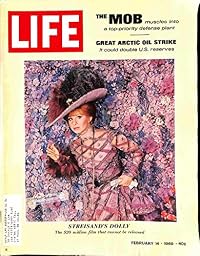
Life Magazine (1969.0214)
Common Knowledge
- Canonical title
- Life Magazine 1969.02.14 February 14, 1969
Statistics
- Members
- 2
- Popularity
- 6,006,156
- Languages
- English
- Media
- Paper
- ASINs
- 1