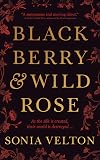
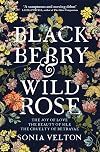
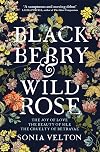
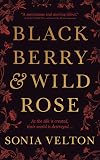
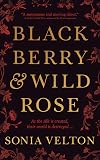
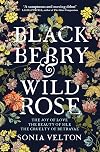
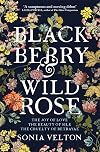
Blackberry & Wild Rose
by Sonia Velton
On This Page
Description
Set in eighteenth-century Spitalfields, London, Blackberry and Wild Rose is the rich and atmospheric tale of a household of Huguenot silk weavers as the pursuit of the perfect silk design leads them all into ambition, love, and betrayal. When Esther Thorel, wife of a master silk weaver, rescues Sara Kemp from a brothel, she thinks she is doing God's will, but her good deed is not returned. Sara quickly realizes that the Thorel household is built on hypocrisy and lies and soon tires of the show more drudgery of life as Esther's new lady's maid. As the two women's relationship becomes increasingly fractious, Sara resolves to find out what it is that so preoccupies her mistress ...Esther has long yearned to be a silk designer. When her early water colors are dismissed by her husband, Elias, as the daubs of a foolish girl, she continues her attempts in secret. It may have been that none of them would ever have become actual silks, were it not for the presence of the extraordinarily talented Bisby Lambert in the Thorel household. Brought in by Elias to weave his master piece on the Thorel's loom in the attic of their house in Spitalfields, the strange cadence of the loom as Bisby works is like a siren call to Esther. The minute she first sets foot in the garret and sees Bisby Lambert at his loom, marks the beginning of Blackberry and Wild Rose, the most exquisite silk design Spitalfields has ever seen, and the end of the Thorel household's veneer of perfection. As unrest among the journeyman silk weavers boils over into riot and rebellion, it leads to a devastating day of reckoning between Esther and Sara. A Library Journal Editor's Pick of Best Debut Novels of Winter/Spring 2019.. show less
Tags
Recommendations









Member Reviews
‘’But there are no secrets in London. Even the houses lean across the narrow alleys towards each other and offer up their scandals in the blink of an open curtain.’’
A woman is trying to break the norms of an oppressive society whose chances are reserved exclusively for men. In an era when silk is considered equal to gold, Esther struggles to convince her husband of her talent as a pattern designer. Her kind nature leads her to Sara, a young woman trapped in a brothel, and to a complex network of deceit and exploitation. Welcome to London during the 18th century.
A stunning cover and a beautiful title. An adventurous era, a very interesting field of research. This is the background of a novel focused on the lives of two young show more women and the conspiracies of silk. The problem is that sometimes a book needs an interesting cast of characters in order to become something special and memorable. Unfortunately, I couldn’t find it here. The atmosphere is excellent and beautifully depicted through balanced writing that is realistic and faithful to the era without becoming modernized or crude. The dialogue is equally satisfying, interesting and believable. The fascinating and sinister world of silk is at the heart of the novel and I believe it should have been explored more thoroughly. Esther’s ambitions and talent along with the enterprise of the glorious material should have been given the first role. These should have been our protagonists instead of wasting our time with a character that had no redeeming, or even remotely interesting, qualities…
Esther is based on Anna Maria Garthwaite, the woman who brought painting to the loom, creating unique designs, as the writer informs us. Perfect! Why did we need to read the ‘’adventures’’ of a mediocre character? Esther is a complex woman. In my opinion and according to my personal values, Sara is a disgusting figure. Her weird notion that she is somehow entitled to a life with plenty of money and little effort, the fact that she is a complete and utter fool, a treacherous creature who curses her bad luck and turns against the one who helps her did little to make me sympathize with her. As a result, her chapters were a chore. Compared to Esther’s complexity and innate elegance, Sara seemed a shadow of a character. I did not care for the closure of her story, it was completely indifferent to me. Moll was even worse...In my opinion, the writer painted the female characters in extremely unfavourable colours by making use of every cliché imaginable… Not that the men were any better. Generally speaking, the characters won’t enter any Literary pantheon anytime soon. Rather the opposite and this issue affected my overall impression significantly.
Also, ‘’Elizabeth Swann’’? Seriously? I was expecting Jack Sparrow and Will Turner to appear...Which would have been great because these three are awesome. The characters in this novel...not so much…
In my opinion, Historical Fiction is a mighty difficult genre. You need the perfect ingredients to create a novel that will stand out. This book is (mostly) well-written but I don’t think it is memorable or unique. Had the characters been better, I would have enjoyed it more. As it is, a 3-star rating is the most I can give.
Many thanks to Quercus and NetGalley for the ARC in exchange for an honest review. show less
A woman is trying to break the norms of an oppressive society whose chances are reserved exclusively for men. In an era when silk is considered equal to gold, Esther struggles to convince her husband of her talent as a pattern designer. Her kind nature leads her to Sara, a young woman trapped in a brothel, and to a complex network of deceit and exploitation. Welcome to London during the 18th century.
A stunning cover and a beautiful title. An adventurous era, a very interesting field of research. This is the background of a novel focused on the lives of two young show more women and the conspiracies of silk. The problem is that sometimes a book needs an interesting cast of characters in order to become something special and memorable. Unfortunately, I couldn’t find it here. The atmosphere is excellent and beautifully depicted through balanced writing that is realistic and faithful to the era without becoming modernized or crude. The dialogue is equally satisfying, interesting and believable. The fascinating and sinister world of silk is at the heart of the novel and I believe it should have been explored more thoroughly. Esther’s ambitions and talent along with the enterprise of the glorious material should have been given the first role. These should have been our protagonists instead of wasting our time with a character that had no redeeming, or even remotely interesting, qualities…
Esther is based on Anna Maria Garthwaite, the woman who brought painting to the loom, creating unique designs, as the writer informs us. Perfect! Why did we need to read the ‘’adventures’’ of a mediocre character? Esther is a complex woman. In my opinion and according to my personal values, Sara is a disgusting figure. Her weird notion that she is somehow entitled to a life with plenty of money and little effort, the fact that she is a complete and utter fool, a treacherous creature who curses her bad luck and turns against the one who helps her did little to make me sympathize with her. As a result, her chapters were a chore. Compared to Esther’s complexity and innate elegance, Sara seemed a shadow of a character. I did not care for the closure of her story, it was completely indifferent to me. Moll was even worse...In my opinion, the writer painted the female characters in extremely unfavourable colours by making use of every cliché imaginable… Not that the men were any better. Generally speaking, the characters won’t enter any Literary pantheon anytime soon. Rather the opposite and this issue affected my overall impression significantly.
Also, ‘’Elizabeth Swann’’? Seriously? I was expecting Jack Sparrow and Will Turner to appear...Which would have been great because these three are awesome. The characters in this novel...not so much…
In my opinion, Historical Fiction is a mighty difficult genre. You need the perfect ingredients to create a novel that will stand out. This book is (mostly) well-written but I don’t think it is memorable or unique. Had the characters been better, I would have enjoyed it more. As it is, a 3-star rating is the most I can give.
Many thanks to Quercus and NetGalley for the ARC in exchange for an honest review. show less
Many thanks to NetGalley, Blackstone Publishing and Sonia Velton for an ARC in exchange for an honest review. My opinions are 100% my own and independent of receiving an advance copy.
This story is inspired from the real life of Anna Maria Garthwaite, a prominent designer of Spitalfields silks in the mid-eighteenth century. This story tells the tale of two characters, Esther and Sara who come from very different worlds. Esther is married to a Hugenot master silk weaver and although she is kept busy doing charity work and running the household, she craves something more. She loves to paint but what she really wants to do is design silks. But these are not times when women should want things and Esther has not done her most important job, show more which is to bear children, especially a son. Only a son can inherit his father’s trade and making silks has been in the Thorel family for generations. Sara, on the other hand, has been sent by her mother to London to try and make a better life for herself. She is quickly taken advantage of and before she even knows what is happening to her becomes a prostitute. Sara also yearns for more and doesn’t see why she shouldn’t have a good life. One day Esther takes notice of Sara and reaches out to help her. Sara goes to work for the Thorels and before long becomes Esther’s lady maid. This is not the life Sara envisioned for herself, emptying her lady’s chamber pot and doesn’t understand why, because of birth, she is relegated to a life of servitude. Esther is so ignorant of Sara’s life, yet she also wants to break out of the chains set upon her by the world. Esther dares to take up with Lambert, who is using Mr. Thorel’s loom to create his masterpiece and hopefully one day become a master weaver. Slowly he teaches Esther how to create a pattern and weave silk. Both woman yearn for a different life, but can they make it happen?
This one caught me by surprise. I wasn’t quite sure what I was in for but boy was I surprised. Then, to find out that it was inspired by real events - really incredible. This story is beautifully laid out, really exploring both women’s desires and the many sides there are to women. Velton stays true to their characters and never do they fall into some neat package, behaving as you would expect. You have the class struggle between Sara and Esther. Esther feels Sara should be so grateful to her for “rescuing” her, but Sara has a different perspective. Both women are pushing back against the narrow role of women in that century and have forward thinking views. The men in their lives, sadly, don’t care to see them for anything other than what they should be. So you have all of these different things at play and as a backdrop you have a volatile story of the weavers revolting against the masters. There is a strict hierarchy of weavers, similar to class structure and Lambert is striving to be something more. Then the master weavers are trying to keep their trade alive amongst the influx of new fabrics from India and China. I loved learning about the silk trade and never does the story become convoluted. There is a clear pace that accelerates with the heightened fervour of the tradesmen with time running out for both Sara and Esther. I enjoyed this read so much and was very engrossed in the story. Strong writing kept this story intact and I couldn’t put it down. show less
This story is inspired from the real life of Anna Maria Garthwaite, a prominent designer of Spitalfields silks in the mid-eighteenth century. This story tells the tale of two characters, Esther and Sara who come from very different worlds. Esther is married to a Hugenot master silk weaver and although she is kept busy doing charity work and running the household, she craves something more. She loves to paint but what she really wants to do is design silks. But these are not times when women should want things and Esther has not done her most important job, show more which is to bear children, especially a son. Only a son can inherit his father’s trade and making silks has been in the Thorel family for generations. Sara, on the other hand, has been sent by her mother to London to try and make a better life for herself. She is quickly taken advantage of and before she even knows what is happening to her becomes a prostitute. Sara also yearns for more and doesn’t see why she shouldn’t have a good life. One day Esther takes notice of Sara and reaches out to help her. Sara goes to work for the Thorels and before long becomes Esther’s lady maid. This is not the life Sara envisioned for herself, emptying her lady’s chamber pot and doesn’t understand why, because of birth, she is relegated to a life of servitude. Esther is so ignorant of Sara’s life, yet she also wants to break out of the chains set upon her by the world. Esther dares to take up with Lambert, who is using Mr. Thorel’s loom to create his masterpiece and hopefully one day become a master weaver. Slowly he teaches Esther how to create a pattern and weave silk. Both woman yearn for a different life, but can they make it happen?
This one caught me by surprise. I wasn’t quite sure what I was in for but boy was I surprised. Then, to find out that it was inspired by real events - really incredible. This story is beautifully laid out, really exploring both women’s desires and the many sides there are to women. Velton stays true to their characters and never do they fall into some neat package, behaving as you would expect. You have the class struggle between Sara and Esther. Esther feels Sara should be so grateful to her for “rescuing” her, but Sara has a different perspective. Both women are pushing back against the narrow role of women in that century and have forward thinking views. The men in their lives, sadly, don’t care to see them for anything other than what they should be. So you have all of these different things at play and as a backdrop you have a volatile story of the weavers revolting against the masters. There is a strict hierarchy of weavers, similar to class structure and Lambert is striving to be something more. Then the master weavers are trying to keep their trade alive amongst the influx of new fabrics from India and China. I loved learning about the silk trade and never does the story become convoluted. There is a clear pace that accelerates with the heightened fervour of the tradesmen with time running out for both Sara and Esther. I enjoyed this read so much and was very engrossed in the story. Strong writing kept this story intact and I couldn’t put it down. show less
‘Blackberry and Wild Rose’, the debut novel of Sonia Velton, is entrancing. So many novels are hyped prior to publication but disappoint on reading. This does not. Carefully imagined and cleverly plotted, it kept me reading until the end. It reminded me of Tracy Chevalier’s early novels in which the reader is immersed in a historical world down to the smallest detail.
‘Blackberry and Wild Rose’ tells the story of two women in eighteenth century Spitalfields, London, where the houses are full of weavers and looms clatter every hour of daylight, set alongside the everyday noise, bustle and smells of market stalls, shops, inns and bawdy houses. In 1768, Sara Kemp arrives in Spitalfields from the country, sent away from home by her show more mother for something she does not understand. Obviously alone and lost, she is taken up by Mrs Swann and put to work in her brothel. Esther Thorel is an Englishwoman married to a Huguenot master of silk. Dissatisfied with her life with a husband obsessed by his business, Esther paints naturalistic flowers which she longs to see reproduced in silk. Dismissed by her husband, instead she fulfils the role expected by her husband and does good works with other Huguenot wives. When the paths of the two women cross one day outside the Wig and Feathers tavern, the lives of many people change. Sara, trying to escape Mrs Swann, must pay an unaffordable sum of money for her freedom. Esther pays the debt and employs her as maidservant in her household. Esther’s husband Elias is unaware of Sara’s background. Both women are blind to each other’s plight. Esther sees Sara as a charitable case, simply helped; Sara despises Esther’s inability to see the truth in front of her nose. It is apparent that there is one set of rules for men, another for women. Though so different, Sara and Esther are essentially trapped by their sex and by their roles, and dependent on the prosperity of the Thorel silk business.
Eighteenth century silk weaving was a highly competitive business, threatened by the import of light, cheap printed cottons imported by the East India Company. As the margins of the masters, including Thorel, are cut, the wages of their journeymen weavers are cut too. The weavers gather together in ‘combinations’, early trade unions, to press their case. Some are militant, issuing ultimatums. Some are violent. As this instability threatens the Thorel livelihood, Esther and Sara individually set off on paths which lead them into a conflict which ends in death. Both must make decisions; to tell the truth and suffer, or to lie and survive.
The woman are credible, contradictory, selfish, generous, often peevish and unlikeable. They are not modern women, with the morals and expectations of modern life, placed into a historical setting. Although both are independent and often wilful, they are eighteenth century women and so may not be to the taste of some readers. The men are similarly selfish, ambitious, deceitful and nasty – with one or two exceptions – and utterly believable. These are not stereotypes, there are characters which redeem faith in human nature, but this is not a novel in which the role of women is enhanced from the factual truth of the time. The story ends with a trial at which the judge says, ‘I understand that all this is difficult for you – a servant and a woman – to understand…’ But the men in this story underestimate the women at their peril.
The story of Esther, silk designer, is loosely based on the real Anna Maria Garthwaite, whose patterns and silks can be seen in London’s Victoria & Albert Museum. The title of the novel is one of Esther’s designs. Excellent.
Read more of my book reviews at http://www.sandradanby.com/book-reviews-a-z/ show less
‘Blackberry and Wild Rose’ tells the story of two women in eighteenth century Spitalfields, London, where the houses are full of weavers and looms clatter every hour of daylight, set alongside the everyday noise, bustle and smells of market stalls, shops, inns and bawdy houses. In 1768, Sara Kemp arrives in Spitalfields from the country, sent away from home by her show more mother for something she does not understand. Obviously alone and lost, she is taken up by Mrs Swann and put to work in her brothel. Esther Thorel is an Englishwoman married to a Huguenot master of silk. Dissatisfied with her life with a husband obsessed by his business, Esther paints naturalistic flowers which she longs to see reproduced in silk. Dismissed by her husband, instead she fulfils the role expected by her husband and does good works with other Huguenot wives. When the paths of the two women cross one day outside the Wig and Feathers tavern, the lives of many people change. Sara, trying to escape Mrs Swann, must pay an unaffordable sum of money for her freedom. Esther pays the debt and employs her as maidservant in her household. Esther’s husband Elias is unaware of Sara’s background. Both women are blind to each other’s plight. Esther sees Sara as a charitable case, simply helped; Sara despises Esther’s inability to see the truth in front of her nose. It is apparent that there is one set of rules for men, another for women. Though so different, Sara and Esther are essentially trapped by their sex and by their roles, and dependent on the prosperity of the Thorel silk business.
Eighteenth century silk weaving was a highly competitive business, threatened by the import of light, cheap printed cottons imported by the East India Company. As the margins of the masters, including Thorel, are cut, the wages of their journeymen weavers are cut too. The weavers gather together in ‘combinations’, early trade unions, to press their case. Some are militant, issuing ultimatums. Some are violent. As this instability threatens the Thorel livelihood, Esther and Sara individually set off on paths which lead them into a conflict which ends in death. Both must make decisions; to tell the truth and suffer, or to lie and survive.
The woman are credible, contradictory, selfish, generous, often peevish and unlikeable. They are not modern women, with the morals and expectations of modern life, placed into a historical setting. Although both are independent and often wilful, they are eighteenth century women and so may not be to the taste of some readers. The men are similarly selfish, ambitious, deceitful and nasty – with one or two exceptions – and utterly believable. These are not stereotypes, there are characters which redeem faith in human nature, but this is not a novel in which the role of women is enhanced from the factual truth of the time. The story ends with a trial at which the judge says, ‘I understand that all this is difficult for you – a servant and a woman – to understand…’ But the men in this story underestimate the women at their peril.
The story of Esther, silk designer, is loosely based on the real Anna Maria Garthwaite, whose patterns and silks can be seen in London’s Victoria & Albert Museum. The title of the novel is one of Esther’s designs. Excellent.
Read more of my book reviews at http://www.sandradanby.com/book-reviews-a-z/ show less
Very well done historical fiction. The author did a great job setting the reader in the time period with details of daily life, food and fashion. The time period of 18th century England was interesting as were the facts surrounding the silk industry and trade. The author also does a great job of entrenching the reading into what life was like for women during that time period and interestingly shows three very different classes of women who all really have the same freedoms and choices - which are basically none. For me it was a bit of a slow burn the first half, but definitely picked up after that with great suspense leading to satisfying conclusions. Thanks to NetGalley and the publisher for allowing me to read an advanced copy in show more exchange for an honest review. show less
Blackberry and Wild Rose has been well researched. It is set in eighteenth century London amid the Huguenot silk weavers, and tells the story of two women, Esther, the wife of a master weaver, and the other, Sara, a young girl who had been working as a prostitute until Esther helps her to escape that life. This fast-paced story is told from the perspectives of the two strong female characters.
The cover excited me before I'd even started listening to the story. Its design reminded me of the ornate fabrics used in those times.
Esther Thorel's husband, Elias, is a master silk weaver. He would have had more doors opened to him, had he married within the Huguenot community, but he chose to marry against his family's wishes, and accepted show more that he had to had to take a back seat in all things. The Thorels are childless but his priority is his business, not his wife. Esther longs to create her own silk designs, but Elias dismisses her, telling her she does not understand his business, and should go back to her charitable works.
Sara Kemp is the daughter of a servant. Her mother sends her to London to make her way in the world, giving her the address of someone who will help her settle. Unfortunately, Mrs Swann, a brothel keeper, sees the pretty young girl alight from the coach and lures her to the Wig and Feathers tavern, where she is drugged, robbed and put to work as a prostitute.
While Esther is delivering bibles for Pastor Gabeau, she witnesses a young girl being badly treated by an older woman, and intervenes. This is how Esther first meets Sara, and decides to help her into a respectable position.
I absolutely loved this beautifully narrated audio book, and was enthralled from the first chapter. I was captivated with the comprehensive descriptions of the working of the silk looms which helped me visualise the journeyman weaving while his draw boy controlled the warp thread. I was also interested in the economics of the time, learning about the Indian calicos and cheaper silk imports which threatened the weavers' livelihoods.
Blackberry and Wild Rose was compulsive listening and I'd highly recommend to readers who enjoy historical fiction. show less
The cover excited me before I'd even started listening to the story. Its design reminded me of the ornate fabrics used in those times.
Esther Thorel's husband, Elias, is a master silk weaver. He would have had more doors opened to him, had he married within the Huguenot community, but he chose to marry against his family's wishes, and accepted show more that he had to had to take a back seat in all things. The Thorels are childless but his priority is his business, not his wife. Esther longs to create her own silk designs, but Elias dismisses her, telling her she does not understand his business, and should go back to her charitable works.
Sara Kemp is the daughter of a servant. Her mother sends her to London to make her way in the world, giving her the address of someone who will help her settle. Unfortunately, Mrs Swann, a brothel keeper, sees the pretty young girl alight from the coach and lures her to the Wig and Feathers tavern, where she is drugged, robbed and put to work as a prostitute.
While Esther is delivering bibles for Pastor Gabeau, she witnesses a young girl being badly treated by an older woman, and intervenes. This is how Esther first meets Sara, and decides to help her into a respectable position.
I absolutely loved this beautifully narrated audio book, and was enthralled from the first chapter. I was captivated with the comprehensive descriptions of the working of the silk looms which helped me visualise the journeyman weaving while his draw boy controlled the warp thread. I was also interested in the economics of the time, learning about the Indian calicos and cheaper silk imports which threatened the weavers' livelihoods.
Blackberry and Wild Rose was compulsive listening and I'd highly recommend to readers who enjoy historical fiction. show less
Silk and sedition!
A fascinating tale using as a backdrop the troubles faced by weavers in eighteenth-century Spitalfields, London, whose jobs are under threat as the market is flooded by cheap Indian calico.
Two woman are the catalysts for much that happens. Master weaver Elia Thorel's wife Esther Thorel, is a gifted painter who wants to be involved in her husband's work.
The other woman is Esther's maid Sara Kemp, a young woman who ended up in the hands of a heartless procurer, a older woman who preys upon innocent country girls at the Coaching stop. Esther effects a rescue of Sara, a rescue that will have devastating effects on her household.
At the same time Esther's stern unbending husband Elias, a Huguenot silk master has taken on show more sponsorship of a talented journeyman, Bisby Lambert, with the promise of helping him to become a master weaver.
The story takes a different turn for all involved when Bisby teaches Esther how to turn a particular painting, Blackberries and Wild Rose, into a pattern for the loom, and subsequently into a gorgeous silk piece. That this happens in secret in the attic where Elias has Bisby working gives the story a complex twist.
Elias is a pompous fellow who regrets going against his family's wishes to marry Esther. He has made her pay for that. A most dislike able man.
Meanwhile Bisby's fellow weavers are preaching sedition and rebellion, and as tempers rise, the outcome is made more shocking by treachery and deceit as Bisby's is unwittingly Vaughn up in their actions.
I found the novel complicated, with multiple threads weaving the action together. Threads that would become tangled knots as ambition and love vie with deceit and dishonesty.
The portrait of the times and the angst rings true. The characters however seem somewhat aloof despite all that is happening. What I found most intriguing is the story of the silk design, the regulations about who can do what and the work involved in manufacturing such a piece. I was quite devastated by the ending and yet given all that has gone on before, how could the story end otherwise?
A Blackstone ARC via NetGalley show less
A fascinating tale using as a backdrop the troubles faced by weavers in eighteenth-century Spitalfields, London, whose jobs are under threat as the market is flooded by cheap Indian calico.
Two woman are the catalysts for much that happens. Master weaver Elia Thorel's wife Esther Thorel, is a gifted painter who wants to be involved in her husband's work.
The other woman is Esther's maid Sara Kemp, a young woman who ended up in the hands of a heartless procurer, a older woman who preys upon innocent country girls at the Coaching stop. Esther effects a rescue of Sara, a rescue that will have devastating effects on her household.
At the same time Esther's stern unbending husband Elias, a Huguenot silk master has taken on show more sponsorship of a talented journeyman, Bisby Lambert, with the promise of helping him to become a master weaver.
The story takes a different turn for all involved when Bisby teaches Esther how to turn a particular painting, Blackberries and Wild Rose, into a pattern for the loom, and subsequently into a gorgeous silk piece. That this happens in secret in the attic where Elias has Bisby working gives the story a complex twist.
Elias is a pompous fellow who regrets going against his family's wishes to marry Esther. He has made her pay for that. A most dislike able man.
Meanwhile Bisby's fellow weavers are preaching sedition and rebellion, and as tempers rise, the outcome is made more shocking by treachery and deceit as Bisby's is unwittingly Vaughn up in their actions.
I found the novel complicated, with multiple threads weaving the action together. Threads that would become tangled knots as ambition and love vie with deceit and dishonesty.
The portrait of the times and the angst rings true. The characters however seem somewhat aloof despite all that is happening. What I found most intriguing is the story of the silk design, the regulations about who can do what and the work involved in manufacturing such a piece. I was quite devastated by the ending and yet given all that has gone on before, how could the story end otherwise?
A Blackstone ARC via NetGalley show less
Set in 18th century London, this story transports you immediately to the world of the Huguenot silk weavers. The descriptions are vivid from the underbelly of London's whore houses to the upper middle class homes of the silk merchants. This novel revolves around two women, Sara Kemp, a prostitute and Esther Thorel, the wife of a very well-respected silk merchant. And although Sara and Esther have very different social stations in life, as women, their choices are dictated by the men around them. I loved this story - great pacing, complex characters and such a compelling story.
Members
- Recently Added By
Lists

Violette's Best Historical Fiction 2020
10 works; 1 member
Author Information
3 Works 239 Members
Awards and Honors
Awards
Common Knowledge
- Canonical title
- Blackberry & Wild Rose
Classifications
Statistics
- Members
- 147
- Popularity
- 222,577
- Reviews
- 11
- Rating
- (3.96)
- Languages
- English
- Media
- Paper, Audiobook, Ebook
- ISBNs
- 23
- ASINs
- 5