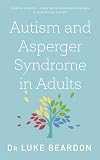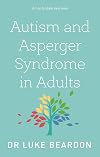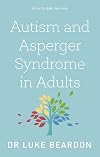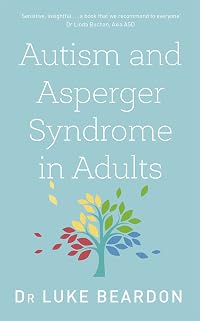
Autism & Asperger Syndrome in Adults (Overcoming Common Problems)
by Luke Beardon
On This Page
Description
If you've recently been diagnosed with ASD, or think you might be, or you are close to someone with ASD, one of the things you will like most about this book is the way in which it challenges the idea of autism as a 'disorder' or 'impairment'. Instead, Dr Luke Beardon will help you to reframe what you feel, and challenge what you know, about being on the spectrum. He explains how autism impacts on the individual, and what purpose a diagnosis might or might not, serve. There is a lot of show more myth-busting, and dismantling of the stereotypes and cliches around ASD and areas like communication, social interaction and relationships. Practical tips for undiagnosed adults will help you navigate things like school, work, study, parenthood and even to understand what happens when autistic people break the law. Above all, this book is a celebration of what it means to be autistic, of the passion, honesty, humour, lack of ego, loyalty and trustworthiness that make you, or your loved one, such an amazing person. show lessTags
Recommendations
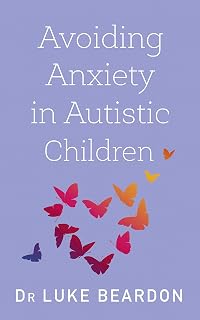
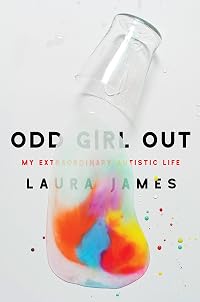
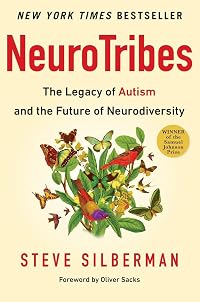


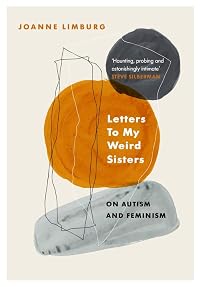
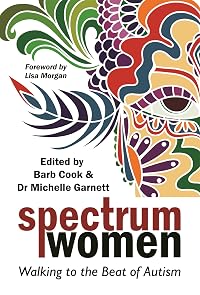
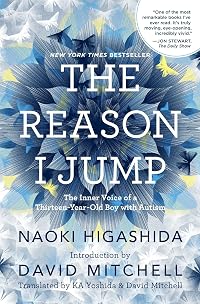
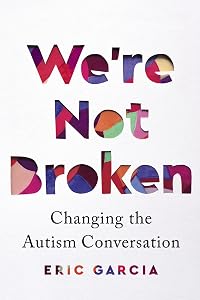
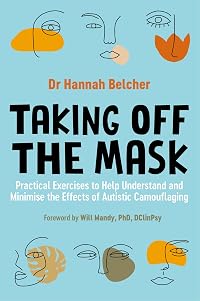

Member Reviews
Here's a nice and straightforward introduction to Autism and Asperger. There's, indeed, a lot of points to like and take onboard in this very short little book (about 100 pages), written by someone who, over the past decades, has been 'a support worker, an outreach worker, a service co-ordinator, a project officer, a development officer, an autism consultant, a trainer, a researcher and a lecturer - all within the autism field'!
Dr Luke Beardon keeps here putting the point across: every individuals is unique, and, so, it would be futile and counterproductive, if not demeaning, to adopt a 'right size fit all' attitude when attempting to deal with the adults concerned. It starts with terminology: should we talk about autistic people, or, show more people with autism? The debate is raging (and I personally am not surprised, in these days of rampant emotionalism...) yet silly. As the author bangs it with common sense: either or, the choice belongs to the person being labelled, and, since such choice will vary from one individual to the next there is no right or wrong! But here's not the most important.
The most important is why individuality is the most relevant factor to be acknowledged. Focusing (strongly) on personalities, this is where he throws some darts at the DSM. Yes, Autism and Asperger are part of a spectrum; but the DSM defines each in such a narrow way that it doesn't help at all. In fact, such highly questionable sub-categorisations just leads to making assumptions, and so have expectations, all based on where on the spectrum individuals have been diagnosed... which is bonkers since all individuals will be unique and so not fit into such clinical ticked-boxes! I love that because, being a Care Support Worker dealing with autistic people, I constantly see that in my job: skills, abilities, preferences, and, so, needs in terms of support vary greatly from one person to the next, despite all having the same diagnosis. Dr Luke Beardon nails a point through an equation: autism + environment = outcomes. After all, that's how it works for what he calls PNB (Predominant Neurotype Brains) so why would it be different for non-neurotypical people?
'I believe that the term autism should be used to cover all individuals who are autistic. In doing so, one would be forced then to ascertain specifically how autism affects each individual (at that time, within that environment), rather than making assumptions related to the term itself.'
This is in fact the whole point here: autism is a set of features (that the author outlines very clearly) but such features will express themselves differently from one person to the next. The author actually goes one step further: addressing neurotypicals, he warns against echopraxic behaviours that is, autistic people sometimes going at such a great length to mask their condition so as to fit in that they may appear like having no condition at all, and so no need of support (women seems to be particularly good at this). An awareness of autism is here needed, for it might lead to a greater understanding and therefore tolerance.
Another strong feature of this book I really enjoyed is how it sails away from autism being perceived as a disorder, or impairment, to, on the contrary, celebrate it as a strength. Sure, it can be an harrowing and severely debilitating condition, and Dr Luke Beardon doesn't deny that. But, here he addresses mainly autistic people who have the mental capacity to be able to engage in society (study, work, marry, have kids etc.) and, as he points out in a whole chapter, such individuals can be very proud of their autism indeed!
On the other hand, where I found the book getting weak is in the ending chapters, focusing on schooling, employment, and relationships (romantic and parenting). Who is his target audience? Autistic people? Educational institutions and employers? Neurotypicals? Well, all of them at once, which, I felt, quite diluted his message -addressing everybody ends up addressing nobody. Nice points are being made when it comes to suggestions in terms of reasonable adjustments (and in debunking a few other myths!) but his solutions are too light, if it's his job to bring solutions at all!
Regardless, here's a very good read challenging the perception of what it means to be autistic. I cannot but recommend it to anyone interested in the topic, and, above all, neurotypicals. We all have prejudices (mine were blown apart when I start working as a Support Worker). Sadly, the 'official' sub-categorisations purported by clinical manuals (e.g. the DSM, itself very controversial even among professionals...) doesn't help in our perception, and, so, in our dealing with autistic people. As an inclusive society we clearly can do better! Well, this book offers right insights, welcome demystifications, and, a few pointers to make things better. A necessary stance! show less
Dr Luke Beardon keeps here putting the point across: every individuals is unique, and, so, it would be futile and counterproductive, if not demeaning, to adopt a 'right size fit all' attitude when attempting to deal with the adults concerned. It starts with terminology: should we talk about autistic people, or, show more people with autism? The debate is raging (and I personally am not surprised, in these days of rampant emotionalism...) yet silly. As the author bangs it with common sense: either or, the choice belongs to the person being labelled, and, since such choice will vary from one individual to the next there is no right or wrong! But here's not the most important.
The most important is why individuality is the most relevant factor to be acknowledged. Focusing (strongly) on personalities, this is where he throws some darts at the DSM. Yes, Autism and Asperger are part of a spectrum; but the DSM defines each in such a narrow way that it doesn't help at all. In fact, such highly questionable sub-categorisations just leads to making assumptions, and so have expectations, all based on where on the spectrum individuals have been diagnosed... which is bonkers since all individuals will be unique and so not fit into such clinical ticked-boxes! I love that because, being a Care Support Worker dealing with autistic people, I constantly see that in my job: skills, abilities, preferences, and, so, needs in terms of support vary greatly from one person to the next, despite all having the same diagnosis. Dr Luke Beardon nails a point through an equation: autism + environment = outcomes. After all, that's how it works for what he calls PNB (Predominant Neurotype Brains) so why would it be different for non-neurotypical people?
'I believe that the term autism should be used to cover all individuals who are autistic. In doing so, one would be forced then to ascertain specifically how autism affects each individual (at that time, within that environment), rather than making assumptions related to the term itself.'
This is in fact the whole point here: autism is a set of features (that the author outlines very clearly) but such features will express themselves differently from one person to the next. The author actually goes one step further: addressing neurotypicals, he warns against echopraxic behaviours that is, autistic people sometimes going at such a great length to mask their condition so as to fit in that they may appear like having no condition at all, and so no need of support (women seems to be particularly good at this). An awareness of autism is here needed, for it might lead to a greater understanding and therefore tolerance.
Another strong feature of this book I really enjoyed is how it sails away from autism being perceived as a disorder, or impairment, to, on the contrary, celebrate it as a strength. Sure, it can be an harrowing and severely debilitating condition, and Dr Luke Beardon doesn't deny that. But, here he addresses mainly autistic people who have the mental capacity to be able to engage in society (study, work, marry, have kids etc.) and, as he points out in a whole chapter, such individuals can be very proud of their autism indeed!
On the other hand, where I found the book getting weak is in the ending chapters, focusing on schooling, employment, and relationships (romantic and parenting). Who is his target audience? Autistic people? Educational institutions and employers? Neurotypicals? Well, all of them at once, which, I felt, quite diluted his message -addressing everybody ends up addressing nobody. Nice points are being made when it comes to suggestions in terms of reasonable adjustments (and in debunking a few other myths!) but his solutions are too light, if it's his job to bring solutions at all!
Regardless, here's a very good read challenging the perception of what it means to be autistic. I cannot but recommend it to anyone interested in the topic, and, above all, neurotypicals. We all have prejudices (mine were blown apart when I start working as a Support Worker). Sadly, the 'official' sub-categorisations purported by clinical manuals (e.g. the DSM, itself very controversial even among professionals...) doesn't help in our perception, and, so, in our dealing with autistic people. As an inclusive society we clearly can do better! Well, this book offers right insights, welcome demystifications, and, a few pointers to make things better. A necessary stance! show less
Men are from Mars for autism/aspergers. I don't find either book particularly helpful.
Pros: This book is written very clearly and has lots of examples of females in it. It also discusses empathy w/o the prejudice of everyone having the same experience/expectations of an event.
Cons: I don't like the analogies or binary nature, and despite everything I still think there are different degrees of autism. And I still do not understand whether it engenders a learning difficulty or difference, and how much you can compensate or overcome problems.
Also it doesn't offer solutions or empower people to make better choices, when faced with a different world view.
Pros: This book is written very clearly and has lots of examples of females in it. It also discusses empathy w/o the prejudice of everyone having the same experience/expectations of an event.
Cons: I don't like the analogies or binary nature, and despite everything I still think there are different degrees of autism. And I still do not understand whether it engenders a learning difficulty or difference, and how much you can compensate or overcome problems.
Also it doesn't offer solutions or empower people to make better choices, when faced with a different world view.
My new bible. I've already recommended it to multiple people and I'm going to make my whole family read this.
Ratings
Members
- Recently Added By
Lists

Books Read in 2020
4,379 works; 124 members

Neuro Pride Ireland Recommendations
101 works; 1 member
Author Information

14 Works 155 Members
Dr Luke Beardon is a well-known expert in the field, and this book is an accessible, easy-to- read introduction for those encountering autism for the first time. Gently and honestly, it guides you through the issues you might encounter, busting the myths around autism and Asperger syndrome, and explaining what the diagnosis means for your child, show more for you and for the family. It covers sensory profiles, helps you handle your child's anxiety, tackles education and answers a variety of frequently asked questions. As an introduction to - and celebration of - the intriguing, beguiling, frustrating and remarkable world of autism, this book will help you understand your child's unique value and importance in the world. show less
Classifications
- Genres
- Nonfiction, Tween, Kids
- DDC/MDS
- 616.85882 — Applied science & technology Medicine & health Diseases, Allergies, Skin Conditions Nervous Disorders: Autism, Anorexia, OCD Miscellaneous Personality, sexual, gender-identity, impulse-control, factitious, developmental, learning disorders; violent behavior; mental retardation Mental retardation; developmental and learning disorders Autism
- LCC
- RC553 .A88 — Medicine Internal medicine Internal medicine Neurosciences. Biological psychiatry. Neuropsychiatry Psychiatry Psychopathology
- BISAC
Statistics
- Members
- 60
- Popularity
- 516,445
- Reviews
- 3
- Rating
- (3.89)
- Languages
- English
- Media
- Paper, Ebook
- ISBNs
- 4
- ASINs
- 3