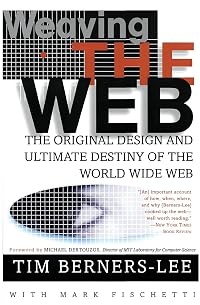
Weaving the Web: The Original Design and Ultimate Destiny of the World Wide Web
by Tim Berners-Lee
On This Page
Description
Tim Berners-Lee, the inventor of the World Wide Web, has been hailed by Time magazine as one of the 100 greatest minds of this century. His creation has already changed the way people do business, entertain themselves, exchange ideas, and socialize with one another. With new online businesses and communities forming every day, the full impact of Berners-Lee's grand scheme has yet to be fully realized. Now, this low-profile genius tells his own story of the Web's origins--from its radical show more introduction and the creation of the now ubiquitous WWW and HTTP acronyms to how he sees the future development of this revolutionary medium. Berners-Lee offers insights to help listeners understand the true nature of the Web, enabling them to use it to their fullest advantage. He shares his views on such critical issues as censorship, privacy, and the increasing power of software companies in the online world. show lessTags
Recommendations
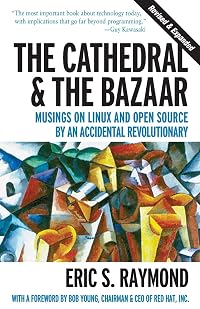
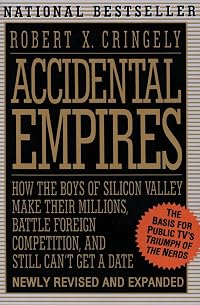






Member Recommendations
Member Reviews
Berners-Lee writes a very fun and informative treatise on his experiences towards creating the Web as we utilize it today. The first nine chapters detail his background and history, up to his move to the United States. A lot of the material describing the internal workings of the CERN environment were absolutely compelling material. The rest of the book follows his work within the W3C, along with his long-range vision of the Web. While the book holds a time-frame of 1999/2000 - much of his observations still hold true today in 2013.
I love this quote from Tim Berners-Lee, the man responsible for the World Wide Web. He’s a low profile genius who never profited from his invention. I often think about him when i talk to my investment banking friends, or other people who are placing monetary gain over what really makes them happy. This is a quote from his book Weaving the Web which is a pretty good read if you’re interested in how the web came about, what the original thoughts were about it, and how it’s survived attempts by private industry (Microsoft, IBM, etc.) to control it.
People have sometimes asked me whether i am upset that i have not made a lot of money from the Web. In fact, I made some quite conscious decisions about which way to take my life. These I show more would not change - though i am making no comment on what i might do in the future. What does distress me, though, is how important a question it seems to be to some. This happens mostly in America, not Europe. What is maddening is the terrible notion that a person’s value depends on how important and financially successful they are, and that that is measured in terms of money. That suggests disrespect for the researchers across the globe developing ideas for the next leaps in science and technology. Core in my upbring was a value system that put monetary gain well in its place, behind things like doing what i really want to do. To use net worth as a criterion by which to judge people is to set our children’s sights on cash rather than on things that will actually make them happy. show less
People have sometimes asked me whether i am upset that i have not made a lot of money from the Web. In fact, I made some quite conscious decisions about which way to take my life. These I show more would not change - though i am making no comment on what i might do in the future. What does distress me, though, is how important a question it seems to be to some. This happens mostly in America, not Europe. What is maddening is the terrible notion that a person’s value depends on how important and financially successful they are, and that that is measured in terms of money. That suggests disrespect for the researchers across the globe developing ideas for the next leaps in science and technology. Core in my upbring was a value system that put monetary gain well in its place, behind things like doing what i really want to do. To use net worth as a criterion by which to judge people is to set our children’s sights on cash rather than on things that will actually make them happy. show less
His Masters Voice.
His Masters Voice.
I only got halfway through this, though I can't remember why.
Writer Lev Grossman has chosen to discuss Tim Berners-Lee’s Weaving the Web: The Past, Present and Future of the World Wide Web by its Inventor on FiveBooks as one of the top five on his subject- The World Wide Web, saying that:
"...This book is extremely engaging and readable. It’s very similar in some ways to Francis Crick’sThe Double Helix, and he really just talks about where his invention came from, how it happened, and what everything you read about the history of the Internet tells you that a lot of it happened by accident...."
The full interview is available here: http://five-books.com/interviews/lev-grossman
"...This book is extremely engaging and readable. It’s very similar in some ways to Francis Crick’sThe Double Helix, and he really just talks about where his invention came from, how it happened, and what everything you read about the history of the Internet tells you that a lot of it happened by accident...."
The full interview is available here: http://five-books.com/interviews/lev-grossman
Found this at an estate sale in Ann Arbor. Seems like an essential item for my small collection of books about the Internet.
Members
- Recently Added By
Author Information

13+ Works 997 Members
Tim Berners-Lee, inventor of the Web, is currently the director of the World Wide Web Consortium, the coordinating body for Web development, and he occupies the 3Com Founders chair at the MIT Laboratory for Computer Science. Recipient of numerous awards, he received the distinguished MacArthur Fellowship in 1998. He lives in Cambridge, MA.
All Editions
Common Knowledge
- Canonical title
- Weaving the Web: The Original Design and Ultimate Destiny of the World Wide Web
Classifications
- Genres
- Technology, Nonfiction, General Nonfiction, History, Biography & Memoir, Science & Nature, Business
- DDC/MDS
- 025.04 — Computer science, information & general works Library & information sciences Administration; Departments Information storage and retrieval systems
- LCC
- TK5105.888 .B46 — Technology Electrical engineering. Electronics. Nuclear engineering Electrical engineering. Electronics. Nuclear Telecommunication
- BISAC
Statistics
- Members
- 841
- Popularity
- 32,763
- Reviews
- 12
- Rating
- (3.74)
- Languages
- 6 — Dutch, English, French, German, Korean, Spanish
- Media
- Paper, Audiobook
- ISBNs
- 13
- ASINs
- 4