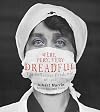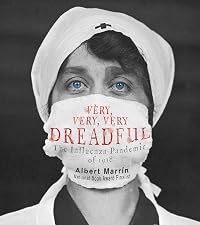
Very, Very, Very Dreadful: The Influenza Pandemic of 1918
by Albert Marrin
On This Page
Description
From National Book Award finalist Albert Marrin comes a fascinating look at the history and science of the deadly 1918 flu pandemic—and its chilling and timely resemblance to the worldwide coronavirus outbreak.In spring of 1918, World War I was underway, and troops at Fort Riley, Kansas, found themselves felled by influenza. By the summer of 1918, the second wave struck as a highly contagious and lethal epidemic and within weeks exploded into a pandemic, an illness that travels rapidly show more from one continent to another. It would impact the course of the war, and kill many millions more soldiers than warfare itself.
Of all diseases, the 1918 flu was by far the worst that has ever afflicted humankind; not even the Black Death of the Middle Ages comes close in terms of the number of lives it took. No war, no natural disaster, no famine has claimed so many. In the space of eighteen months in 1918-1919, about 500 million people—one-third of the global population at the time—came down with influenza. The exact total of lives lost will never be known, but the best estimate is between 50 and 100 million.
In this powerful book, filled with black and white photographs, nonfiction master Albert Marrin examines the history, science, and impact of this great scourge—and the possibility for another worldwide pandemic today.
A Chicago Public Library Best Book of the Year!. show less
Tags
Recommendations






Member Reviews
One hundred years after the "Spanish flu" (it started in Kansas) swept across the world, this book provides the history and science behind that particular strain of influenza. Marrin also covers other plagues and pandemics throughout history, and the medical responses to them; the science of bacteria and viruses, and how viruses "mix" and mutate into lethal or less lethal strains; and the particular twin effects of influenza and trench warfare.
Square format, glossy pages, with two columns of text on each page, and a relevant photograph, chart, diagram, illustration, or reproduction on nearly every double page spread.
Back matter includes notes by chapter, index.
Horrifying and poignant, given the current circumstances in show more 2020.
Quotes/Notes
The 1918 pandemic "killed more people in less time than any other disease before or since." (WHO report in 1994, p. 5)
A Journal of the Plague Year (1722) by Daniel Defoe (p. 20)
[cartoon from an anti-vaccination publication, December 1894] (p. 30)
Scientific medicine's best arguments were beyond dispute: it saved lives and alleviated suffering. By 1900, for the first time since cities came into existence, European and American cities recorded more births than deaths. [the "laying out room" became "the living room" (p. 31)
Lice carried "trench fever"...[and] typhus. (37)
Grown fat from feasting on the dead, a single pair [of rats] could produce 880 babies a year. (38)
Bacteria cause diseases such as bubonic plague, typhoid fever, typhus, tuberculosis, cholera, diphtheria, and whooping cough....Viruses...have caused...measles, mumps, polio, chicken pox, smallpox, hepatitis, rabies, Ebola, AIDS, and influenza. (48-49)
Viruses seem to exist for one purpose only: to reproduce. (49)
This is the principle of vaccination: memory cells recognize past intruders, jolting the immune system into action without causing a full-blown infection. (51)
All flu viruses that make humans sick get their start in birds. (51)
Influenza can kill in two ways...bacterial pneumonia [and] viral pneumonia...In 1918, the mutated Type A H1N1 influenza virus stuck in ways physicians had never seen before or thought possible. (66)
In the US, H1N1 killed at least 675,000 civilians - more than the nation's total military deaths in WWI, WWII, the Korean War, and the Vietnam War combined. (73)
On October 4, 1918, [US Surgeon General Rupert Blue] recommended closing all public gathering places where the disease might spread. Note: recommended, not ordered. Blue's lack of action typified poor leadership in high places; indeed, no single official took charge of the anti-flu effort. Throughout the pandemic, the nation lacked a uniform policy about gathering places, and there was no central authority with the power to make and enforce rules that everyone had to obey. Each community acted on its own...(89-89)
Until the 1930s, the US had no laws to regulate patent medicines...Makers...did not have to prove their products safe and effective, or list ingredients o the label, or have medical or scientific training. (97)
Katherine Anne Porter, Pale Horse, Pale Rider (102)
...medical personnel...had orders to separate flu cases from the wounded. But more often than not, this wasn't feasible...Thus, influenza killed wounded men who might otherwise have lived if they had been separated from their infected comrades and treated in time. (120)
[Following the cease-fire orders after the armistice was signed] Many soldiers, on both sides, wanted the "honor" of firing the last shot of the war....more than 10,000 men, including 3,000 Americans, were killed or wounded for nothing. (129-130)
When the next pandemic comes...perhaps we will be ready to meet it. If we are not, the outcome will be very, very, very dreadful. (final sentence, 165) show less
Square format, glossy pages, with two columns of text on each page, and a relevant photograph, chart, diagram, illustration, or reproduction on nearly every double page spread.
Back matter includes notes by chapter, index.
Horrifying and poignant, given the current circumstances in show more 2020.
Quotes/Notes
The 1918 pandemic "killed more people in less time than any other disease before or since." (WHO report in 1994, p. 5)
A Journal of the Plague Year (1722) by Daniel Defoe (p. 20)
[cartoon from an anti-vaccination publication, December 1894] (p. 30)
Scientific medicine's best arguments were beyond dispute: it saved lives and alleviated suffering. By 1900, for the first time since cities came into existence, European and American cities recorded more births than deaths. [the "laying out room" became "the living room" (p. 31)
Lice carried "trench fever"...[and] typhus. (37)
Grown fat from feasting on the dead, a single pair [of rats] could produce 880 babies a year. (38)
Bacteria cause diseases such as bubonic plague, typhoid fever, typhus, tuberculosis, cholera, diphtheria, and whooping cough....Viruses...have caused...measles, mumps, polio, chicken pox, smallpox, hepatitis, rabies, Ebola, AIDS, and influenza. (48-49)
Viruses seem to exist for one purpose only: to reproduce. (49)
This is the principle of vaccination: memory cells recognize past intruders, jolting the immune system into action without causing a full-blown infection. (51)
All flu viruses that make humans sick get their start in birds. (51)
Influenza can kill in two ways...bacterial pneumonia [and] viral pneumonia...In 1918, the mutated Type A H1N1 influenza virus stuck in ways physicians had never seen before or thought possible. (66)
In the US, H1N1 killed at least 675,000 civilians - more than the nation's total military deaths in WWI, WWII, the Korean War, and the Vietnam War combined. (73)
On October 4, 1918, [US Surgeon General Rupert Blue] recommended closing all public gathering places where the disease might spread. Note: recommended, not ordered. Blue's lack of action typified poor leadership in high places; indeed, no single official took charge of the anti-flu effort. Throughout the pandemic, the nation lacked a uniform policy about gathering places, and there was no central authority with the power to make and enforce rules that everyone had to obey. Each community acted on its own...(89-89)
Until the 1930s, the US had no laws to regulate patent medicines...Makers...did not have to prove their products safe and effective, or list ingredients o the label, or have medical or scientific training. (97)
Katherine Anne Porter, Pale Horse, Pale Rider (102)
...medical personnel...had orders to separate flu cases from the wounded. But more often than not, this wasn't feasible...Thus, influenza killed wounded men who might otherwise have lived if they had been separated from their infected comrades and treated in time. (120)
[Following the cease-fire orders after the armistice was signed] Many soldiers, on both sides, wanted the "honor" of firing the last shot of the war....more than 10,000 men, including 3,000 Americans, were killed or wounded for nothing. (129-130)
When the next pandemic comes...perhaps we will be ready to meet it. If we are not, the outcome will be very, very, very dreadful. (final sentence, 165) show less
This was a good short history of the 1918 pandemic.
I wanted it to be more relevant to COVID, but there are a lot of important differences between the two. The 1918 flu was much worse, killing over 0.6% of the US population over about 2 years compared to COVID killing 0.2% over a slightly shorter period. Things were also much worse in the rest of the world with India losing almost 6% of its population. It was also killing younger, healthier people which was probably more alarming (generally, I am sure that the old and sick are currently quite alarmed). It also killed people very suddenly and rather grotesquely. COVID seems to be slower and with more hospital capacity people aren't dropping in the streets.
Marrin makes it seem like show more masking was widely embraced in 1918, even thought the gauze masks in use at the time were probably ineffective against the virus. That might be due to the rather scarier nature of that pandemic. However, there were protests against closing bars. There were anti-vaxers then too, though no one produced a vaccine effective against that flu.
It was interesting that the 1918 pandemic had a precursor that was milder. Could COVID be followed by something more deadly or virulent? Instead of wasting time speculating about future bio-terror, Marrin could have delved into the possibility that a mild, but widespread flu could turn into a raging epidemic. show less
I wanted it to be more relevant to COVID, but there are a lot of important differences between the two. The 1918 flu was much worse, killing over 0.6% of the US population over about 2 years compared to COVID killing 0.2% over a slightly shorter period. Things were also much worse in the rest of the world with India losing almost 6% of its population. It was also killing younger, healthier people which was probably more alarming (generally, I am sure that the old and sick are currently quite alarmed). It also killed people very suddenly and rather grotesquely. COVID seems to be slower and with more hospital capacity people aren't dropping in the streets.
Marrin makes it seem like show more masking was widely embraced in 1918, even thought the gauze masks in use at the time were probably ineffective against the virus. That might be due to the rather scarier nature of that pandemic. However, there were protests against closing bars. There were anti-vaxers then too, though no one produced a vaccine effective against that flu.
It was interesting that the 1918 pandemic had a precursor that was milder. Could COVID be followed by something more deadly or virulent? Instead of wasting time speculating about future bio-terror, Marrin could have delved into the possibility that a mild, but widespread flu could turn into a raging epidemic. show less
History meets disease in this thick book. Not only does the author speak about the Spanish Flu, but they detail other illnesses, how permanent agriculture increased diseases, and war. This book was published in 2018, and I would've loved to read the author's take on the COVID-19 pandemic only a year later.
Interesting, good photos, and I learned quite a bit. Pro-tip: don't read this on your lunch (or other meal) break; it's gross.
Had this arc in my tbr pile as we got locked down due to the COVID virus. What better book to read.
My blog post about this book is at this link.
Ratings
Members
- Recently Added By
Lists

Science
13 works; 1 member

Health and Society
10 works; 1 member

1900s: America
31 works; 2 members

Books recommended by Calgary Public Library staff
1,588 works; 4 members
Author Information

56+ Works 5,270 Members
Albert Marrin, professor emeritus of history at Yeshiva University in New York City
Some Editions
Awards and Honors
Awards
Distinctions
Common Knowledge
- Original publication date
- 2018
- Important events
- Influenza pandemic (1918)
- Epigraph
- This may serve to describe the dreadful condition of that day, though it is impossible to say anything that is able to give a true idea of it to those who did not see it, other than this, that it was indeed very, very, very d... (show all)readful and no such tongue can express.
-- Daniel Defoe, A Journal of the Plague Year, 1722 - First words
- Monday, March 11, 1918. Fort Riley, north-central Kansas. On a vast wind-swept plain covering more than 20,000 acres, scores of barracks, staff buildings, warehouses, repair shops, stables, and tent cities dotted the ground... (show all). (Prologue)
VISITORS FROM THE DEEP PAST
For untold generations, before the invention of written history, people lived in small family groups numbering, at most, a few dozen members. - Last words
- (Click to show. Warning: May contain spoilers.)When the next pandemic comes, as it surely will someday, perhaps we will be ready to meet it. If we are not, the outcome will be very, very, very dreadful.
Classifications
- Genres
- Nonfiction, Tween, Kids
- DDC/MDS
- 614.5 — Applied science & technology Medicine & health Epidemics, Poisons, Alternative Medicine Incidence of and public measures to prevent specific diseases and kinds of diseases
- LCC
- RC150.4 .M38 — Medicine Internal medicine Internal medicine Infectious and parasitic diseases
- BISAC
Statistics
- Members
- 162
- Popularity
- 202,242
- Reviews
- 6
- Rating
- (3.48)
- Languages
- English, Korean
- Media
- Paper, Audiobook, Ebook
- ISBNs
- 9
- ASINs
- 2