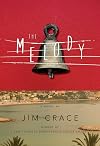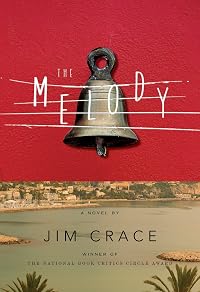
The Melody
by Jim Crace
On This Page
Description
Aside from his trusty piano, Alfred Busi lives alone in his villa overlooking the waves. Famed in his town for his music and songs, he is mourning the recent death of his wife and quietly living out his days, occasionally performing the classics in small venues--never in the stadiums he could fill when in his prime. On the night before receiving his town's highest honor, Busi is wrested from bed by noises in his courtyard and then stunned by an attacking intruder--his hands and neck are show more scratched, his face is bitten. Busi can't say what it was that he encountered, exactly, but he feels his assailant was neither man nor animal. The attack sets off a chain of events that will cast a shadow on Busi's career, imperil his home, and alter the fabric of his town. Busi's own account of what happened is embellished to fan the flames of old rumor--of an ancient race of people living in the surrounding forest--and to spark new controversy: something must finally be done about the town's poor, the feral vagabonds at its edges, whose numbers have been growing. All the while Busi, weathering a media storm, must come to terms with his wife's death and decide whether to sing one last time. show lessTags
Recommendations






























Member Reviews
This is a story of Alfred Busi, aka Mister Al...a widowed, aging singer who is attacked one night by a feral creature....possibly human. This book looks at Alfred's life as he struggles with his grief over losing his wife, his troublesome relatives who want to redevelop the beloved old house he loves, and as he tries to make sense of what happened in his attack. It is well written and I enjoyed it...except that the last section was written from a different perspective that was a bit jarring and the identity of the final narrator is a bit confusing.
The book raises issues around urban development, poverty and homelessness, as well as the themes of dealing with grief and with change. All in all, I'm glad I read it.
The book raises issues around urban development, poverty and homelessness, as well as the themes of dealing with grief and with change. All in all, I'm glad I read it.
Alfred Busi is better known in his town as Mister Al, the singer/pianist. But his venues aren’t as large as they once were and he’s in mourning for his much beloved wife. He’s not keeping up his home very well and it’s getting a bit worn down. He’s often awakened in the night by animals raiding the garbage cans in his courtyard. One night upon hearing the noises in the courtyard, he ventures down to set things right. He’s suddenly attacked – scratched and bitten – and he’s sure it wasn’t an animal but had the sense that it was a naked wild boy. The report of the attack sets off a series of rumors of what’s living in the nearby woods and ignites fear and discord throughout the town.
This is a beautifully written tale show more of love and age and grief and reputation. It’s slow moving but very compelling and unusual and poetic in nature. It’s almost like a fairy tale or a dream that just carried me along in its flow. For all its poetry, it’s also political and makes a strong statement against the prejudices that many of those who are more fortunate have against the homeless and poor. The author is a past winner of the Man Booker Prize and I had read that he had retired from writing but then came out with this book. I’m glad he did and am looking forward to reading more of his work. This one will long remain in my memory due to its distinctiveness.
Recommended.
This book was given to me by the publisher in return for an honest review. show less
This is a beautifully written tale show more of love and age and grief and reputation. It’s slow moving but very compelling and unusual and poetic in nature. It’s almost like a fairy tale or a dream that just carried me along in its flow. For all its poetry, it’s also political and makes a strong statement against the prejudices that many of those who are more fortunate have against the homeless and poor. The author is a past winner of the Man Booker Prize and I had read that he had retired from writing but then came out with this book. I’m glad he did and am looking forward to reading more of his work. This one will long remain in my memory due to its distinctiveness.
Recommended.
This book was given to me by the publisher in return for an honest review. show less
This compelling short novel has Alfred Busi as the main character. He is known as Mister Al in the un-named town in an un-named Mediterranean country and is a singer and pianist. At the start of the novel he is in his 60s and is mourning the death of his much loved wife. He lives in a large villa on the edge of town with dense woodland behind and the shingle seashore and sea in front. It sounds an idyllic spot but readers are shown a wild side as the animals come to raid his dustbins in the night. Venturing down he is attacked and bitten by what he says is a naked boy, not an animal. The next day is an important one for Busi, he is receiving an honour from the town and in his interview he explains his bandages and mentions the boy. The show more story flies around the town and events move on.
The writing is as beautiful as you would expect from Jim Crace. The themes of the natural world and development emerge slowly, as well as old age and grief and the novel has a mythical atmosphere to it. The author cleverly weaves stories of poverty and homelessness and a civic society that tries to hide all this under the carpet and examples of over-indulgence, political manoevering and developers using tactics to whitewash their destruction of the natural world. The novel's final chapters are told by Busi's neighbour, tenant and biographer, six years on from the events at the beginning. This ties things together nicely. show less
The writing is as beautiful as you would expect from Jim Crace. The themes of the natural world and development emerge slowly, as well as old age and grief and the novel has a mythical atmosphere to it. The author cleverly weaves stories of poverty and homelessness and a civic society that tries to hide all this under the carpet and examples of over-indulgence, political manoevering and developers using tactics to whitewash their destruction of the natural world. The novel's final chapters are told by Busi's neighbour, tenant and biographer, six years on from the events at the beginning. This ties things together nicely. show less
I’m a bit surprised that I didn’t enjoy this book more, considering all the other books I have read about lonely old men and their eccentricities. This one gets off to a confusing start and just never seems to get back on track.
The story is about Alfred Busi, a musician and singer who is grieving the loss of his wife. Busi has an attentive sister-in-law that he is somewhat attracted to, a nephew who he doesn’t care too much for and a young neighbor who he eventually comes to think of as a daughter.
On the surface these things seem to be the making of an entertaining story, but it never evolved into that. Early on, Busi is attacked by a “naked child” or some such creature. There was so much written about this attack that I show more thought it was an important part of the story and that eventually we would learn what had attacked him. But no--Busi is attacked again, only this time it is by a man who wanted his wallet and shoes.
Near the end of the story, in comes another narrator and readers have no idea who it is, or how he connects with Busi. Eventually we learn that Busi is his landlord and neighbor, but his entrance into the story really served no purpose.
I’m just not sure what the author was aiming for when he wrote this book, but whatever it was, it fell flat for me.
Thank you NetGalley and Doubleday Books, Nan A. Talese for allowing me to read an advance copy and give my honest review. show less
The story is about Alfred Busi, a musician and singer who is grieving the loss of his wife. Busi has an attentive sister-in-law that he is somewhat attracted to, a nephew who he doesn’t care too much for and a young neighbor who he eventually comes to think of as a daughter.
On the surface these things seem to be the making of an entertaining story, but it never evolved into that. Early on, Busi is attacked by a “naked child” or some such creature. There was so much written about this attack that I show more thought it was an important part of the story and that eventually we would learn what had attacked him. But no--Busi is attacked again, only this time it is by a man who wanted his wallet and shoes.
Near the end of the story, in comes another narrator and readers have no idea who it is, or how he connects with Busi. Eventually we learn that Busi is his landlord and neighbor, but his entrance into the story really served no purpose.
I’m just not sure what the author was aiming for when he wrote this book, but whatever it was, it fell flat for me.
Thank you NetGalley and Doubleday Books, Nan A. Talese for allowing me to read an advance copy and give my honest review. show less
The Melody by Jim Crace is a recommended allegorical tale about ageing, urban renewal, family conflict, and grief.
Alfred Busi is a famous singer in his sixties living in his family's villa overlooking the sea in unnamed town. He still occasionally performs, but mostly for small crowds. He is still mourning the recent death of his wife. His town is going to honor him the next evening, when he is attacked by an intruder. He thinks it was a wild feral child while his sister-in-law, who comes over to bandage him up, thinks it was a cat. This attack and a news account of the attack, along with pictures of Busi in bandages, sets off a chain of events, including a drive to rid the town of the poor after Busi was subsequently mugged. Busi also show more has to handle his nephew who wants him to sell his villa so seaside condos can be built on the land.
First, the prose is distinct and startling at times, with unique descriptions. His first attacker is described as something fierce and dangerous, wild and innocent, with smooth skinned that smells like potato peel. It creates a visceral image that sticks in your mind. The setting the rich against the poor was certainly a morality tale for our time. The narrator is removed from the story, simply telling the story, until we learn his identity later in the book. Crace is, as he describes himself, a fabulist.
But, even with parts that were amazing, I'm going to admit that this was a tough story for me to get through. There were parts that were intriguing and brilliant, but other sections simply didn't hold my attention. I appreciated the reflections on grief and the loss of his wife. I wanted to love The Melody, but it ended up just being an average novel with bits of brilliance.
Disclosure: My review copy was courtesy of Knopf Doubleday.
http://www.shetreadssoftly.com/2018/06/the-melody.html show less
Alfred Busi is a famous singer in his sixties living in his family's villa overlooking the sea in unnamed town. He still occasionally performs, but mostly for small crowds. He is still mourning the recent death of his wife. His town is going to honor him the next evening, when he is attacked by an intruder. He thinks it was a wild feral child while his sister-in-law, who comes over to bandage him up, thinks it was a cat. This attack and a news account of the attack, along with pictures of Busi in bandages, sets off a chain of events, including a drive to rid the town of the poor after Busi was subsequently mugged. Busi also show more has to handle his nephew who wants him to sell his villa so seaside condos can be built on the land.
First, the prose is distinct and startling at times, with unique descriptions. His first attacker is described as something fierce and dangerous, wild and innocent, with smooth skinned that smells like potato peel. It creates a visceral image that sticks in your mind. The setting the rich against the poor was certainly a morality tale for our time. The narrator is removed from the story, simply telling the story, until we learn his identity later in the book. Crace is, as he describes himself, a fabulist.
But, even with parts that were amazing, I'm going to admit that this was a tough story for me to get through. There were parts that were intriguing and brilliant, but other sections simply didn't hold my attention. I appreciated the reflections on grief and the loss of his wife. I wanted to love The Melody, but it ended up just being an average novel with bits of brilliance.
Disclosure: My review copy was courtesy of Knopf Doubleday.
http://www.shetreadssoftly.com/2018/06/the-melody.html show less
This book is a thoughtful reflection on widowhood and growing old. The prose are beautiful, and the story is bittersweet.
Occasional authorial intrusions --"yes, I was on the fringes of that crowd"--pepper this strange tale of aging singer "Mister Al" Busi. About...the vagaries of fame, the indignities of aging, the prurience of the gutter press, fear of the poor, I don't know. Got a little over halfway through and quit on it. Don't feel I can rate it without finishing it.
Members
- Recently Added By
Lists

Review 4
37 works; 3 members

Kirkus Starred Fiction Reviews of Books Published in 2018
330 works; 3 members
Author Information

21+ Works 7,549 Members
British author Jim Crace has won the 2015 International IMPAC Dublin Literary Award for his novel Harvest (Picador). The ¿100,000 (A$205,140) award is presented annually for a novel written in English or translated into English, and is chosen by judges from a selection of titles nominated by libraries across the world. (Bowker Author Biography)
Awards and Honors
Distinctions
Common Knowledge
- Canonical title
- The Melody
- Original publication date
- 2018
- People/Characters
- Alfred Busi; Terina; Joseph; Lex
- Epigraph
- ...but we are by now weary of the piety of galleries and the gaudiness of churches. Instead, we stroll along the Avenue of Fame,where, among the busts and bronzes of little distinction, we find the life-sized statue of a nak... (show all)ed boy, placed thee through the benefaction of a will in 1939. Our guide assures us that the boy steps down from his pedestal at night and causes trouble i the town. He has witnessed it himself, he says: the trouble and the pedestal, though not the child. -- Alain Tancred, One Hundred Towns of Character and Charm (revised edition, 1952), translated by the author.
- First words
- It was not unusual for Alfred Busi -- Mister Al -- to wake up in the shallows of the night and overhear a cacophony of animals, hunting for food in his and his neighbors' metal rubbish bins or drinking water from the open dra... (show all)in, water that the residents had used to clean their teeth or wash their clothes and dishes.
- Last words
- (Click to show. Warning: May contain spoilers.)We go back to the car, where it is safe, and -- wondering, just wondering, what we will witness at the forest edge -- we wait there in its headlamp beams for creatures to appear and dine.
- Blurbers
- McCann, Colum
Classifications
Statistics
- Members
- 165
- Popularity
- 197,348
- Reviews
- 10
- Rating
- (3.43)
- Languages
- Dutch, English, French
- Media
- Paper, Audiobook, Ebook
- ISBNs
- 19
- ASINs
- 2