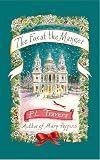
The Fox at the Manger
by P. L. Travers
On This Page
Description
For the first time since the war, the Christmas peal is ringing at St Paul's Cathedral. There is joy. There is new hope. It is Christmas Eve, the carol service has ended, and a woman with three small boys leaves the cathedral, the children swooping like pigeons. 'Why weren't there any wild animals at the crib? Haven't they got something to give?' asked one of the children. And I heard myself say, 'Yes, they have.' Was it true, what I told them? Did I dream it? Where it came from I do not show more know but I seemed to remember every word, just as if I had heard it . . . Outside the cathedral, the children are told the nativity story from a unique perspective: that of a fox. Despite the scorn of the other animals, he enters the stable to offer the child a gift that only he can give. show lessTags
Recommendations





















Member Recommendations
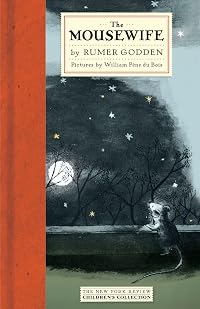
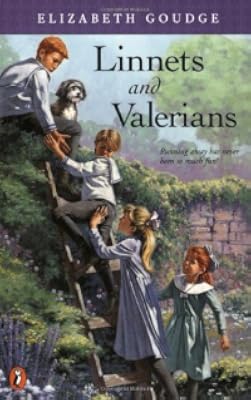
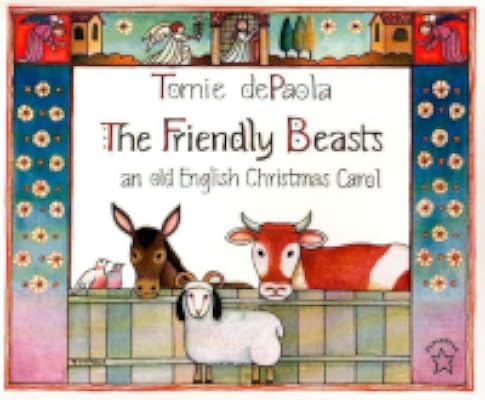
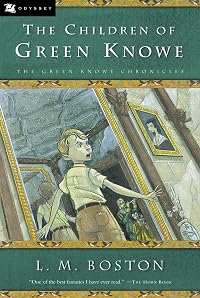
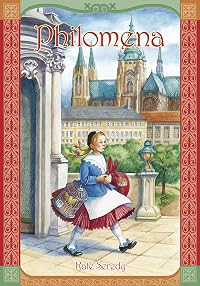
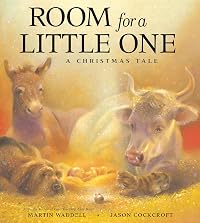
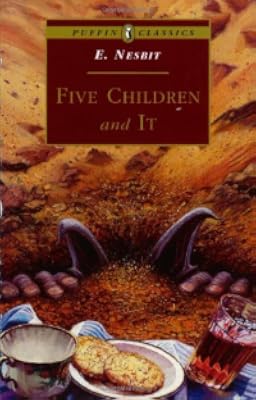
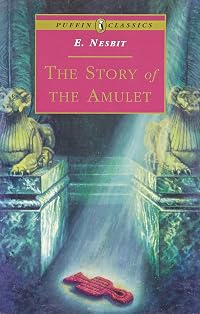
bmlg old-fashioned English stories about children and humble gifts at Christmas, with an undercurrent of sadness
Member Reviews
P.L. Travers, author of the beloved novels about that magical nanny, Mary Poppins, turns her attention to the Christmas story in this lovely little volume. Narrated by an unnamed woman - perhaps Travers herself? - The Fox at the Manger details how three young boys are brought to St. Paul's cathedral in London, shortly after the end of World War II, to attend the traditional Christmas Eve service there. The first part of the book concerns the service itself, and the (hilarious) questions the boys have about what they are experiencing. Responding to the hymn of The Friendly Beasts, which forms an important part of the service, and of the narrative, the boys afterward question the narrator, wanting to know whether the wild animals also show more brought gifts to the Christ Child. There follows an inset story, told by the narrator to the boys, concerning the Fox, and the extraordinary gift he gave...
Such is the beauty and power of Travers' tale here, and such was the strength of my response to it, that when I finished reading it yesterday, sitting in the Rose Reading Room of the New York Public Library, I could only sit there, gazing into space. I had planned, as is my custom on the weekend, to spend the entire day reading various titles, designated as in-library use only, but after The Fox at the Manger I found that I simply couldn't stomach the idea of reading anything else at that moment. I needed time to digest. Time to ponder. Travers' narrative is beautifully written, with passages I needed to read time and again, to appreciate them fully. The scene in which the narrator imagines London past, present and future, with all the times and generations bleeding into one another, and co-existing, was magical. The entire story of the fox, with its references to Reynardian lore, and its sensitive understanding of the conflicting and yet complementary nature of wild and domestic animals, was poignant and powerful. As someone with an interest in foxes - I wrote my masters dissertation on retellings of the History of Reynard for English-language children - I was pretty much guaranteed to find this one interesting. What I didn't expect was to find it so beautiful, so moving, and so thought-provoking. I have never seen Christ compared to a fox before, but when the vulpine character here tells the Child that "it is you who are the fox now, alone against the world," it felt so perfectly right! I had never really considered the meaning and significance of those Biblical passages which speak of the "lion lying down with lamb," but Travers made me think of them, and invested them with a power of which I had not dreamed. Here, from the concluding scenes of the Fox's tale, are some passages that spoke to me most directly:
"His yellow eyes were fixed unblinkingly on the Child and the Child's eyes shone unblinkingly back at him. With a look that seemed to unwind time the two gazed at each other. What they said in that look no one can tell. They might have lived a lifetime in it - thirty-three years of life maybe - stretching away from this winter night to a far-off day in spring."
"This is the way the wheel turns, coming at last to full circle, with wild as well as tame at the crib; lion and turtle-dove together and barnyard beasts lying down with the fox. For wild and tame are but two halves and here, where all begins and ends, everything must be whole."
There is a sharpness of pain here, and an understanding of sacrifice, that make The Fox at the Manger one of the best Nativity Stories I have ever read. I am so very glad that, after many years of meaning to get to this one, I finally did, and I know that it will linger with me for a long time. show less
Such is the beauty and power of Travers' tale here, and such was the strength of my response to it, that when I finished reading it yesterday, sitting in the Rose Reading Room of the New York Public Library, I could only sit there, gazing into space. I had planned, as is my custom on the weekend, to spend the entire day reading various titles, designated as in-library use only, but after The Fox at the Manger I found that I simply couldn't stomach the idea of reading anything else at that moment. I needed time to digest. Time to ponder. Travers' narrative is beautifully written, with passages I needed to read time and again, to appreciate them fully. The scene in which the narrator imagines London past, present and future, with all the times and generations bleeding into one another, and co-existing, was magical. The entire story of the fox, with its references to Reynardian lore, and its sensitive understanding of the conflicting and yet complementary nature of wild and domestic animals, was poignant and powerful. As someone with an interest in foxes - I wrote my masters dissertation on retellings of the History of Reynard for English-language children - I was pretty much guaranteed to find this one interesting. What I didn't expect was to find it so beautiful, so moving, and so thought-provoking. I have never seen Christ compared to a fox before, but when the vulpine character here tells the Child that "it is you who are the fox now, alone against the world," it felt so perfectly right! I had never really considered the meaning and significance of those Biblical passages which speak of the "lion lying down with lamb," but Travers made me think of them, and invested them with a power of which I had not dreamed. Here, from the concluding scenes of the Fox's tale, are some passages that spoke to me most directly:
"His yellow eyes were fixed unblinkingly on the Child and the Child's eyes shone unblinkingly back at him. With a look that seemed to unwind time the two gazed at each other. What they said in that look no one can tell. They might have lived a lifetime in it - thirty-three years of life maybe - stretching away from this winter night to a far-off day in spring."
"This is the way the wheel turns, coming at last to full circle, with wild as well as tame at the crib; lion and turtle-dove together and barnyard beasts lying down with the fox. For wild and tame are but two halves and here, where all begins and ends, everything must be whole."
There is a sharpness of pain here, and an understanding of sacrifice, that make The Fox at the Manger one of the best Nativity Stories I have ever read. I am so very glad that, after many years of meaning to get to this one, I finally did, and I know that it will linger with me for a long time. show less
Very charming! Maybe not so great for children, but delightful for adults. A sweet Christmas story with some funny insights from a mom about her kids. I just stumbled onto this and picked it up because it was Travers. I'm very glad I did. Short and sweet just the right flavor for the Christmas season.
Liked this better than Mary Poppins. I am going to read this every December. I swear.
Ratings
Members
- Recently Added By
Lists

Christmas Books
370 works; 40 members

Favourite Virago Modern Classics
183 works; 38 members

Pleasant Surprises: Books That Exceeded Our Expectations
418 works; 143 members
Author Information

63+ Works 16,864 Members
Born in Australia to an Irish father and a Scottish mother, Helen Lyndon Goff aka. P. L. Travers was a voracious reader and began to write while she was still a child. She did some acting but quickly moved into literary and dramatic criticism; she wrote some highly respected poetry as well. However, it is her series of books for children, starting show more with Mary Poppins (1934), on which her fame rests. The prim, kindly, and enchanting nanny takes charge of the Banks's household and brings the children a seemingly endless stream of fantasy adventures. The book was an immediate success. Walt Disney's (see Vol. 3) musical version, in 1964, brought the stories to an even wider audience. Subsequent books about Mary Poppins include Mary Poppins Comes Back, Mary Poppins Opens the Door, Mary Poppins in the Park, Mary Poppins from A to Z, and Mary Poppins and the House Next Door. Other more recent books include About Sleeping Beauty (1975) and Two Pair of Shoes (1980). Travers was made an Officer of the Order of the British Empire in 1977. She lived into advanced old age, but her health was declining toward the end of her life. Travers died in London on April 23,1996 at the age of 96. (Bowker Author Biography) show less
Some Editions
Series
Belongs to Publisher Series
Virago Modern Classics (644)
Common Knowledge
- Canonical title
- The Fox at the Manger
- Original title
- The Fox at the Manger
- Original publication date
- 1963
- Important places
- St Paul's Cathedral, London, England, UK
- Important events
- Christmas
- Epigraph
- CAROL OF THE FRIENDLY BEASTS
- Dedication
- To C. to remind him
of his childhood - First words
- No-ow-ell, No-ow-ell,
No-ow-ell, No-ow-eh-eh-ell
Born is the ki-ing of I-is-ra-el..
sang the choir, like musical new-boys, flinging their glad tidings all around the cathedral and up into the great dark d... (show all)ome. - Last words
- (Click to show. Warning: May contain spoilers.)By the time they were home and had lit the fire, the swan would be with the fox...
Chelsea, London, May, 1962
Classifications
- Genres
- Fiction and Literature, Children's Books
- DDC/MDS
- 823.912 — Literature & rhetoric English & Old English literatures English fiction 1900- 1901-1999 1901-1945
- LCC
- PZ7 .T689 .F — Language and Literature Fiction and juvenile belles lettres Fiction and juvenile belles lettres Juvenile belles lettres
- BISAC
Statistics
- Members
- 76
- Popularity
- 417,266
- Reviews
- 3
- Rating
- (4.35)
- Languages
- English, Italian
- Media
- Paper, Ebook
- ISBNs
- 4
- ASINs
- 3