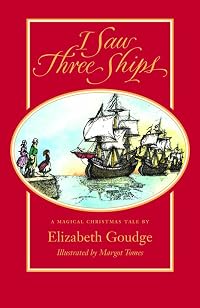
I Saw Three Ships
by Elizabeth Goudge
On This Page
Description
In spite of the fact that Polly's two aunts will not leave the door unlocked on Christmas Eve, their cottage is still visited by three wise men, one of whom has come home to stay after a long absence.Tags
Recommendations



















Member Recommendations
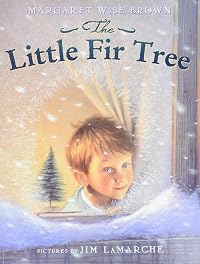
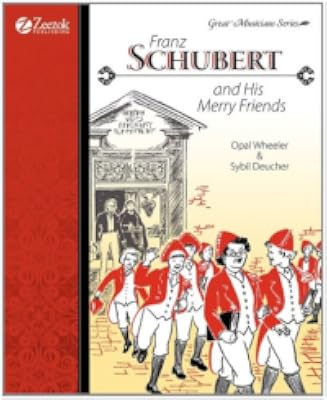
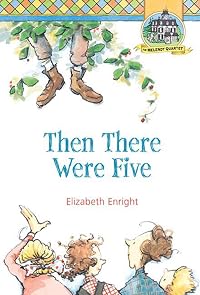
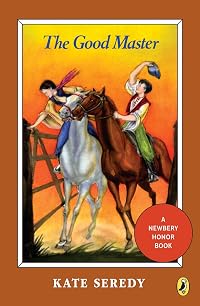
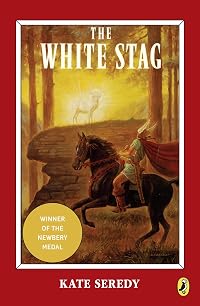
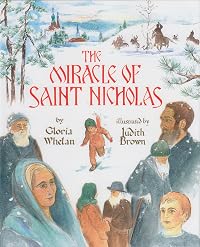
Voracious_Reader Both stories have the same warm, Christmas tone and purpose.

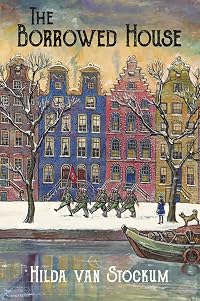
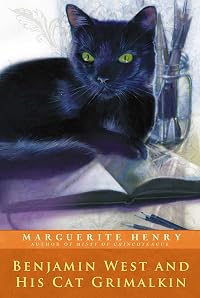
bmlg old-fashioned English stories about children and humble gifts at Christmas, with an undercurrent of sadness
Member Reviews
It is Christmas Eve in an English seaport town, and orphaned young Polly Flowerdew longs to leave one of the doors of her Aunt Constantia and Aunt Dorcas' house unlocked, in case the Wise Men decide to visit. Her maiden aunts are shocked - with no man in the house (only THE HAT), who will protect them? Although they love their vivacious young niece, and are in many ways indulgent of her, they do not totally understand her, or know what to make of her arguments. In the end, sly Polly has her way, and three men do indeed visit in the night. The strange gentleman, who turns out to be her long-lost Uncle Tom ; Polly's friend, the cat-loving Frenchman, who had recently lost his wife and daughter in the Terror of the French Revolution; and the show more old beggar "Rags-and-Bones," come to make his final call - this unlikely trio of Wise Men do indeed bring gifts. And when dawn comes, and Christmas Day arrives, three ships arrive in the harbor, one of them bringing a lady and child...
A beautiful, beautiful book, by turns poignant and amusing, with quirky but lovable characters, and a strong undercurrent of deeper meaning, I Saw Three Ships is a Christmas masterpiece! The classic Christmas carol, which gives the book its name, runs like a stream throughout the story, with various verses utilized at key moments, to draw out the themes of the tale. There is a sense of enchantment here, but not in any fantastical sense. It is the ineffable enchantment of the sacred, evoking that feeling of standing at once in two worlds - the world of an early 19th-century English seaside town, and the world of Christmas miracles, in which the Wise Men might indeed visit, and three ships might indeed come sailing in, bringing great blessing and joy with them. That sense of duality, of simultaneously inhabiting the physical world (marvelously and humorously described) and the world of the spirit (beautifully and poignantly evoked), makes this a truly outstanding work - one of Elizabeth Goudge's best!
This is a wonderfully written and descriptive book, with passages that made me stop and reread, sometimes chuckling, sometimes sighing with happy sadness. Consider this description of the Frenchman:
"When he was not kneeling in the old church by the harbor, saying Popish Latin prayers at the top of his high cracked voice and telling his Popish beads to the scandal of all good Protestants going in and out to polish the brass or beat the dust out of the hassocks, he was striding up and down the steep streets of the little town followed by all the cats of the neighborhood, who adored him not only for the fish heads he kept wrapped in newspaper in his pockets for them but for some quality in himself which appealed to their sense of breeding."
What flavor there is here! How one gets a sense of the little seaside town, with its parochial wariness of this outsider, with his "Popish" (AKA Catholic) ways. What a sense one gets of the outsider himself, deranged by his loss, and yet somehow still noble. And the cats! The cats who follow him - surely a sign of his good qualities!
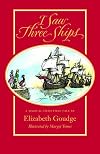
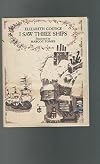
I have had the pleasure of reading I Saw Three Ships on more than one occasion, although this is the first time I have reviewed it. My first reading was of the original British edition, illustrated by Richard Kennedy, whose artwork I found appealing, but not particularly memorable. This reading however, was of the American edition, with the artwork of Margot Tomes, and the visuals made the reading experience something extraordinary. I loved the story on both readings, but I greatly preferred the artwork here, which exactly fit the story, to my thinking. This is a book I would highly recommend, to anyone looking for beautifully written and beautifully illustrated Christmas stories. show less
A beautiful, beautiful book, by turns poignant and amusing, with quirky but lovable characters, and a strong undercurrent of deeper meaning, I Saw Three Ships is a Christmas masterpiece! The classic Christmas carol, which gives the book its name, runs like a stream throughout the story, with various verses utilized at key moments, to draw out the themes of the tale. There is a sense of enchantment here, but not in any fantastical sense. It is the ineffable enchantment of the sacred, evoking that feeling of standing at once in two worlds - the world of an early 19th-century English seaside town, and the world of Christmas miracles, in which the Wise Men might indeed visit, and three ships might indeed come sailing in, bringing great blessing and joy with them. That sense of duality, of simultaneously inhabiting the physical world (marvelously and humorously described) and the world of the spirit (beautifully and poignantly evoked), makes this a truly outstanding work - one of Elizabeth Goudge's best!
This is a wonderfully written and descriptive book, with passages that made me stop and reread, sometimes chuckling, sometimes sighing with happy sadness. Consider this description of the Frenchman:
"When he was not kneeling in the old church by the harbor, saying Popish Latin prayers at the top of his high cracked voice and telling his Popish beads to the scandal of all good Protestants going in and out to polish the brass or beat the dust out of the hassocks, he was striding up and down the steep streets of the little town followed by all the cats of the neighborhood, who adored him not only for the fish heads he kept wrapped in newspaper in his pockets for them but for some quality in himself which appealed to their sense of breeding."
What flavor there is here! How one gets a sense of the little seaside town, with its parochial wariness of this outsider, with his "Popish" (AKA Catholic) ways. What a sense one gets of the outsider himself, deranged by his loss, and yet somehow still noble. And the cats! The cats who follow him - surely a sign of his good qualities!
I have had the pleasure of reading I Saw Three Ships on more than one occasion, although this is the first time I have reviewed it. My first reading was of the original British edition, illustrated by Richard Kennedy, whose artwork I found appealing, but not particularly memorable. This reading however, was of the American edition, with the artwork of Margot Tomes, and the visuals made the reading experience something extraordinary. I loved the story on both readings, but I greatly preferred the artwork here, which exactly fit the story, to my thinking. This is a book I would highly recommend, to anyone looking for beautifully written and beautifully illustrated Christmas stories. show less
I read a newer print of the edition with illustrations by [a:Margot Tomes|402448|Margot Tomes|https://s.gr-assets.com/assets/nophoto/user/u_50x66-632230dc9882b4352d753eedf9396530.png]. I believe the reproduction of the art may be faulty, as there is potential for charm but it seems all blurry.
The story charms, though. It's definitely magical, like so many Christmas stories, especially the short ones meant to shared by the family together. I loved it even though I'm an atheist who does not celebrate Christmas (and read it in February). I will consider more by the author.
And it instructs about the Wise Men's gifts:
"Gold, Frankincense, and Myrrh. Their wealth, their prayer, their death. Three good gifts."... "When he put his fingers on the show more table Balthasar left myrrh. His death, you understand, to enrich their life."
I'm off to research that now, as I've never heard that. Though I have wondered what the gifts meant, and read some more trivial explanations. show less
The story charms, though. It's definitely magical, like so many Christmas stories, especially the short ones meant to shared by the family together. I loved it even though I'm an atheist who does not celebrate Christmas (and read it in February). I will consider more by the author.
And it instructs about the Wise Men's gifts:
"Gold, Frankincense, and Myrrh. Their wealth, their prayer, their death. Three good gifts."... "When he put his fingers on the show more table Balthasar left myrrh. His death, you understand, to enrich their life."
I'm off to research that now, as I've never heard that. Though I have wondered what the gifts meant, and read some more trivial explanations. show less
Just got to this quote, which made me laugh out loud:
"Don't talk nonsense, child," said Dorcas impatiently. "And there are no wise men. I have never met a man yet who was not foolish."
Finished! What a sweet, sweet story. With a little wackinessHello, men just go into the sitting room, although I know they are family/known to the family...
This is worth reading to young relatives, and then re-reading often. And beautifully illustrated.
"Don't talk nonsense, child," said Dorcas impatiently. "And there are no wise men. I have never met a man yet who was not foolish."
Finished! What a sweet, sweet story. With a little wackiness
This is worth reading to young relatives, and then re-reading often. And beautifully illustrated.
[I Saw Three Ships] by [[Elizabeth Goudge]] is a quaint, heartwarming story. It’s a brief, beautifully written, lyrical and sentimental Christmas tale about a little orphan girl named Polly who experiences a number of Christmas miracles. It is light handed and well-paced. Also, my version has some simple illustrations by Margot Tomes that, like the story itself, are sort of Dickensian. I enjoyed it and wish that I could find a copy of Goudge’s [The Little White Horse] to read too. It’s crisp and clean and warm all at once.
This novella-length middle-grade Christmas story takes the carol "I Saw Three Ships" as inspiration and follows the Christmas wishes and fates of several connected members of a seaside town. Pleasant, with charming illustrations.
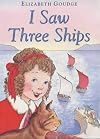
A shame the cover artist isn't named so I can't credit them.
Je l'ai traduit, si ça vous intéresse...
Members
- Recently Added By
Author Information

64+ Works 12,466 Members
Some Editions
Common Knowledge
- Canonical title
- I Saw Three Ships
- Original title
- I Saw Three Ships
- Original publication date
- 1969
- People/Characters
- Polly Flowerdew; Dorcas; Constantia
- Important places
- England, UK
- Original language
- English
Classifications
Statistics
- Members
- 288
- Popularity
- 112,109
- Reviews
- 7
- Rating
- (3.96)
- Languages
- Dutch, English
- Media
- Paper
- ISBNs
- 10
- ASINs
- 4