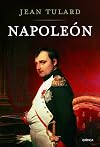
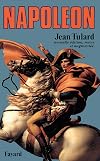
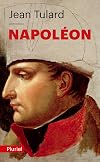
Napoleon: The Myth of the Saviour
by Jean Tulard
On This Page
Description
Om den franske kejser Napoléon I (1769-1821) og hans vej til magtens tinde som enehersker over det meste af Europa samt om myten om ham som Frankrigs redningsmand efter revolutionen - frem til hans nederlag ved Waterloo i 1815.Tags
Recommendations































Member Reviews
The napoleonic saga is well known, books about it have been piling up by the thousands. In a biography dedicated to such a man Jean Tulard follows the rules of the game. He tells his fascinating journey, and shows how the man, oportunistic, managed to emerge out of the troubles of a whole era to impose himself within barely a decade as a central figure in the history of both France and Europe.
The structure of this book is simple, but makes room for plenty of informations. Some chapters deal specifically with topics like economics, art and literature or, again, religion. All end by footnotes rich in details (bibliography, commentaries, open debate...). An appendix with chronology, list of his ministers and generals, and even an show more impressive filmography close it all. Both complete and writen in a fluid style, the book is therefore a real pleasure to read.
Faithful to the subtitle ('or the myth of the savior') Jean Tulard also shows that, if we still entertain this image of Napoleon as being the savior of the French Revolution it's thanks to Napoleon himself, propagandist aware of the image a leader should project to his people... and posterity! From his first campaign in Italy up to St Helena, the man sells himself by constantly adapting as circumstances dictate. Newspapers, paintings, imperial cult, and even his iconic appearance, Napoleon seemed to have been a brilliant spin doctor ahead of his time.
Strangely, while acknowledging this flair for propaganda the historian himself seems to fall under its spell. He quickly brushes aside the monarchists, defends favourable economic conditions, and blaming the Coalitions for being sole responsible for the wars (apart for Spain and Russia) reads between the lines like a justification of his drastic policies. The police state, we are told, was not that oppressive... I won't take side (my ideas of him are way too ambiguous!) but, no doubt, such an approach will irritate some readers. Having said that, is it even possible to have an unbiased opinion about such a man?
Because he clearly shows how difficult it is even nowadays to differentiate between myth and reality, navigating its way through the smoke of a propaganda yet crucial to understand, on top of being a great biography and a very good overview of the period this book remains fascinating. A dense but fantastic read. show less
The structure of this book is simple, but makes room for plenty of informations. Some chapters deal specifically with topics like economics, art and literature or, again, religion. All end by footnotes rich in details (bibliography, commentaries, open debate...). An appendix with chronology, list of his ministers and generals, and even an show more impressive filmography close it all. Both complete and writen in a fluid style, the book is therefore a real pleasure to read.
Faithful to the subtitle ('or the myth of the savior') Jean Tulard also shows that, if we still entertain this image of Napoleon as being the savior of the French Revolution it's thanks to Napoleon himself, propagandist aware of the image a leader should project to his people... and posterity! From his first campaign in Italy up to St Helena, the man sells himself by constantly adapting as circumstances dictate. Newspapers, paintings, imperial cult, and even his iconic appearance, Napoleon seemed to have been a brilliant spin doctor ahead of his time.
Strangely, while acknowledging this flair for propaganda the historian himself seems to fall under its spell. He quickly brushes aside the monarchists, defends favourable economic conditions, and blaming the Coalitions for being sole responsible for the wars (apart for Spain and Russia) reads between the lines like a justification of his drastic policies. The police state, we are told, was not that oppressive... I won't take side (my ideas of him are way too ambiguous!) but, no doubt, such an approach will irritate some readers. Having said that, is it even possible to have an unbiased opinion about such a man?
Because he clearly shows how difficult it is even nowadays to differentiate between myth and reality, navigating its way through the smoke of a propaganda yet crucial to understand, on top of being a great biography and a very good overview of the period this book remains fascinating. A dense but fantastic read. show less
香港大學歷史系
Ce Napoléon ou le mythe du sauveur n'est pas, une biographie historique consacrée une fois encore au «plus grand des Français ». Avec ses notes précises et ses débats ouverts qui ajoutent, tel un appareil critique, à l'intérêt de chaque chapitre, semblable approche humaine et politique est beaucoup plus une étude englobante qui ne laisse rien au hasard, qui défriche impartialement. Ainsi se trouve élucidé l'homme Bonaparte, le premier et le plus génial des «sauveurs» chers (un moment) aux Français en mal de légitimité protectionniste, et ce au moins depuis la chute de Louis XVI. Mais alors, avec Jean Tulard, nous pouvons nous interroger - au-delà de l'Opéra et de la Symphonie Napoléon - sur le sens et sur la voie show more de l'aventure de tout grand sauveur de la patrie retour au passé, maintien du présent, préparation de l'avenir? Ce grand livre d'histoire nous y invite. show less
Jun 7, 2011French
Ratings
Members
- Recently Added By
Lists

Biografías eminentes
24 works; 1 member
Author Information

103+ Works 639 Members
Awards and Honors
Notable Lists
Series
Belongs to Publisher Series
Common Knowledge
- Canonical title
- Napoleon: The Myth of the Saviour
- Original title
- Napoléon ou le mythe du sauveur
- Alternate titles
- Napoleon: The Myth of the Saviour
- Original publication date
- 1977
- People/Characters
- Napoleon Bonaparte; Pope Pius VI
- Important places
- Corsica, France; Lyon, Rhône, Auvergne-Rhône-Alpes, France; Egypt; Italy; Paris, France; Spain (show all 10); Germany; The Netherlands; Moscow, Russia; Waterloo, Walloon Brabant, Belgium
- Epigraph
- D'ici à cinquante ans, il faudra refaire l'histoire de Napoléon tous les ans... STENDHAL, Vie de Napoléon, préface.
- First words
- Quand, à la fin de La Flûte enchantée, les légions de la Reine de la nuit sont vaincues dans le temple du Soleil par les troupes de Sarastro, c'est la victoire des "Lumirères" sur l'obscurantisme que prophétise Mozart
- Last words
- (Click to show. Warning: May contain spoilers.)The first savious was also the greatest; those that followed were mere parodies.
- Publisher's editor
- Fayard
- Original language*
- Français
*Some information comes from Common Knowledge in other languages. Click "Edit" for more information.
Classifications
- Genres
- History, Nonfiction, Biography & Memoir, General Nonfiction
- DDC/MDS
- 944.05 — History & geography History of Europe France and Monaco France First empire 1804-1815
- LCC
- DC203 — History of Europe, Asia, Africa and Oceania France – Andorra – Monaco History of France Modern, 1515- Revolutionary and Napoleonic period, 1789-1815
Statistics
- Members
- 121
- Popularity
- 270,537
- Reviews
- 3
- Rating
- (3.94)
- Languages
- 7 — Danish, English, French, German, Italian, Portuguese, Spanish
- Media
- Paper, Ebook
- ISBNs
- 26
- ASINs
- 6