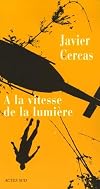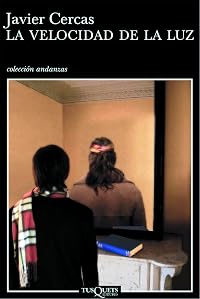
The Speed of Light
by Javier Cercas
On This Page
Description
The young hero of The Speed of Light is an aspiring writer in provincial Spain in the 1980s, dreaming of burning success, searching for a real story to tell. Out of the blue he is offered the chance to work in a in a Midwestern university and soon he is in the United States, living a happy, carefree life, working and writing. Little does he know that his burgeoning friendship with the Vietnam Vet Rodney Falk, a man of few friends and strange ways, will influence the course of his entire show more life, or that he will become obsessed with unravelling the mystery at the heart of Rodney's life. Why do people sometimes ridicule and sometimes fear Rodney? Why does he shun the world? Why does he accept and befriend the narrator? What really happened at My Khe? When the young writer's own life takes a terrible twist many years later, Rodney may be the only person in the world who can save him. show lessTags
Recommendations




















Member Reviews
Someday this war's going to end...
Of course, that quote is not from The Speed of Light; if you know your movie history you’ll hear Robert Duvall as Colonel Kilgore in Apocalypse Now. It’s one of many darkly ironic lines in one of the best movies ever made; he’s just wiped out a Vietnamese village to give his soldiers somewhere to surf, and since he has no clue that the movie he’s in (and the book it’s based on) is about the darkness within man, he can’t comprehend that the war is just going to continue.
I don’t think it’s coincidence that Cercas’ novel has a title that sounds like the opposite of The Heart of Darkness. Just like Coppola built on Conrad, Cercas seems to borrow both from Coppola’s and others’ versions show more of a war when he writes his own Vietnam war novel. After all, as 40-something Europeans, neither Cercas nor his narrator can claim first-hand experiences of the war; much of it is inevitably going to be based on the way the war has since been portrayed. So when the young Spanish exchange student befriends a war veteran 20 years his senior and tries to understand what happened to him, it makes perfect sense that the veteran in question comes across a bit like Christopher Walken’s character in Deer Hunter, if he’d made it back home and started studying literature – both the writer, the reader and the fictional narrator are seeing reality through a fictional lens.
But this is also where Cercas takes a sharp turn. Because as interesting as the traumatised old soldier might be, it’s obviously a story we’ve seen told before – but it’s only half the story in The Speed of Light. The other half concerns the narrator himself, many years later; he’s grown up as a modern European, and after his time in the US he returns home to Spain, far from wars, starvation and pointless massacres... and yet full of things that can go wrong, things you lie awake at night in horror of. Because just like Heart of Darkness isn’t only about colonial Africa, this isn’t about any specific war, but what happens to people who lose the war with themselves – who end up in a situation where they discover how easy it can be to step across that line. How evil is not necessarily something that comes with flashing lights, official declarations of war, bullets or Wagner at top volume, how the same darkness can turn up in the choices and simple acts we make from day to day. Our young Spaniard grows up, becomes a successful writer, and loses his grip completely; the comfortable life with its clearly stated goals of money, family and safety turns out to open up into an abyss, and we all know the quote about what happens if you look into that abyss... and so after losing everything, he returns to the US to try and find out what happened to the old veteran he knew 20 years earlier, and how to cope with the failure of a dream.
Cercas doesn’t exactly make it easy for himself. Having the same nameless narrator tell everything in flashbacks, with very little dialogue, could be a complete disaster for a less talented writer. But Cercas’ language is so straight-forward and alive that the book never loses its way. The two main characters’ lives and their thoughts on literature, war, fame and the difference between surviving and living is rarely less than fascinating (despite the fact that the theme of the book is based on a misquote of Bob Dylan...), occasionally disturbing, and often quite touching.
They say the speed of light is 300,000 m/s. When you look out in the world, it often seems to move a lot slower than that – it certainly doesn’t seem to be able to banish darkness forever. But we keep chasing it, and while there's no guarantee of catching it, occasionally we see a glimpse. Like this book, for instance. show less
Of course, that quote is not from The Speed of Light; if you know your movie history you’ll hear Robert Duvall as Colonel Kilgore in Apocalypse Now. It’s one of many darkly ironic lines in one of the best movies ever made; he’s just wiped out a Vietnamese village to give his soldiers somewhere to surf, and since he has no clue that the movie he’s in (and the book it’s based on) is about the darkness within man, he can’t comprehend that the war is just going to continue.
I don’t think it’s coincidence that Cercas’ novel has a title that sounds like the opposite of The Heart of Darkness. Just like Coppola built on Conrad, Cercas seems to borrow both from Coppola’s and others’ versions show more of a war when he writes his own Vietnam war novel. After all, as 40-something Europeans, neither Cercas nor his narrator can claim first-hand experiences of the war; much of it is inevitably going to be based on the way the war has since been portrayed. So when the young Spanish exchange student befriends a war veteran 20 years his senior and tries to understand what happened to him, it makes perfect sense that the veteran in question comes across a bit like Christopher Walken’s character in Deer Hunter, if he’d made it back home and started studying literature – both the writer, the reader and the fictional narrator are seeing reality through a fictional lens.
But this is also where Cercas takes a sharp turn. Because as interesting as the traumatised old soldier might be, it’s obviously a story we’ve seen told before – but it’s only half the story in The Speed of Light. The other half concerns the narrator himself, many years later; he’s grown up as a modern European, and after his time in the US he returns home to Spain, far from wars, starvation and pointless massacres... and yet full of things that can go wrong, things you lie awake at night in horror of. Because just like Heart of Darkness isn’t only about colonial Africa, this isn’t about any specific war, but what happens to people who lose the war with themselves – who end up in a situation where they discover how easy it can be to step across that line. How evil is not necessarily something that comes with flashing lights, official declarations of war, bullets or Wagner at top volume, how the same darkness can turn up in the choices and simple acts we make from day to day. Our young Spaniard grows up, becomes a successful writer, and loses his grip completely; the comfortable life with its clearly stated goals of money, family and safety turns out to open up into an abyss, and we all know the quote about what happens if you look into that abyss... and so after losing everything, he returns to the US to try and find out what happened to the old veteran he knew 20 years earlier, and how to cope with the failure of a dream.
Cercas doesn’t exactly make it easy for himself. Having the same nameless narrator tell everything in flashbacks, with very little dialogue, could be a complete disaster for a less talented writer. But Cercas’ language is so straight-forward and alive that the book never loses its way. The two main characters’ lives and their thoughts on literature, war, fame and the difference between surviving and living is rarely less than fascinating (despite the fact that the theme of the book is based on a misquote of Bob Dylan...), occasionally disturbing, and often quite touching.
They say the speed of light is 300,000 m/s. When you look out in the world, it often seems to move a lot slower than that – it certainly doesn’t seem to be able to banish darkness forever. But we keep chasing it, and while there's no guarantee of catching it, occasionally we see a glimpse. Like this book, for instance. show less
This brilliant novel concerns a budding young writer who decides to leave Barcelona and travel to a university town in the US Midwest to take up a teaching position. He is befriended by an older man in the same department at the university, who is deeply scarred by his experiences in Vietnam. The two men maintain a strange and distant friendship, and as the narrator becomes a best selling novelist after his return to Spain his life begins to unravel. Once he has reached rock bottom he seeks to meet his old friend again, to help him on the road to recovery, and in doing so he finds out more about what happened to his friend during the war, and the similarities the two men shared in their disparate lives.
"The Speed of Light" is another show more fabulous work by one of my favorite living authors, and I eagerly await the translation of his latest two latest novels into English. show less
"The Speed of Light" is another show more fabulous work by one of my favorite living authors, and I eagerly await the translation of his latest two latest novels into English. show less
Recently shortlisted for this year's Irish Impac Award--'The speed of light' like Cercas's previously translated novel 'Soldiers of Salamis' is a book that crosses back and forth between fiction and non-fiction. A young Spanish writer is given the opportunity to come to the United States to teach Spanish at a small mid-western (Illinois) university. While there he becomes friends with a local Vietnam veteran who also works there but is for the most part shunned by the rest of the faculty. His name is Rodney Falk--and he is large, morose, opinonated and seemingly at times aggressive. The Spanish writer hopes to one day publish a novel and Rodney has strong ideas about literature. Rodney sometimes retreats--sometimes seems to be in show more another world. One day he disappears and the young writer concerned goes to his house and Rodney's father chases him off but later the father invites him back and gives him not only all the correspondence that Rodney, but also Rodney's brother (who had been killed in the war) had sent him while they were in Vietnam.
From here the story shoots forward in time. The Spaniard is now a very successful novelist. Fame has gone to his head and he's unthinkingly destroying his marriage. One day Rodney reappears in his life--meets him in Madrid. Things seemed to have changed in his life too. He seems much happier, more relaxed. He has married and has a child. The writer grills him a bit about the letters--bringing back darker memories and Rodney is reluctant to tell him too much. After that Rodney returns to the United States and the writer's life heads into disaster. His life bottoms out.. He gets an opportunity to return to the United States and he agrees as long as the tour involves a return to the University where our story started out. While there he plans on visiting Rodney. His thinking is that 'Rodney has turned his life around. Rodney can help me'.
Since parting with him in Madrid though-- the Vietnam war has returned to Rodney with a vengeance. As a member of the 101st paratroop division--after the death of his brother he had volunteered for a special unit called Tiger Force. The unit received many commedations but committed numerous atrocities and it is these atrocities that have continued to haunt Rodney for most of his adult life and have come back in full force because of an investigative reporter. From here the book moves towards it's bleak conclusion.
Cercas is adept at this kind of non-fiction/fictionalized writing. It's a not a big step from his excellent Soldiers of Salamis. The book is a page turner. It's easy to fall into the confessional type of tone the writer uses when speaking of his own life--juxtaposed against the confusion and general unhappiness of the young soldier looked back from the perspective of the same man many years later with anger and pity. I liked the book very much and would recommend it. show less
From here the story shoots forward in time. The Spaniard is now a very successful novelist. Fame has gone to his head and he's unthinkingly destroying his marriage. One day Rodney reappears in his life--meets him in Madrid. Things seemed to have changed in his life too. He seems much happier, more relaxed. He has married and has a child. The writer grills him a bit about the letters--bringing back darker memories and Rodney is reluctant to tell him too much. After that Rodney returns to the United States and the writer's life heads into disaster. His life bottoms out.. He gets an opportunity to return to the United States and he agrees as long as the tour involves a return to the University where our story started out. While there he plans on visiting Rodney. His thinking is that 'Rodney has turned his life around. Rodney can help me'.
Since parting with him in Madrid though-- the Vietnam war has returned to Rodney with a vengeance. As a member of the 101st paratroop division--after the death of his brother he had volunteered for a special unit called Tiger Force. The unit received many commedations but committed numerous atrocities and it is these atrocities that have continued to haunt Rodney for most of his adult life and have come back in full force because of an investigative reporter. From here the book moves towards it's bleak conclusion.
Cercas is adept at this kind of non-fiction/fictionalized writing. It's a not a big step from his excellent Soldiers of Salamis. The book is a page turner. It's easy to fall into the confessional type of tone the writer uses when speaking of his own life--juxtaposed against the confusion and general unhappiness of the young soldier looked back from the perspective of the same man many years later with anger and pity. I liked the book very much and would recommend it. show less
A writer in residence at a university in the US meets a mysterious man. The book is about his quest to understand the friendship with the man, a Vietnam veteran. Write attains international fame and starts a family but there is tragedy, both personal, and for his friend.
Friend is involved in the MyKhe incident in Vietnam -
Well written novel I had to finish - the tragedy and collapse of his world was unexpected - very well done.
Friend is involved in the MyKhe incident in Vietnam -
Well written novel I had to finish - the tragedy and collapse of his world was unexpected - very well done.
É vidente que Cercas é um excelente contador de estórias, possui um ritmo e entretenimento eficaz como já havia deixado claro em Soldados de Salamina - único livro que lera dele até então - mas para realmente agradar e fazer com que eu intitule o livro como ótimo, o autor tem que ser mais que um bom contador de estórias.
The Speed of Light by Javier Cercas
Another wonderful piece of literature from the author of Soldiers of Salamis.
This book followed up on the success he had with Soldiers. A Catalan writer early on in his fledgling career is invited to a fellowship in Urbana, Illinois. Leaving his then roommate, Marcos another starving artist-a painter, Javier embarks on this trip. Once there he teaches a class in Spanish Studies and attempts to start writing a novel. His officemate turns out to be a part-time instructor who also happens to be a combat veteran of the Vietnam War. They befriend one another, spending evenings over beers talking about literature, Hemingway, and exchanging Catalan vocabulary.
Rodney Falk is an odd character, awkward socially show more yet brilliant in thought and reflection. Javier befriends him while most other faculty avoid him. At a turning point in the story Rodney disappears and looking for him, Javier ends up spending an evening with Rodney’s father during which Javier hears the background story of Rodney’s travails at war in Vietnam.
His fellowship ends and Javier returns to Catalan, marries, has a son and toils at being a writer eventually writing a bestseller at which time his fame goes to his head and the marriage ends tragically due to his hubris. Guilt ridden he finds himself thinking more and more about Rodney who turns up in Barcelona spending a day with Javier’s wife and son.
Without giving away too much this book is one of intrigue, guilt and the possibility of forgiveness and redemption.
Cercas is a master storyteller with the unique perspective of incorporating his own creative process as a theme of the novel he is writing. show less
Another wonderful piece of literature from the author of Soldiers of Salamis.
This book followed up on the success he had with Soldiers. A Catalan writer early on in his fledgling career is invited to a fellowship in Urbana, Illinois. Leaving his then roommate, Marcos another starving artist-a painter, Javier embarks on this trip. Once there he teaches a class in Spanish Studies and attempts to start writing a novel. His officemate turns out to be a part-time instructor who also happens to be a combat veteran of the Vietnam War. They befriend one another, spending evenings over beers talking about literature, Hemingway, and exchanging Catalan vocabulary.
Rodney Falk is an odd character, awkward socially show more yet brilliant in thought and reflection. Javier befriends him while most other faculty avoid him. At a turning point in the story Rodney disappears and looking for him, Javier ends up spending an evening with Rodney’s father during which Javier hears the background story of Rodney’s travails at war in Vietnam.
His fellowship ends and Javier returns to Catalan, marries, has a son and toils at being a writer eventually writing a bestseller at which time his fame goes to his head and the marriage ends tragically due to his hubris. Guilt ridden he finds himself thinking more and more about Rodney who turns up in Barcelona spending a day with Javier’s wife and son.
Without giving away too much this book is one of intrigue, guilt and the possibility of forgiveness and redemption.
Cercas is a master storyteller with the unique perspective of incorporating his own creative process as a theme of the novel he is writing. show less
I picked this book up at random, without knowing anything about the author or the background to the book. I'd say I really enjoyed the first half, as I had the pleasant expectation that some twist in the plot was coming, but since it never really did, I felt a bit let down by the end of the book.
Having said that, I've since found out that the Vietnam episodes in the book really did occur, so I can see that the book has another meaning. I'd recommend it despite what I thought was a disappointing plot, and I'd definitely read Soldiers of Salamis by the same author if I found it.
Having said that, I've since found out that the Vietnam episodes in the book really did occur, so I can see that the book has another meaning. I'd recommend it despite what I thought was a disappointing plot, and I'd definitely read Soldiers of Salamis by the same author if I found it.
Members
- Recently Added By
Lists

International IMPAC Dublin Literary Award
179 works; 6 members
Author Information

38+ Works 4,980 Members
Javier Cercas is the author of Soldiers of Salamis (which sold more than a million copies worldwide), The Tenant and the Motive, and The Speed of Light. He has taught at the University of Illinois and for many years was a lecturer in Spanish literature at the University of Gerona. His books have been translated into more than twenty languages.
Some Editions
Awards and Honors
Awards
Notable Lists
Series
Belongs to Publisher Series
Common Knowledge
- Canonical title
- The Speed of Light
- Original title
- La velocidad de la luz
- Original publication date
- 2005
- People/Characters
- Rodney Falk
- Important places
- Barcelona, Catalonia, Spain; Girona, Catalonia, Spain; Urbana, Illinois, USA; Rantoul, Illinois, USA; Vietnam; Madrid, Spain
- Important events
- Vietnam War
- Epigraph*
- Il male, non gli errori, durano,
ciò che si può scusare è scusato da tempo,
anche i tagli del coltello
sono guariti così, solo il taglio fatto dal male
non guarisce, si apre di notte, ogni notte.
Ma se dovessero avvilupparci?
Non ci avvilupperanno.
E se dovessimo soffocare?
Non soffocheremo.
JULES VERNE, Viaggio al centro della terra - Dedication*
- A Raül Cercas e Mercè Mas
- First words*
- Adesso conduco una vita falsa, una vita apocrifa, clandestina e invisibile sebbene più reale che se fosse vera, ma io ero ancora io quando conobbi Rodney Falk.
- Quotations*
- Eravamo tremendamente ambiziosi. Aspiravamo al fallimento. Ma non a un fallimento qualsiasi o banale: desideravamo fallire in maniera totale, radicale e assoluta. era il nostro modo di aspirare al successo.
«Mi piace» m'interruppe Rodney.
«Ti piace cosa?» domandai attonito.
«Che tu non sappia ancora di cosa tratterà il romanzo» rispose. «Se lo sapessi in anticipo, sarebbe un male: finiresti per dire quello che sai ... (show all)già, cioè le cose che sappiamo tutti. Se invece non sai ancora cosa vuoi dire, ma sei tanto pazzo o tanto disperato o hai il coraggio sufficiente per continuare a scrivere, magari finirai per dire qualcosa che neanche tu sapevi di sapere e che soltanto tu puoi arrivare a sapere, e questo potrebbe risultare di un qualche interesse. [...] Quello che intendo dire è che chi sa sempre dove va non arriva mai da nessuna parte, e si sa cosa si vuole dire solo quando lo si è già detto.»
«Le storie non esistono» mi disse una volta. «Quello che conta è chi le narra. Se sai chi è, c'è già la storia; se non sai chi è, non c'è storia.»
«In un romanzo ciò che non viene raccontato è sempre più rilevante di ciò che viene raccontato» mi disse in u'altra occasione. «Voglio dire che i silenzi sono più eloquenti delle parole, e tutta l'arte del narratore c... (show all)onsiste nel saper tacere a tempo debito: ecco perché, in fondo, la miglior maniera di raccontare una storia è non raccontarla.»
«Cos'è uno scrittore?»
«E cosa dovrebbe essere?» sbottai spazientito. «Un tizio che è capace di mettere le parole una dietro l'altra e con un certo stile, oltretutto.»
«Esatto» ammise Rodney. «Ma è anche uno... (show all) che si pone problemi molto complessi e, anziché risolverli o tentare di risolverli come farebbe qualsiasi persona sensata, li rende ancora più complicati. Cioè: è uno squilibrato che guarda la realtà, e a volte riesce a vederla.» «Tutti vedono la realtà» obiettai. «Anche chi non è squilibrato.» «E qui ti sbagli disse Rodney. «Tutti guardano la realtà, ma pochi la vedono. L'artista non è colui che rende visibile l'invisibile: questo sì che è romanticismo, anche se non della peggiore specie; l'artista è colui che rende visibile quanto era già visibile ma che tutti avevano sotto gli occhi senza poterlo o volerlo vedere. È troppo sgradevole, spesso terrificante, e bisogna avere due palle così per guardarlo senza chiudere gli occhi o senza scappar via, perché chi lo vede si distrugge o diventa pazzo. A meno che, ovviamente, non abbia uno scudo dietro cui proteggersi o possa fare qualcosa con ciò che vede.» Rodney fece una pausa e poi riattaccò: «Voglio dire che la gente normale subisce o sfrutta la realtà ma non può farci niente, mentre lo scrittore può, perché il suo mestiere consiste nel conferire alla realtà un senso, per quanto illusorio; cioè può trasformarla in bellezza, e questa bellezza o questo senso sono il suo scudo. Perciò sostengo che lo scrittore è uno squlibrato con l'obbligo o il dubbio privilegio di vedere la realtà, e pertanto, quando uno scrittore smette di scrivere, finisce per suicidarsi, perché non ha saputo togliersi il vizio di vedere la realtà, ma intanto non ha più uno scudo dietro cui proteggeresi. Ecco perché Hemingway si è ucciso. Pertanto, quando uno è scrittore non può più smettere di esserlo, a meno che non decida di giocarsi la pelle. Insomma: un mestiere fottuto.»
Ricordo che quando squillò il telefono stavo finendo di leggere un racconto di Hemingway intitolato Un posto pulito, illuminato bene; ricordo anche che presi la cornetta pensando a quel racconto tristissimo e sopratut... (show all)to alla preghiera tristissima che conteneva; «Nada nostro che sei nel nada, nada sia il nome tuo, il regno tuo, nada sia la tua volontà nada in nada come in nada.»
«Lei è ancora troppo giovane per pensare ad avere dei figli» mi disse il padre di Rodney quando ci salutammo, e non l'ho dimenticato. «Non ne abbia, perché se ne pentirebbe; ma anche se non ne avrà se ne pentirà. Così... (show all) è la vita: qualunque cosa faccia, se ne pentirà. Ma mi lasci dire una cosa: tutte le storie d'amore sono insensate, perché l'amore è una malattia; però avere un figlio significa arrischiarsi a vivere una storia d'amore talmente insensata che soltanto la morte è in grado di interromperla.» Questo mi disse il padre di Rodney, e non l'ho dimenticato.
«[...] Oggi, quando un cialtrone non sa come stroncare un romanzo, se la cava asserendo che è sentimentale. I cialtroni non capiscono che scrivere un romanzo consiste nello scegliere le parole più toccanti per suscitare la... (show all) maggiore emozione possibile; non capisco neppure che una cosa è il sentimento e un'altra è il sentimentalismo, e che il sentimentalismo è il fallimento del sentimento. E, dato che gli scrittori sono codardi e non si azzardano a contraddire i cialtroni che dettano legge e hanno bandito i sentimenti e le emozioni, il risultato è una caterva di romanzi perfettini, freddi, esangui e e privi di vita che sembrano usciti direttamente dallo sportello di un funzionario avanguardista per compiacere i critici...»
«Magari uno non è soltanto responsabile di quello che fa, ma anche di quello che vede, legge o ascolta.» [...] «Aha» disse. «Bella frase. Quanto piacciono a voi scrittori le belle frasi. Nel tuo ultimo libro ce ne sono ... (show all)alcune. Davvero carine. Così perfette che a volte sembrano vere. Ma non lo sono affatto, sono solo belle. La cosa strana è che tu non abbia ancora imparato che scrivere bene è l'esatto contrario di scrivere belle frasi. Nessuna bella frase è capace di catturare la realtà, però...»
«Io non ho detto che volevo raccontare la verità» lo interruppi, irritato. «Ho detto solo che volevo raccontare la tua storia.»
«E che differenza c'è?» ribatté, fissandomi con una triste aria di sfida. «Le uniche storie che vale la pena di raccontare sono quelle vere, e se tu non sei riuscito a raccontare la mia è non è perché tu non ce la fai, ma perché non si può raccontare.» - Last words*
- (Click to show. Warning: May contain spoilers.)Ho abbracciato con lo sguardo il bar semideserto e, sentendomi quasi felice, ho riposto: «Finisce così.»
- Original language
- Spanish
*Some information comes from Common Knowledge in other languages. Click "Edit" for more information.
Classifications
Statistics
- Members
- 496
- Popularity
- 60,995
- Reviews
- 16
- Rating
- (3.53)
- Languages
- 12 — Catalan, Danish, Dutch, English, Finnish, French, Italian, Norwegian, Portuguese, Romanian, Spanish, Swedish
- Media
- Paper, Ebook
- ISBNs
- 36
- ASINs
- 6