
Connections and Symbols
by Steven Pinker (Editor), Jacques Mehler (Editor)
On This Page
Description
Does intelligence result from the manipulation of structured symbolic expressions? Or is it the result of the activation of large networks of densely interconnected simple units? Connections and Symbols provides the first systematic analysis of the explosive new field of Connectionism that is challenging the basic tenets of cognitive science. These lively discussions by Jerry A. Fodor, Zenon W. Pylyshyn, Steven Pinker, Alan Prince, Joel Lechter, and Thomas G. Bever raise issues that lie at show more the core of our understanding of how the mind works: Does connectionism offer it truly new scientific model or does it merely cloak the old notion of associationism as a central doctrine of learning and mental functioning? Which of the new empirical generalizations are sound and which are false? And which of the many ideas such as massively parallel processing, distributed representation, constraint satisfaction, and subsymbolic or microfeatural analyses belong together, and which are logically independent? Now that connectionism has arrived with full-blown models of psychological processes as diverse as Pavlovian conditioning, visual recognition, and language acquisition, the debate is on. Common themes emerge from all the contributors to Connections and Symbols: criticism of connectionist models applied to language or the parts of cognition employing language like operations; and a focus on what it is about human cognition that supports the traditional physical symbol system hypothesis. While criticizing many aspects of connectionist models, the authors also identify aspects of cognition that could he explained by the connectionist models. Connections and Symbols is included in the Cognition Special Issue series, edited by Jacques Mehler. show lessTags
Recommendations




























Members
- Recently Added By
Author Information

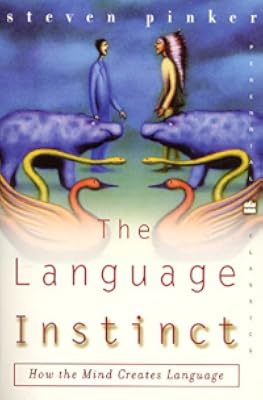
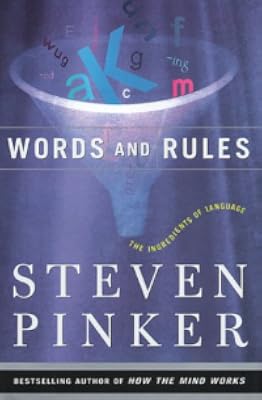
Steven Pinker is an authority on language and the mind. He is Peter de Florez professor of psychology in the department of brain and cognitive sciences at the Massachusetts Institute of Technology. He lives in Cambridge, Massachusetts. Steven Arthur Pinker was born on September 18, 1954 in Canada. He is an experimental psychologist, cognitive show more scientist, linguist, and author. He is a psychology professor at Harvard University. He is the author of several non-fiction books including The Language Instinct, How the Mind Works, Words and Rules, The Blank Slate, The Stuff of Thought, and The Sense of Style: The Thinking Person's Guide to Writing in the 21st Century. His research in cognitive psychology has won the Early Career Award in 1984 and Boyd McCandless Award in 1986 from the American Psychological Association, the Troland Research Award in 1993 from the National Academy of Sciences, the Henry Dale Prize in 2004 from the Royal Institution of Great Britain, and the George Miller Prize in 2010 from the Cognitive Neuroscience Society. He was twice a finalist for the Pulitzer Prize, in 1998 and in 2003. In 2006, he received the American Humanist Association's Humanist of the Year award for his contributions to public understanding of human evolution. (Bowker Author Biography) show less

Series
Belongs to Publisher Series
Common Knowledge
- Canonical title
- Connections and Symbols
- Original publication date
- 1988
- Original language
- English
Classifications
Statistics
- Members
- 49
- Popularity
- 605,251
- Languages
- English
- Media
- Paper, Ebook
- ISBNs
- 2