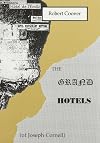
The Grand Hotels (of Joseph Cornell) (Burning Deck Fiction)
by Robert Coover
42 Members (3.50)
On This Page
Description
Fiction. Robert Coover takes us through the looking-glass of Joseph Cornell's boxes into a world of "Grand Hotels" we never dreamed of. Rooms are accessed via ferris wheel. They open onto crystal cages, night voyages, sand fountains. They lead us back to childhood, to forgotten games, to sleeping princess who do not await a prince and, finally, home, poor heart. Funny and wistful by turns, these brilliant vignettes explore the nature of desire and the melancholy of fulfillment. As the author show more says, they are also an "architectural portrait of the artist," with biographical information "built into the construction of the text like girders, brickwork or decor." "A set of brochures to the marvelous. Coover, with magnificent simplicity, orchestrates countering strands of pathos and wonder, decadence and innocent glee, in these 10 short chapters that are sure to make anyone permanently dissatisfied with the run-down bed-and-breakfast we call planet Earth"—Publishers Weekly. show lessTags
Recommendations














Member Reviews
Members
- Recently Added By
Lists

Art-inspired fiction
45 works; 2 members
Author Information

72+ Works 5,755 Members
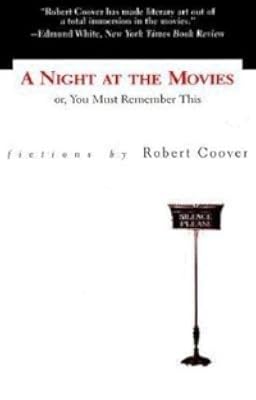
Robert Coover is a midwesterner who has earned a reputation as one of the most innovative of contemporary writers of fiction. Coover likes to experiment with an abundance of differing styles. The Origin of the Brunists (1966), his first novel, is a religious parable heavily loaded with symbolism and mythical parallels. It deals with the rise show more following an Appalachian coal-mine disaster of a sect of worshipers made up of fundamentalists and theosophists whose leader, Giovanni Bruno, is less a preacher than a silent enigma. The principal analogue is apparently meant to be the founding of the Christian religion, but Coover's extensive irony requires that he reverse many of the traditional features of the Christian legend. The Universal Baseball Association (1968), Coover's most accessible novel to date, is also dominated by religious symbolism. Over the years, J. Henry Waugh, a middle-aged bachelor and accountant, has developed an elaborately structured game, which he plays with dice. His game is based on the mathematical probabilities of baseball. Every evening Henry plays his game and maintains his extensive record books. J. Henry Waugh is a surrogate for God, and the participants in his imaginary baseball league seem almost to come to life, raising as they do age-old questions about fate and free will, success and failure, games and religions. Coover's Pricksongs and Descants (1969) is a collection of 20 short pieces and a theoretical "Prologo" in which the author states his belief that contemporary fiction should be based on familiar historical or mythical forms. Most of the stories in this volume, which was well received by critics, are based on biblical episodes or classical fairy tales retold in startling new ways. The Public Burning (1977) is based on the controversial trial of the Rosenbergs. With the exception of a novel, A Night at the Movies (1992), Coover's publications in recent years have consisted mainly of shorter works, written at various stages of his career, published in limited editions to appeal to collectors. Coover is one of the founders of the Electronic Literature Organization. In 1987 he was chosen as the winner of the Rea Award for the Short Story. Coover is indeed one of the foremost short story writers of the postmodern period, as exemplified by the "Seven Exemplary Fictions" contained in his 1969 book Pricksongs and Descants. (Bowker Author Biography) show less
Classifications
Statistics
- Members
- 42
- Popularity
- 701,216
- Rating
- (3.50)
- Languages
- English
- Media
- Paper
- ISBNs
- 2