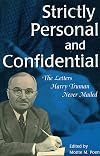
Strictly Personal and Confidential: The Letters Harry Truman Never Mailed
by Harry S. Truman 
On This Page
Description
Harry S. Truman made plain speaking his trademark, and it was a common belief that "Give 'em hell" Harry spared few with his words. However, this fascinating collection of 140 amusing, angry, sarcastic, and controversial letters President Truman wrote but never mailed proves that conception wrong. Addressed to admirers and enemies alike, including Adlai Stevenson, Justice William Douglas, Dwight Eisenhower, Joe McCarthy, and Truman's wife, Bess, these intriguing letters cover such diverse show more subjects as the atomic bomb, running the country, and human greed. show lessTags
Recommendations







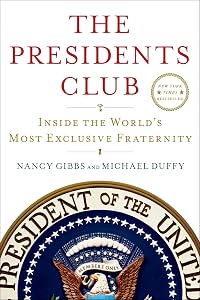
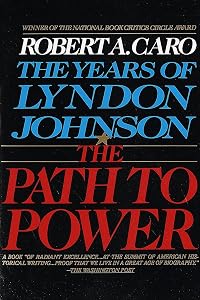


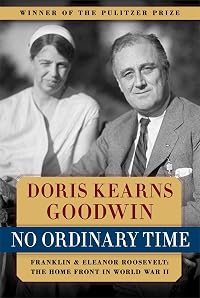


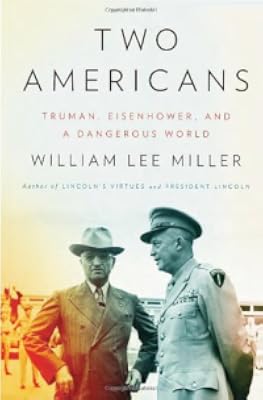







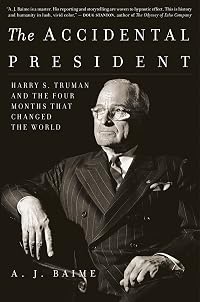
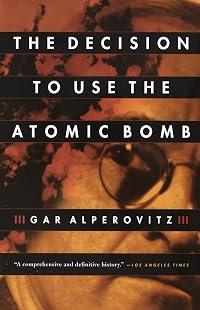
Member Reviews
Members
- Recently Added By
Author Information

61+ Works 1,936 Members
Harry S.Truman, 1884- 1972 Harry S.Truman was born in Lamar, Missouri, in 1884. He grew up in Independence, and worked for 12 years as a farmer in Missouri. He went to France during World War I as a captain in the Field Artillery. Upon his return from the war, he opened a haberdashery in Kansas City. Truman was elected a judge of the Jackson show more County Court as a member of the Democratic Party in 1922. He became a Senator in 1934. During World War II he headed the Senate war investigating committee, checking into waste and corruption and saving perhaps as much as 15 billion dollars. Soon after V-E Day, the war against Japan had reached its final stage. An urgent plea to Japan to surrender was rejected. Truman, after consultations with his advisers, ordered atomic bombs dropped on cities devoted to war work. Two were Hiroshima and Nagasaki. A surrender quickly followed. In June 1945 Truman witnessed the signing of the charter of the United Nations, hopefully established to preserve peace. At this point in his presidential career, Truman presented to Congress a 21-point program, proposing the expansion of Social Security, a full-employment program, a permanent Fair Employment Practices Act, and public housing and slum clearance. The program became known as the Fair Deal. Dangers and crises marked the foreign field as Truman campaigned successfully in 1948. Truman's most effective leadership was apparent in foreign affairs. In 1947 as the Soviet Union pressured Turkey and, through guerrillas, threatened to take over Greece, he asked Congress to aid the two countries, enacting the program that bears his name; the Truman Doctrine. The Marshall Plan, named for his Secretary of State, stimulated economic recovery in war-torn western Europe. When the Russians blockaded the western sectors of Berlin in 1948, Truman created a massive airlift to supply Berliners until the Russians backed down. Meanwhile, he was negotiating a military alliance to protect Western nations, called the North Atlantic Treaty Organization, and established in 1949. In June 1950, the Communist government of North Korea attacked South Korea. A long, discouraging struggle ensued as U.N. forces held a line above the old boundary of South Korea. Truman kept the war a limited one, rather than risk a major conflict with China and perhaps Russia. Deciding not to run again, he retired to Independence. He died December 26, 1972 at the age of 88. (Bowker Author Biography) show less
Harry S. Truman has a Legacy Library. Legacy libraries are the personal libraries of famous readers, entered by LibraryThing members from the Legacy Libraries group.
All Editions
Common Knowledge
- People/Characters
- Harry S. Truman
Classifications
- Genres
- Nonfiction, History, General Nonfiction, Politics and Government, Biography & Memoir
- DDC/MDS
- 973.918 — History & geography History of North America United States 1901- World Wars and Depression Era (1901-1953) Franklin D. Roosevelt (1941-1945) Attack on Pearl Harbor, WW2, D-Day
- LCC
- E814 .A4 — History of the United States United States Twentieth century Truman's administrations, April 12, 1945-1953
- BISAC
Statistics
- Members
- 37
- Popularity
- 783,506
- Reviews
- 1
- Rating
- (3.00)
- Languages
- English
- Media
- Paper
- ISBNs
- 3
- ASINs
- 1