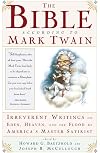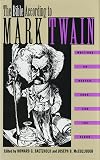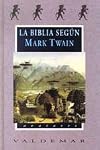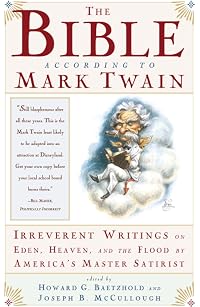
The Bible According to Mark Twain
by Mark Twain 
On This Page
Description
This volume collects the most important writings by Mark Twain in which he used biblical settings, themes, and figures. Featuring Twain's singular portrayals of God, Adam, Eve, Satan, Methuselah, Shem, St. Peter, and others, the writings stand among Twain's most imaginative expressions of his views on human nature and humankind's relation to the Creator and the universe. Composed over four decades (1871-1910), the writings range from farce to fantasy to satire, each one bearing the mark of show more Twain's unmistakable wit and insight. Among the many delights in store for readers are Adam and Eve's divergent accounts of their domestic troubles; Methuselah's discussion of an ancient version of baseball, complete with a parody of baseball jargon; Shem's hand-wringing account of how material shortages and labor troubles were hampering the progress of the ark his father, Noah, was building; a description of the disruptive actions of the fire-and-brimstone evangelist Sam Jones upon arriving in heaven; Captain Stormfield's revelations of what heaven is really like; Satan's musings on our puerile concepts of the afterlife; and Twain's advice on how to dress and tip properly in heaven. Twain's humor, however, is never gratuitous. As readers laugh their way through this volume, they will find ample evidence of Twain's concerns about scriptural fallacies and inconsistencies, the Bible's rather flat portrayal of important characters, and our limited notions about the nature and meaning of our own - and God's - existence. Many of the pieces in this collection, even the most light-hearted, might still be considered controversial; of some of the darker pieces, Twain himself acknowledged that they would be heretical in any age. Moreover, these writings are valuable cultural artifacts of a time when, across the Western world, fundamental religious beliefs were being called into question by the precepts of Darwinism and the rapid advances of science and technology. Several of this volume's selections are previously unpublished; others, like Letters from the Earth, are classics. Virtually all have been newly edited to reflect as closely as possible Twain's final intentions for their form and content. For serious Twain devotees, editors Howard G. Baetzhold and Joseph B. McCullough have supplied an abundance of background material on the writings, including details on the history of their composition, publication, and relevance to the Twain canon. show lessTags
Recommendations










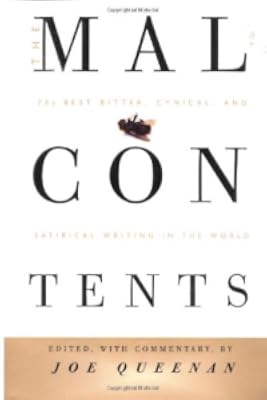


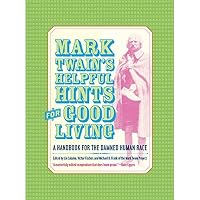
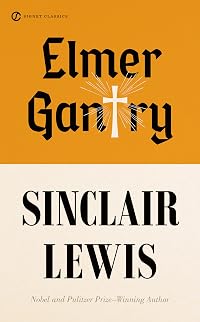
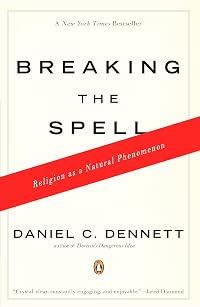

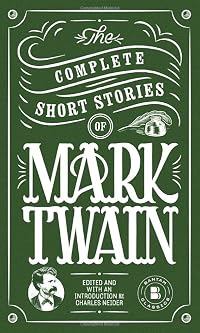

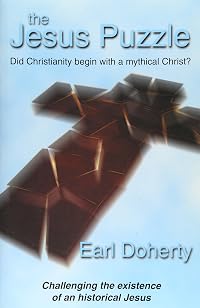

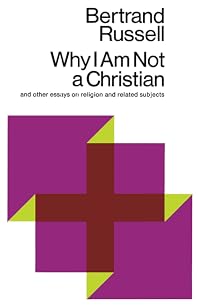
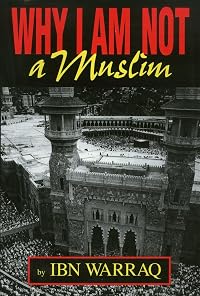




Member Recommendations
Kaelkivial For those who don't mind a good jab at religion!
Member Reviews
A collection of fictional pieces by Mark Twain on various subjects relating to religion and the Bible. Most of these were unpublished in Twain's lifetime, or were published only partially, and aren't necessarily complete.
The book is divided into three sections. The first consists of extracts from the diaries of various Biblical characters, starting with Adam and Eve and continuing, somewhat haphazardly, up through accounts of a great pre-Flood civilization that bears a not entirely coincidental resemblance to Twain's own. The tone varies a lot through these, from sardonic commentary to delightfully silly humor to some passages that are really quite unironically touching. While Twain's writing is, as always, great, it's clear that most show more of this material never got finished and put together quite the way Twain would have liked it, making it a somewhat choppy and not entirely satisfying read.
The second section deals with the concept of heaven, and includes two very similar stories about people dying and going to heaven (or dreaming they've died and gone to heaven), satirizing the somewhat unappealing popular conceptions of heaven as a rather limited little place full of harps, hymns, and halos, and not much else. There's also a bitingly funny little piece about an obnoxiously uncouth evangelist who enters heaven, immediately resulting in other people wanting to leave.
The third section contains the longish "Letters from the Earth," in which Satan pays a visit to Earth and writes letters back to his buddies in heaven detailing these ridiculous humans' ridiculous ideas about religion. The editors quote Twain as saying "this book will never be published," and it's not too difficult to see why he'd think so. Where the earlier pieces are comparatively gentle in their criticisms of Christianity, in this one Twain looses the full force of his scathing, acidic wit on the Bible's logical and moral flaws, and takes no prisoners. Godless heathen that I am, I loved it to pieces.
There is also a substantial set of appendices, which feature alternate versions of a few of these stories with deleted passages included, some of Twain's notes and outlines, and a couple of non-fictional excerpts in which he covers many of the same points the other works in this volume make, and which clarify his own essentially deistic take on religion.
Rating: 4/5. Because even when he's not producing a polished finished product, Twain is awesome. show less
The book is divided into three sections. The first consists of extracts from the diaries of various Biblical characters, starting with Adam and Eve and continuing, somewhat haphazardly, up through accounts of a great pre-Flood civilization that bears a not entirely coincidental resemblance to Twain's own. The tone varies a lot through these, from sardonic commentary to delightfully silly humor to some passages that are really quite unironically touching. While Twain's writing is, as always, great, it's clear that most show more of this material never got finished and put together quite the way Twain would have liked it, making it a somewhat choppy and not entirely satisfying read.
The second section deals with the concept of heaven, and includes two very similar stories about people dying and going to heaven (or dreaming they've died and gone to heaven), satirizing the somewhat unappealing popular conceptions of heaven as a rather limited little place full of harps, hymns, and halos, and not much else. There's also a bitingly funny little piece about an obnoxiously uncouth evangelist who enters heaven, immediately resulting in other people wanting to leave.
The third section contains the longish "Letters from the Earth," in which Satan pays a visit to Earth and writes letters back to his buddies in heaven detailing these ridiculous humans' ridiculous ideas about religion. The editors quote Twain as saying "this book will never be published," and it's not too difficult to see why he'd think so. Where the earlier pieces are comparatively gentle in their criticisms of Christianity, in this one Twain looses the full force of his scathing, acidic wit on the Bible's logical and moral flaws, and takes no prisoners. Godless heathen that I am, I loved it to pieces.
There is also a substantial set of appendices, which feature alternate versions of a few of these stories with deleted passages included, some of Twain's notes and outlines, and a couple of non-fictional excerpts in which he covers many of the same points the other works in this volume make, and which clarify his own essentially deistic take on religion.
Rating: 4/5. Because even when he's not producing a polished finished product, Twain is awesome. show less
THE BIBLE ACCORDING TO MARK TWAIN provides the reader with a reassuringly consistent picture of Samuel Clemens' view, not necessarily of God or of Heaven or of angels (if one believes in the existence of such things), but of such parts of the Christian Bible that he views as thoroughly ridiculous if applied literally. The concept of human souls reaching Heaven in their former mortal forms and haplessly flapping their non-aerodynamic bodies about on thoroughly inadequate wings comes in for quite a bit of treatment as does the earthly relationship between Eve and a rather surprised Adam, who is understandably curious as to what this new creature may be, a surprise and a curiosity that return when Cain shows up on the scene.
Other events show more that come in for acerbic examination are the building of the ark and its provisioning and voyaging, the unfair nature of the punishment meted out to Adam and Eve when they are driven from the Garden of Eden, and divine versus mortal time and space measurements. Clemens' (or Twain's if one prefers) tongue-in-cheek humor is, I feel, as enjoyable for the theistic as much as for the atheistic reader, for, as I have already noted, he is not critiquing the Deity as he is human perceptions of that Deity as expressed in the Old and New Testaments. Oh, I suppose that if the theist's faith insists that every word in those testaments was literally dictated by God, then he or she may be affronted by Clemens' treatment of those words, but any well-read theologian is going to chuckle over the mental imagery created by Clemens' writing.
The book is not, however, a continuous story to be followed without interruption from beginning to end. Rather, it is a collection of Clemens' jottings, notes, and thoughts relative to his perception of what men have named the Divine. A few of these writings, such as "Captain Stormfield's Visit to Heaven," are of decent duration so that the reader can be caught up in the story. "Extracts from Adam's Diary," also relatively lengthy, is utterly hilarious as the reader sees poor Adam's growing vexation with Eve, whose feminine wisdom definitely outstrips his masculine version but whose propensity to try to continually talk to him vexes him mightily (and plays upon a popular stereotype of women as wishing to communicate their thoughts and feelings verbally as contrasted with "strong and silent type" males). Numerous other selections in the book are quite brief and appear to have been jotted down by Clemens in case he could use them later in some other composition.
Most of the selections are prefaced by analytical commentary by the editors, often attempting to establish the time frame in which they were written. Although these prefaces may be helpful to the scholar studying Clemens' works, they are of marginal interest, if that, to the general reader whose interest is in the enjoyment of Clemens' creativity. The editors also chose to do one curious thing whose purpose, so far as I can ascertain, was merely to lengthen the book by a few pages. After printing "Autobiography of Eve" as it was published, they repeat it as an appendix, but now including additional passages that had been deleted before publication. The "unexpurgated" version could just as easily have been printed with the deleted passages in bold font as they are in the appendix, thus avoiding the repetition of printing it twice.
What we have here, then, is a book containing a variety of Clemens' writings, some quite brief, revealing his view of the literal interpretation of several major stories from the Christian Bible. As one would expect, these views are expressed in a delightfully imaginative manner that pokes great fun at the ridiculous results of such literal interpretations. The collection seems to have been designed for the academician studying, dare I say, the minutiae of Clemens' literary productivity, not for the general reader. Nonetheless, assuming the statements in some of the prefaces are accurate, many of these writings have not been published elsewhere, and the reader will discover them only here. The reader who knows that he or she enjoys the humor of "Mark Twain" will find much in this book to enjoy as well, and the Twain scholar will likely find it a useful resource. I would not, however, recommend it as an introduction to Samuel Clemens' writings nor as sole source on which to base one's opinions of this productive and influential author. show less
Other events show more that come in for acerbic examination are the building of the ark and its provisioning and voyaging, the unfair nature of the punishment meted out to Adam and Eve when they are driven from the Garden of Eden, and divine versus mortal time and space measurements. Clemens' (or Twain's if one prefers) tongue-in-cheek humor is, I feel, as enjoyable for the theistic as much as for the atheistic reader, for, as I have already noted, he is not critiquing the Deity as he is human perceptions of that Deity as expressed in the Old and New Testaments. Oh, I suppose that if the theist's faith insists that every word in those testaments was literally dictated by God, then he or she may be affronted by Clemens' treatment of those words, but any well-read theologian is going to chuckle over the mental imagery created by Clemens' writing.
The book is not, however, a continuous story to be followed without interruption from beginning to end. Rather, it is a collection of Clemens' jottings, notes, and thoughts relative to his perception of what men have named the Divine. A few of these writings, such as "Captain Stormfield's Visit to Heaven," are of decent duration so that the reader can be caught up in the story. "Extracts from Adam's Diary," also relatively lengthy, is utterly hilarious as the reader sees poor Adam's growing vexation with Eve, whose feminine wisdom definitely outstrips his masculine version but whose propensity to try to continually talk to him vexes him mightily (and plays upon a popular stereotype of women as wishing to communicate their thoughts and feelings verbally as contrasted with "strong and silent type" males). Numerous other selections in the book are quite brief and appear to have been jotted down by Clemens in case he could use them later in some other composition.
Most of the selections are prefaced by analytical commentary by the editors, often attempting to establish the time frame in which they were written. Although these prefaces may be helpful to the scholar studying Clemens' works, they are of marginal interest, if that, to the general reader whose interest is in the enjoyment of Clemens' creativity. The editors also chose to do one curious thing whose purpose, so far as I can ascertain, was merely to lengthen the book by a few pages. After printing "Autobiography of Eve" as it was published, they repeat it as an appendix, but now including additional passages that had been deleted before publication. The "unexpurgated" version could just as easily have been printed with the deleted passages in bold font as they are in the appendix, thus avoiding the repetition of printing it twice.
What we have here, then, is a book containing a variety of Clemens' writings, some quite brief, revealing his view of the literal interpretation of several major stories from the Christian Bible. As one would expect, these views are expressed in a delightfully imaginative manner that pokes great fun at the ridiculous results of such literal interpretations. The collection seems to have been designed for the academician studying, dare I say, the minutiae of Clemens' literary productivity, not for the general reader. Nonetheless, assuming the statements in some of the prefaces are accurate, many of these writings have not been published elsewhere, and the reader will discover them only here. The reader who knows that he or she enjoys the humor of "Mark Twain" will find much in this book to enjoy as well, and the Twain scholar will likely find it a useful resource. I would not, however, recommend it as an introduction to Samuel Clemens' writings nor as sole source on which to base one's opinions of this productive and influential author. show less
This book lives somewhere in between witty and highlarious. It's a perfect spot for Twain's unique take on the Bible.
If you like Twain, know your Bible, and have a healthy dose of religious skepticism, you'll love it. Actually, the only real essential to truly enjoying this is a smattering of Biblical knowledge, and a thick skin as regards blasphemy. But what else could you expect from Twain? Adam and Eve's respective diaries? Priceless. The original version of Mars/Venus.
As someone that rereads and rereads Twain, I have tremendous affection for his style. This book, written toward the end of his life, shows the same sort of vivid sense of humor as The Innocents Abroad.
If you like Twain, know your Bible, and have a healthy dose of religious skepticism, you'll love it. Actually, the only real essential to truly enjoying this is a smattering of Biblical knowledge, and a thick skin as regards blasphemy. But what else could you expect from Twain? Adam and Eve's respective diaries? Priceless. The original version of Mars/Venus.
As someone that rereads and rereads Twain, I have tremendous affection for his style. This book, written toward the end of his life, shows the same sort of vivid sense of humor as The Innocents Abroad.
I got this book primarily for the "Letters from the Earth," so the four stars go for that. The book as a whole gets three. The rest of the book was made up of stories that had mostly been printed elsewhere. I was surprised and a little disappointed that the scope of the book was limited to Twain's feelings on The Fall and Heaven. It is apparent from some of the appendices that his religious opinions ranged wider than that, so I'm not sure why they weren't included. The "Letters" were great though, as scathing and well-argued as I had hoped. And the biographical information evident throughout the rest of the book and its introductions was of great interest as well.
Mark Twain turns his acerbic wit against "The Good Book", and finds some things that might surprise many people who think they know the book. It certainly looks different in his hands.
An interesting alternative way of looking at the stories in the Bible. Adds a bit of humor although dark to the old traditional interpretations.
This is basically a rehashing of the Adam and Eve story but with a TON of background information. It helped me a lot with my recent term paper.
Members
- Recently Added By
Lists

Books in the Bibliography of Freethinkers by Susan Jacoby
155 works; 1 member
Author Information

2,746+ Works 208,392 Members
Mark Twain was born Samuel L. Clemens in Florida, Missouri on November 30, 1835. He worked as a printer, and then became a steamboat pilot. He traveled throughout the West, writing humorous sketches for newspapers. In 1865, he wrote the short story, The Celebrated Jumping Frog of Calaveras County, which was very well received. He then began a show more career as a humorous travel writer and lecturer, publishing The Innocents Abroad in 1869, Roughing It in 1872, and, Gilded Age in 1873, which was co-authored with Charles Dudley Warner. His best-known works are The Adventures of Tom Sawyer, Mississippi Writing: Life on the Mississippi, and The Adventures of Huckleberry Finn. He died of a heart attack on April 21, 1910. (Bowker Author Biography) show less
Mark Twain has a Legacy Library. Legacy libraries are the personal libraries of famous readers, entered by LibraryThing members from the Legacy Libraries group.
All Editions
Common Knowledge
- Canonical title
- The Bible According to Mark Twain
- People/Characters
- Samuel Langhorne Clemens (Mark Twain)
Classifications
- Genres
- Fiction and Literature, General Fiction
- DDC/MDS
- 818.409 — Literature & rhetoric American literature in English American miscellaneous writings in English Later 19th Century 1861-1900
- LCC
- PS1303 .B34 — Language and Literature American literature American literature Individual authors 19th century
- BISAC
Statistics
- Members
- 687
- Popularity
- 41,533
- Reviews
- 8
- Rating
- (4.08)
- Languages
- English, Spanish
- Media
- Paper
- ISBNs
- 3
- ASINs
- 3