
Mark Perry (1) (1950–)
Author of Grant and Twain: The Story of a Friendship That Changed America
For other authors named Mark Perry, see the disambiguation page.
About the Author
Mark Perry is the author of eight books, including Grant and Twain and Partners in Command. He lives in Arlington, Virginia.
Works by Mark Perry
Conceived in Liberty: Joshua Chamberlin, William Oates, and the American Civil War (1997) 188 copies, 1 review
Lift Up Thy Voice: The Sarah and Angelina Grimké Family’s Journey from Slaveholders to Civil Rights Leaders (2001) 130 copies, 6 reviews
Tagged
Common Knowledge
- Birthdate
- 1950-10-03
- Gender
- male
- Education
- Boston University
Northwestern Military and Naval Academy - Organizations
- Vietnam Veterans of America Foundation
Jerusalem Media and Communications Centre
International Campaign to Ban Land Mines (political director) - Agent
- Gail Ross
- Nationality
- USA
- Places of residence
- Arlington, Virginia, USA
- Associated Place (for map)
- Virginia, USA
Members
Reviews

A short history of the last days of Ulysses Grant's life, when, in the throes of oral cancer, he was struggling to complete his memoirs, to be published and sold by subscription by Twain's fledgling company. Grant had resisted writing his memoirs, but when he fell victim to his financial partners' ill-advised investment practices and found himself both bankrupt and dying, he realized his only option was to sell his recollections. His friend Sam Clemens encouraged him to break with The show more Century magazine which had paid Grant to write several articles on his military campaigns, and to allow Clemens to publish a two volume edition of memoirs. The offer, according to Clemens, would assure Grant that his wife and family would be well-provided for. The book provides background on both Grant and Twain, comparing their lives in intriguing ways. Well written, if a tad repetitive. Lots of vivid detail about Grant's final, personal battle, with sources fully documented in end notes, and a helpful bibliography. show less
Lift Up Thy Voice: The Grimke Family's Journey from Slaveholders to Civil Rights Leaders by Mark Perry
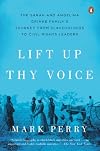
This was a really incredible book. It’s part biography, part history book, first about the Grimke sisters Sarah and Angelina, who were from a prominent slaveholding family in Charleston and became some of the most well known abolitionist and early women’s right activists. The latter part of the book is about their nephews, Archibald and Frances, Black sons of slaveholder Henry Grimke, who were leading civil rights activists in the post Reconstruction era. Their stories were actually the show more most fascinating, probably because that aspect of US history was not something I learned or if I did, learned in a very different way. The debates between Booker T Washington and WEB Dubois are portrayed a certain way in mainstream historical narratives, but this book - because the Grimke brothers were very much a part of that history - gave so much dynamism and complexity to that period of history.
The added bonus is that Francis Grimke was a cornerstone of Washington DC history, which I also did not know.
The book is incredibly well written. Very engaging
All this being said, it seems too good to be true? I have a used copy because this book is not easy to find. Is there something I’m missing about this book? Something inaccurate? I will do some research and update this if needed. But overall I thoroughly enjoyed this book and learned a ton. show less
The added bonus is that Francis Grimke was a cornerstone of Washington DC history, which I also did not know.
The book is incredibly well written. Very engaging
All this being said, it seems too good to be true? I have a used copy because this book is not easy to find. Is there something I’m missing about this book? Something inaccurate? I will do some research and update this if needed. But overall I thoroughly enjoyed this book and learned a ton. show less
Lift Up Thy Voices: The Grimke Family's Journey from Slaveholders to Civil Rights Leaders by Mark Perry
There have been many books on the Grimke sisters slave holders, Sarah and Anglelina, separate and together and their slave nephews the Grimke brothers, Francis and Archibald, separate and together but never one that equally put all four in the same narrative. By doing this Perry has given us insight and knowledge otherwise lost on the history and development of the American reform movements. With the Grimkes one can not separate abolition of slavery, from woman's rights or civil rights. One show more can not ignore the central ugliness of slavery in this story. The reader is left in this well written book in awe of the power, intellect and purposefulness of the Grimkes even when shown in times of trial and weakness. The author now writes for a conservative blog.
Quote (page 195-196) “'If I withdraw the petition,' he said, ' I would consider myself as having sacrificed trial by jury;as having sacrificed the sacred confidence of the post office; as having sacrificed freedom of the press; as having sacrificed every element of liberty that was enjoyed by my fellow citizens.'
On February 25, at the end of the trial, Adams uttered the word slavery, in clear violation of the gag rule. Southern House leaders filed an objection, moving that the word be stricken from the trial record. The motion was overwhelmingly defeated. With Weld feeding him materials from the gallery, Adams extended his defense into a second week. The trail now brought hundreds of petitions every day. But Adams was never allowed to finish his defense, as the Southerners spooked by Adam's continuing offensive, moved quickly to end the trail and succeeded in tabling a censure motion by vote 97 to 25. When the motion to table passed, the House gallery broke into sustained cheers. Weld was ecstatic. 'Slave holding, and slave trading and slave breeding absolutely quailed and howled under his dissecting knife,' he wrote to Angelina. 'The triumph of Mr. Adams is complete. This is the first defeat of the slaveholders in a body yet achieved since the foundation of the government, and from this time their downfall takes it date.'” show less
Quote (page 195-196) “'If I withdraw the petition,' he said, ' I would consider myself as having sacrificed trial by jury;as having sacrificed the sacred confidence of the post office; as having sacrificed freedom of the press; as having sacrificed every element of liberty that was enjoyed by my fellow citizens.'
On February 25, at the end of the trial, Adams uttered the word slavery, in clear violation of the gag rule. Southern House leaders filed an objection, moving that the word be stricken from the trial record. The motion was overwhelmingly defeated. With Weld feeding him materials from the gallery, Adams extended his defense into a second week. The trail now brought hundreds of petitions every day. But Adams was never allowed to finish his defense, as the Southerners spooked by Adam's continuing offensive, moved quickly to end the trail and succeeded in tabling a censure motion by vote 97 to 25. When the motion to table passed, the House gallery broke into sustained cheers. Weld was ecstatic. 'Slave holding, and slave trading and slave breeding absolutely quailed and howled under his dissecting knife,' he wrote to Angelina. 'The triumph of Mr. Adams is complete. This is the first defeat of the slaveholders in a body yet achieved since the foundation of the government, and from this time their downfall takes it date.'” show less
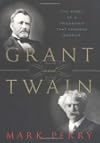
A Human Look at History
I loved this book. Too many histories become footnote festooned tomes that talk of eras, movements and trends. Gone is any sense that history represents the interaction of individuals.
In this highly readable book, Mark Perry protrays a friendship between one of American cultural giants and its military greats: Mark Twain and U. S. Grant. He explores how each man dealt with the American they experienced and how they interacted to impact each other's greatest work.
Grant show more had a keen eye for detail and loved to relate unique wartime incidents. Twain, as most acknowledge, was an accomplished storyteller. Both had a rich reservoir of unique tales to tell.
For Grant, a story’s soul resided in its basic truth and humor. For Twain, it lay in the detail – its nuance, mystery and unexpected outcome. Grant loved to tell stories and told them well. Twain toured the country telling stories, the taller the tale, the better.
Together, they inspired the other’s greatest masterpiece. Inspired by Twain and suffering from cancer, Grant worked against his disease’s deadline to complete his memoirs. While working with Grant, Twain conceived of the ending to Huckleberry Finn.
The book misses greatness by the inclusion of several errors. Georgetown is not in Kentucky. The street on which Twain lived in Buffalo, N. Y. was Delaware Avenue. The name of the town in upstate New York was Geneseo. While individually each of these errors is probably not major; together they detract from the story’s credibility. A reader deserves accuracy from an accomplished historian and his editors.
Despite these lapses, I enjoyed the book. It has a cast of fascinating characters: Gen. William T. Sherman, William Dean Howells and Karl Gerhardt, to name a few. It is a moving story of history, friendship, inspiration, failure and success. In doing so, it depicts the age in which they lived. show less
I loved this book. Too many histories become footnote festooned tomes that talk of eras, movements and trends. Gone is any sense that history represents the interaction of individuals.
In this highly readable book, Mark Perry protrays a friendship between one of American cultural giants and its military greats: Mark Twain and U. S. Grant. He explores how each man dealt with the American they experienced and how they interacted to impact each other's greatest work.
Grant show more had a keen eye for detail and loved to relate unique wartime incidents. Twain, as most acknowledge, was an accomplished storyteller. Both had a rich reservoir of unique tales to tell.
For Grant, a story’s soul resided in its basic truth and humor. For Twain, it lay in the detail – its nuance, mystery and unexpected outcome. Grant loved to tell stories and told them well. Twain toured the country telling stories, the taller the tale, the better.
Together, they inspired the other’s greatest masterpiece. Inspired by Twain and suffering from cancer, Grant worked against his disease’s deadline to complete his memoirs. While working with Grant, Twain conceived of the ending to Huckleberry Finn.
The book misses greatness by the inclusion of several errors. Georgetown is not in Kentucky. The street on which Twain lived in Buffalo, N. Y. was Delaware Avenue. The name of the town in upstate New York was Geneseo. While individually each of these errors is probably not major; together they detract from the story’s credibility. A reader deserves accuracy from an accomplished historian and his editors.
Despite these lapses, I enjoyed the book. It has a cast of fascinating characters: Gen. William T. Sherman, William Dean Howells and Karl Gerhardt, to name a few. It is a moving story of history, friendship, inspiration, failure and success. In doing so, it depicts the age in which they lived. show less
Awards


You May Also Like


Statistics
- Works
- 11
- Members
- 1,129
- Popularity
- #22,742
- Rating
- 4.0
- Reviews
- 15
- ISBNs
- 58
- Languages
- 1