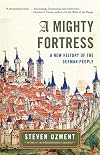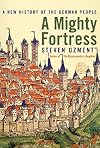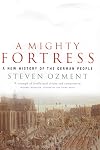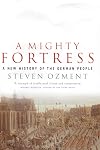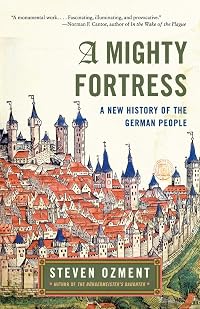
A Mighty Fortress: A New History of the German People
by Steven Ozment
On This Page
Description
A history of Germany examines the links between ancient times and the twentieth century and discusses the prevalence of a defining German culture through multiple centuries, early achievements, and relations with other lands.Tags
Recommendations




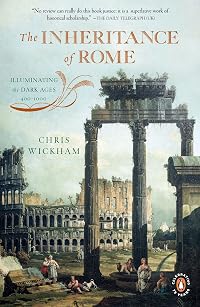
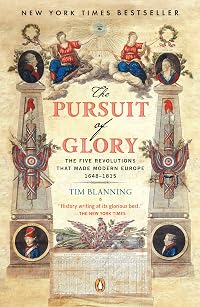


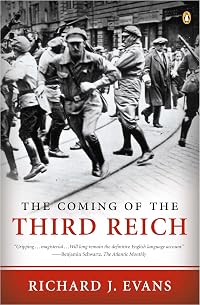

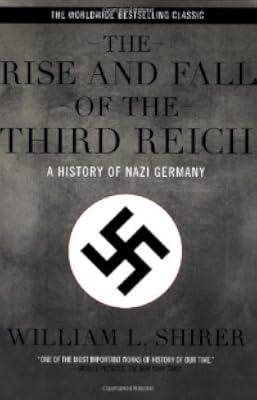





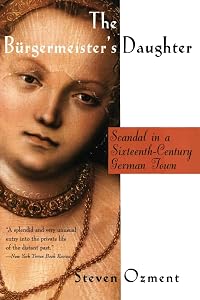


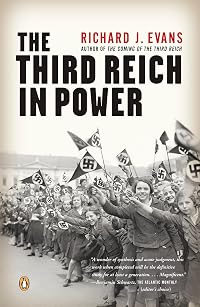

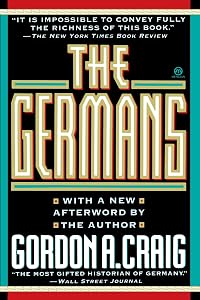









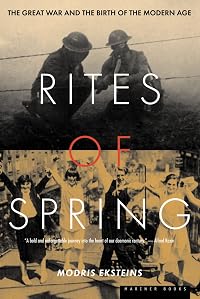
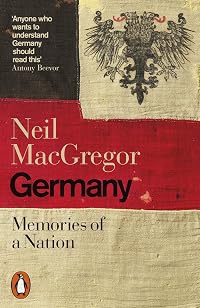








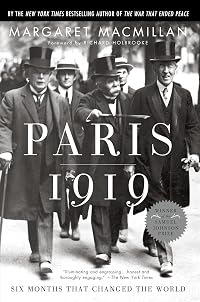


Member Recommendations
yapete If you want to have a good overview of German history, Schulze's book is better.
Member Reviews
By attempting to cover over 2000 years of history in just over 300 pages, Harvard historian Steven Ozment set himself a daunting task, one that was never going to satisfy every kind of reader. The need to compress so much history means leaving a great deal out, assuming some basic prior knowledge on the part of the reader, and focusing on cultural and intellectual trends and themes rather than mere politics and battles. The result is surprisingly effective, as long as the reader does not approach the book with false expectations.
Ozment is a fine writer, whose previous work has tended to focus on social history in Early Modern Germany. This gives him a perspective that allows him to get away from the clichéd approach to German history show more which sees it always through the prism of the Nazi era. As he points out in a substantial introductory chapter where he discusses the historiography of Germany, far too often “a tour of German history can be a circular journey around a magnetic Nazi pole, mesmerizing the general public and distracting historians and politicians eager to move on. This enduring perspective has also turned Germany’s pre-twentieth-century past into a hunting ground for fascist forerunners and defeated democratic alternatives to the absolute territorial state.” At the same time, neither can any single segment of history be singled out as an aberration, a fateful and atavistic detour from an otherwise straightforward journey of progressive liberalism, as some would like to see it. Again, as Ozment reminds us, no one “doubts that the past casts powerful shadows on the present, and more recent decades more powerful ones.” Ozment’s own approach is to write history “from past to present, not from present to past”.
In attempting to create a “reliable history” that does this, Ozment has fashioned a readable, informative, and insightful book. One may not always agree with all of his interpretations, but there is much food for thought here. Perhaps the best sections are those on the Merovingian and Carolingian dynasties, and on the stretch of history from Frederick the Great to Bismarck. There is also a lengthy and intriguing discussion of Luther and the effect of the Reformation on German society, but this was, at least to my mind, somewhat undermined by a lack of factual details concerning the period. It was sometimes difficult to follow discussions of Luther’s ideas about social hierarchies, peasant-lord relations and the treatment of Jews, when the events alluded to were not described or narrated. I can see similar complaints arising about the Nazi period, though given my own background knowledge about that era, I didn’t find it a problem there.
This brings me back to the point about reader expectations. My guess is that readers who already have some familiarity with German history are the ones who are going to get the most out of this book. Those readers who are looking for a narrative history, which lays out the basic timeline of political and intellectual events, will probably be disappointed. Want to know how World War 2 was fought and lost? How Prussia went about uniting the German states into a unified German Reich? Germany’s role in dragging Europe into the First World War? Why the Berlin Wall fell? These events are merely alluded to here or discussed in only the most general terms. True, one does not need to know about these events in detail to get something out of this book, but some readers may specifically be looking for these explanations. Another issue is that one becomes increasingly aware that there is a great deal of history being completely ignored. The high Medieval period seems to get a particularly bum deal. While one can understand the need to pick and choose from the wealth of material available, did so much time have to be spent discussing Luther, his theology and its vision of the ideal civil society?
These caveats aside, there is much to enjoy and mull over here for even a casual history buff. The writing is fluid and a pleasure to read – no dull, dust-dry tome this. For those looking for an intelligent overview of the history of the German people, this is a fine place to look. show less
Ozment is a fine writer, whose previous work has tended to focus on social history in Early Modern Germany. This gives him a perspective that allows him to get away from the clichéd approach to German history show more which sees it always through the prism of the Nazi era. As he points out in a substantial introductory chapter where he discusses the historiography of Germany, far too often “a tour of German history can be a circular journey around a magnetic Nazi pole, mesmerizing the general public and distracting historians and politicians eager to move on. This enduring perspective has also turned Germany’s pre-twentieth-century past into a hunting ground for fascist forerunners and defeated democratic alternatives to the absolute territorial state.” At the same time, neither can any single segment of history be singled out as an aberration, a fateful and atavistic detour from an otherwise straightforward journey of progressive liberalism, as some would like to see it. Again, as Ozment reminds us, no one “doubts that the past casts powerful shadows on the present, and more recent decades more powerful ones.” Ozment’s own approach is to write history “from past to present, not from present to past”.
In attempting to create a “reliable history” that does this, Ozment has fashioned a readable, informative, and insightful book. One may not always agree with all of his interpretations, but there is much food for thought here. Perhaps the best sections are those on the Merovingian and Carolingian dynasties, and on the stretch of history from Frederick the Great to Bismarck. There is also a lengthy and intriguing discussion of Luther and the effect of the Reformation on German society, but this was, at least to my mind, somewhat undermined by a lack of factual details concerning the period. It was sometimes difficult to follow discussions of Luther’s ideas about social hierarchies, peasant-lord relations and the treatment of Jews, when the events alluded to were not described or narrated. I can see similar complaints arising about the Nazi period, though given my own background knowledge about that era, I didn’t find it a problem there.
This brings me back to the point about reader expectations. My guess is that readers who already have some familiarity with German history are the ones who are going to get the most out of this book. Those readers who are looking for a narrative history, which lays out the basic timeline of political and intellectual events, will probably be disappointed. Want to know how World War 2 was fought and lost? How Prussia went about uniting the German states into a unified German Reich? Germany’s role in dragging Europe into the First World War? Why the Berlin Wall fell? These events are merely alluded to here or discussed in only the most general terms. True, one does not need to know about these events in detail to get something out of this book, but some readers may specifically be looking for these explanations. Another issue is that one becomes increasingly aware that there is a great deal of history being completely ignored. The high Medieval period seems to get a particularly bum deal. While one can understand the need to pick and choose from the wealth of material available, did so much time have to be spent discussing Luther, his theology and its vision of the ideal civil society?
These caveats aside, there is much to enjoy and mull over here for even a casual history buff. The writing is fluid and a pleasure to read – no dull, dust-dry tome this. For those looking for an intelligent overview of the history of the German people, this is a fine place to look. show less
I began this book because I wanted to learn about German history. My knowledge of that subject prior to the Franco-Prussian War was very sketchy, superficial, and mostly missing, and this book seemed like a promising way to begin. Boy was I disappointed.
I can't say it wasn't well researched and written. That it was. The author, Steven Ozment, is a history professor at Harvard. What better credentials can you get? But I question what audience he was writing for. Certainly not me. He presumes way too much of his reader and the result is a cumbersome and academic read more designed with his professional colleagues in mind than the lay reader. For example, I quote the following paragraph found on page 192 of his text: "These early show more revolutionaries had also sought a final solution to the contradictions of history - Eckhart by a spiritual unity 'beyond all division,' Muntzer by a 'bloody cleansing' of sociopolitical establishment. Both projects, deemed Icarian by contemporaries, died aborning."
"Icarian?" That was a reference to Icarus. In Greek mythology, he attempted to escape Crete by making wings out of feathers and wax, flew too close to the sun resulting in his wings melting, and with predictable results. It is sometimes used to mean too ambitious. I am 70 years old and have never heard it used before. "Aborning." New. The process of being born. Wikipedia says it started in the mid-20th Century. Again, I have never heard this word before. By no means is this passage unique within this text.
If you are an Ivy League scholar or a well entrenched member of Mensa, then maybe try this book. Otherwise, may I suggest something else. And if you find one, let me know. show less
I can't say it wasn't well researched and written. That it was. The author, Steven Ozment, is a history professor at Harvard. What better credentials can you get? But I question what audience he was writing for. Certainly not me. He presumes way too much of his reader and the result is a cumbersome and academic read more designed with his professional colleagues in mind than the lay reader. For example, I quote the following paragraph found on page 192 of his text: "These early show more revolutionaries had also sought a final solution to the contradictions of history - Eckhart by a spiritual unity 'beyond all division,' Muntzer by a 'bloody cleansing' of sociopolitical establishment. Both projects, deemed Icarian by contemporaries, died aborning."
"Icarian?" That was a reference to Icarus. In Greek mythology, he attempted to escape Crete by making wings out of feathers and wax, flew too close to the sun resulting in his wings melting, and with predictable results. It is sometimes used to mean too ambitious. I am 70 years old and have never heard it used before. "Aborning." New. The process of being born. Wikipedia says it started in the mid-20th Century. Again, I have never heard this word before. By no means is this passage unique within this text.
If you are an Ivy League scholar or a well entrenched member of Mensa, then maybe try this book. Otherwise, may I suggest something else. And if you find one, let me know. show less
One of the best surveys of German history and contains interesting details and compelling prose. Ozment writes in a lively, engaging style and manages to find insights throughout German history. If you are reading one general survey text this should be high on your list.
Three hundred odd pages of text can't fully cover two millennia of history, but Ozment makes interesting the topics he chooses to write about. I learned how germanic tribes were sometimes courted by and sometimes taken advantage of by the Romans, the importance of Martin Luther, how the French revolution affected Germans, why the Germans did not really have their own revolution, what post cold war reunification was like, and much much more. Also, I learned the difference between historiography and history and why it is important.
The pages, like many history books, are long on rulers, battles, regime changes, and short on what was happening to ordinary people, leaving me wondering what really changed and what didn't sometimes.
There show more are interesting references to the history of ideas, including a chapter about nineteenth century philosophers and political thinkers. Hitler and the Nazi's got their chapter, one that explained much to me.
I was looking for a book that especially clarified early germanic history as well as the last two centuries, and this one filled the bill. The fourteen page introduction is worth reading on its own. show less
The pages, like many history books, are long on rulers, battles, regime changes, and short on what was happening to ordinary people, leaving me wondering what really changed and what didn't sometimes.
There show more are interesting references to the history of ideas, including a chapter about nineteenth century philosophers and political thinkers. Hitler and the Nazi's got their chapter, one that explained much to me.
I was looking for a book that especially clarified early germanic history as well as the last two centuries, and this one filled the bill. The fourteen page introduction is worth reading on its own. show less
history of the German peoples from Roman times to the present; rather patchy in content and quality; skips huge chunks of time; very superficial on some subjects, while detailed and articulate on others
poorly organized, assumes reader understands comparisons, not chronological, confusing
Good general history of the German people. Suitable as a survey, but lacking in details.
Members
- Recently Added By
Lists

All Things Germany
321 works; 4 members
Author Information

24+ Works 3,260 Members
Steven Ozment is McLean Professor of Ancient and Modern History at Harvard University
Classifications
Statistics
- Members
- 574
- Popularity
- 51,273
- Reviews
- 10
- Rating
- (3.28)
- Languages
- English, Spanish
- Media
- Paper
- ISBNs
- 6
- ASINs
- 1