On This Page
Description
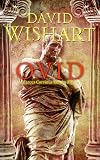
Ovid was banished by the Emperor Augustus and died in exile ten years late. No one known why he was banished. Years after Ovid's death Marcus Corvinus, grandson of the poet's patron, tries to arrange the return of his ashes to Rome for burial. But official permission is refused; and Corvinus makes the dangerous mistake of asking why the Emperor will not make space in Italy for Ovid's bones.Tags
Recommendations







Member Reviews
Fairly fresh from the enjoyable Food for the Fishes, a later Marcus Corvinus mystery, I was curious about how this series began. Whoever reads any novels in this series has to accept Wishart's Roman world as is, also his deliberately anachronistic dialogue, narration, and inner monologues of Marcus, the Senatorial protagonist and narrator--a "broad-striper". Marcus is a party animal. He is not interested in pursuing the politics and promotions of the 'cursus honorem'. I liked Marcus, a wine-quaffing Mickey Spillane or Sam Spade in the Rome of Tiberius. The emperor is irreverently nicknamed "The Wart" by Marcus.
The poet Ovid's stepdaughter, the Lady Perilla, asks Marcus to help bring the deceased Ovid's ashes back to Rome from Tomi on show more the Black Sea, the place of the poet's exile. She wants to give them a proper internment on Roman soil. From that simple request, the plot becomes more and more convoluted. Marcus agrees to help, is stonewalled by bureaucracy, and uncovers a plot involving the imperial family. Marcus escapes death several times as the mystery deepens. Marcus also finds links connecting the intrigue, the Teutoberg Forest Massacre, and the Roman commander of the three legions in Germany, Quinctilius Varus. There are the usual clues, red herrings, and dead bodies. With so many disparate plot strands, I wondered how the author would pull everything together to make sense. He created a logical plot from the few simple facts that are known historically, filling in gaps fictionally.
I liked Marcus's thinking things out and trying to put two and two together. He wasn't afraid to express any uncertainties. The Lady Perilla was no slouch, either. I got a good picture of the Roman patron-client relationship.
I highly recommend this to those wanting to read good escapist historical mystery fiction. show less
The poet Ovid's stepdaughter, the Lady Perilla, asks Marcus to help bring the deceased Ovid's ashes back to Rome from Tomi on show more the Black Sea, the place of the poet's exile. She wants to give them a proper internment on Roman soil. From that simple request, the plot becomes more and more convoluted. Marcus agrees to help, is stonewalled by bureaucracy, and uncovers a plot involving the imperial family. Marcus escapes death several times as the mystery deepens. Marcus also finds links connecting the intrigue, the Teutoberg Forest Massacre, and the Roman commander of the three legions in Germany, Quinctilius Varus. There are the usual clues, red herrings, and dead bodies. With so many disparate plot strands, I wondered how the author would pull everything together to make sense. He created a logical plot from the few simple facts that are known historically, filling in gaps fictionally.
I liked Marcus's thinking things out and trying to put two and two together. He wasn't afraid to express any uncertainties. The Lady Perilla was no slouch, either. I got a good picture of the Roman patron-client relationship.
I highly recommend this to those wanting to read good escapist historical mystery fiction. show less
The first in the Marcus Valerius Corvinus series of Roman mysteries, and the best. The book introduces our hero -- an aristocrat who is much more interested in having fun than in doing his civic duty, which puts him at odds with his father and family. He is asked by the (extremely attractive) Lady Perilla to help her get the ashes of her uncle, the poet Ovid, back from his place of exile on the Black Sea. Marcus efforts lead him deep into political plot and counterplot, and into danger of death.
Wishart, a classics professor, gives us yet another brilliant recreation of ancient Rome, and is particularly good at weaving his fiction around actual historical events. And he is a very funny writer -- Marcus is a reprehensible hero, but one show more with a distinctive voice and a very sharp tongue. Very enjoyable book. show less
Wishart, a classics professor, gives us yet another brilliant recreation of ancient Rome, and is particularly good at weaving his fiction around actual historical events. And he is a very funny writer -- Marcus is a reprehensible hero, but one show more with a distinctive voice and a very sharp tongue. Very enjoyable book. show less
This is a book that is really a 3 star read, but it held my attention, and I wanted to know the solution to the mystery, so I gave it an extra 1/2 star (plus appearance by Herman the German (aka Armineus).
So first, I want to address the way Marcus speaks - I know some reviewers had a problem with that. I don't. Why? Because Marcus would have been speaking in Latin, and the people he hangs out with would have spoken a more "common" form of Latin. So with the author using a more "mobster/less formal" way of speaking is in line with who Marcus is.
However, the plot is all over the place. First the mystery - I'm not sure if it was entirely explained exactly what Ovid saw, when, that got him exiled from Rome. Also, Corvinus seemed to drop the show more Ovid thing as soon as it became apparent that the mystery was bigger - it does get resolved in the end, but it seemed a tacked on.
The second this is the way Marcus was written - at times, a man who knows the ins and outs of women and the world of criminals. At other times, he seemed like an innocent kid bumbling around. His love for Perilla didn't make sense - she's initially described as a prude, someone who Marcus wouldn't fall for.
The mystery itself is quite interesting, bringing knowledge of how Rome during this time worked, and doing it in a way that makes people feel human, rather than like antiques. The mystery actually happened, however, I'm not sure if the characters in involved in the mystery were involved in the way this book describes them.
So overall, not a bad read, not a good read, but it did hold my attention. show less
So first, I want to address the way Marcus speaks - I know some reviewers had a problem with that. I don't. Why? Because Marcus would have been speaking in Latin, and the people he hangs out with would have spoken a more "common" form of Latin. So with the author using a more "mobster/less formal" way of speaking is in line with who Marcus is.
However, the plot is all over the place. First the mystery - I'm not sure if it was entirely explained exactly what Ovid saw, when, that got him exiled from Rome. Also, Corvinus seemed to drop the show more Ovid thing as soon as it became apparent that the mystery was bigger - it does get resolved in the end, but it seemed a tacked on.
The second this is the way Marcus was written - at times, a man who knows the ins and outs of women and the world of criminals. At other times, he seemed like an innocent kid bumbling around. His love for Perilla didn't make sense - she's initially described as a prude, someone who Marcus wouldn't fall for.
The mystery itself is quite interesting, bringing knowledge of how Rome during this time worked, and doing it in a way that makes people feel human, rather than like antiques. The mystery actually happened, however, I'm not sure if the characters in involved in the mystery were involved in the way this book describes them.
So overall, not a bad read, not a good read, but it did hold my attention. show less
This mystery series, unlike many others, hinges on a patrician, Corvinus. I really like the way Wishart intertwines the mystery behind the reasons for Ovid's exile to Tomi, the Paullus rebellion, and the Varus disaster. Eventually (spoiler alert, sort of), he ties it all to Livia's machinations to get Tiberius on the throne after Augustus. Also a pretty good love story as Corvinus rescues Perilla from a loveless marriage. What I didn't like as much was the excessive wisecracking and anachronistic language. I will probably try out at least one other book in the series--it was definitely a good read if you can get past that caveat.
Having read the Parthian Shot first, it was fun to go back and see Corvinus meeting his lady-love. Fun to see him as a bachelor. Looks like the first three books in the series are based on historical events, or at least characters. Interestingly, in the first book the author doesn't have Corvinus call everyone guy, and that made it easier to read for me. I do worry that while exploring the various ways the surviving evidence could be twisted to make an interesting mystery, I may be seeding my brain with a twisted version of history. I read a time travel book once in which the hero suddenly realizes that he was expecting Theseus to be small because he'd read Mary Renault's book The King Must Die, when he was a kid. I hope I'm not getting show more that sort of unwitting filter. But after all, BBC already taught us that everyone in ancient Rome spoke with a British accent, right? So I'll try to read, enjoy, and forget most of it. show less
Marcus Valerius Messalla Corvinus is approached by Rufia Perilla for help in obtaining permission for her to bring home the ashes of her exiled stepfather, the poet Ovid. When permission is refused, Corvinus becomes curious as to why, leading him to uncover a very murky episode in the intrigues within the imperial family a decade ago.
An enjoyable read. Corvinus and Perilla make a great couple. The modern day hard boiled detective style fits well without disrupting the sense of time and place. I shall definitely keep reading in this series.
An enjoyable read. Corvinus and Perilla make a great couple. The modern day hard boiled detective style fits well without disrupting the sense of time and place. I shall definitely keep reading in this series.
This is the first book in the Marcus Corvinus mystery series set in ancient Rome. Tiberius is the Emperor and Marcus is a 21 year old, patrician who is at odds with his politically wired father, and is rich, lazy and devoted to drinking. He is also a wise-ass.
The story revolves around the family of the poet Ovid, trying to get imperial permission to return Ovid's ashes to Rome for burial. Ovid was exiled to a hamlet on the Black Sea by the former Emperor Augustus for unspecified crimes. The family of Ovid are clients of Marcus' family, and he is therefore required to present their request to the bureaucracy.
Eventually Marcus is also investigating the banishment of the Julian line of Augustus's family: Posthumous, and the two Julias, show more as well as the loss of 3 legions in the German forest by Varus.
Anyone who has read I,Claudius by Robert Graves, or seen the TV series will have an understanding of what ground Wishart is covering, albeit poorly.
The problem with the book is that Marcus talks like a tough from modern day NYC or London. He is constantly using modern words, slang and ideas.
The other issue is that there is a lot going on in terms of plot. It starts out trying to find out why Ovid is still hated, then he starts investigating the banishment of Posthumous and Julia and her daughter Julia. Then it wanders into Varus and the 3 lost legions. It is too convoluted, and not really connected well enough. There are a cast of thousands and its hard to keep track of who is who, even though I have read both Graves books, and seen the TV series.
The writing is good, the characters are OK, and the settings are done well. It just doesn't hold your interest all the way through, and Marcus is annoying and anachronistic. Not sure if I will continue reading this series.
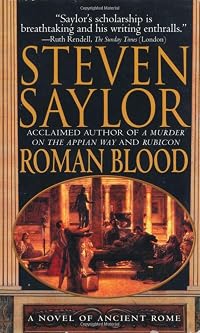
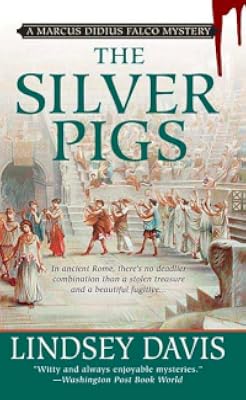
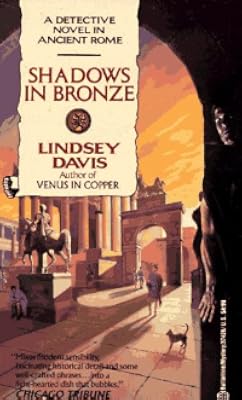
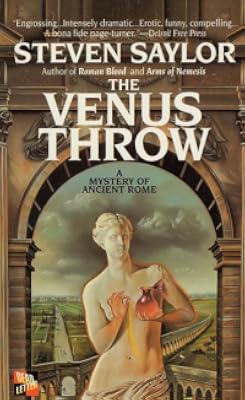
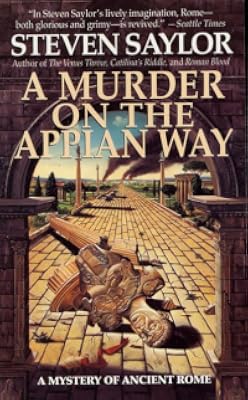
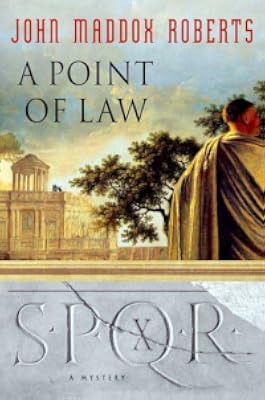
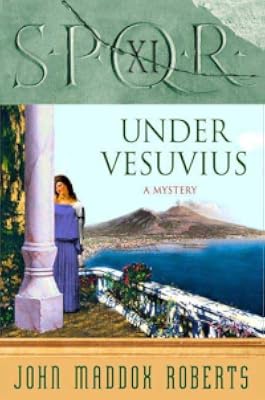
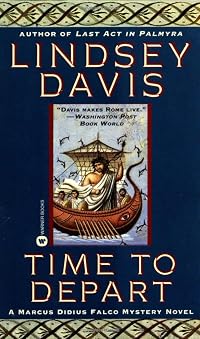
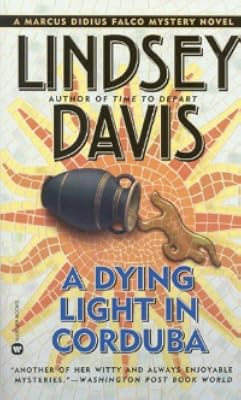
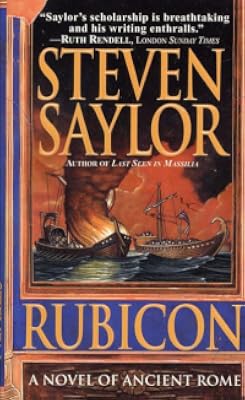
Lindsey Davis, Steven Saylor, and John Maddox Roberts also write mysteries set in Ancient Rome. Davis is the best. Also Colleen McCullough's First Man in Rome series is excellent.
I also recommend both the Graves' books and the TV series. I can still hear Augustus screaming: 'Varus, I want my Eagles'. show less
The story revolves around the family of the poet Ovid, trying to get imperial permission to return Ovid's ashes to Rome for burial. Ovid was exiled to a hamlet on the Black Sea by the former Emperor Augustus for unspecified crimes. The family of Ovid are clients of Marcus' family, and he is therefore required to present their request to the bureaucracy.
Eventually Marcus is also investigating the banishment of the Julian line of Augustus's family: Posthumous, and the two Julias, show more as well as the loss of 3 legions in the German forest by Varus.
Anyone who has read I,Claudius by Robert Graves, or seen the TV series will have an understanding of what ground Wishart is covering, albeit poorly.
The problem with the book is that Marcus talks like a tough from modern day NYC or London. He is constantly using modern words, slang and ideas.
The other issue is that there is a lot going on in terms of plot. It starts out trying to find out why Ovid is still hated, then he starts investigating the banishment of Posthumous and Julia and her daughter Julia. Then it wanders into Varus and the 3 lost legions. It is too convoluted, and not really connected well enough. There are a cast of thousands and its hard to keep track of who is who, even though I have read both Graves books, and seen the TV series.
The writing is good, the characters are OK, and the settings are done well. It just doesn't hold your interest all the way through, and Marcus is annoying and anachronistic. Not sure if I will continue reading this series.
Lindsey Davis, Steven Saylor, and John Maddox Roberts also write mysteries set in Ancient Rome. Davis is the best. Also Colleen McCullough's First Man in Rome series is excellent.
I also recommend both the Graves' books and the TV series. I can still hear Augustus screaming: 'Varus, I want my Eagles'. show less
Members
- Recently Added By
Lists

Majkia's Mystery/ Thriller TBR
86 works; 3 members
Author Information

27+ Works 1,696 Members
Series

Common Knowledge
- Canonical title
- Ovid
- Original title
- Ovid
- Original publication date
- 1995
- People/Characters
- Marcus Valerius Messalla Corvinus
- Important places
- Rome, Italy
- Dedication
- For Roy et ceteris
Classifications
Statistics
- Members
- 237
- Popularity
- 137,695
- Reviews
- 12
- Rating
- (3.58)
- Languages
- English, German, Spanish
- Media
- Paper, Ebook
- ISBNs
- 7
- ASINs
- 6