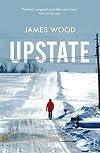
Upstate
by James Wood
On This Page
Description
"New Yorker book critic and award-winning author James Wood delivers a novel of a family struggling to connect with one another and find meaning in their own lives. In the years since his daughter Vanessa moved to America to become a professor of philosophy, Alan Querry has never been to visit. He has been too busy at home in northern England, holding together his business as a successful property developer. His younger daughter, Helen?a music executive in London?hasn't gone, either, and the show more two sisters, close but competitive, have never quite recovered from their parents' bitter divorce and the early death of their mother. But when Vanessa's new boyfriend sends word that she has fallen into a severe depression and that he's worried for her safety, Alan and Helen fly to New York and take the train to Saratoga Springs. Over the course of six wintry days in upstate New York, the Querry family begins to struggle with the questions that animate this profound and searching novel: Why do some people find living so much harder than others? Is happiness a skill that might be learned or a cruel accident of birth? Is reflection conducive to happiness or an obstacle to it? If, as a favorite philosopher of Helen's puts it, "the only serious enterprise is living," how should we live? Rich in subtle human insight, full of poignant and often funny portraits, and vivid with a sense of place, James Wood's Upstate is a powerful, intense, beautiful novel"-- show lessTags
Recommendations




































Member Reviews
I received a copy of this novel from the publisher via NetGalley.
Alan and his younger daughter Helen travel to Saratoga Springs to visit elder daughter Vanessa, after Josh, Vanessa's partner, emails his concern about her mental health. It emerges that Vanessa has had periods of depression in the past and has never found happiness to be a natural state of mind. Helen and Alan (despite marital and career difficulties on her part and financial difficulties on his) find life easier to navigate.
I enjoyed this beautifully written novel very much. It was gentle and sad and featured believable flawed but well-meaning characters. The blurb describes its themes as philosophical, but they were also personal; about the way the members of a family show more are bound to and responsible for one another. The "Englishman abroad" reflections on America and the American way of life (this is set as Obama is announcing his candidacy for president) were amusing.
Highly recommended. show less
Alan and his younger daughter Helen travel to Saratoga Springs to visit elder daughter Vanessa, after Josh, Vanessa's partner, emails his concern about her mental health. It emerges that Vanessa has had periods of depression in the past and has never found happiness to be a natural state of mind. Helen and Alan (despite marital and career difficulties on her part and financial difficulties on his) find life easier to navigate.
I enjoyed this beautifully written novel very much. It was gentle and sad and featured believable flawed but well-meaning characters. The blurb describes its themes as philosophical, but they were also personal; about the way the members of a family show more are bound to and responsible for one another. The "Englishman abroad" reflections on America and the American way of life (this is set as Obama is announcing his candidacy for president) were amusing.
Highly recommended. show less
Alan Querry is a successful property developer in the north-east. Although he now lives in an affluent area of Northumberland, he grew up in an upwardly-mobile working-class family and often questions whether he really belongs amongst the landed-gentry he is now surrounded by. As the story starts his company is experiencing problems and his financial situation is looking somewhat precarious – worrying enough in itself but exacerbated by the fact that he is having to pay expensive care home fees for his elderly mother. He has two daughters: the elder, emotionally frail Vanessa, is living with her much younger boyfriend, Josh, in Saratoga Springs, NY and teaching philosophy at a local college. Helen, two years younger and now married show more with two young children, lives in London and has a successful career as an executive in the music industry. Although neither sister has ever quite recovered from their parents’ acrimonious divorce, and their mother’s subsequent death, Helen is more outwardly self-confident and emotionally robust, whilst Vanessa has suffered periods of serious depression since being a teenager.
In early January Helen receives an email from Josh, expressing serious concern about Vanessa’s increasingly fragile mental health, even questioning whether a recent fall was a suicide attempt. He asks her if she would try to fit in a visit when she is next in New York on business and, feeling concerned by his sense of panic, she readily agrees to do so in early February. When she tells Alan, he shares her concern and agrees to join her in New York City and then to travel upstate with her to visit Vanessa for a few days.
Set in 2007, shortly before the start of the global financial crisis, this story covers the six-day period of Alan and Helen’s visit, in the depths of winter, to Vanessa’s home. Through Alan’s reflections, both before and during this trip, the reader gradually learns about his background – about his childhood; the successful but now ailing business he established; his first marriage and his acrimonious divorce the death of his first wife and the comfort he finds in his relationship with his partner Candace, a Buddhist psychotherapist, of whom neither of his daughters approves. These are experiences which have not only formed him but have also affected how he relates to his daughters. Through the additional reflections of Vanessa and Helen the family dynamics are revealed, making sense of the difficulties they all experience in communicating how they feel, both about themselves and about each other.
This is a quietly reflective novel which explores the complexities of family relationships and how the same family experiences can have profoundly different effects on each member of the family. The story encourages reflection on questions about why some people find living so much harder than others; whether happiness can be learnt, or is it, as Vanessa reflects “… just a trick of birth, a completely accidental blessing, like perfect pitch” and whether reflection is helpful to happiness, or an obstacle to it? The author compassionately explores some of these questions through the eyes of Alan who, as a loving father recognises that Helen had always seemed to find happiness easy whilst Vanessa always found it difficult. He torments himself with the ubiquitous concerns of all caring parents: of wanting to find ways of making everything right for their children and to spare them pain and distress but, ultimately, having to acknowledge that any real control over this lies with the “child”, whatever their age.
The author captures the ways in which these three characters struggle to discuss the things which are important to them (especially the “elephant in the room” which prompted this visit) and how the very fact of spending this intense period of time together all too often results in them resorting to old, defensive ways of interacting, especially when feeling challenged. For example, in an interchange with Helen Alan makes the comment “You know you’re being hurtful and completely impossible, and above all . . . extremely unhelpful.” This is followed by “He hadn’t meant to use that last word and it struck them both comically. But because they were imprisoned in their argument they were not permitted to smile, and instead lapsed into a childish, stubborn silence.” I find it hard to believe that there are many people who, on reading that passage, won’t recognise this particular scenario!
I found his leisurely, well-paced style of storytelling and his use of language a delight. As there is little conventional “action”, the story depends on the intensity of the interactions between the characters and their individual reflections on both past and present events. Throughout his story-telling I felt captivated by the ways in which he made each of them come alive. There was a powerful intensity about the ways in which he conveyed the devastating effects of depression, not only on the person who is depressed but also on family and friends and, at times, this made the story quite painful to read. However, there were also some much lighter moments, so the balance felt right.
In addition to the psychological credibility of the story, I also enjoyed the author’s use of his characters to reflect on politics, consumerism, capitalism, technology and to highlight differences between British and American views and attitudes. Amongst Alan’s more serious ponderings on his efforts to understand America and Americans (so many of which would thought-provoking discussion for reading groups!) are some rather more humorous ones. Just one example – “he’d read somewhere that Americans use, per capita, three times as many sheets of toilet paper a day as the global average, which told him what he needed to know”!
I also appreciated the many ways in which he evocatively captured a sense of place, particularly with his descriptions of the snowy, wintry landscape of Saratoga Springs. Two descriptions which captured something so essential about living in a snowy landscape were:
“It was very cold, the air was thin, stilled: in the late afternoon light everything had an atmosphere of earnest preparation for the long, bitter night ahead” and, of watching the snow fall: “It was coming down fast, in the passive aggressive way of snow, stealthy but relentless, insisting on its own white agenda.”
I think that these quotes capture something of the poetic beauty of his use of language.
The publisher’s “blurb” promised a story “Rich in subtle human insight, full of poignant and often funny portraits, and vivid with a sense of place, Upstate is a perceptive, intensely moving novel” and, for this reader, that promise was fulfilled. show less
In early January Helen receives an email from Josh, expressing serious concern about Vanessa’s increasingly fragile mental health, even questioning whether a recent fall was a suicide attempt. He asks her if she would try to fit in a visit when she is next in New York on business and, feeling concerned by his sense of panic, she readily agrees to do so in early February. When she tells Alan, he shares her concern and agrees to join her in New York City and then to travel upstate with her to visit Vanessa for a few days.
Set in 2007, shortly before the start of the global financial crisis, this story covers the six-day period of Alan and Helen’s visit, in the depths of winter, to Vanessa’s home. Through Alan’s reflections, both before and during this trip, the reader gradually learns about his background – about his childhood; the successful but now ailing business he established; his first marriage and his acrimonious divorce the death of his first wife and the comfort he finds in his relationship with his partner Candace, a Buddhist psychotherapist, of whom neither of his daughters approves. These are experiences which have not only formed him but have also affected how he relates to his daughters. Through the additional reflections of Vanessa and Helen the family dynamics are revealed, making sense of the difficulties they all experience in communicating how they feel, both about themselves and about each other.
This is a quietly reflective novel which explores the complexities of family relationships and how the same family experiences can have profoundly different effects on each member of the family. The story encourages reflection on questions about why some people find living so much harder than others; whether happiness can be learnt, or is it, as Vanessa reflects “… just a trick of birth, a completely accidental blessing, like perfect pitch” and whether reflection is helpful to happiness, or an obstacle to it? The author compassionately explores some of these questions through the eyes of Alan who, as a loving father recognises that Helen had always seemed to find happiness easy whilst Vanessa always found it difficult. He torments himself with the ubiquitous concerns of all caring parents: of wanting to find ways of making everything right for their children and to spare them pain and distress but, ultimately, having to acknowledge that any real control over this lies with the “child”, whatever their age.
The author captures the ways in which these three characters struggle to discuss the things which are important to them (especially the “elephant in the room” which prompted this visit) and how the very fact of spending this intense period of time together all too often results in them resorting to old, defensive ways of interacting, especially when feeling challenged. For example, in an interchange with Helen Alan makes the comment “You know you’re being hurtful and completely impossible, and above all . . . extremely unhelpful.” This is followed by “He hadn’t meant to use that last word and it struck them both comically. But because they were imprisoned in their argument they were not permitted to smile, and instead lapsed into a childish, stubborn silence.” I find it hard to believe that there are many people who, on reading that passage, won’t recognise this particular scenario!
I found his leisurely, well-paced style of storytelling and his use of language a delight. As there is little conventional “action”, the story depends on the intensity of the interactions between the characters and their individual reflections on both past and present events. Throughout his story-telling I felt captivated by the ways in which he made each of them come alive. There was a powerful intensity about the ways in which he conveyed the devastating effects of depression, not only on the person who is depressed but also on family and friends and, at times, this made the story quite painful to read. However, there were also some much lighter moments, so the balance felt right.
In addition to the psychological credibility of the story, I also enjoyed the author’s use of his characters to reflect on politics, consumerism, capitalism, technology and to highlight differences between British and American views and attitudes. Amongst Alan’s more serious ponderings on his efforts to understand America and Americans (so many of which would thought-provoking discussion for reading groups!) are some rather more humorous ones. Just one example – “he’d read somewhere that Americans use, per capita, three times as many sheets of toilet paper a day as the global average, which told him what he needed to know”!
I also appreciated the many ways in which he evocatively captured a sense of place, particularly with his descriptions of the snowy, wintry landscape of Saratoga Springs. Two descriptions which captured something so essential about living in a snowy landscape were:
“It was very cold, the air was thin, stilled: in the late afternoon light everything had an atmosphere of earnest preparation for the long, bitter night ahead” and, of watching the snow fall: “It was coming down fast, in the passive aggressive way of snow, stealthy but relentless, insisting on its own white agenda.”
I think that these quotes capture something of the poetic beauty of his use of language.
The publisher’s “blurb” promised a story “Rich in subtle human insight, full of poignant and often funny portraits, and vivid with a sense of place, Upstate is a perceptive, intensely moving novel” and, for this reader, that promise was fulfilled. show less
If you like well written novels that are thoughtful (“…the wisdom of its mixtures; the fortifying power of dappled things.”), long after you have finished reading, then…
Wood spent four years as a literary critic for The Guardian, co-taught literature with Saul Bellow at Boston University, and advocates the pursuit of “vitality” in literature as opposed to hysterical realism (manic characters, frenzied action, chronic length, and digressions from the topic at hand) that he deems plagues modern lit. That all said and all thoughts of schools of literary criticism aside, Upstate is just a grand highly pleasurable read.
Small in focus, Upstate concerns itself with relationships and how they can change and mature. Alan Querry, a show more 60 year old commercial real estate developer in the north-east of England, thinks constantly of his relationship with the women in his life: the younger woman Candace whom he lives with, his failing mother in an expensive care facility, his ex-wife Cathy who died not long after their divorce, and their two daughters Helen and Vanessa.
Some reviewers cite Alan’s persistent rethinking as a flaw to the book, but I enjoyed roaming around in his head and he tries to make sense of the past, present, and future. He chides himself as being too nonaggressive in business dealings as the reason his firm may be on the brink of insolvency, too much of a spendthrift as he expensively supports his mother in an elderly care facility instead of the less expensive option of taking care of her in his home, too stingy with his time in not being with his daughters in their early years, and berates himself on thinking about himself and his place in life.
Vanessa, with a history of depression from an early age, may have intentionally thrown herself down her front steps in Sarasota Springs, New York. This prompts Vanessa’s partner Josh to email his concerns to Helen resulting in Helen and Alan traveling to be with her to find out how plagued with depression she may be. During the few days this book portrays, Alan’s father perspective changes as he watches and relates to his approaching middle age daughters. As in all of life, but unfortunately often not seen clearly, the characters in Upstate all have choices and potentials.
James Wood’s writing is evocative and often poetic whether it be revealing the relationships above, differences between England the United States, music of the 1980 and the business consequences of digitalization, musings on Thomas Nagel’s essay “The Absurd”, aging, and grief and joy:
“Joy seemed so much more incommunicable than grief. Grief had tears, the visible signs, the obvious rain of sadness, and in that was ultimately childish. Grief took you back to childhood, to the performance that got an adult running: ‘What’s wrong, why are you crying?’ But what was the sign of joy, the sum of joy. Who came running to the joyous one to say, ‘Why are you smiling? Tell me what makes you so happy?’” show less
Wood spent four years as a literary critic for The Guardian, co-taught literature with Saul Bellow at Boston University, and advocates the pursuit of “vitality” in literature as opposed to hysterical realism (manic characters, frenzied action, chronic length, and digressions from the topic at hand) that he deems plagues modern lit. That all said and all thoughts of schools of literary criticism aside, Upstate is just a grand highly pleasurable read.
Small in focus, Upstate concerns itself with relationships and how they can change and mature. Alan Querry, a show more 60 year old commercial real estate developer in the north-east of England, thinks constantly of his relationship with the women in his life: the younger woman Candace whom he lives with, his failing mother in an expensive care facility, his ex-wife Cathy who died not long after their divorce, and their two daughters Helen and Vanessa.
Some reviewers cite Alan’s persistent rethinking as a flaw to the book, but I enjoyed roaming around in his head and he tries to make sense of the past, present, and future. He chides himself as being too nonaggressive in business dealings as the reason his firm may be on the brink of insolvency, too much of a spendthrift as he expensively supports his mother in an elderly care facility instead of the less expensive option of taking care of her in his home, too stingy with his time in not being with his daughters in their early years, and berates himself on thinking about himself and his place in life.
Vanessa, with a history of depression from an early age, may have intentionally thrown herself down her front steps in Sarasota Springs, New York. This prompts Vanessa’s partner Josh to email his concerns to Helen resulting in Helen and Alan traveling to be with her to find out how plagued with depression she may be. During the few days this book portrays, Alan’s father perspective changes as he watches and relates to his approaching middle age daughters. As in all of life, but unfortunately often not seen clearly, the characters in Upstate all have choices and potentials.
James Wood’s writing is evocative and often poetic whether it be revealing the relationships above, differences between England the United States, music of the 1980 and the business consequences of digitalization, musings on Thomas Nagel’s essay “The Absurd”, aging, and grief and joy:
“Joy seemed so much more incommunicable than grief. Grief had tears, the visible signs, the obvious rain of sadness, and in that was ultimately childish. Grief took you back to childhood, to the performance that got an adult running: ‘What’s wrong, why are you crying?’ But what was the sign of joy, the sum of joy. Who came running to the joyous one to say, ‘Why are you smiling? Tell me what makes you so happy?’” show less
This is an interesting story about a man in his 60s who goes to visit his daughter, Vanessa, in 'upstate' New York. The daughter is a philosophy academic at a not-especially-well-known university in Saratoga Springs and the visit occurs during winter, so snow and ice feature prominently. I really liked the perspective of the visiting father - finding the abundance of American flags on display to be weird; noting the fact that Americans just leave old shops and factories to decay in situ (they have so much space compared with England or Europe); having to ask what 'upstate' actually means, precisely; speculating about what the possible election of Obama might mean; noting that an American standard (supersize) croissant is not actually show more better than a small one; the different ratio of churches to bars in America compared with England; etc. Much more interesting, however, is his relationship with Vanessa, her sister, Helen (who also visits) and Vanessa's partner. The man reflects on his relationship with the girls' mother (they separated and then she died) and what impact that had on Vanessa and the fact that the impact was so different for Helen. The quality of his fathering is brought into question as a possible factor in Vanessa's mental state. The book seemed to be written very well to me, especially the way the perspective of the narrator switched from the father (most of the book) to others. I think I'll try & get hold of Wood's only other fiction "The Book Against God", although reviews I've read suggest I won't enjoy it as much as this. show less
This is a beautifully written study of the relationship between a man and his two adult daughters. Vanessa, the older daughter is a philosophy professor at a college in upstate New York. Helen her younger sister is involved in the music industry. After Vanessa's boyfriend tells Helen that Vanessa is not doing well, Alan, the father and Helen decide, given Vanessa's history of depressions, that they should visit.
This is a look at how as parents, even though we never stop worrying about them or feeling responsible for them, we must find ways to engage with our adult children. It's also a look at how/why some people find it more difficult to live than others, why some peple are "glass half full" and others are "glass half empty." The show more language is poetic and beautiful, and there is a lot to savor here. show less
This is a look at how as parents, even though we never stop worrying about them or feeling responsible for them, we must find ways to engage with our adult children. It's also a look at how/why some people find it more difficult to live than others, why some peple are "glass half full" and others are "glass half empty." The show more language is poetic and beautiful, and there is a lot to savor here. show less
A bit dry and too philosophical for my tastes. Email this reviewKIRKUS REVIEWAn understated novel by the eminent literary critic in which a father confronts problems in the lives of his adult daughters during a trip to Saratoga Springs in upstate New York.Wood (The Nearest Thing to Life, 2015, etc.) sets his second novel in early 2007, a time of the Blackberry and Sen. Obama that seems eons ago. The story concerns Alan Querry, a 68-year-old real estate developer in Northumberland, England, whose business has turned rocky around the time he learns that his older daughter needs his help. Vanessa, 40 and a philosophy professor at Skidmore, has had bouts of depression over the years that may stem from Alan?s side of the family and from her show more parents? ?bitter divorce? when she was 15. After a recent episode, her younger sister, Helen, a successful Sony music executive in London, and Alan visit her in the States. They find her in reasonable mental health although torn between an urge to return to England and the fear that such a move would upend relations with her first serious lover, the American Josh. Helen, whose marriage is shaky, is mulling quitting Sony for a new project her father might join. Wood, who has written about Who drummer Keith Moon, has fun dipping into the world of pop music. In the course of meals and meetings that are variously tense or pleasant, the Querrys and Josh are presented as reasonable, intelligent adults whose problems are surmountable. Yes, Vanessa does ask at one point, ?What if despair�kept on returning,? and Alan recalls a frightening vision of ?all the dead, past and future,? while at Hadrian?s Wall. But these are rare dark moments in a narrative that tellingly ends with a lush prose cadenza on spring?s renewal without ever truly testing its characters and letting them show their mettle.A likable novel in many ways but short on the revelatory heft of serious fiction.Pub Date: June 5th, 2018ISBN: 978-0-374-27953-0Page count: 224ppPublisher: Farrar, Straus and Giroux show less
Alan Querry lives a modest life in Northumberland, he is moderately successful as a developer and after the hard time of the divorce and death of his first wife, he found a new love. When his daughter Helen informs him that her sister Vanessa obviously has another depressive episode, Alan makes his way from England to Saratoga Springs upstate New York where Vanessa lives with her boyfriend Josh and where she teaches philosophy. Alan has never visited her, too many things kept him from crossing the ocean. Helen joins him and thus, the family is united in a wintry small town and faced with the uncomfortable truths they have avoided for years.
James Wood is best known for being a literary critic for The Guardian and The New Yorker Magazine show more and teaching literature at Harvard. “Upstate” is his latest novel which focusses on philosophical dilemmas and the bonds of a family.
Clearly, the incident that triggers the family reunion was Vanessa’s accident during which she broke her arm. Yet, this was only the sad climax of a depressive period – something she has known all her life. How come that her younger sister Helen, who had to go through the same hardships as a child and is also struggling with her career, does not know these moody periods and can embrace happiness much easier? Why are some people just stronger, more resilient than others?
It has never been easy for the family members to openly talk about their feelings. Thus, they need to find other topics to layer what they want to say and to make it expressible. For Helen it is music, for Vanessa it has always been philosophy and for Alan, nature seems to be the clue. At the end, the wintry ice is melting, after it was a cause for a minor road accident of Alan, that also the ice between father and daughter finally melts and gives way for a new spring, a new beginning.
What I enjoyed about the novel is the gentle pace at which it moves and the tenderness with which Wood talks about his characters. The impressive American landscape contrasts with the critical look at the people and especially American politics – we are around 2007 immediately before Obama announced his candidacy. Where nature is a lot more extreme, everything created by man is poorer there than the European counterpart, which more conservative but also more reliable. Such as the people – in the end, the family bonds are stronger and more dependable than the love bonds. show less
James Wood is best known for being a literary critic for The Guardian and The New Yorker Magazine show more and teaching literature at Harvard. “Upstate” is his latest novel which focusses on philosophical dilemmas and the bonds of a family.
Clearly, the incident that triggers the family reunion was Vanessa’s accident during which she broke her arm. Yet, this was only the sad climax of a depressive period – something she has known all her life. How come that her younger sister Helen, who had to go through the same hardships as a child and is also struggling with her career, does not know these moody periods and can embrace happiness much easier? Why are some people just stronger, more resilient than others?
It has never been easy for the family members to openly talk about their feelings. Thus, they need to find other topics to layer what they want to say and to make it expressible. For Helen it is music, for Vanessa it has always been philosophy and for Alan, nature seems to be the clue. At the end, the wintry ice is melting, after it was a cause for a minor road accident of Alan, that also the ice between father and daughter finally melts and gives way for a new spring, a new beginning.
What I enjoyed about the novel is the gentle pace at which it moves and the tenderness with which Wood talks about his characters. The impressive American landscape contrasts with the critical look at the people and especially American politics – we are around 2007 immediately before Obama announced his candidacy. Where nature is a lot more extreme, everything created by man is poorer there than the European counterpart, which more conservative but also more reliable. Such as the people – in the end, the family bonds are stronger and more dependable than the love bonds. show less
Members
- Recently Added By
Author Information

16+ Works 3,420 Members
James Wood is currently a senior editor at The New Republic and a visiting lecturer in English and American literature at Harvard.
Some Editions
Awards and Honors
Distinctions
The Guardian Book of the Day (2018-03-13)
Series
Belongs to Publisher Series
Contemporánea [Alba] (39)
Common Knowledge
- Canonical title
- Upstate
Classifications
Statistics
- Members
- 144
- Popularity
- 223,501
- Reviews
- 12
- Rating
- (3.84)
- Languages
- 6 — Danish, Dutch, English, German, Portuguese, Spanish
- Media
- Paper, Audiobook, Ebook
- ISBNs
- 15
- ASINs
- 2