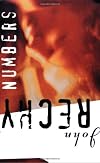
Numbers
by John Rechy
On This Page
Description
Book jacket/back: Johnny Rio, a handsome narcissist but no longer a pretty boy, travels to Los Angeles, the site of past sexual conquest and remembered youthful radiance, in a frenzied attempt to recreate his younger self. Johnny has ten precious days to draw the "numbers," the men who will confirm his desirability, and with the hungry focus of a man on borrowed time, he stalks the dark balconies of all-night theaters, the hot sands of gay beaches, and shady glens of city parks, attempting show more to attract shadowy sex-hunters in an obcessive battle against the passing of his youth. show lessTags
Recommendations





























Member Reviews
Rechy's novel, which was his second, was not better than his first, but it did broaden his horizons. For the majority of the story, I found the adventures of Johnny Rio, the protagonist, to be fascinating, but in the end, he was a depressing figure.
In comparison to his first novel, Rechy got a lot better - in my humble opinion.
This book is tightly glued together through a sharply defined period of time in which the protagonist takes a trip to Los Angeles. Also a lot of recurring themes or 'rituals' - as the narrator states it somewhere - help to make it a much more complete work than his first novel.
Through the narrator we get insight in the protagonist, Johnny Rio, and even the major parts of his life led so far. He states Johnny to be a good-looking, but narcissistic person, who needs to be desired by others and never ever desires someone back.
Ultimately I felt pity for the protagonist, cause he suffers from his desire to be desired that much, that his self-esteem every now show more and then would crumble, if it wasn't for his strange 'reasons', which are sometimes merely weak excuses to do, what he does, and to justify what he does without admitting that he wants to do it. The narrator clearly comments on this, while Johnny puts his reasons together, he simply contradicts and is therefore somehow a symbol of truth for me throughout the novel. Personally I thought those comments that contradicted the protagonist quite charming.
The one negative aspect, the only annoying thing I could find, were introductions of descriptions of characters or scenes that contained the phrase 'like this:'. This invoked a feeling as if the author lacked the creativity to give a proper introduction to his descriptions. And he did this frequently. show less
This book is tightly glued together through a sharply defined period of time in which the protagonist takes a trip to Los Angeles. Also a lot of recurring themes or 'rituals' - as the narrator states it somewhere - help to make it a much more complete work than his first novel.
Through the narrator we get insight in the protagonist, Johnny Rio, and even the major parts of his life led so far. He states Johnny to be a good-looking, but narcissistic person, who needs to be desired by others and never ever desires someone back.
Ultimately I felt pity for the protagonist, cause he suffers from his desire to be desired that much, that his self-esteem every now show more and then would crumble, if it wasn't for his strange 'reasons', which are sometimes merely weak excuses to do, what he does, and to justify what he does without admitting that he wants to do it. The narrator clearly comments on this, while Johnny puts his reasons together, he simply contradicts and is therefore somehow a symbol of truth for me throughout the novel. Personally I thought those comments that contradicted the protagonist quite charming.
The one negative aspect, the only annoying thing I could find, were introductions of descriptions of characters or scenes that contained the phrase 'like this:'. This invoked a feeling as if the author lacked the creativity to give a proper introduction to his descriptions. And he did this frequently. show less
Read this about 20 years ago. It seemed sad then. Reread parts of it recently because Christopher Isherwood and his lover appear under other names. Bachardy seems to think the portrayal was unflattering. The Isherwood character was a trifle pretentious--hardly surprising that a gay hustler from Texas turned author might find an English expatriate who was best friends with W H Auden a little pretentious. The book and the main character still seems sad.
USA, Los Angeles, ca 1965
En ung mand, Johnny Rio, kører rundt i Los Angeles området og bliver brugt og bruger selv en masse mænd seksuelt. Christopher Isherwood og Don Bachardy er forlæg for et par af personerne (og Don Bachardy syntes dårligt om det).
???
En ung mand, Johnny Rio, kører rundt i Los Angeles området og bliver brugt og bruger selv en masse mænd seksuelt. Christopher Isherwood og Don Bachardy er forlæg for et par af personerne (og Don Bachardy syntes dårligt om det).
???
Feb 9, 2019Danish
Ratings
Members
- Recently Added By
Lists

Books That Changed Our Perspective
423 works; 168 members
Author Information

29+ Works 2,701 Members
Rechy is an important gay writer also linked to the Beat Movement, whose work has been recognized by a number of prestigious grant nominations or awards, including one from the National Endowment for the Arts. He grew up in El Paso, Texas, in a poor, Mexican American family. Because of his poverty and his ethnic heritage, he learned very early in show more life to feel himself an outsider, which was intensified by his later experiences as a gay hustler traveling America in search of his social and sexual identity. He came to popular and critical attention with his first published novel, City of Night (1963), which was a bestseller and was nominated for the International Prix Formentor. A fictionalized account of his travels, the novel focuses on the people whom the unnamed narrator encounters on the hustling scene in a number of cities, including New York, San Francisco, New Orleans, Chicago, and Los Angeles. Together, these cities make up the titular "city of night," or, as Rechy writes, "the city of night of the soul." A state of mind rather than a particular place, this "city"---modern America---is where hypocrisy and homophobia are reconciled with the fact of homosexuality in various forms, and poverty may be more spiritual than material. The book owes something to two classics: Jack Kerouac's Beat novel, On the Road, which celebrates countercultural alternatives to middle-class culture and lifestyles, including bourgeois marriage and family life, and Djuna Barnes's modernist novel Nightwood, which explores a tragic gay "nightworld" as a symbol of the modern urban wasteland. Rechy addresses similar themes in a later work that is equally well known, The Sexual Outlaw (1977), which he has described as an experiment with the novel form. Ostensibly a documentary of the life of a gay man, the book is also a critique of American values and morality. Commentaries throughout the text are really journalistic essays that expose the double standards and double binds of a "closeted" culture, in which many fear to be openly gay because of homophobic reprisals. Rechy has suggested that all of his work (which includes plays, essays, and reviews, as well as novels) articulates the need to preserve gay "difference," which he associates with "abundant sexuality," in the face of increasing "heterofascism." (Bowker Author Biography) show less
Common Knowledge
- Original publication date
- 1967
Classifications
Statistics
- Members
- 239
- Popularity
- 135,629
- Reviews
- 4
- Rating
- (3.47)
- Languages
- Danish, English, French, Italian
- Media
- Paper, Ebook
- ISBNs
- 7
- ASINs
- 11