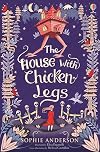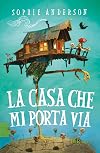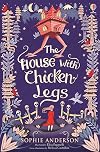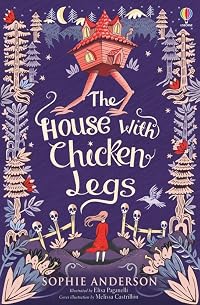
The House With Chicken Legs
by Sophie Anderson
On This Page
Description
All 12-year-old Marinka wants is a friend. A real friend. Not like her house with chicken legs. Sure, the house can play games like tag and hide-and-seek, but Marinka longs for a human companion. Someone she can talk to and share secrets with. But that's tough when your grandmother is a Yaga, a guardian who guides the dead into the afterlife. It's even harder when you live in a house that wanders all over the world . . . carrying you with it. Even worse, Marinka is being trained to be a show more Yaga. That means no school, no parties -- and no playmates that stick around for more than a day. So when Marinka stumbles across the chance to make a real friend, she breaks all the rules . . . with devastating consequences. Her beloved grandmother mysteriously disappears, and it's up to Marinka to find her -- even if it means making a dangerous journey to the afterlife. With a mix of whimsy, humor, and adventure, this debut novel will wrap itself around your heart and never let go. show lessTags
Recommendations








Member Reviews
Marinka lives with her Baba Yaga in a house with chicken legs that picks up and moves somewhere new a few times a year. Baba's job is to welcome the dead and shepherd them through the Gate, but Marinka doesn't think that's her own destiny: she's passionately curious about the world outside and wants to make friends. But she's not allowed to go past the gate (made of bones and topped with skulls), so her attempts at friendship with the living are frequently thwarted. When she tries to keep one of the dead from passing through the Gate to stay and be her friend, it has disastrous consequences, leaving Marinka alone (except for a lamb, Benji, and her jackdaw, Jack). She and the House go to the market, where Marinka consults the most show more ancient Yaga, and receives advice she doesn't want to hear.
Full of remarkable twists, turns, and reveals, with a satisfying conclusion.
See also: The Undead Fox of Deadwood Forest
Quotes
...I still want to leave and explore the real world, meet the living, and have friendships that last for more than one night. (30)
"If you would focus more on the life you have instead of daydreaming about the life you don't, then I think you would be happier." (48)
The life I've had is certainly better than no life at all. (108)
In this universe full of possibilities, there has to be another way of making things right, without being forced to accept a fate I don't want. (223)
Baba used to say it's not how long a life but how sweet a life that counts, and I think maybe the same is true of friendships....Nobody is yours to keep. Nothing is forever. (241)
"Some mistakes you have to make for yourself." (247)
Everyone is getting on with their day like it is so ordinary, while inside I am bursting with the wonder of it all. (255) show less
Full of remarkable twists, turns, and reveals, with a satisfying conclusion.
See also: The Undead Fox of Deadwood Forest
Quotes
...I still want to leave and explore the real world, meet the living, and have friendships that last for more than one night. (30)
"If you would focus more on the life you have instead of daydreaming about the life you don't, then I think you would be happier." (48)
The life I've had is certainly better than no life at all. (108)
In this universe full of possibilities, there has to be another way of making things right, without being forced to accept a fate I don't want. (223)
Baba used to say it's not how long a life but how sweet a life that counts, and I think maybe the same is true of friendships....Nobody is yours to keep. Nothing is forever. (241)
"Some mistakes you have to make for yourself." (247)
Everyone is getting on with their day like it is so ordinary, while inside I am bursting with the wonder of it all. (255) show less
I'd absolutely love the book if I don't hate Marinka and her ways. Don't get me wrong, I feel her loneliness and frustration but to me, it feels like she only goes and messes up everything which people (and house) around her has to clean up after.
Other than that I love everything about this book. I love the magic, the heartwarming storyline and the excellent storytelling, everything was just beautiful.
Other than that I love everything about this book. I love the magic, the heartwarming storyline and the excellent storytelling, everything was just beautiful.
Malo je knjiga koje me natjeraju plakati. Malo je knjiga zbog kojih žalim što ih nisam imala u djetinjstvu. U prvom redu, tu je veličanstvena Gejmenova Knjiga o groblju, zbog koje sam bila tužna jer je nisam prvi put pročitala kad sam imala osam godina. No, tada, možda malo kasnije, čitala sam Potera. I gledala Kaspera. I Da li se plašite mraka? I, u skladu sa svim tim, toj listi pridružujem jednu prelijepu priču. Za Babu Jagu čula sam veoma rano, i to kroz Vasilisu Prekrasnu, koja je moja omiljena bajka iz Rusije. Baba Jaga, to čudovište koje živi u kući sa kokošijim nogama, demonskog porijekla (bar nas tako uče) bila je domaćin Vasilisi. I fino joj je pomogla, tako da, uprkos ružnoj spoljašnjosti, nisam imala show more zamjerke na njeno postojanje. A ni godinama kasnije kada sam čitala i proučavala mitove i legende. I istog tog sam mišljenja nakon čitanja uistinu veličanstvene knjige za djecu koja se kod Hrvata našla u izdanju Mitopeje. Riječ je o knjizi Kuća na kokošijim nogama auotrke Sofije Andersen.
Kao i sve slatke, fine knjige koje pretenduju na naša srca, da nas zarobe u svoj svijet, tako i ova počinje, recimo u bajkovitom maniru uistinu čarobno! Tu je šuma, šumska okućnica, i već može da se čuje i omiriše ta divna atmosfera! A pored toga, ništa se ne krije, i tako već u prvom pasusu dobijamo saznanje da (njena) kuća ima kokošije noge. I da dva-tri puta godišenj, bez upozorenja, kuća ih vodi na neko drugo mjesto. A ono što tišti naratorku, jeste to što ih kuća vodi bogu iza nogu. Ali, nas se to ne tiče. Nas to ne zanima. Uranjamo u šumotitu atmosferu da saznamo kakva je to Baba. Pa tek Jaga. Dobro, ja znam ko su babe Jage. Znam i ko su Babe Marte, ali svakako zarad ove knjige prepustila sam se djetinjoj perspektiti. Prepustila sam se i dopustila sebi da sve (nešto) saznam po prvi put.
Da ne bih išla u prepričavanje, u detaljisanje, i studiozno analiziranje, u ovom prikazu, koji je tako nesvojstven meni, izdvojiću momenat i saznanje da je Marinka ipak samo duh. Zapravo, bolje recimo da je to samospoznaja. Može li se zamisliti bol koju neko doživi kada sazna da nije ono što je mislio da jeste? Kada se čitavog života bori protiv sudbine, a zapravo ne zna da je već iskusio i doživio svoju sudbinu.
Bilo kako bilo, Babe Jage nisu zle vještice koje jedu djecu za užinu, u jednom zalogaju (kakva notorna laž!) I one su osjećajna bića, koja žive stotinama godina, koje prevode upokojene iz svijeta živih u svijet mrtvih. Imaju svoje legende i svoje običaje. I svoja takmičenja i rituale. Kod njih je sve jasno i precizno, i svaka živi sa svojim životima. A ti životi broje bar dvije-tri laži. show less
Kao i sve slatke, fine knjige koje pretenduju na naša srca, da nas zarobe u svoj svijet, tako i ova počinje, recimo u bajkovitom maniru uistinu čarobno! Tu je šuma, šumska okućnica, i već može da se čuje i omiriše ta divna atmosfera! A pored toga, ništa se ne krije, i tako već u prvom pasusu dobijamo saznanje da (njena) kuća ima kokošije noge. I da dva-tri puta godišenj, bez upozorenja, kuća ih vodi na neko drugo mjesto. A ono što tišti naratorku, jeste to što ih kuća vodi bogu iza nogu. Ali, nas se to ne tiče. Nas to ne zanima. Uranjamo u šumotitu atmosferu da saznamo kakva je to Baba. Pa tek Jaga. Dobro, ja znam ko su babe Jage. Znam i ko su Babe Marte, ali svakako zarad ove knjige prepustila sam se djetinjoj perspektiti. Prepustila sam se i dopustila sebi da sve (nešto) saznam po prvi put.
Da ne bih išla u prepričavanje, u detaljisanje, i studiozno analiziranje, u ovom prikazu, koji je tako nesvojstven meni, izdvojiću momenat i saznanje da je Marinka ipak samo duh. Zapravo, bolje recimo da je to samospoznaja. Može li se zamisliti bol koju neko doživi kada sazna da nije ono što je mislio da jeste? Kada se čitavog života bori protiv sudbine, a zapravo ne zna da je već iskusio i doživio svoju sudbinu.
Bilo kako bilo, Babe Jage nisu zle vještice koje jedu djecu za užinu, u jednom zalogaju (kakva notorna laž!) I one su osjećajna bića, koja žive stotinama godina, koje prevode upokojene iz svijeta živih u svijet mrtvih. Imaju svoje legende i svoje običaje. I svoja takmičenja i rituale. Kod njih je sve jasno i precizno, i svaka živi sa svojim životima. A ti životi broje bar dvije-tri laži. show less
Twelve-year-old Marinka’s parents died a long time ago so she only has her Baba (grandmother) and their house with chicken legs. Oh, and the dead souls that Baba Yaga helps cross into the afterlife. Every night is a party as Baba Yaga hosts the dead, listens to their stories, and blesses them on their journeys.
But Marinka is lonely. The house with chicken legs never stays in one place for long and Marinka and her Baba don’t control their moves. Marinka never gets a chance to make any living friends. The house is fun but she wants someone her own size and age to play with. And she definitely doesn’t want to take Baba’s place as a Yaga (a guardian of the Gate to the afterlife). But Marinka’s choices are limited. Can she find a show more way forward?
I can see the reason that this book is rated so highly on GoodReads. I understand why the author included some events, but my own history of grief led me to interpret them in a different way than intended and lower my own rating. To explain further would give away some major plot points so I’ll have to leave it there.
Part of me admires Marinka for wanting so much more than what she’s been given. Who doesn’t want friends and a choice in how to live their lives? And being a Yaga is a true calling that she just doesn’t feel. No one can force something like that.
But she largely comes across as a selfish brat to me. Weren’t most of us selfish brats at age 12? I know I was. But she makes choices that have serious consequences for a lot of people. She isn’t ignorant of the consequences–she just puts her own needs first. Some of her problems could have been addressed if she had only been honest about her feelings with the people around her. Baba repeatedly gives her the opportunity to open up but she just keeps saying that she’s happy to train as a Yaga. Meanwhile, she’s keeping some dangerous secrets.
The house is a character all its own and one of my favorites. I honestly felt that it deserved better than Marinka. The house doesn’t speak but it finds ways to communicate. It tries so hard to make Marinka happy but she just takes it for granted and doesn’t take very good care of it.
There were a couple of beautiful quotes though. This is the blessing that the Yaga says just before the dead pass through the Gates to the afterlife (it changes slightly from soul to soul):
“May you have strength on the long and arduous journey ahead. The stars are calling for you. Move on with gratitude for your time on Earth. Every moment now an eternity. You carry with you memories of infinite value, the love of your family and home…. Peace at returning to the stars. The great cycle is complete.”
This is a thoughtful quote too:
“Baba used to say it’s not how long a life but how sweet a life that counts, and I think maybe the same is true with friendships. I’m not sure how long I will get to spend with Benjamin, but I will appreciate the time I have…. Nobody is yours to keep. Nothing is forever.”
I am truly in the minority in my feelings for this book so if you’re interested in a story about Baba Yaga, or a troubled middle-grade character who does eventually learn some truths about life, give this one a try. show less
But Marinka is lonely. The house with chicken legs never stays in one place for long and Marinka and her Baba don’t control their moves. Marinka never gets a chance to make any living friends. The house is fun but she wants someone her own size and age to play with. And she definitely doesn’t want to take Baba’s place as a Yaga (a guardian of the Gate to the afterlife). But Marinka’s choices are limited. Can she find a show more way forward?
I can see the reason that this book is rated so highly on GoodReads. I understand why the author included some events, but my own history of grief led me to interpret them in a different way than intended and lower my own rating. To explain further would give away some major plot points so I’ll have to leave it there.
Part of me admires Marinka for wanting so much more than what she’s been given. Who doesn’t want friends and a choice in how to live their lives? And being a Yaga is a true calling that she just doesn’t feel. No one can force something like that.
But she largely comes across as a selfish brat to me. Weren’t most of us selfish brats at age 12? I know I was. But she makes choices that have serious consequences for a lot of people. She isn’t ignorant of the consequences–she just puts her own needs first. Some of her problems could have been addressed if she had only been honest about her feelings with the people around her. Baba repeatedly gives her the opportunity to open up but she just keeps saying that she’s happy to train as a Yaga. Meanwhile, she’s keeping some dangerous secrets.
The house is a character all its own and one of my favorites. I honestly felt that it deserved better than Marinka. The house doesn’t speak but it finds ways to communicate. It tries so hard to make Marinka happy but she just takes it for granted and doesn’t take very good care of it.
There were a couple of beautiful quotes though. This is the blessing that the Yaga says just before the dead pass through the Gates to the afterlife (it changes slightly from soul to soul):
“May you have strength on the long and arduous journey ahead. The stars are calling for you. Move on with gratitude for your time on Earth. Every moment now an eternity. You carry with you memories of infinite value, the love of your family and home…. Peace at returning to the stars. The great cycle is complete.”
This is a thoughtful quote too:
“Baba used to say it’s not how long a life but how sweet a life that counts, and I think maybe the same is true with friendships. I’m not sure how long I will get to spend with Benjamin, but I will appreciate the time I have…. Nobody is yours to keep. Nothing is forever.”
I am truly in the minority in my feelings for this book so if you’re interested in a story about Baba Yaga, or a troubled middle-grade character who does eventually learn some truths about life, give this one a try. show less
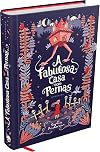
Such an endearing heroine. Very flawed, but as she's 12, we love her anyway, and ache for her through her struggles. Immersive and visual story-telling... I was too engaged to pay attention to how the author did it, but somehow she made me feel like I was there with Marinka, smelling and tasting all that Russian food, feeling desert heat or the salt spray, hearing the jackdaw's cries and murmurs. Strong honest themes, too. And just look at that house (on the hardcover edition) - animators would have such fun with it.
Iow, all the ingredients for a good family movie.
I kinda wish my library book were the other edition, with the darker blue cover, as it looks more apt for the kind of story that is best read instead of filmed, which is the show more kind of story I generally prefer. But that edition probably doesn't have the endpaper this one does... oh you poor deprived e-book readers.... show less
Iow, all the ingredients for a good family movie.
I kinda wish my library book were the other edition, with the darker blue cover, as it looks more apt for the kind of story that is best read instead of filmed, which is the show more kind of story I generally prefer. But that edition probably doesn't have the endpaper this one does... oh you poor deprived e-book readers.... show less
Honestly, this went on my reading list the moment I saw its title. Baba Jaga/Jędzibaba? Yes please! Unfortunately I think it's my very love for Jędzibaba that got in the way of enjoying The House with Chicken Legs.
Representation:
There are some non-white secondary characters who come and go, like Nina, who’s hinted to live somewhere in Africa (either Africa or SW Asia), and other girls who also live in Africa, probably in Morocco.
Twelve-year-old Marinka lives with her baba in a house with chicken legs, traveling all around the world. Sounds like she’s living a dream, except that she can never leave the house and can never make a friend for longer than a single night. She’s training for an important job: she’s a Yaga, which show more means she’s destined to guide the dead into The Gate every night. But Marinka hates her destiny and wishes she could leave her house and join the living, make an actual friend, and leave the Guardian duties to her baba. When she tries to change her life, however, and keeps one dead girl from passing on, she realizes how dangerous messing with destiny can be.
On its own, this book is a really lovely middle grade novel, focusing on Marinka’s loneliness, her desperation for a connection with living people, etc. Maybe I’m just super petty, though, because I just couldn’t get over how Jędzibaba is cheapened down to a shiny little concept to give this YA more sparkle. Marinka could simply be in a house that moves, right? To me, Jędzibaba is someone who could have once been a goddess, and some of my acquaintances still give her offerings and prayers. She’s a dark, dangerous wild forest goddess/spirit who aids some and punishes others. She does exist in a liminal space, but making her a thing that, like … is simply a bloodline occupation is so saddening; anyone can be a Yaga if your parents were, etc. But I think what most bothers me is that these (white) Yaga dominate every other culture and belief: every other culture’s dead passes through the Yagas’ Gates. No matter the religion, somehow they all go through the Slavic Gates. Why? If Sophie Anderson didn’t mean for it to be this way, why do the Yaga only practice Slavic (Russian) culture, make Russian feasts, put the spirits through their own culture when they were passing, etc? Look, I know this is a middle grade novel, but it bothered me!
Marinka also only worries about herself. It seems like she worries about others, sure -- but that's only because if they got better/came back, then her own life would improve or get back to normal. Yes, this is a very childlike want, but I expected her to mature a little over the course of the novel. And while she did grow some, it's enough for it to be obvious to the age group, I think. Maybe I’m wrong! But I’m not sure. The end was very heartwarming, though, and I’m glad she was able to compromise. I think the ending was perfect for the characters, the book overall, and for me (lol). It made me smile and feel warm and content. It’s a perfect ending in pretty much every way. I just think the come-down period and the MC’s growth happened a little too fast.
The writing is also a bit sloppy. Commas are everywhere they shouldn't be, especially in places where there's meant to be a pause instead. Where's the editor in all this? This is their job! There's also some very, VERY large plot holes, where the house shows a huge amount of magic that could have fixed things in the beginning and it conveniently ... didn't.
But really, this is a lovely middle grade novel. I'm just nitpicking, as always! show less
Representation:
There are some non-white secondary characters who come and go, like Nina, who’s hinted to live somewhere in Africa (either Africa or SW Asia), and other girls who also live in Africa, probably in Morocco.
Twelve-year-old Marinka lives with her baba in a house with chicken legs, traveling all around the world. Sounds like she’s living a dream, except that she can never leave the house and can never make a friend for longer than a single night. She’s training for an important job: she’s a Yaga, which show more means she’s destined to guide the dead into The Gate every night. But Marinka hates her destiny and wishes she could leave her house and join the living, make an actual friend, and leave the Guardian duties to her baba. When she tries to change her life, however, and keeps one dead girl from passing on, she realizes how dangerous messing with destiny can be.
On its own, this book is a really lovely middle grade novel, focusing on Marinka’s loneliness, her desperation for a connection with living people, etc. Maybe I’m just super petty, though, because I just couldn’t get over how Jędzibaba is cheapened down to a shiny little concept to give this YA more sparkle. Marinka could simply be in a house that moves, right? To me, Jędzibaba is someone who could have once been a goddess, and some of my acquaintances still give her offerings and prayers. She’s a dark, dangerous wild forest goddess/spirit who aids some and punishes others. She does exist in a liminal space, but making her a thing that, like … is simply a bloodline occupation is so saddening; anyone can be a Yaga if your parents were, etc. But I think what most bothers me is that these (white) Yaga dominate every other culture and belief: every other culture’s dead passes through the Yagas’ Gates. No matter the religion, somehow they all go through the Slavic Gates. Why? If Sophie Anderson didn’t mean for it to be this way, why do the Yaga only practice Slavic (Russian) culture, make Russian feasts, put the spirits through their own culture when they were passing, etc? Look, I know this is a middle grade novel, but it bothered me!
Marinka also only worries about herself. It seems like she worries about others, sure -- but that's only because if they got better/came back, then her own life would improve or get back to normal. Yes, this is a very childlike want, but I expected her to mature a little over the course of the novel. And while she did grow some, it's enough for it to be obvious to the age group, I think. Maybe I’m wrong! But I’m not sure. The end was very heartwarming, though, and I’m glad she was able to compromise. I think the ending was perfect for the characters, the book overall, and for me (lol). It made me smile and feel warm and content. It’s a perfect ending in pretty much every way. I just think the come-down period and the MC’s growth happened a little too fast.
The writing is also a bit sloppy. Commas are everywhere they shouldn't be, especially in places where there's meant to be a pause instead. Where's the editor in all this? This is their job! There's also some very, VERY large plot holes, where the house shows a huge amount of magic that could have fixed things in the beginning and it conveniently ... didn't.
But really, this is a lovely middle grade novel. I'm just nitpicking, as always! show less
Tender and poignant, this readable book is captained by a heroine with lots of inner turmoil who struggles with feeling trapped by destiny. Deep wisdom is contained in this middle grade tale: death is a subject that needs more exploring and this book tackles it with wit and descriptive prose. My heart strings were pulled and my imaginative fires stoked. I swallowed this book whole and highly recommend it!
Also, I would love a Yaga house of my own! 🌱🍗🏠🍗🌱
Also, I would love a Yaga house of my own! 🌱🍗🏠🍗🌱
Members
- Recently Added By
Lists

Books Read in 2018
4,360 works; 110 members

Build Your Library Level 4
23 works; 1 member
Author Information

6+ Works 1,132 Members
Some Editions
Awards and Honors
Awards
Notable Lists
Common Knowledge
- Original title
- The House with Chicken Legs
- Original publication date
- 2018-09-25
- People/Characters
- Marinka; Baba Yaga; Baba Yaga's chicken-legged hut; Jack (Jackdaw); Benji (Lamb); Old Yaga, Yaga Tatyana (show all 7); Benjamin (Lake District)
- Important places
- Lake District, Cumbria, England, UK; Russian steppes
- Dedication
- FOR MY LITTLE PIGEONS --
NICKY, ALEC, AND SANDY
SMILE AT THE STARS AND DANCE
YOUR OWN DESTINY - First words
- My house has chicken legs. (prologue)
I light the candles in the skulls at dusk. - Last words
- (Click to show. Warning: May contain spoilers.)I see the whole universe in the tiny puddle, and I smile.
- Publisher's editor
- Hill, Rebecca (Osbourne); Kass, Mallory (Scholastic)
Classifications
Statistics
- Members
- 619
- Popularity
- 47,076
- Reviews
- 16
- Rating
- (4.00)
- Languages
- 10 — Chinese, Czech, English, French, German, Italian, Polish, Portuguese (Portugal), Spanish, Ukrainian
- Media
- Paper, Audiobook, Ebook
- ISBNs
- 26
- ASINs
- 4