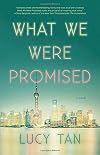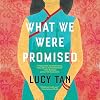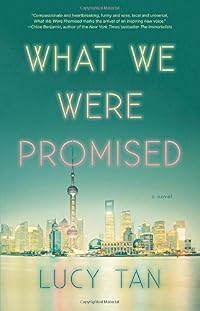
What We Were Promised
by Lucy Tan
On This Page
Description
Set in modern Shanghai, a debut by a Chinese-American writer about a prodigal son whose unexpected return forces his newly wealthy family to confront painful secrets and unfulfilled promises. After years of chasing the American dream, the Zhen family has moved back to China. Settling into a luxurious serviced apartment in Shanghai, Wei, Lina, and their daughter, Karen, join an elite community of Chinese-born, Western-educated professionals who have returned to a radically transformed city. show more One morning, in the eighth tower of Lanson Suites, Lina discovers that a treasured ivory bracelet has gone missing. This incident sets off a wave of unease that ripples throughout the Zhen household. Wei, a marketing strategist, bows under the guilt of not having engaged in nobler work. Meanwhile, Lina, lonely in her new life of leisure, assumes the modern moniker taitai-a housewife who does no housework at all. She is haunted by the circumstances surrounding her arranged marriage to Wei and her lingering feelings for his brother, Qiang. Sunny, the family's housekeeper, is a keen but silent observer of these tensions. An unmarried woman trying to carve a place for herself in society, she understands the power of well-kept secrets. When Qiang reappears in Shanghai after decades on the run with a local gang, the family must finally come to terms with the past and its indelible mark on their futures. From a silk-producing village in rural China, up the corporate ladder in suburban America, and back again to the post-Maoist nouveaux riches of modern Shanghai, What We Were Promised explores the question of what we owe to our country, our families, and ourselves. show lessTags
Recommendations







Member Reviews
Dark Secret in Modern Shanghai
Lucy Tan’s debut novel brings into vivid focus the reassessment of life that confronts many when they reach their middle years, and much of it addresses delusion and regret. But the introspection her characters work through leads to a new appreciation of what matters most, family. That she sets it in modern Shanghai adds intriguing texture, however, her theme isn’t local, or solely Chinese, it’s universal, and most readers will identify with the story.
Wei, Lina, and teen daughter Karen have moved back to China from the U.S. to live in Lanson Suites, a full service residence hotel catering to returning Chinese elite expat businesspeople. Wei, who studied mechanical engineering at the University of show more Pennsylvania on a scholarship, has transitioned into a managing director and executive vice president’s position at an American global marketing company. Lina, who worked in the States, is now something of a discontented taitai, loosely translated as a lady who lunches. Karen attends private school in the U.S. and is home for the summer. The hotel provides maid service to the residents and Sunny, who emigrated from a small village in a nearby province, impresses Lina, who brings her on as the family ayi, something of a head maid, companion, and personal assistant wrapped into one.
Two disruptive events occur that set the story in motion. Rose, an older maid Sunny works with before becoming an ayi, steals a bracelet from Lina’s jewelry box. Since it appeared insubstantial compared to the rest of the collection, she never thought it would get her into trouble. But it does and she puts Sunny, now an ayi, into an awkward position by asking for her help surreptitiously returning the bracelet. Turns out the bracelet holds a significance for Lina tied to the second event: the sudden return of Wei’s younger brother Qiang, once a troubled youth involved in gangs and gambling back in their home village. The bracelet was his gift to Lina back when all three were youths, presented about the time that Wei was about to marry Lina.
Conflict here revolves around Lina’s questioning as to what her life would have been like with Qiang instead of Wei, the pressures on Wei of always being the responsible business leader, husband, father, and brother, and Sunny’s eventual self-realization about a bigger life for herself, and something she’d nearly given up on, someone to love and be loved by and a home life.
Within the story, and it does take a bit of time to reach it, lies questions about China’s Cultural Revolution. This shattering event has a profound effect on the parents of Wei, Qiang, and Lina, and then on the three youths. The first to become aware of what happened to their families was Qiang as a child, and it becomes a secret he carries until he shows up at the home of Wei and Lina twenty years later. And, no, it is not anything you can guess at, but it does contain a brotherly love engendered by the Revolution.
Tan’s What We Were Promised should have wide appeal, and she tells the very intriguing story well. show less
Lucy Tan’s debut novel brings into vivid focus the reassessment of life that confronts many when they reach their middle years, and much of it addresses delusion and regret. But the introspection her characters work through leads to a new appreciation of what matters most, family. That she sets it in modern Shanghai adds intriguing texture, however, her theme isn’t local, or solely Chinese, it’s universal, and most readers will identify with the story.
Wei, Lina, and teen daughter Karen have moved back to China from the U.S. to live in Lanson Suites, a full service residence hotel catering to returning Chinese elite expat businesspeople. Wei, who studied mechanical engineering at the University of show more Pennsylvania on a scholarship, has transitioned into a managing director and executive vice president’s position at an American global marketing company. Lina, who worked in the States, is now something of a discontented taitai, loosely translated as a lady who lunches. Karen attends private school in the U.S. and is home for the summer. The hotel provides maid service to the residents and Sunny, who emigrated from a small village in a nearby province, impresses Lina, who brings her on as the family ayi, something of a head maid, companion, and personal assistant wrapped into one.
Two disruptive events occur that set the story in motion. Rose, an older maid Sunny works with before becoming an ayi, steals a bracelet from Lina’s jewelry box. Since it appeared insubstantial compared to the rest of the collection, she never thought it would get her into trouble. But it does and she puts Sunny, now an ayi, into an awkward position by asking for her help surreptitiously returning the bracelet. Turns out the bracelet holds a significance for Lina tied to the second event: the sudden return of Wei’s younger brother Qiang, once a troubled youth involved in gangs and gambling back in their home village. The bracelet was his gift to Lina back when all three were youths, presented about the time that Wei was about to marry Lina.
Conflict here revolves around Lina’s questioning as to what her life would have been like with Qiang instead of Wei, the pressures on Wei of always being the responsible business leader, husband, father, and brother, and Sunny’s eventual self-realization about a bigger life for herself, and something she’d nearly given up on, someone to love and be loved by and a home life.
Within the story, and it does take a bit of time to reach it, lies questions about China’s Cultural Revolution. This shattering event has a profound effect on the parents of Wei, Qiang, and Lina, and then on the three youths. The first to become aware of what happened to their families was Qiang as a child, and it becomes a secret he carries until he shows up at the home of Wei and Lina twenty years later. And, no, it is not anything you can guess at, but it does contain a brotherly love engendered by the Revolution.
Tan’s What We Were Promised should have wide appeal, and she tells the very intriguing story well. show less
Dark Secret in Modern Shanghai
Lucy Tan’s debut novel brings into vivid focus the reassessment of life that confronts many when they reach their middle years, and much of it addresses delusion and regret. But the introspection her characters work through leads to a new appreciation of what matters most, family. That she sets it in modern Shanghai adds intriguing texture, however, her theme isn’t local, or solely Chinese, it’s universal, and most readers will identify with the story.
Wei, Lina, and teen daughter Karen have moved back to China from the U.S. to live in Lanson Suites, a full service residence hotel catering to returning Chinese elite expat businesspeople. Wei, who studied mechanical engineering at the University of show more Pennsylvania on a scholarship, has transitioned into a managing director and executive vice president’s position at an American global marketing company. Lina, who worked in the States, is now something of a discontented taitai, loosely translated as a lady who lunches. Karen attends private school in the U.S. and is home for the summer. The hotel provides maid service to the residents and Sunny, who emigrated from a small village in a nearby province, impresses Lina, who brings her on as the family ayi, something of a head maid, companion, and personal assistant wrapped into one.
Two disruptive events occur that set the story in motion. Rose, an older maid Sunny works with before becoming an ayi, steals a bracelet from Lina’s jewelry box. Since it appeared insubstantial compared to the rest of the collection, she never thought it would get her into trouble. But it does and she puts Sunny, now an ayi, into an awkward position by asking for her help surreptitiously returning the bracelet. Turns out the bracelet holds a significance for Lina tied to the second event: the sudden return of Wei’s younger brother Qiang, once a troubled youth involved in gangs and gambling back in their home village. The bracelet was his gift to Lina back when all three were youths, presented about the time that Wei was about to marry Lina.
Conflict here revolves around Lina’s questioning as to what her life would have been like with Qiang instead of Wei, the pressures on Wei of always being the responsible business leader, husband, father, and brother, and Sunny’s eventual self-realization about a bigger life for herself, and something she’d nearly given up on, someone to love and be loved by and a home life.
Within the story, and it does take a bit of time to reach it, lies questions about China’s Cultural Revolution. This shattering event has a profound effect on the parents of Wei, Qiang, and Lina, and then on the three youths. The first to become aware of what happened to their families was Qiang as a child, and it becomes a secret he carries until he shows up at the home of Wei and Lina twenty years later. And, no, it is not anything you can guess at, but it does contain a brotherly love engendered by the Revolution.
Tan’s What We Were Promised should have wide appeal, and she tells the very intriguing story well. show less
Lucy Tan’s debut novel brings into vivid focus the reassessment of life that confronts many when they reach their middle years, and much of it addresses delusion and regret. But the introspection her characters work through leads to a new appreciation of what matters most, family. That she sets it in modern Shanghai adds intriguing texture, however, her theme isn’t local, or solely Chinese, it’s universal, and most readers will identify with the story.
Wei, Lina, and teen daughter Karen have moved back to China from the U.S. to live in Lanson Suites, a full service residence hotel catering to returning Chinese elite expat businesspeople. Wei, who studied mechanical engineering at the University of show more Pennsylvania on a scholarship, has transitioned into a managing director and executive vice president’s position at an American global marketing company. Lina, who worked in the States, is now something of a discontented taitai, loosely translated as a lady who lunches. Karen attends private school in the U.S. and is home for the summer. The hotel provides maid service to the residents and Sunny, who emigrated from a small village in a nearby province, impresses Lina, who brings her on as the family ayi, something of a head maid, companion, and personal assistant wrapped into one.
Two disruptive events occur that set the story in motion. Rose, an older maid Sunny works with before becoming an ayi, steals a bracelet from Lina’s jewelry box. Since it appeared insubstantial compared to the rest of the collection, she never thought it would get her into trouble. But it does and she puts Sunny, now an ayi, into an awkward position by asking for her help surreptitiously returning the bracelet. Turns out the bracelet holds a significance for Lina tied to the second event: the sudden return of Wei’s younger brother Qiang, once a troubled youth involved in gangs and gambling back in their home village. The bracelet was his gift to Lina back when all three were youths, presented about the time that Wei was about to marry Lina.
Conflict here revolves around Lina’s questioning as to what her life would have been like with Qiang instead of Wei, the pressures on Wei of always being the responsible business leader, husband, father, and brother, and Sunny’s eventual self-realization about a bigger life for herself, and something she’d nearly given up on, someone to love and be loved by and a home life.
Within the story, and it does take a bit of time to reach it, lies questions about China’s Cultural Revolution. This shattering event has a profound effect on the parents of Wei, Qiang, and Lina, and then on the three youths. The first to become aware of what happened to their families was Qiang as a child, and it becomes a secret he carries until he shows up at the home of Wei and Lina twenty years later. And, no, it is not anything you can guess at, but it does contain a brotherly love engendered by the Revolution.
Tan’s What We Were Promised should have wide appeal, and she tells the very intriguing story well. show less
In the first chapter of this book, I learn a surprising fact about China – it has one standard time zone, despite it spanning five geographical time zones! How confusing is that?
Luckily this book, despite its interweaving stories of an expat family, a long-lost brother, and a housekeeping staff-turned-ayi, isn’t confusing at all.
Sunny is from rural China. She works as a maid cleaning rooms and serviced apartments at a hotel in Shanghai. Her name isn’t Sunny of course – it’s just a name tag she picked out of the bin, finding something that seemed right about the name, although she couldn’t even read it herself.
“Chinese names were too difficult for foreign residents to pronounce and carried too much meaning to be revealed to show more the Chinese speakers. When characters in a name were combined, they produced a complex of feelings and images. That was no good; the best thing for a housekeeper to be was forgettable. Better to take on the blankness of American names.”
One of the apartments that Sunny cleans belongs to the Zhen family, an expat family returned to China after a decade in the US. Lina and Wei have had a long history, having been betrothed since they were young. Wei works long hours at his advertising job, Lina is one of the many taitais in the hotel – “ladies of luxury who could not be called housewives because, aside from cooking the occasional meal, they did no housework at all”.
Wei’s long-lost brother Qiang, contacts them out of the blue after 22 years, and comes to visit. What exactly does he want? Why did he disappear all those years ago? And it turns out that Qiang and Lina have had a history of their own.
I’ve read quite a few books by Chinese authors but this one is written from a very different perspective of a returning Chinese family. Their move from China to the US and then back to China was such a contrast – from a young couple with no money to spare, entertaining themselves by wandering into drugstores and looking at all the goods on display and not being able to buy anything, to becoming a well-off expat family living in a fancy apartment, owning Rolex watches and expensive jewelry. It was a bit hard to like Lina though, although I felt like we had plenty in common in that I am an immigrant to the US myself and while Singapore isn’t such a huge contrast from the US with all its shopping malls and what not, there were all these very “American” things that fascinated (and sometimes frustrated) me. Like the way our first apartment had an open kitchen and this combination cooker hood/microwave over the stove – how was one to get rid of all the cooking smells if that was all?
“American kitchens weren’t designed for wok use, Lina complained. She had tried the American recipes and decided people here didn’t know what real cooking was. All that boiling and baking? Those were safe ways of preparing food. Oil was meant to be splattered on walls, the wok lid held in front of your body like a shield. Cooking, she said, was an act of love and creation. Danger should be somewhere in the mix or it didn’t count. You had to put yourself on the line; you had to sweat. Chinese cuisine required more energy and a higher flame.”
What We Were Promised is a story of contrasts. Sunny’s qunzu fang, a room she shares with five others and which reeks of boiled cabbage and urine vs the large and luxurious jasmine-scented Lanson Suites she cleans. The silk factory where Lina’s father worked vs the skyscraper in which Wei’s office is located. Rural vs city life, rich vs poor.
In case you can’t tell by now, I loved this book and I am just so excited to see what else Lucy Tan writes. show less
Luckily this book, despite its interweaving stories of an expat family, a long-lost brother, and a housekeeping staff-turned-ayi, isn’t confusing at all.
Sunny is from rural China. She works as a maid cleaning rooms and serviced apartments at a hotel in Shanghai. Her name isn’t Sunny of course – it’s just a name tag she picked out of the bin, finding something that seemed right about the name, although she couldn’t even read it herself.
“Chinese names were too difficult for foreign residents to pronounce and carried too much meaning to be revealed to show more the Chinese speakers. When characters in a name were combined, they produced a complex of feelings and images. That was no good; the best thing for a housekeeper to be was forgettable. Better to take on the blankness of American names.”
One of the apartments that Sunny cleans belongs to the Zhen family, an expat family returned to China after a decade in the US. Lina and Wei have had a long history, having been betrothed since they were young. Wei works long hours at his advertising job, Lina is one of the many taitais in the hotel – “ladies of luxury who could not be called housewives because, aside from cooking the occasional meal, they did no housework at all”.
Wei’s long-lost brother Qiang, contacts them out of the blue after 22 years, and comes to visit. What exactly does he want? Why did he disappear all those years ago? And it turns out that Qiang and Lina have had a history of their own.
I’ve read quite a few books by Chinese authors but this one is written from a very different perspective of a returning Chinese family. Their move from China to the US and then back to China was such a contrast – from a young couple with no money to spare, entertaining themselves by wandering into drugstores and looking at all the goods on display and not being able to buy anything, to becoming a well-off expat family living in a fancy apartment, owning Rolex watches and expensive jewelry. It was a bit hard to like Lina though, although I felt like we had plenty in common in that I am an immigrant to the US myself and while Singapore isn’t such a huge contrast from the US with all its shopping malls and what not, there were all these very “American” things that fascinated (and sometimes frustrated) me. Like the way our first apartment had an open kitchen and this combination cooker hood/microwave over the stove – how was one to get rid of all the cooking smells if that was all?
“American kitchens weren’t designed for wok use, Lina complained. She had tried the American recipes and decided people here didn’t know what real cooking was. All that boiling and baking? Those were safe ways of preparing food. Oil was meant to be splattered on walls, the wok lid held in front of your body like a shield. Cooking, she said, was an act of love and creation. Danger should be somewhere in the mix or it didn’t count. You had to put yourself on the line; you had to sweat. Chinese cuisine required more energy and a higher flame.”
What We Were Promised is a story of contrasts. Sunny’s qunzu fang, a room she shares with five others and which reeks of boiled cabbage and urine vs the large and luxurious jasmine-scented Lanson Suites she cleans. The silk factory where Lina’s father worked vs the skyscraper in which Wei’s office is located. Rural vs city life, rich vs poor.
In case you can’t tell by now, I loved this book and I am just so excited to see what else Lucy Tan writes. show less
I liked how the story in this novel turned out, with many of the characters confronting and making peace with their past. While the novel centers around the life of an elite Chinese-American family in Shanghai, one of the best characters is their housekeeper Sunny, who observes their luxurious lifestyle and behavior with irony and keen insight. A good read, one that is insightful about life in contemporary China without being negative.
FROM AMAZON: Set in modern Shanghai, a debut by a Chinese American writer about a prodigal son whose unexpected return forces his newly wealthy family to confront painful secrets and unfulfilled promises.
After years of chasing the American dream, the Zhen family has moved back to China. Settling into a luxurious serviced apartment in Shanghai, Wei, Lina, and their daughter, Karen, join an elite community of Chinese-born, Western-educated professionals who have returned to a radically transformed city.
One morning, in the eighth tower of Lanson Suites, Lina discovers that a treasured ivory bracelet has gone missing. This incident sets off a wave of unease that ripples throughout the Zhen household. Wei, a marketing strategist, bows under show more the guilt of not having engaged in nobler work. Meanwhile, Lina, lonely in her new life of leisure, assumes the modern moniker taitai-a housewife who does no housework at all. She is haunted by the circumstances surrounding her arranged marriage to Wei and her lingering feelings for his brother, Qiang. Sunny, the family's housekeeper, is a keen but silent observer of these tensions. An unmarried woman trying to carve a place for herself in society, she understands the power of well-kept secrets. When Qiang reappears in Shanghai after decades on the run with a local gang, the family must finally come to terms with the past and its indelible mark on their futures.
From a silk-producing village in rural China, up the corporate ladder in suburban America, and back again to the post-Maoist nouveaux riches of modern Shanghai, What We Were Promised explores the question of what we owe to our country, our families, and ourselves. show less
After years of chasing the American dream, the Zhen family has moved back to China. Settling into a luxurious serviced apartment in Shanghai, Wei, Lina, and their daughter, Karen, join an elite community of Chinese-born, Western-educated professionals who have returned to a radically transformed city.
One morning, in the eighth tower of Lanson Suites, Lina discovers that a treasured ivory bracelet has gone missing. This incident sets off a wave of unease that ripples throughout the Zhen household. Wei, a marketing strategist, bows under show more the guilt of not having engaged in nobler work. Meanwhile, Lina, lonely in her new life of leisure, assumes the modern moniker taitai-a housewife who does no housework at all. She is haunted by the circumstances surrounding her arranged marriage to Wei and her lingering feelings for his brother, Qiang. Sunny, the family's housekeeper, is a keen but silent observer of these tensions. An unmarried woman trying to carve a place for herself in society, she understands the power of well-kept secrets. When Qiang reappears in Shanghai after decades on the run with a local gang, the family must finally come to terms with the past and its indelible mark on their futures.
From a silk-producing village in rural China, up the corporate ladder in suburban America, and back again to the post-Maoist nouveaux riches of modern Shanghai, What We Were Promised explores the question of what we owe to our country, our families, and ourselves. show less
Overall good but ending was a little lacking for me
Ratings
Members
- Recently Added By
Lists

Amazon best fictional genre picks monthly for 2018
418 works; 9 members
Author Information

1 Work 283 Members
Awards and Honors
Common Knowledge
- Canonical title
- What We Were Promised
- Original publication date
- 2018
- People/Characters
- Wei Zhen; Lina Fang Zhen; Karen Zhen; Qiang Zhen; Sunny; Rose (show all 14); Lijian Fang; Jiajia Fang; Hong Zhen; Menghua Zhen; Jian Yun (Cloudy); Little Cao; Li Jun; Yuzi
- Important places
- Shanghai, China; Lanson Suites; Suzhou, Jiangsu, China
- Dedication
- For my parents, and theirs
- First words
- It wasn't the plane Lina feared, but the sky above the airfield.
- Quotations
- How strange, she thought, that what you looked for in a mate could change so drastically as you aged. In earlier years of their marriage, she had been attracted to Wei's strength. Now she was more moved by his vulnerability -... (show all)-- in the rare instances he let it show.
"Why do we do that?" he asked, his voice climbing. "Why do our minds fixate on the kinds of love we're not getting instead of the kinds of love we are? We expect it to be the thing we want it to be. And we're blind to every o... (show all)ther form of it."
Remember: Time and commitment. If you have these things, you can have any manner of love. All these years, she'd thought he'd been teaching her how to find love. Maybe what he'd really been teaching her was that the hard part... (show all) wasn't finding love. It was keeping it. - Last words
- (Click to show. Warning: May contain spoilers.)These objects of luxury they handled---how easy it was to fill them with meaning, to let them represent what you did or didn't have. How difficult, in fact, to know what you wanted in the first place.
- Blurbers
- Benjamin, Chloe; Shipstead, Maggie; Pittard, Hannah; Wang, Weike; Salesses, Matthew; Evans, Danielle (show all 8); Hemenway, Arna Bontemps; Mitchell, Judith Claire
Classifications
Statistics
- Members
- 281
- Popularity
- 113,887
- Reviews
- 6
- Rating
- (3.35)
- Languages
- English
- Media
- Paper, Audiobook, Ebook
- ISBNs
- 11
- ASINs
- 2