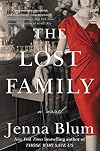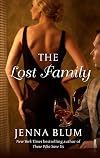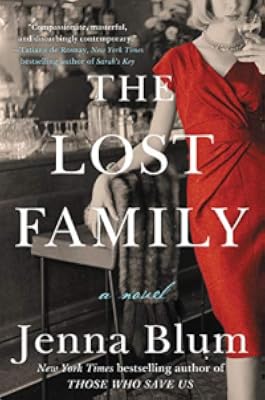
The Lost Family
by Jenna Blum
On This Page
Description
The Lost Family is an extraordinary read, the kind of book that makes you sob and smile, the kind that gives you hope.... It is compassionate, masterful and disturbingly contemporary."—Tatiana de Rosnay, bestselling author of Sarah's KeyThe New York Times bestselling author of Those Who Save Us creates a vivid portrait of marriage, family, and the haunting grief of World War II in this emotionally charged, beautifully rendered story that spans a generation, from the 1960s to the 1980s.
In show more 1965 Manhattan, patrons flock to Masha's to savor its brisket bourguignon and impeccable service and to admire its dashing owner and head chef Peter Rashkin. With his movie-star good looks and tragic past, Peter, a survivor of Auschwitz, is the most eligible bachelor in town. But Peter does not care for the parade of eligible women who come to the restaurant hoping to catch his eye. He has resigned himself to a solitary life. Running Masha's consumes him, as does his terrible guilt over surviving the horrors of the Nazi death camp while his wife, Masha—the restaurant's namesake—and two young daughters perished.
Then exquisitely beautiful June Bouquet, an up-and-coming young model, appears at the restaurant, piercing Peter's guard. Though she is twenty years his junior, the two begin a passionate, whirlwind courtship. When June unexpectedly becomes pregnant, Peter proposes, believing that beginning a new family with the woman he loves will allow him to let go of the horror of the past. But over the next twenty years, the indelible sadness of those memories will overshadow Peter, June, and their daughter Elsbeth, transforming them in shocking, heartbreaking, and unexpected ways.
Jenna Blum artfully brings to the page a husband devastated by a grief he cannot name, a frustrated wife struggling to compete with a ghost she cannot banish, and a daughter sensitive to the pain of both her own family and another lost before she was born. Spanning three cinematic decades, The Lost Family is a charming, funny, and elegantly bittersweet study of the repercussions of loss and love.
. show less
Tags
Recommendations












Member Recommendations

Member Reviews
I don't know where I expected this book to end up, but it wasn't what I imagined. That being said, it wasn't a bad thing, this book took me along for a ride that was different and unique. The characters are all horribly flawed, while still being likable and sympathetic. The book opens with Peter Rashkin, a Manhattan restaurant owner who is grateful for escaping the Nazis, but also feels safest hiding in a kitchen. He lost his wife and twin daughters in a camp and to honor them he names his flourishing restaurant after his wife. For two decades he's devoted every minute of his day to the success of his restaurant, he has no time for relationships or fun. That is until he meets a charming model named June Bouquet. She's easily two years show more his junior and they share next to nothing in common (except for their good looks) but they strike up a romance that turns out to be what neither of them expected. June always feels she is in the shadow of Peter's dead wife, and Peter just wants the simplicity of the kitchen with an occasional spice from June. As their story progresses it expands, shrinks, aches, and longs to be fulfilled. The Lost Family is the story of a non-traditional romance with heavy baggage and the tolls it takes on those involved. I liked how the story progressed across decades, the characters were also rich and complex and it felt so real. A fulfilling tale of loves progression and recession. show less
A special thank you to Edelweiss and Harper for an ARC in exchange for an honest review.
Blum's latest generational work spans from the 1960s to the 1980s. Her beautiful prose is juxtaposed against culinary delights (trust me, her descriptions of food will make you want to throw a dinner party).
In 1965 Manhattan, Masha's is the talk of the town—not only because its exquisite faire and impeccable service, but because of the movie-star handsome owner and head chef, Peter Rashkin. Peter is a survivor of Auschwitz, his wife (the restaurant's namesake) and two young daughters perished and he has resigned himself to a solitary life, even with all of the attention he attracts from the women who flock to the restaurant in hopes of snagging the show more city's most eligible bachelor.
An up-and-coming model, June Bouquet, catches Peter's eye and soon his heart. Although she is twenty years younger, they have a passionate relationship. June becomes pregnancy and Peter ends up proposing thinking that perhaps this new beginning will help heal him from the horrors of his past. Over the next twenty year, the family is eclipsed by Peter's grief and memories that overshadow them in life, loss, and love.
This beautiful story is about relationships, family, and grief. Blum is artful and detailed in her writing that is so effortless and elegant. Her study in loss is monumental and could overtake the narrative at any time, however she deftly navigates through the story than spans several years with ease. What I loved about the book is how immersed the reader is in each decade through pop culture, fashion, and of course food!
Peter is a broken and flawed character that cannot escape the guilt and grief he has over the death of his wife and daughters. The Lost Family could be considered a ghost story with a modern twist in that the family are forever living with the ghosts of Peter's past. His life is overshadowed by the ghost of his wife and daughters. Her memory smothers Peter, and June feels in constant competition with Masha. Their daughter also feels the effects, with the strife between her parents as well as the loss of a family she never knew.
This was my first book by Jenna Blum and I'm utterly enchanted. She pens complex, interesting characters, provides gorgeous descriptions, and charges her writing with emotion and depth. show less
Blum's latest generational work spans from the 1960s to the 1980s. Her beautiful prose is juxtaposed against culinary delights (trust me, her descriptions of food will make you want to throw a dinner party).
In 1965 Manhattan, Masha's is the talk of the town—not only because its exquisite faire and impeccable service, but because of the movie-star handsome owner and head chef, Peter Rashkin. Peter is a survivor of Auschwitz, his wife (the restaurant's namesake) and two young daughters perished and he has resigned himself to a solitary life, even with all of the attention he attracts from the women who flock to the restaurant in hopes of snagging the show more city's most eligible bachelor.
An up-and-coming model, June Bouquet, catches Peter's eye and soon his heart. Although she is twenty years younger, they have a passionate relationship. June becomes pregnancy and Peter ends up proposing thinking that perhaps this new beginning will help heal him from the horrors of his past. Over the next twenty year, the family is eclipsed by Peter's grief and memories that overshadow them in life, loss, and love.
This beautiful story is about relationships, family, and grief. Blum is artful and detailed in her writing that is so effortless and elegant. Her study in loss is monumental and could overtake the narrative at any time, however she deftly navigates through the story than spans several years with ease. What I loved about the book is how immersed the reader is in each decade through pop culture, fashion, and of course food!
Peter is a broken and flawed character that cannot escape the guilt and grief he has over the death of his wife and daughters. The Lost Family could be considered a ghost story with a modern twist in that the family are forever living with the ghosts of Peter's past. His life is overshadowed by the ghost of his wife and daughters. Her memory smothers Peter, and June feels in constant competition with Masha. Their daughter also feels the effects, with the strife between her parents as well as the loss of a family she never knew.
This was my first book by Jenna Blum and I'm utterly enchanted. She pens complex, interesting characters, provides gorgeous descriptions, and charges her writing with emotion and depth. show less
If there ever was a family that deserved a happy ending, it was this one and I may be just a little mad that the ending was more realistic than perfect. Set in New York City in the 1960s to 1980s, this novel follows the story of Peter, a chef and restaurant owner who lost his wife and two daughters in the Holocaust. He finds love again with a younger woman - June, a model who happens into his restaurant during a power outage. Still, not all is perfect, since Peter refuses to fully grapple with his loss during the war. It takes Peter a frustrating long time to come to terms with his experiences, which is understandable, but it also takes a painful toll on his remaining family. If you read this book, be prepared for a family with each show more member struggling in their own way. show less
You have probably heard in the last few days that almost as many people have committed suicide because of the Columbine school shooting as died in the rampage itself. That very circumstance is central to this book.
The book takes place between 1965 and 1986. Peter is Jewish and a survivor of Auschwitz. He lives in the U.S. now and is a chef with his own restaurant, Masha's. Masha was the name of his German wife. Masha and their 3 year old twins apparently died in a camp, he never found them or any record showing their names.
Masha tried to warn Peter that even though she was Aryan they were not safe and should leave Germany when they still could. But Peter refused to go, thinking they just needed to wait awhile and life would return to show more normal. Twenty years later, he is so consumed with guilt that he is unable to have a relationship with anyone other than his employees. The only people he sees on a regular basis other than that are his father's cousin Sol and his wife. Eventually Peter meets a young model, June, and becomes smitten with her.
The first 80% of The Lost Family was very good, but the last 20% was a disappointment. June and Peter eventually married and had a daughter. The last of the book is primarily about her behavior at sixteen and is overwrought, overwritten and overpowers all that came before it. show less
The book takes place between 1965 and 1986. Peter is Jewish and a survivor of Auschwitz. He lives in the U.S. now and is a chef with his own restaurant, Masha's. Masha was the name of his German wife. Masha and their 3 year old twins apparently died in a camp, he never found them or any record showing their names.
Masha tried to warn Peter that even though she was Aryan they were not safe and should leave Germany when they still could. But Peter refused to go, thinking they just needed to wait awhile and life would return to show more normal. Twenty years later, he is so consumed with guilt that he is unable to have a relationship with anyone other than his employees. The only people he sees on a regular basis other than that are his father's cousin Sol and his wife. Eventually Peter meets a young model, June, and becomes smitten with her.
The first 80% of The Lost Family was very good, but the last 20% was a disappointment. June and Peter eventually married and had a daughter. The last of the book is primarily about her behavior at sixteen and is overwrought, overwritten and overpowers all that came before it. show less
Told in three sections, this is a story of a family of three: Peter, a Jewish German-American survivor of Auschwitz whose Aryan wife Masha and twin daughters were killed by Nazis; June, a Midwestern girl who moved to New York to model, and became Peter's second wife; and their daughter Elspeth, who adores cooking with Peter but suffers from his workaholism and, following a heart attack, his depression, as well as June's criticism about her weight and diet.
From mid-1960s New York to suburban New Jersey in the 1970s and '80s, we follow Peter, June, and Elspeth through their struggles: financial, health, past trauma, infidelity, eating disorder, and eventually divorce. Blum captures each decade's character as well as each individual's show more desires and mortivations.
Somewhat relevant article about inherited trauma: https://mosaicscience.com/story/conflict-suicide-northern-ireland/
Quotes
He was all too familiar with what happened to civility when a city's lights went out. (12)
...it was disconcerting to discover how easily one's defenses were still undone. (Peter during the blackout in New York, 16)
...for a moment Peter fancied that the special acoustics of the terminal allowed for time preservation...that every soul and moment that had ever been through here was collected and preserved under the high roof, where they mixed and mingled. (46)
This memory shrapnel was surfacing more and more for Peter lately. (76)
There was no way to tell anyone who hadn't been there any of that, how your very concept of luck turned inside out and upside down, so that when you found yourself alive at the end of it, you were no longer sure whether that was a good thing. (86)
[June] was the quintessence of Peter's adopted country, his fresh American start. (95)
Suddenly you were invisible, and the next day worse....and you stared in astonishment at the erosion of your life... (123)
But Peter had always been a coward; he had always known that about himself. It was his worst, most damning trait, the one that defined him, the secret at his core he tried and tried to keep hidden but that inevitably surfaced, time and time again. It was his inability to act, his paralysis in crucial situations. His inability to jump. (142)
Was it the same for everyone? Was the magnitude of discrepancy between the person you thought you were marrying and the person you got similar for most couples? (204)
"You can't compete with ghosts." (Gregg to June, 210)
She felt resentful, tricked: not by Gregg but by war. It was such a wily opponent. It had punched such big holes in June's life... (259)
"But in the end, this is who I am, and this is the best I can do." (Peter to June, 272) show less
From mid-1960s New York to suburban New Jersey in the 1970s and '80s, we follow Peter, June, and Elspeth through their struggles: financial, health, past trauma, infidelity, eating disorder, and eventually divorce. Blum captures each decade's character as well as each individual's show more desires and mortivations.
Somewhat relevant article about inherited trauma: https://mosaicscience.com/story/conflict-suicide-northern-ireland/
Quotes
He was all too familiar with what happened to civility when a city's lights went out. (12)
...it was disconcerting to discover how easily one's defenses were still undone. (Peter during the blackout in New York, 16)
...for a moment Peter fancied that the special acoustics of the terminal allowed for time preservation...that every soul and moment that had ever been through here was collected and preserved under the high roof, where they mixed and mingled. (46)
This memory shrapnel was surfacing more and more for Peter lately. (76)
There was no way to tell anyone who hadn't been there any of that, how your very concept of luck turned inside out and upside down, so that when you found yourself alive at the end of it, you were no longer sure whether that was a good thing. (86)
[June] was the quintessence of Peter's adopted country, his fresh American start. (95)
Suddenly you were invisible, and the next day worse....and you stared in astonishment at the erosion of your life... (123)
But Peter had always been a coward; he had always known that about himself. It was his worst, most damning trait, the one that defined him, the secret at his core he tried and tried to keep hidden but that inevitably surfaced, time and time again. It was his inability to act, his paralysis in crucial situations. His inability to jump. (142)
Was it the same for everyone? Was the magnitude of discrepancy between the person you thought you were marrying and the person you got similar for most couples? (204)
"You can't compete with ghosts." (Gregg to June, 210)
She felt resentful, tricked: not by Gregg but by war. It was such a wily opponent. It had punched such big holes in June's life... (259)
"But in the end, this is who I am, and this is the best I can do." (Peter to June, 272) show less
This absorbing novel begins in the 1960s. Peter Rashkin, a German-Jewish man and a concentration camp survivor, is a chef and co-owner of a successful restaurant he has named after his wife, Masha, who didn't survive the Holocaust. She and their 3-year old twin daughters were never seen again after being herded by the Nazis during a terror-filled purge. Peter blames himself for their separation, and is plagued by the guilt and loss of his family. He eventually falls in love with, and marries, a much younger woman, June, an internationally-renown model. They have one daughter, Elspeth.
The story is told from the perspectives of Peter, June and Elspeth in separate sections, and revolves around Peter, whose obsession with the past permits show more him from enjoying the present. The family unit slowly disintegrates with each of the three distancing themselves from the rest with predictably disastrous results and the possibility of unexpected reconciliations. The haunting prose in this novel is evocative of Blum's previous memorable novel, Those Who Save Us. show less
The story is told from the perspectives of Peter, June and Elspeth in separate sections, and revolves around Peter, whose obsession with the past permits show more him from enjoying the present. The family unit slowly disintegrates with each of the three distancing themselves from the rest with predictably disastrous results and the possibility of unexpected reconciliations. The haunting prose in this novel is evocative of Blum's previous memorable novel, Those Who Save Us. show less
This is a wonderful novel about family and is so well written that it will stay with me long after the last page was read. Peter lost his wife and twin daughters to the concentraton camps in WWII. He has moved to NYC to try to start his life over but is unable to let go of his past and think about his future. He marries June, hoping that her youth and love of life will help him learn how to enjoy life. They have a child, Elsbeth, who should bring joy to both parents but they have difficulty letting go of their pasts. Is Peter going to lose his new family, too?
I loved the way the book was set up. The first section 1965 is told from Peter's perspective, the second section, 1975 is told from June's perspective and the last section, 1985 is show more told from Elsbeth's. Using this technique, we get the deepest thoughts of all three main characters and learn to love them - flaws and all.
This is a wonderful well written book and my first book by Jenna Blum. I need to go back and read her earlier books now. show less
I loved the way the book was set up. The first section 1965 is told from Peter's perspective, the second section, 1975 is told from June's perspective and the last section, 1985 is show more told from Elsbeth's. Using this technique, we get the deepest thoughts of all three main characters and learn to love them - flaws and all.
This is a wonderful well written book and my first book by Jenna Blum. I need to go back and read her earlier books now. show less
Members
- Recently Added By
Lists

Top Five Books of 2018
802 works; 265 members

Kirkus Starred Fiction Reviews of Books Published in 2018
330 works; 3 members

History: Holocaust
106 works; 1 member
Author Information

9+ Works 3,942 Members
Common Knowledge
- Canonical title
- The Lost Family
- Original publication date
- 2018
- People/Characters
- Peter Albert Rashkin; June Ann Bouquet Rashkin; Elsbeth Rashkin; Sol Rashkin; Ruth Rashkin; Margarete "Masha" Stusskopf Rashkin (show all 15); Vivian "Vivi" Rashkin; Ginger "Gigi" Rashkin; Lena; Gregg Santorelli; Ida Bouquet; Julian Wilton; Liza; Alfred Hazaan; Dr. Linda
- Important places
- Manhattan, New York, New York, USA; Larchmont, New York, USA; Glenwood, New Jersey, USA; New Heidelburg, Minnesota, USA; Minneapolis, Minnesota, USA; Berkshires, Massachusetts, USA
- Epigraph
- Well, what if Peter hadn't caught the wolf? What then, eh?
---SERGEI PROKOFIEV
The thoughtful wife has a simple beverage (cold in summer, hot in winter) ready for her weary husband when he comes home at night. The simplest are fruit and vegetable juices served in small fruit juice glasses.
---BETTY C... (show all)ROCKER'S NEW PICTURE COOK BOOK
What's your definition of dirty, baby? What do you consider pornography?
---GEORGE MICHAEL - Dedication
- To my parents and their New York
- First words
- The first time Peter saw the girl was during the dinner seating at Masha's.
- Last words
- (Click to show. Warning: May contain spoilers.)And somehow, whether from some inner source or this child beside him, Peter Rashkin, who had long ago thought he was past making any fresh start if his own, found the strength to begin.
- Blurbers
- de Rosnay, Tatiana; Moriarty, Laura; Attenberg, Jami
Classifications
Statistics
- Members
- 218
- Popularity
- 150,104
- Reviews
- 18
- Rating
- (3.40)
- Languages
- Dutch, English
- Media
- Paper, Audiobook, Ebook
- ISBNs
- 15
- ASINs
- 5