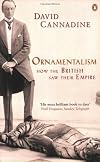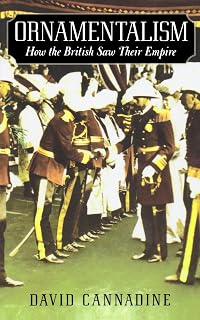
Ornamentalism: How the British Saw Their Empire
by David Cannadine
On This Page
Description
"In this book, David Cannadine investigates the ideologies and social attitudes at the heart of the Empire. One of them was, undoubtedly, race. But even more pervasive was class - a traditional vision of hierarchy and subordination, derived from the sense the British had of their own society, which they exported and analogized to the ends of the earth and back again." "This was how the British made, ran and visualized their Empire. And this in turn helps us to understand many of its show more seemingly baffling oddities, such as the ostentatiously elaborated monarchy and the exceptionally complex honours system, both of which the British continue to live with, long after most other nations who were once part of the Empire have given them up."--Jacket. "David Cannadine looks at the British Empire from a new perspective -- through the eyes of those who created and ruled it -- and offers fresh insight into the driving forces behind the Empire. Arguing against the views of Edward Said and others, Cannadine suggests that the British were guided not so much by race as by class. The British wanted to domesticate the exotic world of their colonies and to reorder the societies they ruled according to an idealized image of their own class hierarchies. In reestablishing the connections between British society and colonial society, Cannadine shows that Imperialists lathed Indians and Africans no more nor less than they loathed the great majority of Englishmen, and were far more willing to work with maharajahs, kings, and chiefs of whatever race than with "sordid" white settlers. Revolted by the triumph of democracy in Britain itself, the Empire's rulers embraced a feudal vision of the colonies which successfully endured until the 1950s."--Jacket. show lessTags
Recommendations








Member Reviews
Read for my History Workshop (A class required for my History Major)
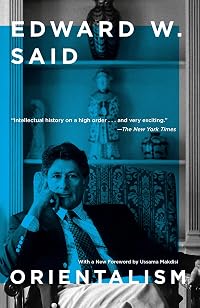
If I rated books I read for school Ornamentalism would do poorly. I have read David Cannadine before for this exact same class, and I disagree with his ideas of class. While I completely disagree with Cannadine when it comes to issues of class, I kind of agree with his ideas on Ornamentalism and Empire. I think Cannadine is not incorrect in his portrayal of how the British sought to control their Empire through the use of hierarchy and status, it his dismissal of race as a factor in looking at Empire that I disagree with. I agree more with Edward Said's ideas of Orientalism over Cannadine's Ornamentalism, and I honestly believe if Cannadine brought in parts of show more Orientalism then that would strengthen his argument. To ignore or to downplay race in the British Empire, to me, is poor history. Cannadine in my opinion at times doesn't even justify his reasons for why race is not critical in the history of the Empire. His reasoning being that Indian princes could get the same medals and honors as a Colonial Governor is almost the same as saying that because Barack Obama was elected President of the United States than racism in the United States has been solved. Cannadine's argument is weak and shows a lack of critical historical analysis that isn't blinded for nostalgia for the Empire. In my history classes I have peers that agree with Cannadine in ways, but still found his argument lacking. Cannadine himself solely focuses in on White men in the Empire which is a great example of race being important to the Empire, who are the major benefactors of Empire? Who are the ones leading the Empire? Those are some questions that Cannadine almost ignores in this book and I think that hurts his argument. show less
If I rated books I read for school Ornamentalism would do poorly. I have read David Cannadine before for this exact same class, and I disagree with his ideas of class. While I completely disagree with Cannadine when it comes to issues of class, I kind of agree with his ideas on Ornamentalism and Empire. I think Cannadine is not incorrect in his portrayal of how the British sought to control their Empire through the use of hierarchy and status, it his dismissal of race as a factor in looking at Empire that I disagree with. I agree more with Edward Said's ideas of Orientalism over Cannadine's Ornamentalism, and I honestly believe if Cannadine brought in parts of show more Orientalism then that would strengthen his argument. To ignore or to downplay race in the British Empire, to me, is poor history. Cannadine in my opinion at times doesn't even justify his reasons for why race is not critical in the history of the Empire. His reasoning being that Indian princes could get the same medals and honors as a Colonial Governor is almost the same as saying that because Barack Obama was elected President of the United States than racism in the United States has been solved. Cannadine's argument is weak and shows a lack of critical historical analysis that isn't blinded for nostalgia for the Empire. In my history classes I have peers that agree with Cannadine in ways, but still found his argument lacking. Cannadine himself solely focuses in on White men in the Empire which is a great example of race being important to the Empire, who are the major benefactors of Empire? Who are the ones leading the Empire? Those are some questions that Cannadine almost ignores in this book and I think that hurts his argument. show less
Author presents a view of the British Empire as one based upon the social order existing in England. Thus class was more important than race. As example, after the Indian Mutiny of 1857, the British relied upon using Indian princes to help govern the country.
Adam Foulds, novelist and poet, has chosen to discuss David Cannadine’s Ornamentalism: How the British Saw Their Empire , on FiveBooks (http://five-books.com) as one of the top five on his subject - The Mau Mau Uprising and The Fading Empire, saying that:
“… I think he’s a really interesting historian who writes very beautifully. It’s a historical essay – the thesis of which is somewhat contra Edward Said’s arguments in his book Orientalism. Part of Cannadine’s argument is that there was much more cultural interpenetration in the British Empire, certainly in India, than Said suggests. But also its central contention is that the British Empire wanted to see in other cultures a replication of its own power structure, and show more of its own aristocracy and royalty..…”.
The full interview is available here: http://thebrowser.com/books/interviews/adam-foulds show less
“… I think he’s a really interesting historian who writes very beautifully. It’s a historical essay – the thesis of which is somewhat contra Edward Said’s arguments in his book Orientalism. Part of Cannadine’s argument is that there was much more cultural interpenetration in the British Empire, certainly in India, than Said suggests. But also its central contention is that the British Empire wanted to see in other cultures a replication of its own power structure, and show more of its own aristocracy and royalty..…”.
The full interview is available here: http://thebrowser.com/books/interviews/adam-foulds show less
Ratings
Members
- Recently Added By
Lists

Best British Empire History Books
39 works; 8 members

Books in the Bibliography of The Dawn of Everything by Graeber & Wengrow
478 works; 2 members
Author Information

45+ Works 2,908 Members
David Cannadine is Professor of History and Director of the Institute of Historical Research at London University.
Awards and Honors
Notable Lists
Work Relationships
Is a reply to
Common Knowledge
- People/Characters
- George Nathaniel Curzon (The Lord Curzon of Kedleston)
- Important places
- India
- Important events
- British Raj
Classifications
- Genres
- History, Nonfiction, General Nonfiction
- DDC/MDS
- 941.08 — History & geography History of Europe British Isles Historical periods of British Isles 1837- Period of Victoria and House of Windsor
- LCC
- DA16 .C28 — History of Europe, Asia, Africa and Oceania Great Britain History of Great Britain British Empire. Commonwealth of Nations. The
- BISAC
Statistics
- Members
- 369
- Popularity
- 85,103
- Reviews
- 3
- Rating
- (3.46)
- Languages
- English
- Media
- Paper, Ebook
- ISBNs
- 5
- ASINs
- 3