
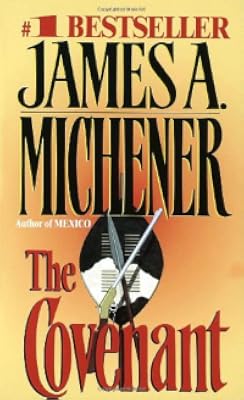
The Covenant
by James A. Michener
On This Page
Description
Fiction. Literature. Thriller. Historical Fiction. HTML:James A. Michener’s masterly chronicle of South Africa is an epic tale of adventurers, scoundrels, and ministers, the best and worst of two continents who carve an empire out of a vast wilderness. From the Java-born Van Doorn family tree springs two great branches: one nurtures lush vineyards, the other settles the interior to become the first Trekboers and Afrikaners. The Nxumalos, inhabitants of a peaceful village unchanged for show more centuries, unite warrior tribes into the powerful Zulu nation. And the wealthy Saltwoods are missionaries and settlers who join the masses to influence the wars and politics that ravage a nation. Rivalries and passions spill across the land of The Covenant, a story of courage and heroism, love and loyalty, and cruelty and betrayal, as generations fight to forge a new world.Praise for The Covenant
“A prodigious endeavor . . . Nowhere else could an American reader unfamiliar with South Africa get so full an understanding of its problems in so engaging a form.”—The New York Times Book Review. show less
Tags
Recommendations






















Member Reviews
The epic saga of the settling of South Africa by the Javanese and British; of course, native Africans already lived there. This was violent and gory from the beginning and didn't get much better, finishing in 1980. Unfortunately, most of the book was the battle between the Dutch and the English. About 250 pages in the middle depicted the once brilliant, but ultimately mad-man, Shaka Zulu. Although I know skin color was very important as pertains to how South Africa became "South Africa", much of the book repeated the same story of how the browns looked down on the black, the mixed looked down on the browns, etc. I could have substituted names and the events were identical. I did learn some South African history, but this work of show more Michener's was not as enjoyable as other sagas that I have read. (Chesapeake, Texas, Hawaii) 1200 pages show less
Well I don’t think you can ever enter into reading a James A. Michener book lightly.
I had this book on the to be read shelf for the last 10 years, and last week I saw there were elections in South Africa and I decided to give the book a try.
I clearly knew nothing of the founding of South Africa, the Dutch and British influence, Calvinism, the Old Testament, the different tribes that were already in the area, who the Boers were, how a people became Afrikaner. This book is wildly in depth and extremely fascinating.
In some ways it’s good that it came out in 1979 because while it doesn’t cover the last 40 years which have been significant in South Africa’s history it does do some detailed and accurate predicting.
Just like many of show more his other books prepare to learn so much along the way, and plan to have some late nights since the paperback edition is small print and 1200 pages.
This is an excellent book. It is too bad now still writes this type of book anymore. show less
I had this book on the to be read shelf for the last 10 years, and last week I saw there were elections in South Africa and I decided to give the book a try.
I clearly knew nothing of the founding of South Africa, the Dutch and British influence, Calvinism, the Old Testament, the different tribes that were already in the area, who the Boers were, how a people became Afrikaner. This book is wildly in depth and extremely fascinating.
In some ways it’s good that it came out in 1979 because while it doesn’t cover the last 40 years which have been significant in South Africa’s history it does do some detailed and accurate predicting.
Just like many of show more his other books prepare to learn so much along the way, and plan to have some late nights since the paperback edition is small print and 1200 pages.
This is an excellent book. It is too bad now still writes this type of book anymore. show less
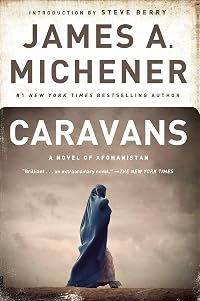
James Michener built his reputation as a writer with his histories of contested lands: Israel (The Source), Korea (The Bridges at Toko-Ri), Hawaii, Mexico, Poland, Afghanistan (Caravans), and so on. By examining the land from the first—often before men had even come into the country—he was able to bring a perspective to these conflicts. By writing history as fiction, he communicates these perspectives in a very accessible way.
In 1978 I spent six weeks in South Africa living in Johannesburg for business. So I was intrigued when two years later Michener's historical fiction about South Africa was published and I read it. The Covenant is Michener's novel of South Africa, from the time when only the nomadic San peoples (later called show more "Bushmen") lived there; to the coming of the Zulu tribes from the north at the same time as Dutch Huegenots settled at the southern tip of the continent; the arrival of the British colonial settlers; the passive rebellion of the Boers (Voertrekkers who left their rich colonial coast farms for the stony inner provinces) and their active rebellion (the Boer War, which the British nominally won); the clever way in which the former Boer general Oom Paul Kruger and his staff managed to wrest victory from that defeat, imposing apartheid on the nation; and the multicultural society that developed in the 80s when the fence between blanks (whites) and nie-blanks (non-whites) was finally broken.
So in The Covenant, we meet the San and learn their depth of understanding of this land and its animals; this is their land by virtue of their command of its powers. The Boer is described with his forthright assumption of the covenant of Adam and Moses; this is his land by virtue of his willingness to invest the sweat of his brow in it. And the Zulu tribes and their drive south to acquire grazing for their cattle are presented; it is their land by virtue of their blood and the blood of their children shed for it. Michener also discusses some of the motivations for British colonialism and the savage investment English-speaking settlers made in the Boer War; for these people, "British" is what their grandfather was—what they are is South African, and this is their land, too.
I enjoyed the book and learned more about the history of the land I had visited but was not impressed enough to become a Michener fan. show less
In 1978 I spent six weeks in South Africa living in Johannesburg for business. So I was intrigued when two years later Michener's historical fiction about South Africa was published and I read it. The Covenant is Michener's novel of South Africa, from the time when only the nomadic San peoples (later called show more "Bushmen") lived there; to the coming of the Zulu tribes from the north at the same time as Dutch Huegenots settled at the southern tip of the continent; the arrival of the British colonial settlers; the passive rebellion of the Boers (Voertrekkers who left their rich colonial coast farms for the stony inner provinces) and their active rebellion (the Boer War, which the British nominally won); the clever way in which the former Boer general Oom Paul Kruger and his staff managed to wrest victory from that defeat, imposing apartheid on the nation; and the multicultural society that developed in the 80s when the fence between blanks (whites) and nie-blanks (non-whites) was finally broken.
So in The Covenant, we meet the San and learn their depth of understanding of this land and its animals; this is their land by virtue of their command of its powers. The Boer is described with his forthright assumption of the covenant of Adam and Moses; this is his land by virtue of his willingness to invest the sweat of his brow in it. And the Zulu tribes and their drive south to acquire grazing for their cattle are presented; it is their land by virtue of their blood and the blood of their children shed for it. Michener also discusses some of the motivations for British colonialism and the savage investment English-speaking settlers made in the Boer War; for these people, "British" is what their grandfather was—what they are is South African, and this is their land, too.
I enjoyed the book and learned more about the history of the land I had visited but was not impressed enough to become a Michener fan. show less
Although Michener sometimes gets a knock for doing light-weight history, he does manage to capture the essence of some historical moments and historical trajectories. The work that he does, connecting Calvinism to apartheid is impressive ... and enlightening. Overall, this is an excellent book and well worth the investment of your time.
Michener really rocks. He must do an unimaginable amount of research for his books (I would assume he has a staff to help him) and, even though the Covenant is VERY long, you are still sad when it is finished. He writes the history of South Africa through different chapters corresponding to different time periods with extremely interesting characters. When he gets to the more modern times, he shows us South Africa mostly through the eyes of the Afrikaans which I found very interesting. He in NO way defends Apartheid but you can get an idea of how it came about. If you like long, well written, historical fiction, then this book is for you.
Read for the second time and still a wonderful epic Michener saga. Beginning with the early San peoples of the region and ending with the story of Apartheid, this covers the history of South Africa through several families: one Dutch (Afrikaner, one English, one native). Over 1200 pages cover a lot of territory, but there are few details that I would have omitted as this is an excellent blend of fictional characters painted over the factual history of the nation of South Africa.
Michener certainly goes for the grand sweep of history, covering some 500 years of South African history in one, admittedly large novel. This gives an instructive continuity to the story, but sadly at the expense of depth. Instead we get a long series of vignettes, usually from a narrow view point and rarely with any exploration of the complexities of the conflicting drivers. If this is disappointing, the sheer number of these sketches at least allow an idea of the conflicts to emerge. In my view, not the best use of the novel form as a way of exploring history. 9 March 2019
Members
- Recently Added By
Lists

Historical Fiction
889 works; 91 members

1980 great books
63 works; 1 member
Author Information

205+ Works 49,279 Members
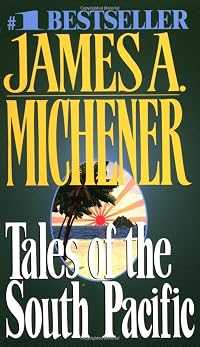
James A. Michener, 1907 - 1997 James Albert Michener was born on February 3, 1907 in Doylestown, Pa. He earned an A.B. from Swarthmore College, an A.M. from Colorado State College of Education, and an M.A. from Harvard University. He taught for many years and was an editor for Macmillan Publishing Company. His first book, "Tales of the South show more Pacific," derived from Michener's service in the Pacific in World War II, won the 1947 Pulitzer Prize for Fiction and was the basis for the Rodgers and Hammerstein Broadway musical South Pacific, which won the 1950 Pulitzer Prize for Drama. Michener completed close to 40 novels. Some other epic works include "Hawaii," "Centennial," "Space," and "Caribbean." He also wrote a significant amount of nonfiction including his autobiography "The World Is My Home." Among his many other honors, James Michener received the Presidential Medal of Freedom in 1977. He was married to Patti Koon in 1935; they divorced in 1948. He married Vange Nord in 1948 (divorced 1955) and Mari Yoriko Sabusawa in 1955 (deceased 1994). He died in 1997 in Austin, Texas. (Bowker Author Biography) show less
Work Relationships
Is contained in
Contains
Is abridged in
Common Knowledge
- Canonical title*
- Frihetens sjö
- Original publication date
- 1980
- First words
- It was the silent time before dawn, along the shores of what had been one of the most beautiful lakes in southern Africa.
- Last words
- (Click to show. Warning: May contain spoilers.)Next year when they returned, the lake would be quite different.
*Some information comes from Common Knowledge in other languages. Click "Edit" for more information.
Classifications
- Genres
- Fiction and Literature, General Fiction, Historical Fiction
- DDC/MDS
- 813.54 — Literature & rhetoric American literature in English American fiction in English 1900-1999 1945-1999
- LCC
- PS3525 .I19 .C68 — Language and Literature American literature American literature Individual authors 1900-1960
- BISAC
Statistics
- Members
- 2,228
- Popularity
- 9,035
- Reviews
- 23
- Rating
- (3.89)
- Languages
- 8 — Dutch, English, French, German, Italian, Korean, Spanish, Swedish
- Media
- Paper, Audiobook, Ebook
- ISBNs
- 28
- ASINs
- 34