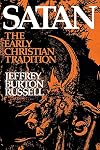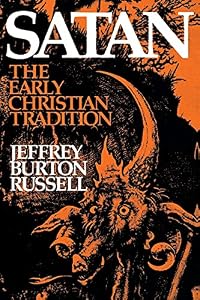
Satan: The Early Christian Tradition
by Jeffrey Burton Russell
History of the Concept of the Devil (2)
On This Page
Description
Undeniably, evil exists in our world; we ourselves commit evil acts. How can one account for evil's ageless presence, its attraction, and its fruits? The question is one that Jeffrey Burton Russell addresses in his history of the concept of the Devil--the personification of evil itself. In the predecessor to this book, The Devil: Perceptions of Evil from Antiquity to Primitive Christianity, Russell traced the idea of the Devil in comparative religions and examined its development in Western show more thought through ancient Hebrew religion and the New Testament. This volume follows its course over the first five centuries of the Christian era. Like most theological problems, the question of evil was largely ignored by the primitive Christian community. The later Christian thinkers who wrestled with it for many centuries were faced with a seemingly irreconcilable paradox: if God is benevolent and omnipotent, why does He permit evil? How, on the other hand, can God be all-powerful if one adopts a dualist stance, and posits two divine forces, one good and one evil? Drawing upon a rich variety of literary sources as well as upon the visual arts, Russell discusses the apostolic fathers, the apologetic fathers, and the Gnostics. He goes on to treat the thought of Irenaeus and Tertullian, and to describe the diabology of the Alexandrian fathers, Clement and Origen, as well as the dualist tendencies in Lactantius and in the monastic fathers. Finally he addresses the syntheses of the fifth century, especially that of Augustine, whose view of the Devil has been widely accepted in the entire Christian community ever since. Satan is both a revealing study of the compelling figure of the Devil and an imaginative and persuasive inquiry into the forces that shape a concept and ensure its survival. show lessTags
Recommendations














Member Reviews
Pros: detailed analysis, lots of explanation
Cons: lots of necessary repetition
This is the second in a series of books on the evolution of the devil in Christian thought, following The Devil: Perceptions of Evil from Antiquity to Primitive Christianity. There are 8 chapters: The Devil, The Apostolic Fathers, The Apologetic Fathers and the Gnostics, Human Sin and Redemption: Irenaeus and Tertullian, Mercy and Damnation: the Alexandrians, Dualism and the Desert, Satan and Saint Augustine, Conclusion: Satan Today. There is also an essay on the sources used by Russell.
Given that each group of theologians built on what came before, the book contains a lot of repetition. Several later authors expanded on Origen’s theory of the cosmos and show more redemption before it was declared heretical. Russell does a good job of explaining sometimes convoluted mythologies (like those of the Gnostics and Manicheans) so that you can see how their beliefs coloured that of Orthodox Christians.
Each chapter deals with a stage in the development of Christianity, including how the believers at that period understood Creation, the Fall (of angels and mankind), and Redemption (whether through Christ’s sacrifice or via tricking the Devil). It’s interesting to read the various theories and how they shifted and grew over time into the ideas we’re familiar with today.
While it’s an older book, first published in 1981, the scholarship is solid, with then current references and a lot of page notes explaining certain concepts in more detail.
If you’re interested in the development of the devil and hell, how theological discourse changes over time, or simply in the history of Christianity as a whole, this is an interesting read. show less
Cons: lots of necessary repetition
This is the second in a series of books on the evolution of the devil in Christian thought, following The Devil: Perceptions of Evil from Antiquity to Primitive Christianity. There are 8 chapters: The Devil, The Apostolic Fathers, The Apologetic Fathers and the Gnostics, Human Sin and Redemption: Irenaeus and Tertullian, Mercy and Damnation: the Alexandrians, Dualism and the Desert, Satan and Saint Augustine, Conclusion: Satan Today. There is also an essay on the sources used by Russell.
Given that each group of theologians built on what came before, the book contains a lot of repetition. Several later authors expanded on Origen’s theory of the cosmos and show more redemption before it was declared heretical. Russell does a good job of explaining sometimes convoluted mythologies (like those of the Gnostics and Manicheans) so that you can see how their beliefs coloured that of Orthodox Christians.
Each chapter deals with a stage in the development of Christianity, including how the believers at that period understood Creation, the Fall (of angels and mankind), and Redemption (whether through Christ’s sacrifice or via tricking the Devil). It’s interesting to read the various theories and how they shifted and grew over time into the ideas we’re familiar with today.
While it’s an older book, first published in 1981, the scholarship is solid, with then current references and a lot of page notes explaining certain concepts in more detail.
If you’re interested in the development of the devil and hell, how theological discourse changes over time, or simply in the history of Christianity as a whole, this is an interesting read. show less
This book tackles the history of the Christian perception of evil, from the start of Christianity to the fifth century. While I have very little background in theology, I still found this book understandable & interesting. The author does a good job of describing beliefs & how they arose, then explaining why they continued, changed, or died out.
Ratings
Members
- Recently Added By
Lists

Best Books Involving Satan
63 works; 24 members

Books in the Bibliography of The History of Hell by Alice K. Turner
155 works; 1 member
Author Information

22+ Works 2,912 Members
Jeffrey Burton Russell (Ph.D., Emory University) is professor emeritus of history at the University of California-Santa Barbara, where he taught from 1979 to 1988. He has also taught at the University of Mexico, Harvard, University of California-Riverside, Notre Dame and California State University-Sacramento. Russell has published numerous books show more and articles in his area of expertise, the history of theology. Early in his academic career, Russell was honored as a Fulbright Fellow, Harvard Junior Fellow and Guggenheim Fellow. show less
Series

Belongs to Publisher Series
Common Knowledge
- Original title
- Satan. The Early Christian Tradition
- Original publication date
- 1981
- People/Characters
- The Devil
Classifications
Statistics
- Members
- 300
- Popularity
- 105,210
- Reviews
- 2
- Rating
- (4.12)
- Languages
- English, Italian, Spanish, Turkish
- Media
- Paper
- ISBNs
- 4
- ASINs
- 2