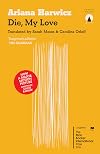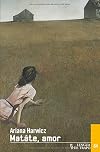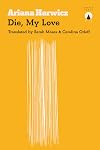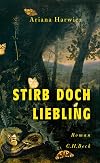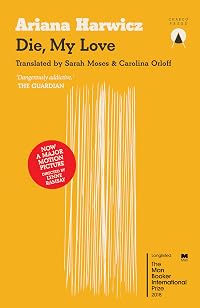
Die, My Love
by Ariana Harwicz
On This Page
Description
In a forgotten patch of French countryside, a woman is battling her demons - embracing exclusion yet wanting to belong, craving freedom whilst feeling trapped, yearning for family life but at the same time wanting to burn the entire house down. Given surprising leeway by her family for her increasingly erratic behaviour, she nevertheless feels ever more stifled and repressed. Motherhood, womanhood, the banality of love, the terrors of desire, the inexplicable brutality of 'another person show more carrying your heart forever' - Die, My Love faces all this with a raw intensity. It's not a question of if a breaking point will be reached, but rather when and how violent a form will it take? This is a brutal, wild book - it's impossible to come out from reading Ariana Harwicz unscathed. The language of Die, My Love cuts like a scalpel even as it attains a kind of cinematic splendour, evoking the likes of John Cassavetes, David Lynch, Lars von Trier and John Ford. In a text that explores the destabilising effects of passion and its absence, immersed in the psyche of a female protagonist always on the verge of madness, in the tradition of Sylvia Plath and Clarice Lispector, Harwicz moulds language, submitting it to her will in irreverent prose. Bruising and confrontational, yet anchored in an unapologetic beauty and lyricism, Die, My Love is a unique reading experience that quickly becomes addictive. show lessTags
Recommendations











Member Reviews
This was an all-immersive experience into what may at first seem like post-partum depression but which spreads out into a desperate search for freedom and independence. The novella length makes for a compulsive quick read of escalating tension as you wonder what the nameless narrator/mother figure will do next and whom might she hurt in the process. And yet there is humour and love and lust along the way, so it is not as if the journey is all grim and you can actually identify with and hope for the best for this anti-heroine. It all ends on as exhilarating a note as Clarice Lispector's "Near to the Wild Heart."
"Die, My Love" is the first of three novellas by Argentinean writer Ariana Harwicz who now lives in France but continues to show more write in the Spanish of her birth country. The three novellas are considered a trilogy themed on mothers and their children and the 2nd book "La débil mental" is also expected to be translated and published in English by Scotland's Charco Press in 2019. Charco Press is recent publishing house dedicated to translating & publishing emerging Argentinean writers. They have an initial list of 5 titles which is expected to increase by a further 5 books to be published throughout 2018.
My thanks to the Republic of Consciousness Prize 2018 and Charco Press for my Shortlist Perk copy of "Die, My Love."! Best wishes for success with the forthcoming Man Booker International Prize! show less
"Die, My Love" is the first of three novellas by Argentinean writer Ariana Harwicz who now lives in France but continues to show more write in the Spanish of her birth country. The three novellas are considered a trilogy themed on mothers and their children and the 2nd book "La débil mental" is also expected to be translated and published in English by Scotland's Charco Press in 2019. Charco Press is recent publishing house dedicated to translating & publishing emerging Argentinean writers. They have an initial list of 5 titles which is expected to increase by a further 5 books to be published throughout 2018.
My thanks to the Republic of Consciousness Prize 2018 and Charco Press for my Shortlist Perk copy of "Die, My Love."! Best wishes for success with the forthcoming Man Booker International Prize! show less
La locura que este libro exuda es agotadora. Hubiera deseado leerlo de jalón porque la escritura de Harwicz hace una narración densa, errática, que te mete en la mente de la protagonista y te tiene al borde de que va a pasar durante todo el libro,
Whether you love this book or feel assaulted by it depends on where you situate yourself as a witness to this female narrator's harrowing account of perfectly normal and privileged life in the French countryside. If the definition of 'a perfectly normal and privileged life' has ever felt like a horrifying nightmare to you--if you have ever looked around you and thought, however fleetingly, 'wow, these people, my family, actually think they are behaving rationally, when really they are trapped in a nightmare inside their own skulls, and are living a script in which they never question their values or beliefs, and I'm trapped along with them'-- then you'll experience your own alienation, and recognize your own thoughts, while reading this show more brief testimony of a woman who refuses to look away. If instead you situate yourself, as a reader, outside of her experience, then you'll read this novel as a chronicle of madness, and it will be far less interesting to you.
In an early scene the narrator's husband urges her to look at the stars--he wants her to feel the wonder of them, he insists that she feels what he feels. Her resistance felt so familiar to me. It's the moment when you realize how much of your life is governed by long-held expectations of culture and history and family. Who does not love the stars? Aren't we all supposed to love stars? And yet this woman permits herself to acknowledge, in secret only, that she feels indifferent to stars, and oppressed by her husband's doggish enthusiasm for them. From that point in the story, it's almost as if her inability to feel excited about stars is a deadly insight that prevents her from feeling anything else, just because she is supposed to feel it. Instead of auto-love for her baby, for example, she is absorbed by and obsessed by the lamprey-like truth of being pregnant, of nursing.
The unnumbered chapter that begins on p. 13, of a Christmas dinner with in-laws, is so searing and insightful and scary that I wish I could quote the whole chapter, but here is a little of it:
As soon as all the other had escaped to their rooms to digest their meals, I heard my father-in-law cutting the grass beneath the snow with his new green tractor and thought that if I could lynch my whole family to be alone for one minute with Glenn Gould, I'd do it. Later on I saw him sitting at his desk, going over last month's supermarket receipts. He read the price of each product and then checked the total with a calculator. By the time he'd finished recording the sums in his log of monthly expenses, the desk lamp was no longer giving off enough light. We at dinner, all of us together again, and I can still remember the tired, backlit image of an average man who thinks he's exceptional. show less
In an early scene the narrator's husband urges her to look at the stars--he wants her to feel the wonder of them, he insists that she feels what he feels. Her resistance felt so familiar to me. It's the moment when you realize how much of your life is governed by long-held expectations of culture and history and family. Who does not love the stars? Aren't we all supposed to love stars? And yet this woman permits herself to acknowledge, in secret only, that she feels indifferent to stars, and oppressed by her husband's doggish enthusiasm for them. From that point in the story, it's almost as if her inability to feel excited about stars is a deadly insight that prevents her from feeling anything else, just because she is supposed to feel it. Instead of auto-love for her baby, for example, she is absorbed by and obsessed by the lamprey-like truth of being pregnant, of nursing.
The unnumbered chapter that begins on p. 13, of a Christmas dinner with in-laws, is so searing and insightful and scary that I wish I could quote the whole chapter, but here is a little of it:
As soon as all the other had escaped to their rooms to digest their meals, I heard my father-in-law cutting the grass beneath the snow with his new green tractor and thought that if I could lynch my whole family to be alone for one minute with Glenn Gould, I'd do it. Later on I saw him sitting at his desk, going over last month's supermarket receipts. He read the price of each product and then checked the total with a calculator. By the time he'd finished recording the sums in his log of monthly expenses, the desk lamp was no longer giving off enough light. We at dinner, all of us together again, and I can still remember the tired, backlit image of an average man who thinks he's exceptional. show less
My mind is spent, it’s lost on the river bank. When I finally go in, the food will be cold on the counter and there’ll be a note in his writing saying ‘Enjoy your dinner, I love you’. By the end of the night, I’ve built up so much rage that I could drink until I have a heart attack. That’s what I tell myself but it’s not true. I couldn’t even down half a bottle. My days are all like this. Endlessly stagnant. A slow downfall.
It would be easy to dispel this book as a simple she-experienced-this-it's-no-real-tour-de-force, but it fucking is. I mean, the author may or may not have lived through some of what's found in here but it's a real barrel of turns and tussles, alright.
A lot of dialogue directed towards the main show more character, mostly from her husband, is not barbed with emotion, but factual counts of what's really said to her. However, her own thoughts are to me the jewels in the crown:
Instead of a vagina, he thought his wife had a stone in the depths of a cave.
When I fall in love, like this very minute, as I shake myself, I scatter earth onto a coffin. It doesn’t matter whose. And when I masturbate I desecrate crypts, and when I rock my baby I say amen, and when I smile I unplug an iron lung. Hence the kiss. Because after all, since forever and since even before being born, and for the whole time my husband’s been shouting with jealous rage, I’ve been dead.
Here's a paragraph that's telling of the entire book, which is only about 100 pages long:
Open the door, please, we’ll do it after, I promise. He’s bribing me, but screw him. I’m begging you, it’s not funny. And then, having climbed onto the toilet, I deliver a lengthy existential monologue, adding some philosophical and psychoanalytic touches for good measure. When I’m done, he says: It’s all in your head. That’s all he ever says. In the end I feel sorry for him and leave the bathroom. He gives me an insipid kiss that does nothing for me. I need a buffalo and all I get is a porcupine. He shoves me away from the bathroom door. I hear him defecate, the sound of his shit dropping into the water. I wait for him in bed, try to read something, but all I can think about is satiating my body: it’s chasing after me, sweating. I toss the book aside. The baby is all twisted up in his sleep, coughing like a worker in a Cuban tobacco factory. I straighten him out and decide to go to sleep. My husband is still in the bathroom, playing on his phone. I end up taking off my bra, the underwire hurts, and changing out of my knickers. I scrub my face clean and slather on some lotion. Afterwards, nothing. At dawn, I’m woken by a shrill, trumpet-like scream. A strange whistling sound. The fire in the living room has gone out. I blow on it but that just sends ash flying everywhere, including up my nose. I spit. I sneeze. I have an allergic reaction. Nasal blood. I try to light the fire. The uproar continues outside. Men and animals are fighting it out. A chicken truck has crashed into a car carrying an average family, two point four children in a pile-up. Or it’s a kangaroo giving birth to a troop of joeys and they’ve got stuck on the way out. I leave the house barefoot. I get soaked, slip on the stones, look for the source of the tumult of voices and growls. I walk down the road, through the woods and to the stretch of wasteland scattered with used condoms where the tourists go to procreate. It’s coming from the sky. Hundreds of birds are criss-crossing each other, confused. No one’s leading them. North and south are mixed up. The baby is crying his quota of morning torment. He’s had his nightmare about a hungry wolf climbing in through the window. There’s no smoke detector in his room. I put him to bed with my husband. I wrap their arms around each other and they lie there, sound asleep, breathing the air from each other’s mouths. My vampiric offspring is going to end up a smoker. I go back outside. For the first time, I feel drawn to the sky. The birds are raising the feathers on their wings, they’re riled up like bulls. Then one of them heads south and the rest follow, screeching off into the distance. Back in the house I find the baby under our bed, screaming at the top of his lungs like another bird. I don’t know what we’re doing with our tiny deformity, with our flesh. What we’re doing with our conjoined entrails. We’re letting him grow up among shrubs and bones. We’re letting him get scraped and knocked about. How could you leave him there when you can see I’m sleeping, he said. Are you out of your mind? Then he drifted off again. I lay down between my husband and my son and watched them inhale and exhale as they abandoned themselves to the heavy breathing of sleep. I looked at one face and then at the other, and then at myself in the middle. I eventually got bored of their features and was alarmed to find that, after staring at them for so long, I no longer recognised them.
All in all, the book's a dark, torn, terrifying tale of ennui and heartbreaking happenings, and I like it. show less
A compelling, dark, psychological novella, this stark journey into the psyche of a woman struggling with depression bordering on insanity is unforgettable. Using brutally blunt prose and a stream of consciousness format, which flows like a raging river, the author forcibly drags the reader inside the protagonist's pain, as she struggles with new motherhood after having a baby she didn't want in the first place. Truly a powerful piece of writing which left this reader breathless and sad.
My third book from the excellent Republic of Consciousness prize shortlist.
This book has also been longlisted for the Man Booker International Prize
This is a raw, visceral and intensely personal novella, the dark interior monologue of a young woman on the verge of madness who wants to break free of the expectations created by being a mother of a small child, struggling to contain destructive urges. This is not always easy to follow and is often a little uncomfortable to read, but it is very impressive and quite beautiful in places.
This book has also been longlisted for the Man Booker International Prize
This is a raw, visceral and intensely personal novella, the dark interior monologue of a young woman on the verge of madness who wants to break free of the expectations created by being a mother of a small child, struggling to contain destructive urges. This is not always easy to follow and is often a little uncomfortable to read, but it is very impressive and quite beautiful in places.
This debut novel, which won the Best Argetinian Novel in 2012 and was longlisted for this year's Man Booker International Prize, is set in a rural French village and is narrated by a woman living with her partner and young child, along with her recently widowed mother-in-law. The unnamed woman, who comes from another country, lusts more than loves her man, does not love or want her young son, and is slowly descending into madness, with frequent flights of ideas, homicidal and suicidal thoughts, and recurrent delusions. This was a very difficult and unpleasant book to read, as I found it nearly impossible to follow this unreliable and unstable narrator, and although it may be a worthwhile look into the mind of a mentally ill young woman, show more it was anything but enjoyable to do so. show less
Members
- Recently Added By
Author Information

19 Works 546 Members
Some Editions
Awards and Honors
Awards
Notable Lists
Common Knowledge
- Canonical title
- Die, My Love
- Original title
- Matate, amor
- Original publication date
- 2012 (Spanish original) (Spanish original); 2017 (English translation) (English translation)
- Important places
- Argentina; France
- Blurbers
- Kunzru, Hari; Bennett, Claire-Louise; Schweblin, Samanta; Meruane, Lina; Fonseca, Carlos
- Original language
- Spanish
Classifications
- Genres
- Fiction and Literature, General Fiction
- DDC/MDS
- 863.7 — Literature & rhetoric Spanish Literature Spanish fiction 21st Century
- LCC
- PQ7798.418 .A79 .M3813 — Language and Literature French, Italian, Spanish and Portuguese literatures Spanish literature Provincial, local, colonial, etc. Spanish America
- BISAC
Statistics
- Members
- 308
- Popularity
- 103,952
- Reviews
- 16
- Rating
- (3.66)
- Languages
- 9 — English, French, German, Hebrew, Italian, Polish, Portuguese (Portugal), Spanish, Turkish
- Media
- Paper, Ebook
- ISBNs
- 21
- ASINs
- 2