The Double Planet
by Isaac Asimov
On This Page
Description
This is the first book to place Russia's 'long' eighteenth century squarely in its European context. The conceptual framework is set out in an opening critique of modernisation which, while rejecting its linear implications, maintains its focus on the relationship between government, economy and society. Following a chronological introduction, a series of thematic chapters (covering topics such as finance and taxation, society, government and politics, culture, ideology, and economy) show more emphasise the ways in which Russia's international ambitions as an emerging great power provoked administrative and fiscal reforms with wide-ranging (and often unanticipated) social consequences. This thematic analysis allows Simon Dixon to demonstrate that the more the tsars tried to modernise their state, the more backward their empire became. A chronology and critical bibliography are also provided to allow students to discover more about this colourful period of Russian history. show lessTags
Recommendations






















Member Reviews
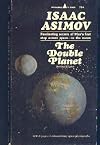
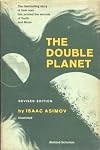
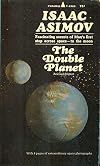
The Double Planet is a short science fact book that deals with the Earth-Moon system. Originally written in 1960 and revised in 1966 and 1968, the material contained in this book obviously does not include anything that was discovered as a result of the Apollo landings. To a certain extent, the book was intended to build up interest in exploring the moon, and the cover blurb even makes the somewhat misleading statement that the book contains "fascinating secrets of Man's first step across space - to the moon", even though the book itself does not contain more than a passing reference to the projected human exploration of our closest neighbor.
What the book does contain is a fairly decent introduction to the basic facts of the Earth and show more the Moon. Starting with the Earth, Asimov discusses how large it is, what it is made of, its orbit, its rotation, and several other physical details concerning our planet. To leaven the dry recitation of facts, Asimov also includes background information concerning how and why we know these things about the Earth, recounting the various creative experiments and painstaking observations made by scientists throughout history that led to the conclusions that are presented in the text. Asimov then moves on to discuss what we know about the Moon (or more accurately, what we knew about it as of 1968), once again interlacing the dry data with background concerning those who discovered the various facts about the Moon and how they went about doing so.
The book is written in Asimov's typically straightforward writing style. As I've noted before, this style can lead to some relatively dry fiction, but works quite well for a science fact piece. The book includes several photos taken by unmanned probes sent to the Moon by NASA, which was probably a decent selling point in the late 1960s, but are fairly mundane now, especially when contrasted with the photos taken by the various Apollo missions that followed. The most interesting element of the book is the timing: written originally just before Gagarin became the first man in space, and revised just one year before the Apollo landings began, the book gives a very readable historical perspective on what we knew about both the Earth and the Moon at the outset of the Space Age. In the decades since we have come to take for granted the vast amount of knowledge that we have gained concerning our universe that has been provided to us by our space endeavors. For that historical perspective alone this book is a decent addition to one's library and despite being more than forty years out of date, it is worth reading.
This review has also been posted to my blog Dreaming About Other Worlds. show less
What the book does contain is a fairly decent introduction to the basic facts of the Earth and show more the Moon. Starting with the Earth, Asimov discusses how large it is, what it is made of, its orbit, its rotation, and several other physical details concerning our planet. To leaven the dry recitation of facts, Asimov also includes background information concerning how and why we know these things about the Earth, recounting the various creative experiments and painstaking observations made by scientists throughout history that led to the conclusions that are presented in the text. Asimov then moves on to discuss what we know about the Moon (or more accurately, what we knew about it as of 1968), once again interlacing the dry data with background concerning those who discovered the various facts about the Moon and how they went about doing so.
The book is written in Asimov's typically straightforward writing style. As I've noted before, this style can lead to some relatively dry fiction, but works quite well for a science fact piece. The book includes several photos taken by unmanned probes sent to the Moon by NASA, which was probably a decent selling point in the late 1960s, but are fairly mundane now, especially when contrasted with the photos taken by the various Apollo missions that followed. The most interesting element of the book is the timing: written originally just before Gagarin became the first man in space, and revised just one year before the Apollo landings began, the book gives a very readable historical perspective on what we knew about both the Earth and the Moon at the outset of the Space Age. In the decades since we have come to take for granted the vast amount of knowledge that we have gained concerning our universe that has been provided to us by our space endeavors. For that historical perspective alone this book is a decent addition to one's library and despite being more than forty years out of date, it is worth reading.
This review has also been posted to my blog Dreaming About Other Worlds. show less
Ratings
Members
- Recently Added By
Author Information

2,396+ Works 292,694 Members
Isaac Asimov was born in Petrovichi, Russia, on January 2, 1920. His family emigrated to the United States in 1923 and settled in Brooklyn, New York, where they owned and operated a candy store. Asimov became a naturalized U.S. citizen at the age of eight. As a youngster he discovered his talent for writing, producing his first original fiction at show more the age of eleven. He went on to become one of the world's most prolific writers, publishing nearly 500 books in his lifetime. Asimov was not only a writer; he also was a biochemist and an educator. He studied chemistry at Columbia University, earning a B.S., M.A. and Ph.D. In 1951, Asimov accepted a position as an instructor of biochemistry at Boston University's School of Medicine even though he had no practical experience in the field. His exceptional intelligence enabled him to master new systems rapidly, and he soon became a successful and distinguished professor at Columbia and even co-authored a biochemistry textbook within a few years. Asimov won numerous awards and honors for his books and stories, and he is considered to be a leading writer of the Golden Age of science fiction. While he did not invent science fiction, he helped to legitimize it by adding the narrative structure that had been missing from the traditional science fiction books of the period. He also introduced several innovative concepts, including the thematic concern for technological progress and its impact on humanity. Asimov is probably best known for his Foundation series, which includes Foundation, Foundation and Empire, and Second Foundation. In 1966, this trilogy won the Hugo award for best all-time science fiction series. In 1983, Asimov wrote an additional Foundation novel, Foundation's Edge, which won the Hugo for best novel of that year. Asimov also wrote a series of robot books that included I, Robot, and eventually he tied the two series together. He won three additional Hugos, including one awarded posthumously for the best non-fiction book of 1995, I. Asimov. "Nightfall" was chosen the best science fiction story of all time by the Science Fiction Writers of America. In 1979, Asimov wrote his autobiography, In Memory Yet Green. He continued writing until just a few years before his death from heart and kidney failure on April 6, 1992. (Bowker Author Biography) show less
Common Knowledge
- Original publication date
- 1960
Classifications
Statistics
- Members
- 68
- Popularity
- 458,634
- Reviews
- 1
- Rating
- (3.50)
- Languages
- English, Italian
- Media
- Paper, Ebook
- ISBNs
- 5
- ASINs
- 5