
About the Author
Image credit: Tish Rabe (pronounced "Robby"). From the website www.tishrabe.com.
Series
Works by Tish Rabe
There's No Place Like Space! All About Our Solar System (The Cat in the Hat's Learning Library) (1999) — Author — 3,763 copies, 32 reviews
On Beyond Bugs! All About Insects (The Cat in the Hat's Learning Library) (1999) 1,589 copies, 6 reviews
There's a Map on My Lap! All About Maps (The Cat in the Hat's Learning Library) (2002) 1,322 copies, 10 reviews
Inside Your Outside! All About the Human Body (The Cat in the Hat's Learning Library) (2003) 1,135 copies, 15 reviews
Miles and Miles of Reptiles: All About Reptiles (The Cat in the Hat's Learning Library) (2009) 1,074 copies, 5 reviews
Oh, the Things You Can Do That Are Good for You! All About Staying Healthy (2001) 1,055 copies, 2 reviews
Oh, the Pets You Can Get! All About Our Animal Friends (The Cat in the Hat's Learning Library) (2005) 866 copies, 6 reviews
Oh, Say Can You Say What's the Weather Today? All About Weather (The Cat in the Hat's Learning Library) (2004) — Author — 865 copies, 6 reviews
Is a Camel a Mammal? All About Mammals (The Cat in the Hat's Learning Library) (1998) 654 copies, 2 reviews
My, Oh My--A Butterfly! All About Butterflies (The Cat in the Hat's Learning Library) (2007) 645 copies, 4 reviews
Fine Feathered Friends: All About Birds (The Cat in the Hat's Learning Library) (1998) 561 copies, 4 reviews
Why Oh Why Are Deserts Dry? All About Deserts (The Cat in the Hat's Learning Library) (2011) 485 copies, 2 reviews
If I Ran the Dog Show: All About Dogs (The Cat in the Hat's Learning Library) (2012) 444 copies, 8 reviews
A Bird's Best Friend (A Golden Book) (Sesame Street) (A Growing Up Book) (1986) 187 copies, 1 review
Who Hatches the Egg? All About Eggs (The Cat in the Hat's Learning Library) (2017) 170 copies, 1 review
Out of Sight till Tonight! All About Nocturnal Animals (The Cat in the Hat's Learning Library) (2015) 145 copies
What Cat Is That? All About Cats (The Cat in the Hat's Learning Library) (2013) 123 copies, 1 review
High? Low? Where Did It Go? All About Animal Camouflage (The Cat in the Hat's Learning Library) (2016) 55 copies, 1 review
A Long Winter's Nap / Flight of the Penguin (The Cat in the Hat Knows a Lot About That!) (2011) 55 copies, 1 review
Spring into Summer!/Fall into Winter!(Dr. Seuss/The Cat in the Hat Knows a Lot About That!) (Pictureback(R)) (2012) 54 copies
The 100 Hats of the Cat in the Hat: A Celebration of the 100th Day of School (The Cat in the Hat's Learning Library) (2019) 52 copies, 1 review
Can You See a Chimpanzee? All About Primates (The Cat in the Hat's Learning Library) (2014) 52 copies, 1 review
A Tale About Tails (Dr. Seuss/The Cat in the Hat Knows a Lot About That!) (Step into Reading) (2014) 43 copies
The Cat in the Hat Knows a Lot About Christmas! (Dr. Seuss/Cat in the Hat) (Big Golden Book) (2013) 20 copies
There's No Place Like Space: All About Our Solar System (Hardcover)【2018】by Tish Rabe (Author) 17 copies
Halloween Fun for Everyone! (Dr. Seuss/Cat in the Hat) (Cat in the Hat Know a Lot about That!) (2016) 15 copies
Thump!/The Lost Egg (Dr. Seuss/The Cat in the Hat Knows a Lot About That!) (Pictureback(R)) (2013) 11 copies
My, Oh My-A Butterfly! All About Butterflies (The Cat in the Hat's Learning Library) (2019) 7 copies
THERES NO PLACE LIKE SPACE 5 copies
The not-so-helpless female: how to change the world even if you never thought you could;: A step-by-step guide to social action (1973) 3 copies
Oh, the Things You Can Do That are Good for You! (Cat in the Hat's Learning Library) (Paperback) - Common (2002) 2 copies
The 100 Hats of the Cat in the Hat A Celebration of the 100th Day of School (The Cat in the Hat's Learning Library) (2019) 2 copies
Sesame Street Gift Pack: Early Bird on Sesame Street/What's Up in the Attic?/A Bird's Best Friend (Golden Story Book 'n' Tape) (1992) 1 copy
Descobre a aventura 1 copy
Atlasul penelor 1 copy
Chill Out! The Cat's Wintertime Ebook Collection (Dr. Seuss/Cat in the Hat) (Deluxe Pictureback) (2012) 1 copy
Cows Can MOO! Can You? 1 copy
Sweet Dreams Ahead Time For Bed: A Rhyming Book and Lullaby to Help Children Get Ready for Sleep (2021) 1 copy
I Love the Nightlife! (Dr. Seuss/Cat in the Hat) (Pictureback(R)) by Rabe, Tish [Paperback(2010/8/10)] (2009) 1 copy
A Reindeer's First Christmas/New Friends for Christmas (Dr. Seuss/Cat in the Hat) (Pictureback) (2012) 1 copy
Tagged
Common Knowledge
- Canonical name
- Rabe, Tish
- Other names
- SOMMERS, Tish
SOMMERS RABE, Tish
RABE, Tish - Birthdate
- 1951-07-24
- Gender
- female
- Education
- Ithaca College School of Music (BMus|Applied Vocal Performance)
- Occupations
- jazz singer
lyricist
music producer
Music Production Assistant, Sesame Street
Senior Producer for Children's Media, Random House - Nationality
- USA
- Places of residence
- New York, New York, USA
New York, USA
Mystic, Connecticut, USA - Associated Place (for map)
- New York, USA
Members
Reviews

Using the classic Christmas carol, The Twelve Days of Christmas, as an inspiration, author Tish Rabe explores the fun things a new student can do during the first twelve days of first grade. From telling the time to leading the line, from performing in a play to building things with clay, as the narrator here concludes, first grade is lots of fun...
Apparently the second book in which Rabe has used The Twelve Days of Christmas to create a text exploring the first day of a new school year - show more that initial title was On the First Day of Kindergarten - On the First Day of First Grade was somewhat less than impressive. I found the text awkward, and rather forced. It didn't read particularly well, and although I attempted to follow along using the tune of the carol, it didn't quite work. Although I realize that the idea here is to highlight fun activities a child in first grade might enjoy, I also had to wonder at a text in which a play is put on the eighth day of school. The artwork by Sarah Jennings is colorful, and features a diverse cast of children, but leaving that aside, there really isn't much here that I would recommend. There are far better "first day of school" books, from Ryan Higgins' humorous We Don't Eat Our Classmates to Alyssa Satin Capucilli's sweeter Not This Bear: A First Day of School Story. I would recommend that potential readers track down those titles instead. show less
Apparently the second book in which Rabe has used The Twelve Days of Christmas to create a text exploring the first day of a new school year - show more that initial title was On the First Day of Kindergarten - On the First Day of First Grade was somewhat less than impressive. I found the text awkward, and rather forced. It didn't read particularly well, and although I attempted to follow along using the tune of the carol, it didn't quite work. Although I realize that the idea here is to highlight fun activities a child in first grade might enjoy, I also had to wonder at a text in which a play is put on the eighth day of school. The artwork by Sarah Jennings is colorful, and features a diverse cast of children, but leaving that aside, there really isn't much here that I would recommend. There are far better "first day of school" books, from Ryan Higgins' humorous We Don't Eat Our Classmates to Alyssa Satin Capucilli's sweeter Not This Bear: A First Day of School Story. I would recommend that potential readers track down those titles instead. show less
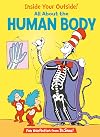
I generally disapprove of books with Dr. Suess characters that are not written by Dr. Suess. On the other hand, the Suess-ian style did engage the three year olds I teach enough for them to ask me to read this book over and over, despite the fact that a lot of the information inside (right vs. left brain, the fact that your eyes invert the images you see) are difficult concepts for children of that age.
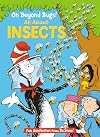
Fans of Dr. Seuss's favorite feline will enjoy learning through rhymed couplets and cartoonlike illustrations similar to the originals. Each book combines basic facts with interesting trivia to introduce readers to topics that are sure to be of interest. From Bugs: "Here is a riddle/I learned from my mother./How's a skunk and a ladybug/like one another?/When danger is near,/it is easy to tell-/they suddenly give off/a terrible smell!" While the grammar is off, Seussian rhyme is rarely show more totally correct ("thunk"). In Space, readers learn, "On Venus the weather/is always the same-/hot, dry, and windy,/with no chance of rain." The familiar format and entertaining text are sure to appeal to beginning readers. show less
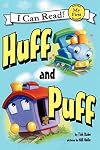
I never seem to be able to get enough easy readers to satisfy my patrons, especially in the summer. The books just fly off the shelves, leaving behind only the worn and ancient titles that should really be weeded and/or replaced. Most popular are the very beginning, just a few words per page, titles - which, of course, are the most difficult to find. Anyhow, I am on several publisher newsletters and will pretty much try anything new that comes out. This is a new series from the ever-growing show more I Can Read line.
Huff is an engine, Puff is the caboose. They work together well until one day they each decide the other train has it easier and they want to try switching. Of course, they both discover that they're better suited to their own jobs and the other train really does work hard. If you want to get really picky, you could dissect the socioeconomic implications of the cliched plot, which basically says that everyone has one specific thing they're good at and you can't deviate from that role. It's a pretty common plot in children's books and I think it stems from folktales - there are quite a few about sticking to your own role in life, not surprising since most of them sprang from feudal societies. It would have been more interesting, to me at least, if Huff and Puff had discovered that, with a little hard work, they could both enjoy doing a different job now and then and been able to switch off in the future. I mean, come on, has the train never heard of cross-training?
However, for a beginning reader the plot isn't really the point - the combination of text and art and how well it does its job of giving kids a simple plot that they can follow while still decoding the words is paramount. How well does it do this? Not very well, to be honest. The pages are full-color, with cute, rounded illustrations of the anthropomorphic trains and their cargo, a collection of brightly-colored animals. The illustrations are certainly cute, but they overshadow the words and make it difficult to pick them out from the pages. On one page the sentence is placed against a railroad tie, on another it's buried in the grass, etc. When the trains switch places, it gets even more confusing as they fill the page, bulging around the words, and making it difficult to keep track of which is Huff, which is Puff, and where they are on the train. The refrain "Click-ity clack, click-ity clack" or "Click-ity, click-ity clack" is repeated multiple times, and I can't help but wonder if there weren't better words to reinforce through repetition.
Verdict: If you are in urgent need of easy readers it's a decent filler series, especially for a library like mine where I'm having to look for easy readers to appeal to younger and younger kids, but if you're watching your budget or looking for high-quality easy readers this isn't a necessary purchase.
ISBN: 9780062305022; Published 2012 by HarperCollins; Purchased for the library show less
Huff is an engine, Puff is the caboose. They work together well until one day they each decide the other train has it easier and they want to try switching. Of course, they both discover that they're better suited to their own jobs and the other train really does work hard. If you want to get really picky, you could dissect the socioeconomic implications of the cliched plot, which basically says that everyone has one specific thing they're good at and you can't deviate from that role. It's a pretty common plot in children's books and I think it stems from folktales - there are quite a few about sticking to your own role in life, not surprising since most of them sprang from feudal societies. It would have been more interesting, to me at least, if Huff and Puff had discovered that, with a little hard work, they could both enjoy doing a different job now and then and been able to switch off in the future. I mean, come on, has the train never heard of cross-training?
However, for a beginning reader the plot isn't really the point - the combination of text and art and how well it does its job of giving kids a simple plot that they can follow while still decoding the words is paramount. How well does it do this? Not very well, to be honest. The pages are full-color, with cute, rounded illustrations of the anthropomorphic trains and their cargo, a collection of brightly-colored animals. The illustrations are certainly cute, but they overshadow the words and make it difficult to pick them out from the pages. On one page the sentence is placed against a railroad tie, on another it's buried in the grass, etc. When the trains switch places, it gets even more confusing as they fill the page, bulging around the words, and making it difficult to keep track of which is Huff, which is Puff, and where they are on the train. The refrain "Click-ity clack, click-ity clack" or "Click-ity, click-ity clack" is repeated multiple times, and I can't help but wonder if there weren't better words to reinforce through repetition.
Verdict: If you are in urgent need of easy readers it's a decent filler series, especially for a library like mine where I'm having to look for easy readers to appeal to younger and younger kids, but if you're watching your budget or looking for high-quality easy readers this isn't a necessary purchase.
ISBN: 9780062305022; Published 2012 by HarperCollins; Purchased for the library show less
Lists
Awards


You May Also Like


Associated Authors
Statistics
- Works
- 157
- Members
- 25,659
- Popularity
- #814
- Rating
- 4.0
- Reviews
- 164
- ISBNs
- 533
- Languages
- 6
- Favorited
- 2