
P. D. Eastman (1909–1986)
Author of Are You My Mother?
About the Author
Philip Dey "Phil" Eastman was born on November 25, 1909 in Amherst, Massachusetts. After preparing at Phillips Academy and Williston Academy, he graduated from Amherst College in 1933 and later from the National Academy of Design. From 1936 to 1941, Eastman worked at the story department of Walt show more Disney Productions. From 1941 to 1943 he worked at the story department of Warner Bros. Cartoons. From 1945 to 1952 he worked in the story department of United Productions of America. He contributed to the "Private Snafu" World War II training films, wrote for the animation Mr. Magoo, and the Gerald McBoing-Boing series for UPA. He bacame a protégé of Theodor Geisel (Dr. Seuss). He wrote many books for children such as Go, Dog. Go!, Big Dog....Little Dog and Red Stop! Green Go! His title Are You My Mother? made The New York Times Best Seller List for 2012. Philip Eastman died on January 7, 1986 at the age of 76. (Bowker Author Biography) show less
Series
Works by P. D. Eastman
The Cat in the Hat Beginner Book Dictionary in Spanish (Beginner Books(R)) (Spanish Edition) (1966) 232 copies
Let's compare 27 copies
The Little Red Box of Bright and Early Board Books (Bright & Early Board Books(TM)) (2014) 19 copies
play together Drawer 4 Box 1 10 copies
One Fish, Two Fish, Red Fish, Blue Fish / Are You My Mother? [video] (2003) — Contributor — 3 copies
It's A Zoo in Here! 1 copy
The Bird's Nest 1 copy
Go Dog Go 1 copy
Sam the Firefly 1 copy
Are You My Mother? (I Can Read It All by Myself Beginner Books (Hardcover)) (Hardback) - Common 1 copy
Everything Happens to Aaron 1 copy
Gros chien...petit chien 1 copy
Are You My Mother Activities 1 copy
The Big Purple Book of Beginner Books — Author — 1 copy
Associated Works
Tagged
Common Knowledge
- Canonical name
- Eastman, P. D.
- Legal name
- Eastman, Philip Dey
- Other names
- Eastman, Phil
- Birthdate
- 1909-11-25
- Date of death
- 1986-01-07
- Gender
- male
- Education
- Amherst College (B.A.|1933)
National Academy of Design - Occupations
- illustrator
children's book author
screenwriter - Organizations
- Screen Cartoonists Guild
United Productions of America
Warner Bros. Cartoons
Walt Disney Productions
United States Army (WWII) - Relationships
- Eastman, Peter Anthony (son)
- Nationality
- USA
- Birthplace
- Amherst, Massachusetts, USA
- Places of residence
- Westport, Connecticut, USA
Los Angeles, California, USA - Place of death
- Cresskill, New Jersey, USA
- Associated Place (for map)
- USA
Members
Reviews
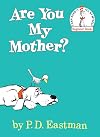
The central idea for the book Are You My Mother by P.D. Eastman is finding security and a sense of belonging. The little bird’s journey represents the universal need for connection and the reassurance that comes from knowing where we belong. Eastman explains these themes through the bird’s repetitive questioning and encounters with various animals and objects. Each refusal deepens the bird’s anxiety, but the eventual reunion with his mother provides a comforting resolution. The baby show more bird begins the story vulnerable and uncertain, freshly hatched and left alone while his mother searches for food. His determination to find her shows early independence, even as he struggles to define what a “mother” is. Although he faces confusion and discouragement throughout his journey, his perseverance reflects growth.
Eastman uses characterization, repetition, and humor to engage young readers. The bird’s simple dialogue asking every creature and object “Are you my mother?” This reflects the innocents of childhood. The cumulative structure builds anticipation, while the absurd encounters with animals and adds humor. The illustrations are simple yet effective, using clean lines and muted colors to highlight the bird’s smallness in contrast to the larger world. The exaggerated size of the “Snort” compared to the bird underlines his vulnerability but also his bravery. Visual repetition mirrors the textual repetition, reinforcing the rhythm of the story and helping early readers anticipate what comes next.
The story resonates with children because it mirrors their own feelings of separation anxiety, curiosity, and the need for reassurance. Many young readers can relate to the fear of being lost or alone, and the story provides comfort by showing that persistence leads back to safety and love. show less
Eastman uses characterization, repetition, and humor to engage young readers. The bird’s simple dialogue asking every creature and object “Are you my mother?” This reflects the innocents of childhood. The cumulative structure builds anticipation, while the absurd encounters with animals and adds humor. The illustrations are simple yet effective, using clean lines and muted colors to highlight the bird’s smallness in contrast to the larger world. The exaggerated size of the “Snort” compared to the bird underlines his vulnerability but also his bravery. Visual repetition mirrors the textual repetition, reinforcing the rhythm of the story and helping early readers anticipate what comes next.
The story resonates with children because it mirrors their own feelings of separation anxiety, curiosity, and the need for reassurance. Many young readers can relate to the fear of being lost or alone, and the story provides comfort by showing that persistence leads back to safety and love. show less
I get mild anxiety about getting lost, so some tension was building up in my stomach the farther away from the nest the bird wandered. How lucky for the little bird that the Snort (either a sentient machine, or manned by an uncredited operator, it is not revealed it the book) was kind enough to return him to his nest , and that none of the other animals tried to harm him! What if he had met a snake, or a hawk?
This is obviously also a reminder to parents to immediately teach their kids about show more Stranger Danger. The book is also forgiven for being written in the era that it was, but this could also be a start to open up a good dialogue about how some people don't have just one mother (which makes us wonder where the father is in this scenario), but sometimes two mothers or two daddies, or one daddy. Further topics of discussion could lead to the advantages and disadvantages of the nuclear family vs. tribal way of bringing up a child in a large community, and even how, if baby bird (boy) looks for mother (female), and what if it was a girl baby bird, would she look for father? Good intro to Oedipus/Electra complex right there. Out of all the animals though, why is it the machine that ends up being helpful? Why did the other animals either say nothing, or simply deny the connection, without going a step further? Does this mean machines are more capable of compassion? And how could have the baby bird suspected that a plane and ship could be his mother? What does that say about forming emotional attachments to inanimate objects? Could infants display signs of such mental illness so early? Or do they outgrow this as they pick up cues from society on what is and what is not allowed?
You guys know I'm kidding right? Anyway, I could imagine reading this out loud easily, with feeling, and look forward to finding out how it will be received by an actual child. Personally though I still prefer Runaway Bunny. show less
This is obviously also a reminder to parents to immediately teach their kids about show more Stranger Danger. The book is also forgiven for being written in the era that it was, but this could also be a start to open up a good dialogue about how some people don't have just one mother (which makes us wonder where the father is in this scenario), but sometimes two mothers or two daddies, or one daddy. Further topics of discussion could lead to the advantages and disadvantages of the nuclear family vs. tribal way of bringing up a child in a large community, and even how, if baby bird (boy) looks for mother (female), and what if it was a girl baby bird, would she look for father? Good intro to Oedipus/Electra complex right there. Out of all the animals though, why is it the machine that ends up being helpful? Why did the other animals either say nothing, or simply deny the connection, without going a step further? Does this mean machines are more capable of compassion? And how could have the baby bird suspected that a plane and ship could be his mother? What does that say about forming emotional attachments to inanimate objects? Could infants display signs of such mental illness so early? Or do they outgrow this as they pick up cues from society on what is and what is not allowed?
You guys know I'm kidding right? Anyway, I could imagine reading this out loud easily, with feeling, and look forward to finding out how it will be received by an actual child. Personally though I still prefer Runaway Bunny. show less
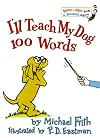
I loved this book about an owner and his dog for several reasons. The writing was very engaging and easy to follow and the characters really made the story stand out. The owner wants to teach his dog many new tricks and show him off to the town. As the book starts and finishes, the flow and rhythm of the writing is very distinct and I think keeps the reader interest. The characters in the story, especially the dog, are very funny and most of the actions demonstrated are so unrealistic that I show more think kids would really be engaged and want to read which word the owner is going to teach his dog next. I thought this book was really cute and the main message is that, you can have fun with obedient dogs imagining the things they could do and words they could learn is something we all are curious about. show less
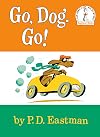
In my opinion this is a great book for emerging readers. As an early childhood ed student, we learn the importance of patterns in text, repetition and rhyme. This book demonstrates those characteristics as it tells the story of dogs engaging in everyday human activities. The book repeats that phrase "go, dog, go" countless time throughout the text. This helps children pick out sight words and allows them to recognize certain letter patterns that form words. There are also nonsense words like show more "kenamachu" which help readers to sound out words and enjoy the silly aspects of reading. This is such a good way to get children excited about reading. Children can relate to the story because, while they aren't dogs, they do drive in cars and experience similar events to the characters. During a few of pages, the dogs are supposed to be asleep. Many children can relate to bedtime and not wanting to go to bed. The general moral of this story is the various activities of the day people (and dogs) experience, However the phonics component of this 'learn to read" book carries huge weight to the purpose of the text. show less
Lists
Read (1)
ORCID Book list (1)
Favourite Books (1)
Sonlight Books (1)
BitLife (1)
1960s (1)
Best Dog Stories (3)
Awards


You May Also Like


Associated Authors
Statistics
- Works
- 62
- Also by
- 3
- Members
- 45,585
- Popularity
- #355
- Rating
- 4.1
- Reviews
- 582
- ISBNs
- 307
- Languages
- 9
- Favorited
- 10
