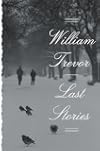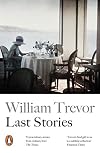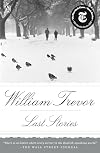
Last Stories
by William Trevor
On This Page
Description
"The beloved and acclaimed William Trevor's last ten stories With a career that spanned more than half a century, William Trevor is regarded as one of the best writers of short stories in the English language. Now, in Last Stories, the master storyteller delivers ten exquisitely rendered tales--nine of which have never been published in book form--that illuminate the human condition and will surely linger in the reader's mind long after closing the book. Subtle yet powerful, Trevor gives us show more insights into the lives of ordinary people. We encounter a tutor and his pupil, whose lives are thrown into turmoil when they meet again years later; a young girl who discovers the mother she believed dead is alive and well; and a piano-teacher who accepts her pupil's theft in exchange for his beautiful music. This final and special collection is a gift to lovers of literature and Trevor's many admirers, and affirms his place as one of the world's greatest storytellers"-- show lessTags
Recommendations








Member Reviews
William Trevor was on another level. His stories feel as if they reveal subtleties of humanity and human behavior that most of us are unaware even exist. A “genius” piano student steals small items from his teacher. She tolerates it, bowing to his talent. Two brothers, honest but not truthful, paint a house where a death has gone unreported. A woman working as a prostitute steals from a man with dementia who may not even be aware.
Several of the stories here examine hearts gone astray. A man leaves his wife and daughters for the woman he tutored years ago, then returns to his family. A cleaning girl no one knows much about seemingly commits suicide and one of her clients believes it’s because she was in love with the client’s show more son. Two childless women appear to target motherless girls to convince them that one of the women is their mother.
Not everything is as it seems and deep emotional damage is caused by the decisions of the characters. But there’s no sense of judgement of their actions. More of a reportage, which makes the impact stronger. A fine collection which appears to be the final one of a long career. Fortunately William Trevor has left behind many, many words of exquisite writing. show less
Several of the stories here examine hearts gone astray. A man leaves his wife and daughters for the woman he tutored years ago, then returns to his family. A cleaning girl no one knows much about seemingly commits suicide and one of her clients believes it’s because she was in love with the client’s show more son. Two childless women appear to target motherless girls to convince them that one of the women is their mother.
Not everything is as it seems and deep emotional damage is caused by the decisions of the characters. But there’s no sense of judgement of their actions. More of a reportage, which makes the impact stronger. A fine collection which appears to be the final one of a long career. Fortunately William Trevor has left behind many, many words of exquisite writing. show less
Although not a mystery writer in the usual sense, the late William Trevor was nevertheless a mystery writer. Each of the 10 stories in his final collection of short stories, “Last Stories,” is a little mystery, full of subtle clues that lead to a final resolution. Or don't. Sometimes the resolution, like the clues themselves, are so subtle readers may be left scratching their heads.
As in any good mystery, there is a lot of misdirection in Trevor's stories. Even the titles misdirect the reader. When the title refers to someone, the story is most often about someone else. "The Piano Teacher's Pupil," for example, is actually about the piano teacher, not the pupil. Once she had a lover who in time abandoned her, yet she treasures that show more time when he was hers. Now she has a student, more gifted than any other, who steals something each time he comes to her house. Yet she treasures having him as a pupil. Paradise comes at a price she's willing to pay.
"The Crippled Man," rather than being about the crippled man, is mostly about the woman who takes care of him, although it turns out that he is taking care of her.
In "The Unknown Girl," Trevor's focus falls on Harriet, a woman whose home this girl had sometimes cleaned before stepping into traffic and being killed. Gradually Harriet comes to realize that the girl's death may be related to her unrequited love for Harriet's son.
Trevor's stories are like paintings on which the artist adds a dab of paint here and a dab of paint there. Not until the final brushstroke does an observer realize what the painting reveals. At times he even refers to different characters in alternate sentences in the same paragraph, requiring careful reading (and rereading) to understand what exactly is going on.
His stories don't make easy reading, yet they are so tender, so beautiful, so delicate that they are all worth the effort. show less
As in any good mystery, there is a lot of misdirection in Trevor's stories. Even the titles misdirect the reader. When the title refers to someone, the story is most often about someone else. "The Piano Teacher's Pupil," for example, is actually about the piano teacher, not the pupil. Once she had a lover who in time abandoned her, yet she treasures that show more time when he was hers. Now she has a student, more gifted than any other, who steals something each time he comes to her house. Yet she treasures having him as a pupil. Paradise comes at a price she's willing to pay.
"The Crippled Man," rather than being about the crippled man, is mostly about the woman who takes care of him, although it turns out that he is taking care of her.
In "The Unknown Girl," Trevor's focus falls on Harriet, a woman whose home this girl had sometimes cleaned before stepping into traffic and being killed. Gradually Harriet comes to realize that the girl's death may be related to her unrequited love for Harriet's son.
Trevor's stories are like paintings on which the artist adds a dab of paint here and a dab of paint there. Not until the final brushstroke does an observer realize what the painting reveals. At times he even refers to different characters in alternate sentences in the same paragraph, requiring careful reading (and rereading) to understand what exactly is going on.
His stories don't make easy reading, yet they are so tender, so beautiful, so delicate that they are all worth the effort. show less
These ten poignant stories are exquisite and instantly atmospheric, giving vivid glimpses of varied lives, often involving widows, widowers, or other solitary souls, who seem broadly content, but are contemplating what to do now. Many of the stories have two main threads that seem unrelated but come together.
The understated style reflects the importance of what is not, or cannot, be said in the stories themselves.
Secrets, whether deliberately kept or unconsciously buried, abound. Sometimes the past is revealed, but in other cases, the fear is enough. And some remain happy in their denial or ignorance.
Secrecy often implies victims, but several of these stories are deliciously ambiguous about whether there is a victim, and if so, show more which of the characters it is.
Reviews of individual stories (no spoilers)
1. The Piano Teacher’s Pupil, 4*
By the second page, I felt I’d known the piano teacher all my life: the arch of her story, and her quotidian regime. She’s the sort of single middle-aged woman who used to be called a spinster and for whom people feel sorry. But she’s sure she’s not unhappy, and is cheered by memories of happiness. And then a new joy: a brilliant new pupil, though there’s something a little odd.
“Each time after the boy left there was a mockery in the music that faintly lingered.”
She figures out the facts, but she doesn’t need to understand or hear any excuse. She’s the grateful recipient of genius.
Image: Porcelain swan - totemic in the story (Source.)
2. The Crippled Man, 3*
The title set me on edge from the start, and word recurs throughout, but that fits the unsettling tone of the story. Itinerant brothers knock at the crippled man’s door, offering to paint the house, while his cousin-cum-carer is out.
“Wherever they were, they circumvented what they did not call the system, since it was not a word they knew.... Survival was their immediate purpose, their hope that there might somewhere be a life that was more than they yet knew.”
Nothing is clear: not (initially) to the reader, not to the painters whose English and maybe intelligence is limited, nor to the carer or the crippled man whose communication is also vague and sometimes veiled. Is the apparent ending the actual one? Read it and decide for yourself.
3. At the Caffè Daria, 4*
“What happens, Anita wonders, to people who walk away.”
The café has an origin story that could be a story in this collection in its own right: after WW2, a wealthy Italian, heartbroken by his wife’s leaving him for another man, ended up in London, and founded a stylish café in her memory. But that’s just the first two of twenty pages.
“He was seized, in desperation, with eccentricity: to do something to confirm his existence.”
The real story concerns a former dancer who’s been a regular customer since childhood, and her best friend from dance days. All three stories are linked by betrayal and women walking away.
“Childless women as they are, they might turn to one another now. But pretence’s truth is shoddy, without a heart. And the past is too far off, its laughter does not echo, its flimsy shadows fall away.”
4. Taking Mr Ravenswood, 4*
The opening sentence, a long, hanging-modifier garden-path one, demonstrates a great writer flouting the “rules”:
“Belonging to her time on the counters - before they removed her upstairs to Customer Care - Mr Ravenswood’s easy smile stirred in Rosanne’s memory, the paisley handkerchief tidily protruding from the top pocket of a softly checked jacket, the tweed hat on the counter for the duration of whatever transaction there was.”
What at first seems the chance of escapist respite from a life of second-best and failure, develops into a darker plan - or two. Who is preying on who?
“Guilt tells you about yourself.”
5. Mrs Crasthorpe, 4*
It opens with Mrs Crasthorpe’s “profound humiliation” as the sole mourner at her husband’s bleak funeral, in a village he requested, though she does not know why. But she’s a woman of secrets herself: buried so she can rise in the world.
Her journey through grief and attempting to forge a new life is contrasted with that of Etheridge, a man whose path occasionally crosses hers, though he wishes it didn’t. Nevertheless, he’s a gentle man and a gentleman. He can keep other people’s secrets.
6. The Unknown Girl, 3*
A young woman steps into traffic and is killed. Who is she? There is an answer of sorts, but it tells us almost nothing. She is indeed unknown, and was perhaps unknowable.
7. Making Conversation, 4*
This one is almost humorous, as two women discuss how they perceive their relationship with a man who is largely off-stage. One unreliable narrator (if so, which?), or two?
8. Giotto’s Angels, 4*
Image: Giotto’s Angels in The Lamentation (Source.)
“When privately he considered his life - as much of it as he knew - it seemed to be a thing of unrelated shred and blurs, something like the damaged canvases that were brought to him for attention.”
A picture restorer with severe but intermittent amnesia makes for a different sort of unreliable narrator (not that he actually narrates the story). He has various tricks and routines to navigate life, but it’s not easy, and he’s therefore vulnerable. I was reminded a little of Ogawa’s The Housekeeper + The Professor (see my review HERE).
“A memory came to him in the way it sometimes did, emerging from nowhere but very clear… [but] he couldn’t hold it. Slippery like some old snake it was.”
I loved and believed the portrayal of Constantine Naylor, but I didn’t quite believe in the other person in the story (how they justify their actions, and what they (nearly) do at the end).
9. An Idyll in Winter, 4*
“Often their thoughts touched before words expressed them.”
A 12-year old girl has a 22-year old male tutor living with the family over the summer in a fairly remote northern farm. Inevitably, the Brontes come to mind (even before he says the moors are “Very Heathcliffian”), and inevitably Mary Bella develops a crush on Anthony, but the story itself develops in unexpected ways.
10. The Women, 5*
Cecilia is 14, has always known her mother is “not here”, but despite a good relationship with her father, is not sure if that means she left or died, but “she lived with her uncertainty”.
On the advice of friends, Cecilia’s father sends her to boarding school, “to be a girl among other girls”. She hates it at first, settles in, and the story progresses in a somewhat simplistic boarding-school story style, reflecting Cecilia’s youth. The women of the title are fully formed but initially mysterious figures, and Cecilia’s reactions are in character. It’s hard to explain why I thought this story was the best of the set, but perhaps the closing paragraph gives an idea:
“The flimsy exercise in assumption and surmise crept, unsummoned, into Cecilia’s thoughts and did not go away. Shakily challenging the apparent, the almost certain, its suppositions were vague, inchoate. Yet they were there, and Cecilia reached out for their whisper of consoling doubt.”
Quotes
“She read the novels that time’s esteem kept alive, and judged contemporary fiction for herself.”
“There was excitement in the shadowlands of what might have been.”
“Suppositions were vague, inchoate. Yet they were there, and Cecilia reached out for their whisper of consoling doubt.”
“Television was something for an audience of more than one.”
“His continuing anger at the careless greed of death.”
“Obedient to her vanity, the grey in her hair was softened in an artificial way, her skin was daily cared for, its small ravages patiently repaired.”
“His eyes… had a most look, suggesting a residue of tears, and yet were not quite sad. It was more sentiment than sorrow.”
Why this, why now?
I first read William Trevor four years ago: a haunting novel, The Story of Lucy Gault (see my HERE). I intended to read another, but during coronavirus pandemic, I’m drawn more to short pieces, so when Laysee wrote a sublime review of these stories (HERE), I knew now was the time.
A little background
Julian Barnes shared this insight from his late wife, Pat Kavanagh, who was Trevor’s long-term literary agent:
“He liked to sit on park benches and eavesdrop on conversations; but that he never wanted to listen to a whole story, so would get up and move on as soon as he had heard the small amount he needed to trigger his further imaginings.”
These “last stories” were apparently written as a collection and found by his son as a completed manuscript after his death, aged 88, in 2016. However, many of them had been published in The New Yorker, some as much as ten years earlier. show less
The understated style reflects the importance of what is not, or cannot, be said in the stories themselves.
Secrets, whether deliberately kept or unconsciously buried, abound. Sometimes the past is revealed, but in other cases, the fear is enough. And some remain happy in their denial or ignorance.
Secrecy often implies victims, but several of these stories are deliciously ambiguous about whether there is a victim, and if so, show more which of the characters it is.
Reviews of individual stories (no spoilers)
1. The Piano Teacher’s Pupil, 4*
By the second page, I felt I’d known the piano teacher all my life: the arch of her story, and her quotidian regime. She’s the sort of single middle-aged woman who used to be called a spinster and for whom people feel sorry. But she’s sure she’s not unhappy, and is cheered by memories of happiness. And then a new joy: a brilliant new pupil, though there’s something a little odd.
“Each time after the boy left there was a mockery in the music that faintly lingered.”
She figures out the facts, but she doesn’t need to understand or hear any excuse. She’s the grateful recipient of genius.
Image: Porcelain swan - totemic in the story (Source.)
2. The Crippled Man, 3*
The title set me on edge from the start, and word recurs throughout, but that fits the unsettling tone of the story. Itinerant brothers knock at the crippled man’s door, offering to paint the house, while his cousin-cum-carer is out.
“Wherever they were, they circumvented what they did not call the system, since it was not a word they knew.... Survival was their immediate purpose, their hope that there might somewhere be a life that was more than they yet knew.”
Nothing is clear: not (initially) to the reader, not to the painters whose English and maybe intelligence is limited, nor to the carer or the crippled man whose communication is also vague and sometimes veiled. Is the apparent ending the actual one? Read it and decide for yourself.
3. At the Caffè Daria, 4*
“What happens, Anita wonders, to people who walk away.”
The café has an origin story that could be a story in this collection in its own right: after WW2, a wealthy Italian, heartbroken by his wife’s leaving him for another man, ended up in London, and founded a stylish café in her memory. But that’s just the first two of twenty pages.
“He was seized, in desperation, with eccentricity: to do something to confirm his existence.”
The real story concerns a former dancer who’s been a regular customer since childhood, and her best friend from dance days. All three stories are linked by betrayal and women walking away.
“Childless women as they are, they might turn to one another now. But pretence’s truth is shoddy, without a heart. And the past is too far off, its laughter does not echo, its flimsy shadows fall away.”
4. Taking Mr Ravenswood, 4*
The opening sentence, a long, hanging-modifier garden-path one, demonstrates a great writer flouting the “rules”:
“Belonging to her time on the counters - before they removed her upstairs to Customer Care - Mr Ravenswood’s easy smile stirred in Rosanne’s memory, the paisley handkerchief tidily protruding from the top pocket of a softly checked jacket, the tweed hat on the counter for the duration of whatever transaction there was.”
What at first seems the chance of escapist respite from a life of second-best and failure, develops into a darker plan - or two. Who is preying on who?
“Guilt tells you about yourself.”
5. Mrs Crasthorpe, 4*
It opens with Mrs Crasthorpe’s “profound humiliation” as the sole mourner at her husband’s bleak funeral, in a village he requested, though she does not know why. But she’s a woman of secrets herself: buried so she can rise in the world.
Her journey through grief and attempting to forge a new life is contrasted with that of Etheridge, a man whose path occasionally crosses hers, though he wishes it didn’t. Nevertheless, he’s a gentle man and a gentleman. He can keep other people’s secrets.
6. The Unknown Girl, 3*
A young woman steps into traffic and is killed. Who is she? There is an answer of sorts, but it tells us almost nothing. She is indeed unknown, and was perhaps unknowable.
7. Making Conversation, 4*
This one is almost humorous, as two women discuss how they perceive their relationship with a man who is largely off-stage. One unreliable narrator (if so, which?), or two?
8. Giotto’s Angels, 4*
Image: Giotto’s Angels in The Lamentation (Source.)
“When privately he considered his life - as much of it as he knew - it seemed to be a thing of unrelated shred and blurs, something like the damaged canvases that were brought to him for attention.”
A picture restorer with severe but intermittent amnesia makes for a different sort of unreliable narrator (not that he actually narrates the story). He has various tricks and routines to navigate life, but it’s not easy, and he’s therefore vulnerable. I was reminded a little of Ogawa’s The Housekeeper + The Professor (see my review HERE).
“A memory came to him in the way it sometimes did, emerging from nowhere but very clear… [but] he couldn’t hold it. Slippery like some old snake it was.”
I loved and believed the portrayal of Constantine Naylor, but I didn’t quite believe in the other person in the story (how they justify their actions, and what they (nearly) do at the end).
9. An Idyll in Winter, 4*
“Often their thoughts touched before words expressed them.”
A 12-year old girl has a 22-year old male tutor living with the family over the summer in a fairly remote northern farm. Inevitably, the Brontes come to mind (even before he says the moors are “Very Heathcliffian”), and inevitably Mary Bella develops a crush on Anthony, but the story itself develops in unexpected ways.
10. The Women, 5*
Cecilia is 14, has always known her mother is “not here”, but despite a good relationship with her father, is not sure if that means she left or died, but “she lived with her uncertainty”.
On the advice of friends, Cecilia’s father sends her to boarding school, “to be a girl among other girls”. She hates it at first, settles in, and the story progresses in a somewhat simplistic boarding-school story style, reflecting Cecilia’s youth. The women of the title are fully formed but initially mysterious figures, and Cecilia’s reactions are in character. It’s hard to explain why I thought this story was the best of the set, but perhaps the closing paragraph gives an idea:
“The flimsy exercise in assumption and surmise crept, unsummoned, into Cecilia’s thoughts and did not go away. Shakily challenging the apparent, the almost certain, its suppositions were vague, inchoate. Yet they were there, and Cecilia reached out for their whisper of consoling doubt.”
Quotes
“She read the novels that time’s esteem kept alive, and judged contemporary fiction for herself.”
“There was excitement in the shadowlands of what might have been.”
“Suppositions were vague, inchoate. Yet they were there, and Cecilia reached out for their whisper of consoling doubt.”
“Television was something for an audience of more than one.”
“His continuing anger at the careless greed of death.”
“Obedient to her vanity, the grey in her hair was softened in an artificial way, her skin was daily cared for, its small ravages patiently repaired.”
“His eyes… had a most look, suggesting a residue of tears, and yet were not quite sad. It was more sentiment than sorrow.”
Why this, why now?
I first read William Trevor four years ago: a haunting novel, The Story of Lucy Gault (see my HERE). I intended to read another, but during coronavirus pandemic, I’m drawn more to short pieces, so when Laysee wrote a sublime review of these stories (HERE), I knew now was the time.
A little background
Julian Barnes shared this insight from his late wife, Pat Kavanagh, who was Trevor’s long-term literary agent:
“He liked to sit on park benches and eavesdrop on conversations; but that he never wanted to listen to a whole story, so would get up and move on as soon as he had heard the small amount he needed to trigger his further imaginings.”
These “last stories” were apparently written as a collection and found by his son as a completed manuscript after his death, aged 88, in 2016. However, many of them had been published in The New Yorker, some as much as ten years earlier. show less
Last Stories is the final, posthumous collection of short stories by the Irish master, William Trevor. Drenched in melancholy and the aching nuances of regret, Trevor serves up ten stories that are as foreign to my own life experience as could be. A few even left me totally confused by what the story was about. I would have rated this book 3 stars, but Trevor does something with these tales that leaves me both satisfied by his intricate descriptions of ordinary lives sub-optimally lived, as well as bewildered by the details he leaves out.
As foreign as are the lives and choices of these stories' characters, I almost always find some strand of empathy for what they endure and how they respond to their challenges -- or pity for their show more failure to do so -- that compels me to continue reading Trevor's writing. These stories bother me. The desperation and poor judgment of these characters bother me. The mundanities are maddening. Yet in all these sketches of inner lives, I catch reflections of universal emotions in a shared humanity that makes us not so different from one other, whether we are in Ireland or America, the 1950s or the 2020s, wealthy or poor, in good health or ill, happy in our relationships or not, and more.
It gives me gratitude for my life, for my wife and family, for the joy I feel in doing all I can to provide for their comfort and happiness, and for the joy they bring me in our ordinary life. It's a life that is, thankfully, filled with a contentment that is not found in the pages of Last Stories. show less
As foreign as are the lives and choices of these stories' characters, I almost always find some strand of empathy for what they endure and how they respond to their challenges -- or pity for their show more failure to do so -- that compels me to continue reading Trevor's writing. These stories bother me. The desperation and poor judgment of these characters bother me. The mundanities are maddening. Yet in all these sketches of inner lives, I catch reflections of universal emotions in a shared humanity that makes us not so different from one other, whether we are in Ireland or America, the 1950s or the 2020s, wealthy or poor, in good health or ill, happy in our relationships or not, and more.
It gives me gratitude for my life, for my wife and family, for the joy I feel in doing all I can to provide for their comfort and happiness, and for the joy they bring me in our ordinary life. It's a life that is, thankfully, filled with a contentment that is not found in the pages of Last Stories. show less
Beautiful language, craft, a brilliant writer. The stories themselves were a bit too bleak and almost nihilistic for me. Many of the female characters were unpleasant, which was sad. THat's the word. Just felt kind of sad after reading these, and that's not for me. :)
These ten stories are at once poignant and atmospheric. I'll need, I think, to re-read them. There are revelations, flashbacks, guarded comments which bring about an understanding of character, circumstance. And which also leave the reader wondering - what REALLY happened? Did that middle-aged woman really murder her disabled cousin? Or ...?
There's something of the formula about these stories, which all contain an unexpected twist. But Trevor's fastidious use of language keeps each story on its own track: yet it's not always certain exactly what took place, or when, or how. Each character remains in many ways unknowable.
And that's why I want to read these stories again. I'm sure they'll set me thinking just as much as they did first show more time round. show less
There's something of the formula about these stories, which all contain an unexpected twist. But Trevor's fastidious use of language keeps each story on its own track: yet it's not always certain exactly what took place, or when, or how. Each character remains in many ways unknowable.
And that's why I want to read these stories again. I'm sure they'll set me thinking just as much as they did first show more time round. show less
A collection of mature, elegiac, very sad stories of loss. A master of the short story, but I found the grim tone of his final collection dispiriting.
Members
- Recently Added By
Lists

Fiction: Classics, Literary, Short Stories
85 works; 1 member

Kirkus Starred Fiction Reviews of Books Published in 2018
330 works; 3 members
Author Information

120+ Works 13,460 Members
William Trevor Cox was born in Mitchelstown, County Cork, Ireland on May 24, 1928. He received a degree in history from Trinity College in 1950. Before becoming a full-time author in 1965, he worked as a sculptor, a teacher, and a copywriter at an advertising agency. He exhibited his sculptures in Dublin and England and was joint winner of the show more International Year of the Political Prisoner art competition in 1952. His first novel, A Standard of Behaviour, was published in 1958. His other novels include Other People's Worlds, Nights at the Alexandra, The Silence in the Garden, The Story of Lucy Gault, My House in Umbria, and Love and Summer. He won the Hawthornden Prize in 1964 for The Old Boys, the Whitbread Award in 1976 for The Children of Dynmouth, the Whitbread Award in 1983 for Fools of Fortune, and the Whitbread Award in 1994 for Felicia's Journey. His short story collections include The Day We Got Drunk on Cake and Other Stories, The Ballroom of Romance and Other Stories, Beyond the Pale, A Bit on the Side, Cheating at Canasta, and The Mark-2 Wife. The Hill Bachelors received the 2001 Irish Times Irish Literature Prize for Fiction and the PEN/Macmillan Silver Pen Award for Short Stories. He received the Allied Irish Banks' Prize in 1976, The Sunday Times Award for Literary Excellence in 1992, the David Cohen British Literature Prize in 1999, and the Bob Hughes Lifetime Achievement Award in Irish Literature in 2008. In 1977, he was awarded an honorary CBE in recognition of his services to literature. He died on November 20, 2016 at the age of 88. (Bowker Author Biography) show less
Some Editions
Awards and Honors
Common Knowledge
- Canonical title*
- La ragazza sconosciuta: ultime storie
- Original title
- Last Stories
- First words
- 'The Brahams' she said. 'Shall we struggle through the Brahms?'
- Last words
- (Click to show. Warning: May contain spoilers.)Yet they were there, and Cecilia reached out for their whisper of consoling doubt.
- Blurbers
- Banville, John; Enright, Anne; Li, Yiyun
- Original language
- English
*Some information comes from Common Knowledge in other languages. Click "Edit" for more information.
Classifications
Statistics
- Members
- 272
- Popularity
- 118,242
- Reviews
- 13
- Rating
- (3.98)
- Languages
- English, Italian
- Media
- Paper, Audiobook, Ebook
- ISBNs
- 13
- ASINs
- 4