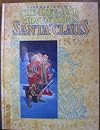
The Life and Adventures of Santa Claus
by Mike Ploog
On This Page
Description
Describes the life of Santa Claus, in comic book format, from birth through old age and into immortality.Tags
Recommendations






















Member Reviews
Ploog does a great job of taking a very Victorian-styled novel and making it into a bit more of a fantasy adventure. In fact, calling it "L. Frank Baum's..." is a bit misleading, because it really only matches Baum's story in the general overview. Both stories show Claus found as an infant by the Master Woodsman (here, Ark; in the novel, Ak) and adopted by the nymph Necile, and both find him growing up, making the first toys for children, having a conflict with the demonic Awgwas, and gradually developing into the Santa Claus we know today. Both stories also conclude with the mortal Claus being bestowed the "mantle of immortality" so he can continue on as the patron saint of children everywhere. Very good. I'm glad we've got that all show more sorted.
Where the two stories differ considerably is in the actual events. Ploog takes Baum's rather episodic plot as inspiration, but he blows it up into something bigger and far more interconnected. Although he does adapt a few of Baum's sequences outright, most of his alterations work to simply make the story more exciting. Instead of the first "toy" being a wooden effigy of Claus' cat, Blinkie, it's now a little jumping-jack based on Claus' monkey, Toy - and that, later, leads into the creation of the first Christmas tree (something wholly unconnected in Baum's book). Similarly, the Awgwas first set upon Claus and Ark during their trip around their world, and their leader - named, unoriginally, Swine - fosters a grudge against Claus after the boy chops off the end of his tail in self-defense. They aren't major changes, but they manage to make the story run more smoothly. Ploog even addresses the situation of Santa's elves - left unspoken in Baum - by hiring a group of wood elves who've returned from a job building a certain Emerald City. (Ho ho ho.) The whole thing is couched in a framing story where Ark's plea for Claus' immortality is put not to the governing council of Immortals, but to their ruler, the powerful Gnome King (a figure occasionally mentioned in the original novel). Here, he is explicitly made the (G)Nome King of the Oz books, appearing from the side of his "faraway mountain" as per Return to Oz, for which Ploog drew concept art.
Where the graphic novel falls down a little bit is in some of Ploog's artistic portrayals, which are occasionally just a little too...'80s. His women and children have the same odd, elongated, full-cheeked quality as Ian Gibson's girls from The Ballad of Halo Jones, which makes them simultaneously a little too cutesy and a little too waifish. Swine and all of his Awgwas look like nothing more than rejects from Teenage Mutant Ninja Turtles, which is regrettable in the extreme. You'd think the leader of a powerful group of invisible demons would be a little bit more threatening than a boar-headed guy in Robin Hood gear.
Despite the occasional shortcoming, this is a strong adaptation that arguably holds up more under rereading than the original text. It's extremely pleasant, and a lot of fun for Christmas, without being too saccharine (well, at least until the last page). It's too bad Ploog never turned his hand to other Baum adaptations, as I think they might have come out rather well. show less
Where the two stories differ considerably is in the actual events. Ploog takes Baum's rather episodic plot as inspiration, but he blows it up into something bigger and far more interconnected. Although he does adapt a few of Baum's sequences outright, most of his alterations work to simply make the story more exciting. Instead of the first "toy" being a wooden effigy of Claus' cat, Blinkie, it's now a little jumping-jack based on Claus' monkey, Toy - and that, later, leads into the creation of the first Christmas tree (something wholly unconnected in Baum's book). Similarly, the Awgwas first set upon Claus and Ark during their trip around their world, and their leader - named, unoriginally, Swine - fosters a grudge against Claus after the boy chops off the end of his tail in self-defense. They aren't major changes, but they manage to make the story run more smoothly. Ploog even addresses the situation of Santa's elves - left unspoken in Baum - by hiring a group of wood elves who've returned from a job building a certain Emerald City. (Ho ho ho.) The whole thing is couched in a framing story where Ark's plea for Claus' immortality is put not to the governing council of Immortals, but to their ruler, the powerful Gnome King (a figure occasionally mentioned in the original novel). Here, he is explicitly made the (G)Nome King of the Oz books, appearing from the side of his "faraway mountain" as per Return to Oz, for which Ploog drew concept art.
Where the graphic novel falls down a little bit is in some of Ploog's artistic portrayals, which are occasionally just a little too...'80s. His women and children have the same odd, elongated, full-cheeked quality as Ian Gibson's girls from The Ballad of Halo Jones, which makes them simultaneously a little too cutesy and a little too waifish. Swine and all of his Awgwas look like nothing more than rejects from Teenage Mutant Ninja Turtles, which is regrettable in the extreme. You'd think the leader of a powerful group of invisible demons would be a little bit more threatening than a boar-headed guy in Robin Hood gear.
Despite the occasional shortcoming, this is a strong adaptation that arguably holds up more under rereading than the original text. It's extremely pleasant, and a lot of fun for Christmas, without being too saccharine (well, at least until the last page). It's too bad Ploog never turned his hand to other Baum adaptations, as I think they might have come out rather well. show less
Reread this fabulous adaptation of Baum's marvellous book by Ploog & his great art. If you can find this long-oop book, snap it up!
excelente
Het grote boek - het grootste in de gehele collectie! (dat wordt weer boekenplanken timmeren ...) - begint veelbelovend. Geen kindeke Jezus, geen Coca-Cola-vrachtwagens, maar een vondeling die door een reus aan de hoede van een hongerige leeuwin wordt toevertrouwd, vervolgens wordt opgevoed door halfnaakte bosnimfen en eerder stommelings dan weloverwogen in het traditionele kerstgedoe rolt. (Hij komt te laat in het dorp, gaat daarom door de schouw. De kerstboom is eigenlijk een grafsteen voor zijn overleden vriend.)
Er zit humor in de vertelling, verwijzingen ook naar dat andere werk van Baum, The wizard of Oz, maar het blijft een kerstverhaal. De bosnimfen zijn tepelloos, de kerstman Klaas is seks- en foutloos: behalve zijn show more zelfopgelegde opdracht om kinderen speelgoed te geven heeft hij geen verlangens, behalve de angst om die opdracht niet te kunnen vervullen gaat hij volstrekt zorgeloos door het leven.
Hij wordt geholpen door zijn vrienden: elfen, nimfen en andere onsterfelijke wezens. Als enige sterfelijke onder hen is hij ook een doorn in het oog van trolachtige wezens, eveneens onsterfelijken, die de zorg voor de mensen toebedeeld kregen omdat de anderen met die vernielzuchtige wezens niets te maken wilden hebben. Het komt tot een gevecht, waarbij de Kerstman (met een zwaard in handen!) de leider van de trolachtigen in de afgrond stort. Meteen daarna zweert hij nooit meer een zwaard te zullen hanteren.
Het is een verademing om een kerstverhaal zonder religieuze of commerciële boodschap te lezen. De morele boodschap moet je er natuurlijk wel bijnemen. En ach, zolang we sterfelijk zijn, is dat misschien maar het beste ...
http://occamsrazorlibrary.blogspot.com/2009/12/santa-claus-de-legende-van-de-ker... show less
Er zit humor in de vertelling, verwijzingen ook naar dat andere werk van Baum, The wizard of Oz, maar het blijft een kerstverhaal. De bosnimfen zijn tepelloos, de kerstman Klaas is seks- en foutloos: behalve zijn show more zelfopgelegde opdracht om kinderen speelgoed te geven heeft hij geen verlangens, behalve de angst om die opdracht niet te kunnen vervullen gaat hij volstrekt zorgeloos door het leven.
Hij wordt geholpen door zijn vrienden: elfen, nimfen en andere onsterfelijke wezens. Als enige sterfelijke onder hen is hij ook een doorn in het oog van trolachtige wezens, eveneens onsterfelijken, die de zorg voor de mensen toebedeeld kregen omdat de anderen met die vernielzuchtige wezens niets te maken wilden hebben. Het komt tot een gevecht, waarbij de Kerstman (met een zwaard in handen!) de leider van de trolachtigen in de afgrond stort. Meteen daarna zweert hij nooit meer een zwaard te zullen hanteren.
Het is een verademing om een kerstverhaal zonder religieuze of commerciële boodschap te lezen. De morele boodschap moet je er natuurlijk wel bijnemen. En ach, zolang we sterfelijk zijn, is dat misschien maar het beste ...
http://occamsrazorlibrary.blogspot.com/2009/12/santa-claus-de-legende-van-de-ker... show less
Jan 12, 2010Dutch
Ratings
Members
- Recently Added By
Author Information
Work Relationships
Was inspired by
Classifications
- Genre
- Graphic Novels & Comics
- DDC/MDS
- 741.5973 — Arts & recreation Drawing & decorative arts Drawing Comic books, graphic novels, fotonovelas, cartoons, caricatures, comic strips History, geographic treatment, biography North American United States (General)
- LCC
- PN6727 .P55 .L15 — Language and Literature Literature (General) Literature (General) Collections of general literature Comic books, strips, etc.
Statistics
- Members
- 51
- Popularity
- 595,017
- Reviews
- 4
- Rating
- (4.19)
- Languages
- 7 — Danish, Dutch, English, Finnish, German, Portuguese, Swedish
- Media
- Paper
- ISBNs
- 9
- ASINs
- 1