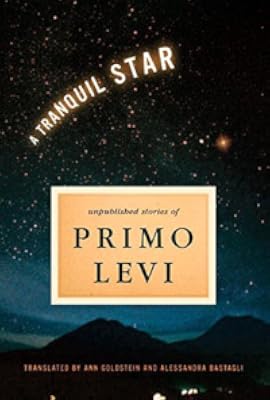
A Tranquil Star
by Primo Levi
On This Page
Description
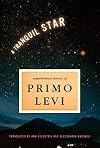
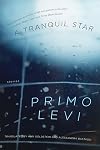
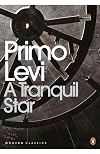
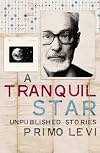
A Tranquil Star, the first new American collection of Primo Levi's previously untranslated fiction to appear since 1990, affirms his position as one of the twentieth century's most enduring writers. These seventeen stories, first published in Italian between 1949 and 1986 and translated by Ann Goldstein and Alessandra Bastagli, demonstrate Levi's extraordinary range, taking the reader from the primal resistance of a captured partisan fighter to a middle-aged chemist experimenting with a new show more paint that wards off evil, to the lustful thoughts of an older man obsessed with a mysterious woman in a seaside villa. In the title story, Levi demonstrates his unerringly tragic understanding of the fragility of the universe through the tale of a pensive astronomer, terrified by the possibility that a long-dormant star might explode and reduce the entire planet to vapor. This remarkable new collection affirms Italo Calvino's conviction that Levi was one of the most important and gifted writers of our time. show lessTags
Recommendations













Member Reviews
A Tranquil Star is a collection of some of Primo Levi's unpublished or lesser known short works. Having only read a bit of Levi's more notable Holocaust-related writing, I was surprised at these clever and occasionally downright funny pieces of fiction with a satirical bent. The stories in this collection range from the macabre "The Death of Marinese" in which a prisoner of war conspires to sabotage his truck full of captors if he is to die anyway to "Buffet Dinner" an offbeat piece in which a kangaroo attends a dinner party.
Levi's stories are populated with unlikely and imaginative scenarios from a world in which book characters exist only for as long as they are remembered; to a world in which higher level office workers are charged show more with inventing causes of death for people whose dates of death have been randomly pre-determined; to a fictional country struggling under the burden of censoring its writers and artists that eventually finds that those best suited to the work of censorship are animals, most notably, chickens.
In the introduction, Ann Goldstein quotes Levi as writing, "In my opinion, a story has as many meanings as there are keys in which it can be read, and so all interpretations are true, in fact the more interpretations a story can give, the more ambiguous it is. I insist on this word, 'ambiguous': a story must be ambiguous or else it is a news story." This collection is a mere 162 pages long, but ideally should be read slowly to realize the many layers of meaning with which Levi has imbued even the shortest story. Each story is only a few pages in length, but Levi's writing leaves endless possibility for contemplation and interpretations of all kinds. To those who take their time with it, Levi's writing will reveal its rich humor, its deft social commentary, and its keen insight into human nature itself. show less
Levi's stories are populated with unlikely and imaginative scenarios from a world in which book characters exist only for as long as they are remembered; to a world in which higher level office workers are charged show more with inventing causes of death for people whose dates of death have been randomly pre-determined; to a fictional country struggling under the burden of censoring its writers and artists that eventually finds that those best suited to the work of censorship are animals, most notably, chickens.
In the introduction, Ann Goldstein quotes Levi as writing, "In my opinion, a story has as many meanings as there are keys in which it can be read, and so all interpretations are true, in fact the more interpretations a story can give, the more ambiguous it is. I insist on this word, 'ambiguous': a story must be ambiguous or else it is a news story." This collection is a mere 162 pages long, but ideally should be read slowly to realize the many layers of meaning with which Levi has imbued even the shortest story. Each story is only a few pages in length, but Levi's writing leaves endless possibility for contemplation and interpretations of all kinds. To those who take their time with it, Levi's writing will reveal its rich humor, its deft social commentary, and its keen insight into human nature itself. show less
'A Tranquil Star' -- the last of seventeen short stories which gives its name to this selection of previously unpublished pieces in translation -- is as good a place as any to start a consideration of this collection. It begins with a discussion of the inadequacy of superlatives (immense, colossal, extraordinary) to give indications of comparative size, especially when it comes to stars. Al-Ludra is the now not-so-tranquil star when it comes to its convulsive, cataclysmic end; how to describe an event which is beyond the comprehension of most, an event that is measured "not in millions or billions of years but of hours and minutes"? All we can do is relate its death to the impact it has on a human being, something we can more easily show more understand. On October 19th 1950 Ramón Escojido, a Peruvian married to his Austrian wife Judith, notices something unusual in photos taken from his mountain observatory. His dilemma is this: does he assume it's a blemish on his photographic plate of the night sky, or does he cancel the planned family excursion to double-check if, in fact, it's really a supernova?
While some stories may seem impersonal at first sight, underlying them all is the all-too-human individual. They may range from the semi-autobiographical to the deeply satirical but it's the humanity that Levi is known for that comes across. 'The Death of Marinese', the earliest tale and the one that opens this collection, is about the Italian resistance: two partisans are captured by the Germans, and one tries to summon up the strength and courage to ensure he doesn't go down without a fight and the chance to inflict damage on his country's enemies. Detailing what goes through Marinese's thoughts in his last few minutes is powerful evidence of Levi's ability to enter another's mind; it helps to know that Levi experienced something very similar in 1943. 'Bear Meat', set in the mountains around Turin, is a Russian dolls nest of tales about climbing, with daring and machismo as aspects of the recklessness that marks out the teenage male. 'Fra Diavolo on the Po' is a piece of black humour, being a memoir of his wartime military career -- such as it was.
Another tale that strongly held my attention was 'The Sorcerers'. We are all familiar with the notion of modern Westerners impressing isolated peoples with their technology, giving the impression that they can wield magic; H Rider Haggard's King Solomon's Mines is a good fictional exemplar. What happens when, for example, two English anthropologists studying the Siriono tribe in eastern Bolivia, suddenly find themselves bereft of that technology, and are imprisoned until they can reproduce it? Will they last out until outside help comes? The Siriono too seem themselves unable to reproduce some of the technology of their forebears, for example the ability to make fire. Levi's conclusion, that "not in every place and not in every era is humanity destined to advance" is apt not just for the Siriono but also for the supposedly superior Europeans studying them.
At another extreme are almost unclassifiable pieces, part satire, part allegory, part science fiction but all fantastical. 'In the Park' concerns the afterlife of famous characters from fiction in limbo: some are entirely made-up, others are various versions of real-life individuals (for example there the several Cleopatras, by Shakespeare, Pushkin, Shaw and Gautier, who reportedly "can't stand one another"). One Antonio Casella is a newcomer to the Park; it turns out [1] that in an attempt to enter it he has written his own biography, "building himself as a compelling, fascinating, worth remembering character". Though he successfully stays in the Park he nevertheless finds that after three years he is -- literally -- fading into obscurity.
Many of Levi's tales involve technology that doesn't necessarily bring benefits to humankind. 'Knall' begins by describing an innovation that appears to be a novelty designed to appeal to the masses. It turns out to be an instantly disposable weapon, like drugs freely available if you know where to look, an object of almost religious and certainly ritual adoration, regarded often as benign whereas it is in truth lethal. If we substitute any mass-produced object or product currently accepted by society (often with equanimity) despite its capacity to kill and injure -- private transport, tobacco, guns, even sugar for example -- we can see the point that Levi is trying to make with his concept of the knell.
Two stories in particular are influenced by his long association with the Italian paint industry. 'The Magic Paint' describes the invention of a formula which ensures that whatever is coated with the paint brings good luck; unfortunately it also reflects bad luck so it rebounds, with fatal consequences. This is such a potent parable, the equivalent of letting the genie out of the bottle. The second tale, 'The Molecule's Defiance' is a reminder that, despite our confidence in mastering technology, such as manufacturing paint to a consistent specification, things can still be beyond our control.
His tales, whether told in a light or a darker tone, all have something profound to say about the human condition. The strongest, to my mind, is an extended metaphor Levi creates that speak of the experience he is best known for, his year in Auschwitz. 'One Night' describes a train hurtling along a wooded plateau as night falls. Dead leaves litter the track, forcing the train to slow, then finally stop. Out of the woods emerge "a group of cautious little people. They were men and women of short stature, slim, in dark clothes..." They proceed to demolish the train and its engine, piece by piece, until at sunrise nothing remains of the train. This image must surely haunt every reader, much as it may have haunted Levi.
This is a marvellous selection: caustic commentaries on censorship and fascism, humorous tales where our perceptions are played with, and even a melancholy love story. I was impressed and pleasantly surprised, given the serious matters that Levi is usually associated with. The translations by Ann Goldstein and Alessandra Bastagli (only 'Censorship in Bitinia' is by Jenny McPhee) read as smoothly as if they were the originals, while Goldstein's informative introduction quote's Levi's opinion that "a story has as many meanings as there are keys in which it can be read". A fiction, he insists, must be ambiguous "or else it is a news story". Thus these are stories to read and re-read, for each reading brings a new interpretation; and, he suggests, "all interpretations are true".
* * * * *
[1] Anna Baldini 'Primo Levi’s Imaginary Encounters: Lavoro Creativo and Nel Parco' https://www.academia.edu/ Accessed 17.10.15
http://wp.me/s2oNj1-tranquil show less
While some stories may seem impersonal at first sight, underlying them all is the all-too-human individual. They may range from the semi-autobiographical to the deeply satirical but it's the humanity that Levi is known for that comes across. 'The Death of Marinese', the earliest tale and the one that opens this collection, is about the Italian resistance: two partisans are captured by the Germans, and one tries to summon up the strength and courage to ensure he doesn't go down without a fight and the chance to inflict damage on his country's enemies. Detailing what goes through Marinese's thoughts in his last few minutes is powerful evidence of Levi's ability to enter another's mind; it helps to know that Levi experienced something very similar in 1943. 'Bear Meat', set in the mountains around Turin, is a Russian dolls nest of tales about climbing, with daring and machismo as aspects of the recklessness that marks out the teenage male. 'Fra Diavolo on the Po' is a piece of black humour, being a memoir of his wartime military career -- such as it was.
Another tale that strongly held my attention was 'The Sorcerers'. We are all familiar with the notion of modern Westerners impressing isolated peoples with their technology, giving the impression that they can wield magic; H Rider Haggard's King Solomon's Mines is a good fictional exemplar. What happens when, for example, two English anthropologists studying the Siriono tribe in eastern Bolivia, suddenly find themselves bereft of that technology, and are imprisoned until they can reproduce it? Will they last out until outside help comes? The Siriono too seem themselves unable to reproduce some of the technology of their forebears, for example the ability to make fire. Levi's conclusion, that "not in every place and not in every era is humanity destined to advance" is apt not just for the Siriono but also for the supposedly superior Europeans studying them.
At another extreme are almost unclassifiable pieces, part satire, part allegory, part science fiction but all fantastical. 'In the Park' concerns the afterlife of famous characters from fiction in limbo: some are entirely made-up, others are various versions of real-life individuals (for example there the several Cleopatras, by Shakespeare, Pushkin, Shaw and Gautier, who reportedly "can't stand one another"). One Antonio Casella is a newcomer to the Park; it turns out [1] that in an attempt to enter it he has written his own biography, "building himself as a compelling, fascinating, worth remembering character". Though he successfully stays in the Park he nevertheless finds that after three years he is -- literally -- fading into obscurity.
Many of Levi's tales involve technology that doesn't necessarily bring benefits to humankind. 'Knall' begins by describing an innovation that appears to be a novelty designed to appeal to the masses. It turns out to be an instantly disposable weapon, like drugs freely available if you know where to look, an object of almost religious and certainly ritual adoration, regarded often as benign whereas it is in truth lethal. If we substitute any mass-produced object or product currently accepted by society (often with equanimity) despite its capacity to kill and injure -- private transport, tobacco, guns, even sugar for example -- we can see the point that Levi is trying to make with his concept of the knell.
Two stories in particular are influenced by his long association with the Italian paint industry. 'The Magic Paint' describes the invention of a formula which ensures that whatever is coated with the paint brings good luck; unfortunately it also reflects bad luck so it rebounds, with fatal consequences. This is such a potent parable, the equivalent of letting the genie out of the bottle. The second tale, 'The Molecule's Defiance' is a reminder that, despite our confidence in mastering technology, such as manufacturing paint to a consistent specification, things can still be beyond our control.
His tales, whether told in a light or a darker tone, all have something profound to say about the human condition. The strongest, to my mind, is an extended metaphor Levi creates that speak of the experience he is best known for, his year in Auschwitz. 'One Night' describes a train hurtling along a wooded plateau as night falls. Dead leaves litter the track, forcing the train to slow, then finally stop. Out of the woods emerge "a group of cautious little people. They were men and women of short stature, slim, in dark clothes..." They proceed to demolish the train and its engine, piece by piece, until at sunrise nothing remains of the train. This image must surely haunt every reader, much as it may have haunted Levi.
This is a marvellous selection: caustic commentaries on censorship and fascism, humorous tales where our perceptions are played with, and even a melancholy love story. I was impressed and pleasantly surprised, given the serious matters that Levi is usually associated with. The translations by Ann Goldstein and Alessandra Bastagli (only 'Censorship in Bitinia' is by Jenny McPhee) read as smoothly as if they were the originals, while Goldstein's informative introduction quote's Levi's opinion that "a story has as many meanings as there are keys in which it can be read". A fiction, he insists, must be ambiguous "or else it is a news story". Thus these are stories to read and re-read, for each reading brings a new interpretation; and, he suggests, "all interpretations are true".
* * * * *
[1] Anna Baldini 'Primo Levi’s Imaginary Encounters: Lavoro Creativo and Nel Parco' https://www.academia.edu/ Accessed 17.10.15
http://wp.me/s2oNj1-tranquil show less
I love Levi's writing, (he writes with the no nonsense precision of the chemist he was) and was excited to read work not focused on his time in Auschwitz. There was some good work here, but there was a lot that felt (and some definitely was) unfinished, fragmentary or at least unrealized. I understand the drive to share every scrap of the work of a genius, I have learned more from several exhibits of Leonardo's notebooks than I have from dozens of viewings of completed work. But for me that was not the case here. Glad to have read it for the good pieces, and I was intrigued by some of the scraps, but my rereads belong to Survival in Auschwitz and The Periodic Table
Primo Levi was one of the most astonishing voices to emerge from the twentieth century. This landmark selection of his short stories opens up a world of wonder, love, cruelty and curious twists of fate, where nothing is as it seems. In "The Fugitive" an office worker composes the most beautiful poem ever with unforeseen consequences, while "Magic Paint" sees a group of researchers develop a paint that mysteriously protects them from misfortune. "Gladiators" and "The Knall" are chilling explorations of mass violence, and in "The Tranquil Star" a simple story of stargazing becomes a meditation on language, imagination and infinity.
Having left the Holocaust behind, Levi has happened upon a world of unlikely, unexpected adventures in this collection of short stories. The stories are as scintillating, as memorable as Primo Levi’s memoirs. I’d recommend this to anyone who likes short stories, in short!
These short stories were well written, diverse, and interesting. However, I got the most out of them while I was reading them and do not expect them to stay with me, as other writing of Primo Levi has.
Amazing book of stories from an author best known for surviving Auschwitz. They are are short, only a few pages and range widely, including science fiction, satire, mountaineering, and a great story populated by fictional characters.
Members
- Recently Added By
Lists

Italian Literature
558 works; 42 members

2016 UpROOTed
11 works; 1 member
Author Information

168+ Works 25,426 Members
Primo Levi was born on July 31, 1919 in Turin, Italy. He pursued a career in chemistry, and spent the early years World War II as a research chemist in Milan. Upon the German invasion of northern Italy, Levi, an Italian Jew, joined an anti-fascist group and was captured and sent to the Auschwitz concentration camp in Poland. He was able to survive show more the camp, due in part to his value to the Nazis as a chemist. After the war ended, Levi did chemistry work in a Turin paint factory while beginning his writing career. His first book, If This Is a Man (title later was changed to Survival in Auschwitz) was published in 1947 and its sequel, The Truce (later retitled The Reawakening) came out in 1958. These two books recount Levi's story of surviving concentration camp life. Levi also published poetry, short stories, and novels, some under the pen name Damianos Malabaila. His 1985, largely autobiographical work, The Periodic Table, cemented his world fame. Awards in tribute to his writing included the Kenneth B. Smilen fiction award, presented by the Jewish Museum in New York. Ironically, despite his surviving Auschwitz, Primo Levi appears to have died by suicide, in Turin on April 11, 1987. (Bowker Author Biography) show less
Some Editions
Common Knowledge
- Canonical title
- A Tranquil Star
Classifications
- Genres
- Fiction and Literature, General Fiction
- DDC/MDS
- 853.914 — Literature & rhetoric Italian, Romanian & related literatures Italian fiction 1900- 20th Century 1945-1999
- LCC
- PQ4872 .E8 .A2 — Language and Literature French, Italian, Spanish and Portuguese literatures Italian literature Individual authors, 1961-2000
- BISAC
Statistics
- Members
- 298
- Popularity
- 107,959
- Reviews
- 8
- Rating
- (3.67)
- Languages
- English
- Media
- Paper, Audiobook, Ebook
- ISBNs
- 9
- ASINs
- 4