On This Page
Description
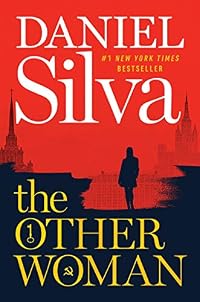
From Daniel Silva, the #1 New York Times–bestselling author, comes a modern masterpiece of espionage, love, and betrayal.She was his best-kept secret ...
In an isolated village in the mountains of Andalusia, a mysterious Frenchwoman begins work on a dangerous memoir. It is the story of a man she once loved in the Beirut of old, and a child taken from her in treason's name. The woman is the keeper of the Kremlin's most closely guarded secret. Long ago, the KGB inserted a mole into the show more heart of the West—a mole who stands on the doorstep of ultimate power.
Only one man can unravel the conspiracy: Gabriel Allon, the legendary art restorer and assassin who serves as the chief of Israel's vaunted secret intelligence service. Gabriel has battled the dark forces of the new Russia before, at great personal cost. Now he and the Russians will engage in a final epic showdown, with the fate of the postwar global order hanging in the balance.
Gabriel is lured into the hunt for the traitor after his most important asset inside Russian intelligence is brutally assassinated while trying to defect in Vienna. His quest for the truth will lead him backward in time, to the twentieth century's greatest act of treason, and, finally, to a spellbinding climax along the banks of the Potomac River outside Washington that will leave readers breathless.
Fast as a bullet, hauntingly beautiful, and filled with stunning double-crosses and twists of plot, The Other Woman is a tour de force that proves once again that "of all those writing spy novels today, Daniel Silva is quite simply the best" (Kansas City Star).
. show less
Tags
Recommendations















Member Reviews
Too often, successive books in a series become weaker. Luckily Daniel Silva's spy series highlighting Gabriel Allon, Chief of Israeli secret intelligence service, has not succumbed to that. THE OTHER WOMAN is an extremely well-written page-turner. The characters are well-developed and realistic. The plots deals with the spy industry in Russia, England, the United States, and Israel and is very current..
In Vienna, Israel was about to bring in a Russian defector. Everything went well until he approached the safe house. He was not followed, and no outsiders knew where the house was locataed. Just as he was steps away from the doorway, a speeding motorcyclist killed him. The assassin fled, followed by two Israeli agents. As a high-speed show more chase continued, the cyclist lost control of his motorcycle, crashed, and died. The remaining question was how did the Russians know the location of the safe house.
Two countries had been involved in the operation: England and Israel. Israel knew it was not responsible, even though was widely blamed, and realized there had to be a mole somewhere in the British intelligence. With very few people in England knowing about the operation, the list of possible moles was short. The blame quickly turned to one man.
The next step was trying to prove that the man was a mole. Seemingly irrelevant information actually provided important clues.
The most famous spy in British history, Kim Philby, is discussed in the book.
To avoid giving away any spoilers, that's all I will say about the plot except that it has many twists and turns with a lot of action leading to an unexpected conclusion. Seemingly irrelevant information actually provides important clues.
The book is very current in several areas. It mentions Donald Trump’s admiration of Vladimir Putin, his desire to create a closer relationship with Russia, and the current investigation about that relationship and its role in the 2016 Presidential election.
“The postwar global security and economic institutions America so painstakingly built were crumbling. Soon they would be swept away, and with them to go the Pax Americana. IM6 was already planning for the post-American world.”
In the Middle East, “America's retreat in the region had created a vacuum that the Iranians and the Russians were rapidly filling. Israel was acting as a bulwark against the rising Iranian threat, with Gabriel and in the Office serving as the tip of the spear. What's more, America's unpredictable president had declared his intention to scrap the agreement that had temporarily delayed Iranians nuclear ambitions. Gabriel fully expected the Iranians to ramp up the weapons program in response, and was putting in place a new program of intelligence-gathering and sabotage to stop it.”
Be sure to read the brief “Prologue” and the “Author’s Notes” at the end; The Notes discussed the Active Measures program while Stalin headed the Russian government. It used “disinformation to the Western media, political violence, and assassinations to try to weaken and eventually destroy the capitalist West. Many of those techniques are currently being used.” “The United States imposed economic sanctions on seven of Russia's richest men and seventeen top government officials, in part over Russia's interference in the 2016 US presidential election. Vladimir Putin, regarded by many observers to be the richest man in the world, was not on the list.
“Security analysts estimate that two thirds of the ‘diplomats’ stationed at the typical Embassy in Western Europe are actually intelligence officers. Therefore, it is unlikely a modest round of tit-for-tat sanctions will deter Putin from his present path. And why should it? Putin and Putinism are on the march. The strongman in the corporate state and the ‘corporate state’– by another name, fascism, are all the rage. Western-style democracy and other global institutions that created an unprecedented period of peace in Europe are suddenly out of vogue.
"Probe with bayonets," advised Lenin. "If you encounter mush, proceed; if you encounter steel, withdraw." Thus far, Putin has encountered only mush. In the 1930s, when the world witnessed a similar simultaneous rise of authoritarian and dictatorial regimes, the calamitous world war ensued, leaving more than sixty million dead. It is wishful thinking to assume the 21st century's flirtation with neofascism will proceed without conflict.”
‘The postwar global security and economic institutions America so painstakingly built were crumbling. Soon they would be swept away, and with them to go the Pax Americana. IM6 was already planning for the post-American world.’
Regarding the Middle East: “America's retreat in the region had created a vacuum that the Iranians and the Russians were rapidly filling. Israel was acting as a bulwark against the rising Iranian threat, with Gabriel and in the Office serving as the tip of the spear. What's more, America's unpredictable president had declared his intention to scrap the agreement that had temporarily delayed Iranians nuclear ambitions. Gabriel fully expected the Iranians to ramp up the weapons program in response, and was putting in place a new program of intelligence-gathering and sabotage to stop it.”
Tidbits:
Bella was unhappy with Navot's current weight, which fluctuated like a Latin American stock exchange.
“I had a meeting with the prime minister. That’s about the extent of it.”
“It didn’t go well?”
“He didn’t offer me Chinese food. I took it as a bad sign.”
Referring to the tsar of Russia “real fascists, thought Charlotte, did not use Botox.”
In THE OTHER WOMAN, Daniel Silva referred to several activities covered in previous books. It is not necessary to have read those books in order to understand this one..
My only complaint is excessively short chapters: 88 of them in 467 pages. Toward the end of the book they dropped down to two-page of chapters. I think story and the suspense level could have easily be handled with chapters and less waste of paper.
The only repetition I noticed was mentioning Vienna's Demel chocolates. They must really be good.
This book belongs on the top of spy story fans list of books to read. I'm looking forward to the movie. show less
In Vienna, Israel was about to bring in a Russian defector. Everything went well until he approached the safe house. He was not followed, and no outsiders knew where the house was locataed. Just as he was steps away from the doorway, a speeding motorcyclist killed him. The assassin fled, followed by two Israeli agents. As a high-speed show more chase continued, the cyclist lost control of his motorcycle, crashed, and died. The remaining question was how did the Russians know the location of the safe house.
Two countries had been involved in the operation: England and Israel. Israel knew it was not responsible, even though was widely blamed, and realized there had to be a mole somewhere in the British intelligence. With very few people in England knowing about the operation, the list of possible moles was short. The blame quickly turned to one man.
The next step was trying to prove that the man was a mole. Seemingly irrelevant information actually provided important clues.
The most famous spy in British history, Kim Philby, is discussed in the book.
To avoid giving away any spoilers, that's all I will say about the plot except that it has many twists and turns with a lot of action leading to an unexpected conclusion. Seemingly irrelevant information actually provides important clues.
The book is very current in several areas. It mentions Donald Trump’s admiration of Vladimir Putin, his desire to create a closer relationship with Russia, and the current investigation about that relationship and its role in the 2016 Presidential election.
“The postwar global security and economic institutions America so painstakingly built were crumbling. Soon they would be swept away, and with them to go the Pax Americana. IM6 was already planning for the post-American world.”
In the Middle East, “America's retreat in the region had created a vacuum that the Iranians and the Russians were rapidly filling. Israel was acting as a bulwark against the rising Iranian threat, with Gabriel and in the Office serving as the tip of the spear. What's more, America's unpredictable president had declared his intention to scrap the agreement that had temporarily delayed Iranians nuclear ambitions. Gabriel fully expected the Iranians to ramp up the weapons program in response, and was putting in place a new program of intelligence-gathering and sabotage to stop it.”
Be sure to read the brief “Prologue” and the “Author’s Notes” at the end; The Notes discussed the Active Measures program while Stalin headed the Russian government. It used “disinformation to the Western media, political violence, and assassinations to try to weaken and eventually destroy the capitalist West. Many of those techniques are currently being used.” “The United States imposed economic sanctions on seven of Russia's richest men and seventeen top government officials, in part over Russia's interference in the 2016 US presidential election. Vladimir Putin, regarded by many observers to be the richest man in the world, was not on the list.
“Security analysts estimate that two thirds of the ‘diplomats’ stationed at the typical Embassy in Western Europe are actually intelligence officers. Therefore, it is unlikely a modest round of tit-for-tat sanctions will deter Putin from his present path. And why should it? Putin and Putinism are on the march. The strongman in the corporate state and the ‘corporate state’– by another name, fascism, are all the rage. Western-style democracy and other global institutions that created an unprecedented period of peace in Europe are suddenly out of vogue.
"Probe with bayonets," advised Lenin. "If you encounter mush, proceed; if you encounter steel, withdraw." Thus far, Putin has encountered only mush. In the 1930s, when the world witnessed a similar simultaneous rise of authoritarian and dictatorial regimes, the calamitous world war ensued, leaving more than sixty million dead. It is wishful thinking to assume the 21st century's flirtation with neofascism will proceed without conflict.”
‘The postwar global security and economic institutions America so painstakingly built were crumbling. Soon they would be swept away, and with them to go the Pax Americana. IM6 was already planning for the post-American world.’
Regarding the Middle East: “America's retreat in the region had created a vacuum that the Iranians and the Russians were rapidly filling. Israel was acting as a bulwark against the rising Iranian threat, with Gabriel and in the Office serving as the tip of the spear. What's more, America's unpredictable president had declared his intention to scrap the agreement that had temporarily delayed Iranians nuclear ambitions. Gabriel fully expected the Iranians to ramp up the weapons program in response, and was putting in place a new program of intelligence-gathering and sabotage to stop it.”
Tidbits:
Bella was unhappy with Navot's current weight, which fluctuated like a Latin American stock exchange.
“I had a meeting with the prime minister. That’s about the extent of it.”
“It didn’t go well?”
“He didn’t offer me Chinese food. I took it as a bad sign.”
Referring to the tsar of Russia “real fascists, thought Charlotte, did not use Botox.”
In THE OTHER WOMAN, Daniel Silva referred to several activities covered in previous books. It is not necessary to have read those books in order to understand this one..
My only complaint is excessively short chapters: 88 of them in 467 pages. Toward the end of the book they dropped down to two-page of chapters. I think story and the suspense level could have easily be handled with chapters and less waste of paper.
The only repetition I noticed was mentioning Vienna's Demel chocolates. They must really be good.
This book belongs on the top of spy story fans list of books to read. I'm looking forward to the movie. show less
Ein eigentlich routinierter Fall für die Geheimdienste: ein Doppelspion will brisantes Material über die Russen liefern und dafür bei den Engländern untertauchen. Gabriel Allon und sein Team wollen ihn in Wien in Empfang nehmen und an den MI6 übergeben, doch dazu kommt es nicht, denn der Mann wird auf offener Straße erschossen. Offenbar war man in Moskau informiert und dafür gibt es nur einen Grund: in den Reihen der Briten muss es einen Maulwurf geben. Diese leugnen dies, doch für den Chef des israelischen Dienstes ist der Fall klar. Doch als sein Kandidat in Bern ums Leben kommt, kommen ihm Zweifel: ist er auf eine geschickt gelegte falsche Spur hereingefallen? Womöglich, aber an den Maulwurf glaubt er immer noch und ist show more bereit alles dranzusetzen, diesen aufzudecken. Er ahnt nicht, wen er ins Visier nimmt und wie schlimm der MI6 tatsächlich unterlaufen wurde.
Auch im bereits 18. Fall von Daniel Silvas Superagenten des israelischen Geheimdienstes ist dieser kein bisschen müde, sich mit den größten globalen Verbrechern anzulegen. Hat er in den letzten beiden Fällen noch die islamistischen Terroristen gejagt, steht nun ein ungewöhnlich klassischer Fall im Vordergrund. Auch wenn der Kalte Krieg seit nunmehr 30 Jahren beendet ist, taugt die Konfrontation zwischen Ost und West noch immer zu großer Unterhaltung und so ist „Der russische Spion“ ein Thriller nach dem bewährten Muster der großen britischen Agenten James Bond oder George Smiley. Nur dass es der Chef des Mossad ist, der fast im Alleingang gegen die russische Übermacht kämpft.
„Gabriel klappte seinen Aktenkoffer auf und nahm drei Gegenstände aus dem Geheimfach. Eine Geburtsurkunde, eine Heiratsurkunde und ein in der Jesus Lane in Cambridge heimlich gemachtes Foto. Übel, dacht er. Verdammt übel.“
Die Erwartungen werden einmal mehr voll erfüllt. Ein spannungsgeladener Thriller, der zunächst einige undurchschaubare Verwicklungen liefert und dann das Katz-und-Maus-Spiel eröffnet. Interessanterweise lehnt sich Silva dieses Mal an eine reale Figur an: Kim Philby, ein britischer Geheimdienstmitarbeiter, der als einer der bekanntesten Doppelagenten und Informationslieferant für die Sowjets in die Geschichte eingegangen ist. Ebenso wie dieser historisch verbriefte Fall trifft auch der Maulwurf im Thriller den englischen MI6 Mitten ins Herz und macht den Fall damit besonders brisant.
Auch wenn die vorhergehenden Fälle durchaus an aktuelle Großkrisen der Welt angelehnt waren, fand ich dieses Mal die Vermischung von Fakt und Fiktion besonders gelungen. Auch die Tatsache, dass etwas weniger geschossen und in die Luft gejagt wird, sondern die altbewährten Spionagetechniken wieder zum Einsatz kommen dürfen – Beschattung, geheime Briefkästen, heimlich übergebene Umschläge – hat mich besonders gefreut und unterstreicht, dass Silva beides liefern kann: actiongeladene rasante Geschichten ebenso wie komplexe Spionagethriller. Lassen viele Serien im Laufe der Zeit nach, würde ich hier das Gegenteil konstatieren wollen: für mich einer der besten Romane von Daniel Silva. show less
Auch im bereits 18. Fall von Daniel Silvas Superagenten des israelischen Geheimdienstes ist dieser kein bisschen müde, sich mit den größten globalen Verbrechern anzulegen. Hat er in den letzten beiden Fällen noch die islamistischen Terroristen gejagt, steht nun ein ungewöhnlich klassischer Fall im Vordergrund. Auch wenn der Kalte Krieg seit nunmehr 30 Jahren beendet ist, taugt die Konfrontation zwischen Ost und West noch immer zu großer Unterhaltung und so ist „Der russische Spion“ ein Thriller nach dem bewährten Muster der großen britischen Agenten James Bond oder George Smiley. Nur dass es der Chef des Mossad ist, der fast im Alleingang gegen die russische Übermacht kämpft.
„Gabriel klappte seinen Aktenkoffer auf und nahm drei Gegenstände aus dem Geheimfach. Eine Geburtsurkunde, eine Heiratsurkunde und ein in der Jesus Lane in Cambridge heimlich gemachtes Foto. Übel, dacht er. Verdammt übel.“
Die Erwartungen werden einmal mehr voll erfüllt. Ein spannungsgeladener Thriller, der zunächst einige undurchschaubare Verwicklungen liefert und dann das Katz-und-Maus-Spiel eröffnet. Interessanterweise lehnt sich Silva dieses Mal an eine reale Figur an: Kim Philby, ein britischer Geheimdienstmitarbeiter, der als einer der bekanntesten Doppelagenten und Informationslieferant für die Sowjets in die Geschichte eingegangen ist. Ebenso wie dieser historisch verbriefte Fall trifft auch der Maulwurf im Thriller den englischen MI6 Mitten ins Herz und macht den Fall damit besonders brisant.
Auch wenn die vorhergehenden Fälle durchaus an aktuelle Großkrisen der Welt angelehnt waren, fand ich dieses Mal die Vermischung von Fakt und Fiktion besonders gelungen. Auch die Tatsache, dass etwas weniger geschossen und in die Luft gejagt wird, sondern die altbewährten Spionagetechniken wieder zum Einsatz kommen dürfen – Beschattung, geheime Briefkästen, heimlich übergebene Umschläge – hat mich besonders gefreut und unterstreicht, dass Silva beides liefern kann: actiongeladene rasante Geschichten ebenso wie komplexe Spionagethriller. Lassen viele Serien im Laufe der Zeit nach, würde ich hier das Gegenteil konstatieren wollen: für mich einer der besten Romane von Daniel Silva. show less
After the slightly disappointing read that was House of Spies last year, I thought maybe Gabriel Allon's story is now saturated, but this book proves me wrong. The story here is much more personal but also with far reaching consequences affecting multiple intelligence agencies for a long time to come.
What starts as an easy job of securing a Russian defector in Vienna turns into an assassination on the streets and everyone is quick to point fingers at Gabriel. All the goodwill that he earned after killing Saladin is up in smoke and even Israeli newspapers are questioning his ability to run the Office. When he decides to take a deeper look into the failed operation, he quickly realizes there is a mole operating in the very high echelons show more of Western intelligence and it falls on him to discover the truth.
We don't get the usual bomb blasts and mass murders and nuclear weapons in this installment. It's much more about Russian infiltration into western agencies and how far they would go to dismantle the existing power structures. We get a lot of history of British spies from the World War and Cold War like Kim Philby and Cambridge Five and Daniel Silva integrates this history with his own fiction creating the perfect mole. I loved getting to know all of this history and the way Gabriel and his team use this information to zero in on the mole and set up their usual trap to catch them.
There is a lot more talk about current world events in this book and I enjoyed the way the author talks about his political opinions through his stories. The planning and execution is pretty simplistic as usual and we know that nothing bad would ever happen to any of the major players. But the last 15-20% of the book is really thrilling and and the twists and turns that took place were not what I was expecting and was pleasantly surprised. The ending especially felt very realistic and also laid the foundation for the very different turn Gabriel's story is going to take in the upcoming books. I have always admired the way Gabriel developed his tentative relationships with Graham and Adrian through the course of this series and it was devastating to see them end up on opposing sides and I can't wait to see what explosive things are going to happen next.
I thoroughly enjoyed this book and obviously would recommend to all fans of Gabriel. It's also quite different from the last couple of books in the series, so you should keep that in mind before reading. This book is also much more blatantly political and presents a bleak picture of things that are happening or could happen. The author's note is especially scary and could also be a prediction of things to come, both in the real world and the series. If you love Gabriel, don't miss out on this one. show less
What starts as an easy job of securing a Russian defector in Vienna turns into an assassination on the streets and everyone is quick to point fingers at Gabriel. All the goodwill that he earned after killing Saladin is up in smoke and even Israeli newspapers are questioning his ability to run the Office. When he decides to take a deeper look into the failed operation, he quickly realizes there is a mole operating in the very high echelons show more of Western intelligence and it falls on him to discover the truth.
We don't get the usual bomb blasts and mass murders and nuclear weapons in this installment. It's much more about Russian infiltration into western agencies and how far they would go to dismantle the existing power structures. We get a lot of history of British spies from the World War and Cold War like Kim Philby and Cambridge Five and Daniel Silva integrates this history with his own fiction creating the perfect mole. I loved getting to know all of this history and the way Gabriel and his team use this information to zero in on the mole and set up their usual trap to catch them.
There is a lot more talk about current world events in this book and I enjoyed the way the author talks about his political opinions through his stories. The planning and execution is pretty simplistic as usual and we know that nothing bad would ever happen to any of the major players. But the last 15-20% of the book is really thrilling and and the twists and turns that took place were not what I was expecting and was pleasantly surprised. The ending especially felt very realistic and also laid the foundation for the very different turn Gabriel's story is going to take in the upcoming books. I have always admired the way Gabriel developed his tentative relationships with Graham and Adrian through the course of this series and it was devastating to see them end up on opposing sides and I can't wait to see what explosive things are going to happen next.
I thoroughly enjoyed this book and obviously would recommend to all fans of Gabriel. It's also quite different from the last couple of books in the series, so you should keep that in mind before reading. This book is also much more blatantly political and presents a bleak picture of things that are happening or could happen. The author's note is especially scary and could also be a prediction of things to come, both in the real world and the series. If you love Gabriel, don't miss out on this one. show less
Daniel Silva mines current and historical events in "The Other Woman," an espionage novel in which he describes the growing threat that Vladimir Putin poses to his democratic adversaries. The story opens with the impending defection of Russian spy Konstantin Kirov, code-named Heathcliff. Unfortunately, someone leaks details of the exfiltration and it goes terribly wrong. Journalists and others lambaste Gabriel Allon--chief of Israel's Secret Intelligence Service--who is stung by allegations that portray him as incompetent or even complicit in the blown operation. Subsequently, Allon and his team are determined to identify a mole who is passing classified information to Moscow.
This hefty work of fiction has a large cast; fascinating show more background about the Cambridge Five, citizens of the U. K. who began funneling state secrets to the Soviet Union during the 1940s; old-fashioned tradecraft (dead-drops, safe houses, and surreptitiously tailing of persons of interest); sophisticated surveillance involving high powered cameras and other sensitive eavesdropping equipment; games of cat and mouse that threaten to turn violent; and trips to such places as Austria, England, France Washington, D. C., Spain, and Canada. The plot is dizzying and, at times, difficult to follow, but the second half picks up steam, especially when Silva focuses on a confrontation between two wily and experienced spies.
The author depicts a shadowy world in which men and women betray their country for money, because of their political beliefs, and/or to boost their egos. Allon and company spare no effort or expense to fulfill their mission but, even with meticulous planning, not everything goes precisely as expected. To his credit, Silva offers no pat solutions to the bitter conflicts that make our divided world so dangerous. Moreover, he effectively portrays the precarious lives of intelligence agents who, in order to survive, must be convincing, resourceful, and audacious. "The Other Woman" has its flaws. It is too long and drawn-out, and there are instances of painfully clichéd writing ("Fear stalked him day and night." "He was gripped by an overwhelming sense of impending doom."). On the other hand, the book becomes far more compelling when the seemingly disparate threads come together, and the proceedings conclude with a suspenseful, intense, and engrossing finale. show less
This hefty work of fiction has a large cast; fascinating show more background about the Cambridge Five, citizens of the U. K. who began funneling state secrets to the Soviet Union during the 1940s; old-fashioned tradecraft (dead-drops, safe houses, and surreptitiously tailing of persons of interest); sophisticated surveillance involving high powered cameras and other sensitive eavesdropping equipment; games of cat and mouse that threaten to turn violent; and trips to such places as Austria, England, France Washington, D. C., Spain, and Canada. The plot is dizzying and, at times, difficult to follow, but the second half picks up steam, especially when Silva focuses on a confrontation between two wily and experienced spies.
The author depicts a shadowy world in which men and women betray their country for money, because of their political beliefs, and/or to boost their egos. Allon and company spare no effort or expense to fulfill their mission but, even with meticulous planning, not everything goes precisely as expected. To his credit, Silva offers no pat solutions to the bitter conflicts that make our divided world so dangerous. Moreover, he effectively portrays the precarious lives of intelligence agents who, in order to survive, must be convincing, resourceful, and audacious. "The Other Woman" has its flaws. It is too long and drawn-out, and there are instances of painfully clichéd writing ("Fear stalked him day and night." "He was gripped by an overwhelming sense of impending doom."). On the other hand, the book becomes far more compelling when the seemingly disparate threads come together, and the proceedings conclude with a suspenseful, intense, and engrossing finale. show less
It wasn't difficult to guess who the mole was, and the plot fizzled out for a while once the identity of the mole was clear. But the chase to nab her is just as thrilling. I enjoyed this immensely - something different from the usual Gabriel plot where he more often than not, either plants a mole or deals with a terrorism threat.
Another disappointing novel by Daniel Silva. Is Gabriel Allon now too old and family-driven to be the vivacious spy, strategist and art restorer of the past (or is it Silva himself who has aged dramatically?) This one is repetitious, unoriginal and downright dull, especially the first half. Basically, this one centers around a senior mole in the British intelligence community, where they have to rely on Gabriel because they cannot admit they have been duped for many years (think of Kim Philby, a famous Russian spy of the 50's, who successfully escaped England to live out his life as a hero in Russia.) Sadly, Silva has become formulaic, pretty much copying and pasting Allon's team, with little character development and no deaths, despite show more the hazards of the spy business. Shorter, with more action in the next installment please and how about some art history too? show less
The 18th book in the Gabriel Allon series is contemporary with a little history included. Intelligence services of several countries become involved in the hunt for a Russian mole. I like the premise of the book, although it really jumps between characters and can be hard to follow at time. Lots of repeating of backstory, too much page filler.
Members
- Recently Added By
Lists

Kirkus Starred Fiction Reviews of Books Published in 2018
330 works; 3 members

Amazon best fictional genre picks monthly for 2018
418 works; 9 members

Evan's Wish List
86 works; 2 members
Author Information

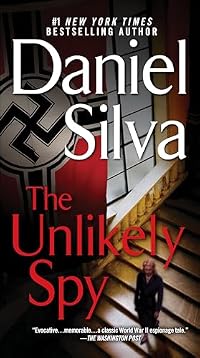
Daniel Silva was born in Michigan in 1960. While pursuing a master's degree in international relations, he received a temporary job with United Press International to help cover the 1984 Democratic National Convention. Soon after, he left his graduate program to work full-time for United Press International. He worked in San Francisco and show more Washington, D. C. and as a Middle East correspondent in Cairo and the Persian Gulf. He was working at CNN when his first novel, The Unlikely Spy, was published. In 1997. He then left CNN to become a full-time author. His novels include The Fallen Angel, The English Girl, The Other Woman, and other titles in the Gabriel Allon series. He won the Barry Award for Best Thriller for The Messenger in 2006. In 2014 he made The New York Times Best Seller List with The Heist and The English Spy made the list in 2015. The Black Widow is his latest bestseller. (Bowker Author Biography) show less
Some Editions
Awards and Honors
Distinctions
Series

Common Knowledge
- Canonical title
- The Other Woman
- Original title
- The Other Woman
- Original publication date
- 2018
- People/Characters
- Gabriel Allon; Rebecca Manning; Graham Seymour; Charlotte Bettencourt
- Important places
- Washington, D.C., USA; London, England, UK; Zahara, Granada, Spain
- Epigraph
- He was given a new lease on life when the Centre finally suggested that he take part in the training of a new generation of agents at the KGB spy school, a job he accepted with great enthusiasm. He proved an excellent teache... (show all)r, imparting what he knew with pleasure, patience and devotion. He loved the work.
--Yuri Modin, "My Five Cambridge Friends"
And what does anyone know about traitors, or why Judas did what he did?
--Jean Rhys, "Wide Sargasso Sea" - Dedication
- Once again, for my wife, Jamie, and my children, Nicholas and Lily
- First words
- The car was a Zil limousine, long and black, with pleated curtains in the rear windows.
- Last words
- (Click to show. Warning: May contain spoilers.)It smells like forgiveness.
- Original language
- English US
Classifications
Statistics
- Members
- 1,261
- Popularity
- 19,335
- Reviews
- 33
- Rating
- (3.92)
- Languages
- 9 — Danish, Dutch, English, German, Italian, Polish, Spanish, Swedish, Portuguese (Portugal)
- Media
- Paper, Audiobook, Ebook
- ISBNs
- 56
- ASINs
- 8